Welcome to Our Factory for a Visit! Free customized disinfection solutions
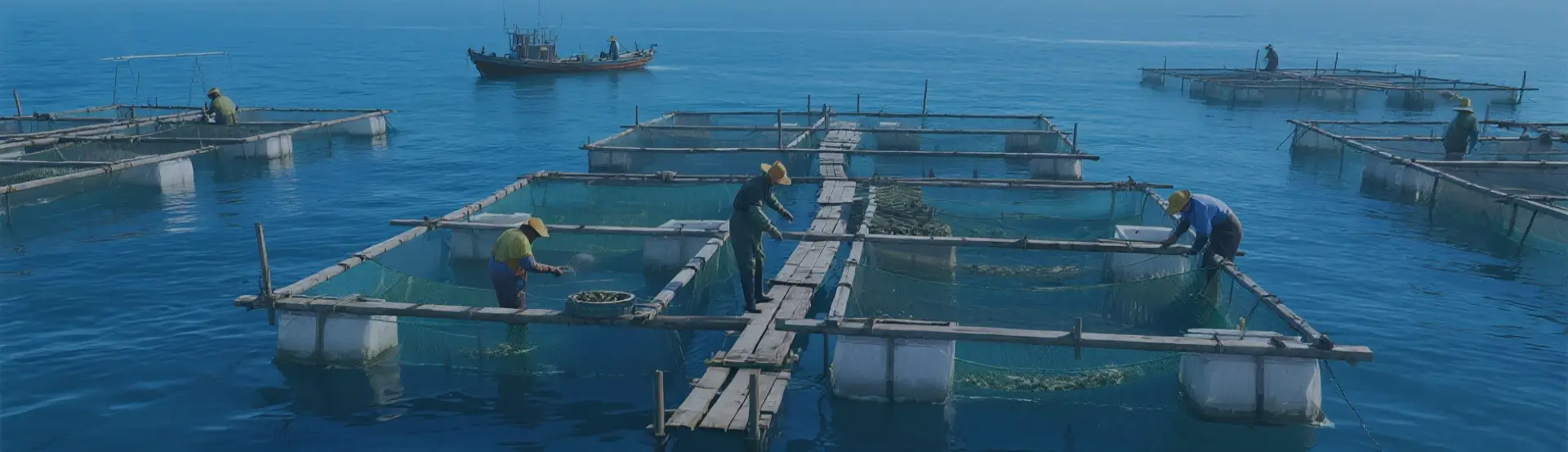
In the modern animal husbandry industry, drinking water safety is like a cornerstone, firmly supporting the building of animal health and production efficiency. Relevant data shows that the incidence rate of animal intestinal diseases caused by water pollution exceeds 30%, which not only leads to the decline of feed conversion rate, but also extends the growth cycle of animals, bringing huge economic losses to breeding enterprises.
For many aquaculture customers, scientifically selecting drinking water disinfection methods and equipping them with efficient sterilization equipment are key to achieving sustainable development. Today, Xiuba editor will provide you with another guide on drinking water disinfection in the animal husbandry industry, one by one, to provide "factory owners" with how to choose disinfection types of products, or how to effectively and reasonably select disinfection equipment that matches the conditions of the factory area for breeding and anti-virus education.
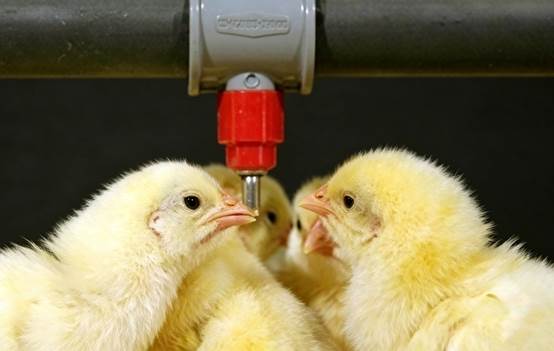
Firstly, pay close attention to the lifeline of animal husbandry and breeding
Water pollution poses three serious threats to animal husbandry: pathogenic microorganisms such as Escherichia coli, Salmonella, etc., which can easily cause mass diarrhea and immune suppression; Chemical pollutants, such as heavy metals and pesticide residues, can cause chronic poisoning and reproductive disorders in animals; Algal toxins appear during blue-green algae outbreaks and can cause acute liver and kidney function damage in animals.
Disinfection of drinking water is of great significance. It can effectively reduce the use of antibiotics and lower treatment costs by over 30%; Improve feed utilization efficiency and shorten the fattening period by 5-8 days; Improving the survival rate of piglets and reducing the mortality rate of large-scale pig farms by 15% can directly bring considerable economic benefits to breeding enterprises.
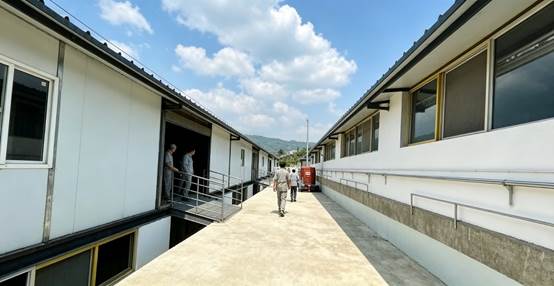
Secondly, a comprehensive analysis of the four mainstream disinfection technologies for livestock drinking water
1. Physical filtering method
Principle: Adsorption of suspended solids and some microorganisms through filter materials such as quartz sand and activated carbon.
Applicable scenario: As a pre-treatment stage, it is suitable for areas with turbid water but less microbial pollution.
Limitations: Unable to kill viruses and bacterial spores, requiring the use of other disinfection methods.
2. UV disinfection
Technical advantage: No chemical residue, can instantly inactivate 99.9% of pathogens.
Equipment recommendation: Pipeline type ultraviolet sterilizer (suitable for small farms with stable water volume).
Attention: The turbidity of the water body should be below 5NTU, and the lamp tube should be replaced regularly and the quartz sleeve should be cleaned.
3. Ozone oxidation
Sterilization efficiency: Strong oxidizing ability can destroy the structure of microbial cells, and also has deodorizing and decolorizing functions.
Application pain points: High equipment cost (about three times that of chlorine disinfection), short half-life of ozone (15-30 minutes), requiring on-site preparation.
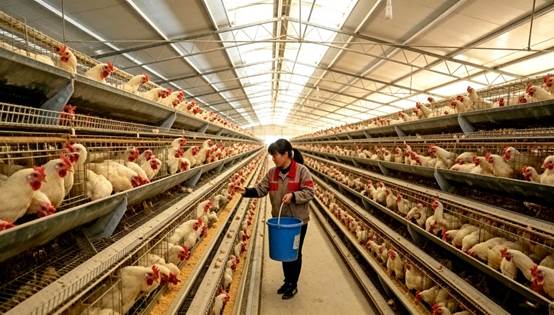
4. Chemical disinfection method (mainstream choice)
Chlorine dioxide (ClO ₂): Broad spectrum sterilization (including African swine fever virus), low concentration of action (0.2-0.5ppm), not affected by pH value, and no carcinogenic by-products. Sterilization performance: The ability to penetrate biological membranes is 2.6 times that of chlorine gas, and 99.99% of virus spores can be killed within 5 minutes; Safety advantage: does not produce trihalomethanes, has a wide pH adaptability range (2-10)
Economy: The concentration required for addition is only 0.5-2ppm, and the overall cost is 40% lower than that of ozone.
Sodium hypochlorite: Low cost but easily reacts with organic matter to produce trichloromethane, and decomposes quickly in high temperature environments.
Peroxyacetic acid: Strong irritant odor, highly corrosive to metal pipelines, and needs to be prepared and used immediately.
Comparison Table of Four Disinfection Technologies
|
Disinfectant |
sterilization efficiency |
safety |
sustained effectiveness |
usage cost |
|
Chlorine dioxide |
★★★★★ |
★★★★★ |
★★★★☆ |
★★★☆☆ |
|
Ultraviolet rays |
★★★★☆ |
★★★★★ |
★☆☆☆☆ |
★★★★☆ |
|
Sodium hypochlorite |
★★★☆☆ |
★★☆☆☆ |
★★☆☆☆ |
★★★★★ |
Finally, a guide for selecting equipment that accurately matches the needs of aquaculture scenarios
For small-scale breeding farms (with a stock of less than 1000 heads), if the water source quality is good and the breeding scale is small, a simple manual addition method of chemical disinfectants can be used, such as Xiuba brand chlorine dioxide effervescent disinfection tablets, which are easy to use, precise to add, and effective in packaging. One element chlorine dioxide disinfectant powder can also be used, which is equally safe and reliable.
It is recommended to equip medium-sized ranches (with a stock of 1000-5000 heads) with professional disinfection equipment, such as chlorine dioxide generators, chlorine dioxide dosing equipment, etc., in combination with Xiuba binary chlorine dioxide disinfection powder AB, to achieve automated and continuous disinfection. At the same time, equipped with water quality testing equipment such as pH meters, microbial detection tools, etc., for real-time monitoring of water quality.
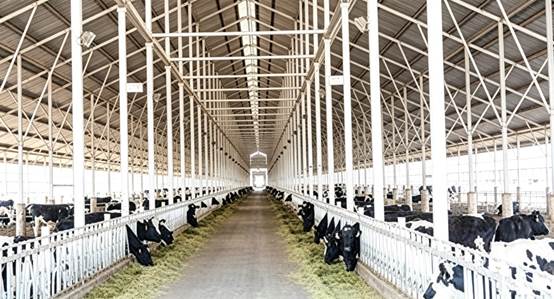
Wan Tou level aquaculture groups are more suitable for modular intelligent water treatment stations, such as high-pressure cleaning machines, used to clean dirt and biofilms in water towers and pipes. This type of large-scale modular management equipment integrates processes such as multi-stage filtration, ultraviolet pretreatment, chlorine dioxide closed-loop dosing, and cloud data management.
Xiuba Chlorine Dioxide Equipment: Redefining Drinking Water Disinfection Standards
As a well-known brand in the disinfection and purification industry, Xiuba has been deeply cultivating and developing for more than 40 years. The solid foundation of brand development not only allows Xiuba to witness the industry's development, but also gradually leads the industry's development. The intelligent chlorine dioxide dosing device involved in its brand operation service adopts an advanced PLC intelligent control system, which can achieve dual control of flow and residual chlorine (optional for customers). It can automatically adjust the dosing amount based on real-time data of water quality and flow, ensuring stable and accurate disinfection effect. The unique reactor uses special composite materials that are resistant to high temperature, strong corrosion, and high pressure. The multi-stage reaction kettle and differential reaction process ensure sufficient reaction, high raw material conversion rate, and reaction yield exceeding 85%.
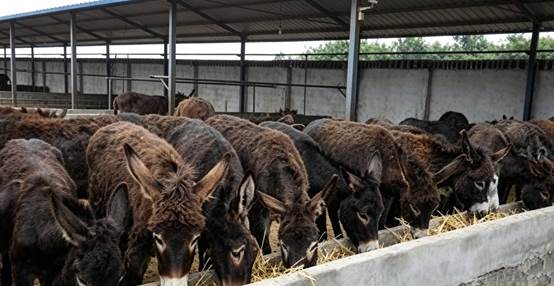
The advantages of using this brand for specialized disinfection equipment in livestock breeding enterprises are:
1. The chlorine dioxide dosing device series developed by Xiuba brand has passed ISO9001 and CE certification, and has independent brand invention patents;
2. The product has precise control technology to support dynamic adjustment of dosage, with an error rate of<± 2%;
3. Support turbidity and flow linkage control; In terms of material technology, the corrosion resistance life has been extended to 15 years, ensuring 100000 hours of trouble free operation;
4. Its intelligent management system supports 4G remote monitoring and big data analysis, automatically generates daily water quality reports, and has a fault response time of less than 2 hours.
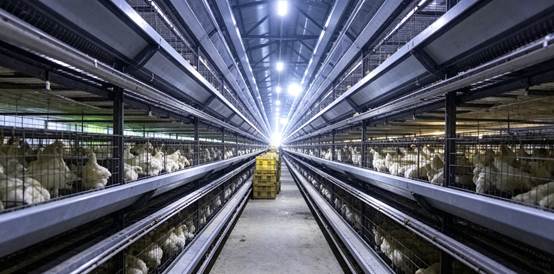
In short, disinfection of drinking water in animal husbandry is an important link in ensuring animal health and improving production efficiency. Choosing appropriate disinfection methods and equipment should be comprehensively considered based on factors such as the scale of the breeding farm, water quality of the water source, and the types and needs of the farmed animals. By scientifically selecting disinfection methods and equipment, and strictly following operating procedures and precautions, the hygiene and safety of drinking water for animal husbandry can be effectively ensured, the occurrence of animal diseases can be reduced, and the breeding efficiency can be improved.
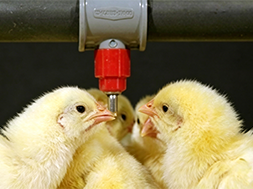
Water source pollution is the main cause of high incidence and declining efficiency of intestinal diseases in livestock and poultry farms. Scientific implementation of drinking water disinfection can significantly reduce the cost of breeding diseases and medication. Compared with the four mainstream drinking water disinfection technologies, chlorine dioxide has the best comprehensive performance. Livestock farms can select corresponding Xiuba disinfection products and intelligent equipment according to their inventory size to improve quality and efficiency.
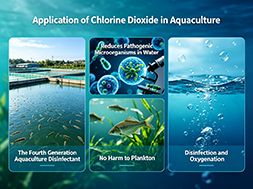
Chlorine dioxide is a highly effective and safe disinfectant for aquaculture. It sterilizes and purifies water, leaves no carcinogenic residues, and is superior to traditional chlorine-based disinfectants. It requires low dosage, has stable effects, and is highly safe, and has been widely used in coastal areas and is being promoted to inland aquaculture areas.
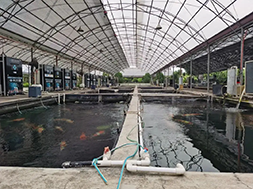
Aquaculture farmers often blindly use chlorine dioxide to disinfect fish ponds, a practice that frequently leads to the death of fish and shrimp. While chlorine dioxide is effective at killing bacteria, safe, and does not induce drug resistance—making it a common choice in aquaculture—it requires proper activation and precise dosage control prior to use. It should be applied on sunny days and never mixed with other substances. Ultimately, disinfection serves only as a symptomatic remedy; the true foundation of successful aquaculture lies in the proper management of water quality, pond sediment, and feeding practices.
Northeast of Huangshan Road and Chuangye Intersection, Small and Medium sized Enterprise Entrepreneurship Industrial Park, Shanwang Town, Linqu County, Weifang City, Shandong Province
Copyright © 2025 by Shandong Huashi Pharmaceutical Co., Ltd All Rights Reserved


 Language
 中文
中文 Русский
 Chlorine Dioxide Disinfectant Manufacturer


