Welcome to Our Factory for a Visit! Free customized disinfection solutions
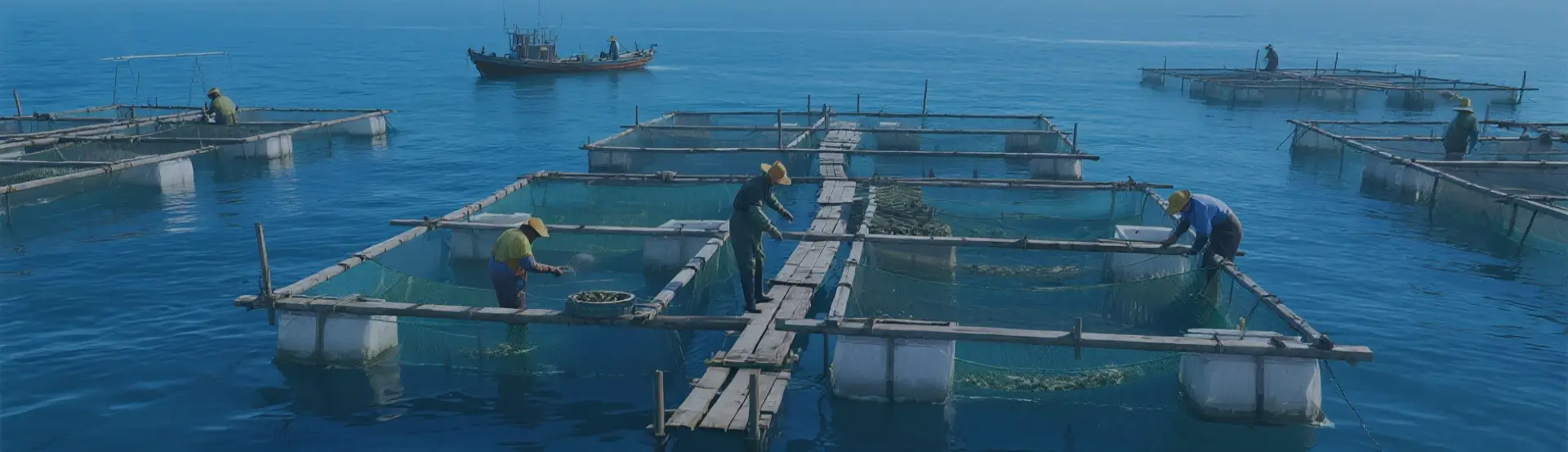
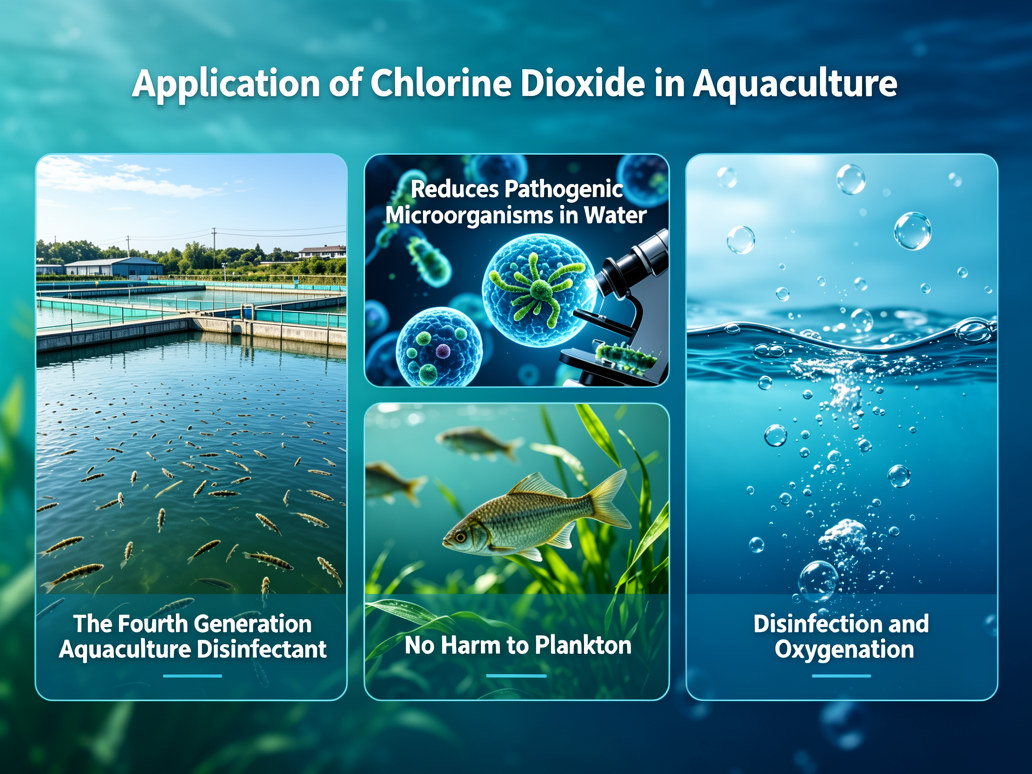
Chlorine dioxide, as a fourth-generation disinfectant for aquaculture, not only significantly reduces the number of pathogenic microorganisms in the water but also does not harm plankton, thus disinfecting and oxygenating the water. Stable chlorine dioxide is non-irritating, does not harm aquatic organisms, and improves water quality. Compared with other control drugs, it has advantages such as short sterilization time and fewer side effects. It has significant efficacy against hemorrhagic septicemia, gill rot, red skin disease, enteritis, and saprolegniasis in fish, and vibriosis and viruses in shrimp. In recent years, it has been rapidly adopted in coastal aquaculture areas such as Hainan, Guangdong, Shandong, Hebei, and Liaoning, and is gradually penetrating inland freshwater aquaculture areas.
In aquaculture, disinfection of the water is an essential measure to prevent diseases in aquatic animals. Currently, chlorine-based disinfectants are commonly used, such as bleaching powder, sodium dichloroisocyanurate, and trichloroisocyanuric acid. While these chlorine-based disinfectants are effective at killing pathogens in the water, the available chlorine reacts with the water to form various halogenated compounds, producing non-volatile chlorinated organic compounds such as trihalomethanes. Trihalomethanes have been identified as carcinogens. In the 1980s, another class of non-volatile chlorination disinfection byproducts were discovered, including halohexanoic acid, dichlorohexanoic acid, and trichlorohexanoic acid. Their carcinogenic risk is 50 to 100 times that of trihalomethanes, polluting natural and groundwater and threatening human health. Furthermore, chlorine-based disinfectants react with ammonia in the water to produce chloramines, which have almost no inactivation effect on pathogens in the water. Furthermore, chlorinated chlorine at concentrations of 0.05–1.2 mg/L is toxic to aquatic organisms, and chlorine-based disinfectants are significantly affected by pH and suspended solids in the water. When the pH is high and there are many suspended solids, chlorine-based disinfectants are almost ineffective for disinfection without increasing the concentration, wasting disinfectant and polluting the water. Long-term use of chlorine-based disinfectants can also lead to drug resistance in pathogens. ClO₂ is suitable as a disinfectant for aquaculture because:
First, stable ClO2 requires a small dosage. Compared to commonly used disinfectants such as quicklime, bleaching powder, sodium dichloroisocyanurate, trichloroisocyanuric acid, and bromochlorohydantoin, stable ClO2 requires a much smaller dosage, reducing the workload for operators. According to available information, when using stable ClO2 to prevent infectious diseases in aquatic animals, a concentration of 0.1–0.2 mg/L applied to the entire pond each time is sufficient to achieve good results. When using stable ClO2 to treat diseases in aquatic animals, only 0.2–0.3 mg/L is needed, applied twice with a one-day interval.
Secondly, stable ClO2 has a superior disinfection effect. Because stable ClO2 possesses extremely strong oxidizing power, it can kill various bacteria, viruses, molds, fungi, algae, and bacterial spores even in the presence of suspended solids in the water, even with relatively small doses. According to data, stable ClO2, especially at low concentrations, has a stronger diffusion rate and penetration capacity in water than chlorine. Under the same conditions, 5 mg/L chlorine gas achieves a 90% sterilization rate after 5 minutes, while 2 mg/L ClO2 can kill 100% of various microorganisms in just 30 seconds. Stable ClO2 maintains a strong bactericidal ability over a wide pH range, while chlorine gas cannot. Furthermore, because stable ClO2 does not react with ammonia and amines, its bactericidal effect is unaffected by the concentration of ammonia and amines in the water.
Thirdly, stable ClO2 leaves no residue or harmful substances after its action. When disinfecting with chlorine-based agents such as chlorine gas, chlorine reacts with organic matter in water to produce trihalomethanes (THMs), such as CHCl3 and other organohalogenated compounds, which are known carcinogens. However, the products of stable ClO2 are water, sodium chloride, trace amounts of CO2 , and small amounts of sugars, with no substances harmful to human health. Furthermore, chlorine dioxide can remove excess inorganic pollutants such as Fe2+, Mn2+, S2−, and CN−, as well as organic pollutants such as phenols and humic substances from water . Stable ClO2 can oxidize carcinogenic organic compounds, such as benzopyrene, into non-carcinogenic substances. Stable ClO2 also has a strong removal effect on odor compounds such as musty and fishy smells.
Fourth, stable ClO2 has a high safe concentration, making it unlikely to cause poisoning in aquatic animals due to excessive use. Experiments using fish, shrimp, and crab fry have shown that stable ClO2 is a low-toxicity substance. Furthermore, toxicological experiments conducted on mice have indicated that stable ClO2 is practically non-toxic.
Fifth, stable ClO2 is very convenient to use. If using a stable ClO2 solution to soak aquatic animals, simply add the required amount of drug to the water and stir well. If using a stable ClO2 solution to spray the entire aquatic animal rearing pond, you can also directly dilute the required amount of stable ClO2 in a small amount of water and then spray it evenly throughout the pond.
Chlorine dioxide is an oxidizing agent and does not undergo chlorination. Therefore, it does not have the toxic side effects of chlorinating agents. Its safety performance has been classified as A1 by the World Health Organization, making it an internationally recognized ideal alternative to chlorine-based disinfectants. It not only serves as a highly effective bactericidal disinfectant, controlling the transmission of pathogenic microorganisms and effectively preventing the occurrence and spread of infectious diseases in aquaculture, but also has excellent water purification effects. It can increase dissolved oxygen in the aquatic environment while reducing chemical oxygen demand (COD) and ammonia nitrogen levels, thus reducing eutrophication and improving the overall productivity of fishponds.
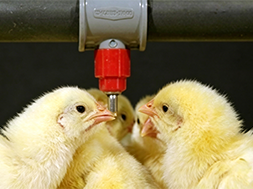
Water source pollution is the main cause of high incidence and declining efficiency of intestinal diseases in livestock and poultry farms. Scientific implementation of drinking water disinfection can significantly reduce the cost of breeding diseases and medication. Compared with the four mainstream drinking water disinfection technologies, chlorine dioxide has the best comprehensive performance. Livestock farms can select corresponding Xiuba disinfection products and intelligent equipment according to their inventory size to improve quality and efficiency.
Chlorine dioxide is a highly effective and safe disinfectant for aquaculture. It sterilizes and purifies water, leaves no carcinogenic residues, and is superior to traditional chlorine-based disinfectants. It requires low dosage, has stable effects, and is highly safe, and has been widely used in coastal areas and is being promoted to inland aquaculture areas.
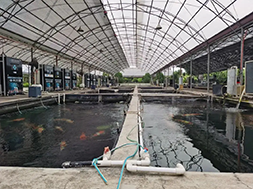
Aquaculture farmers often blindly use chlorine dioxide to disinfect fish ponds, a practice that frequently leads to the death of fish and shrimp. While chlorine dioxide is effective at killing bacteria, safe, and does not induce drug resistance—making it a common choice in aquaculture—it requires proper activation and precise dosage control prior to use. It should be applied on sunny days and never mixed with other substances. Ultimately, disinfection serves only as a symptomatic remedy; the true foundation of successful aquaculture lies in the proper management of water quality, pond sediment, and feeding practices.
Northeast of Huangshan Road and Chuangye Intersection, Small and Medium sized Enterprise Entrepreneurship Industrial Park, Shanwang Town, Linqu County, Weifang City, Shandong Province
Copyright © 2025 by Shandong Huashi Pharmaceutical Co., Ltd All Rights Reserved


 Language
 中文
中文 Русский
 Chlorine Dioxide Disinfectant Manufacturer


