Welcome to Our Factory for a Visit! Free customized disinfection solutions

Flour whitening and strengthening agents are commonly used improvers that whiten flour and strengthen its gluten. Potassium bromate was first used as a flour whitening agent in the United States in 1914, and has been used for over 90 years. However, with in-depth research into the properties of potassium bromate, it was discovered that it has carcinogenic effects , and therefore many countries have banned its use. Relevant departments in China have also paid close attention to this issue, with national standards specifying a maximum usage of 0.03 g/kg and requiring that it not be detected in the final food product. Therefore, the application of potassium bromate in flour whitening and strengthening has gradually lost its dominant position.
Benzoyl peroxide (BPO) has strong oxidizing properties, can bleach flour, is easy to weigh, and is convenient to use. The mechanism by which benzoyl peroxide whitens flour is as follows: it hydrolyzes under the action of air and enzymes, releasing reactive oxygen species, which oxidize and destroy the conjugated double bonds of pigments such as carotene and lutein in the flour, causing the unsaturated fat-soluble pigments in the flour to denature and lose their color. The disadvantage is that the benzoic acid produced after the hydrolysis of benzoyl peroxide releases reactive oxygen species remains in the flour, affecting the taste of flour products. The component ratio is: 10%–30% emulsifier, 15%–25% tripolyphosphate, 0%–5% calcium carbonate, 5%–25% stable solid chlorine dioxide, 0.2%–2% silicon dioxide, and 30%–60% starch (all percentages are by mass). Experiments show that after adding this additive to flour, the evaluation values such as formation time, stability time, tensile resistance, tensile strength ratio, and flour strength are significantly improved, with effects comparable to potassium bromate gluten strengthener. Furthermore, the whiteness of the produced flour is equivalent to that of flour treated with benzoyl peroxide. The finished steamed and baked products also show improvements in appearance, color, volume, specific volume, internal structure, palatability, and taste, especially in northern-style steamed buns. Moreover, this whitening and strengthening agent leaves no residue in food, is harmless to the human body, and is easy to use.
Using chlorine dioxide gas to treat flour can not only promote flour maturation and gluten development, but also bleach the flour. Moreover, no toxic residues harmful to the human body are produced after the reaction. It is a better chemical substitute for potassium bromate and benzoyl peroxide in flour improvement. However, chlorine dioxide gas is not easy to weigh and control, has a strong odor, which is extremely inconvenient for industrial applications. In addition, there is a lot of waste and loss during use, and the cost is high.
In summary, traditional flour whitening and strengthening agents, such as potassium bromate and benzoyl peroxide, all contain chemicals harmful to the human body and are not suitable for consumption. While chlorine dioxide gas has a good whitening and strengthening effect , its use is inconvenient and difficult to industrialize. Therefore, the market currently needs a new type of flour whitening and strengthening agent that is non-toxic, has significant effects, and is easy to use, to replace traditional products.
A novel flour whitening and strengthening agent is available, which mainly consists of stable solid chlorine dioxide, emulsifier, pH adjuster, and dispersant. It is formulated by compounding solid chlorine dioxide, calcium stearoyl lactylate (CSL)/sodium stearoyl lactylate (SSL), alkaline phosphate, calcium carbonate, and modified starch in a certain proportion to coordinate the effects of various components. The component proportions are: 10% to 30% emulsifier, 15% to 25% tripolyphosphate, 0% to 5% calcium carbonate, 5% to 25% stable solid chlorine dioxide, 0.2% to 2% silicon dioxide, and 30% to 60% starch (all percentages are by mass). Experiments show that after adding this additive to flour, the evaluation values such as formation time, stability time, tensile resistance, tensile strength ratio, and flour strength are significantly improved, with effects comparable to potassium bromate gluten strengthener. Furthermore, the whiteness of the produced flour is equivalent to that of flour treated with benzoyl peroxide. The finished steamed and baked products also show improvements in appearance, color, volume, specific volume, internal structure, palatability, and taste, especially in northern-style steamed buns. Moreover, this whitening and strengthening agent leaves no residue in food, is harmless to the human body, and is easy to use.

When using chlorine dioxide for disinfection in food production, the disinfectant concentration is a critical control point in the HACCP system. Test strips are convenient to use but have a relatively large margin of error; portable testing instruments offer higher accuracy but require regular calibration and maintenance. Enterprises can adopt a three-tiered monitoring solution: primarily online sensors, supplemented by portable instrument inspection and calibration, and emergency verification using test strips. This enables continuous monitoring, data retention and traceability, ensuring both disinfection effectiveness and food safety.
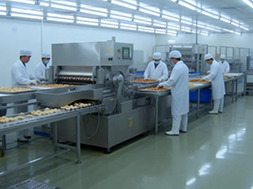
Chlorine dioxide fumigation can achieve thorough disinfection of food factory workshops, but it can easily produce residual odors that contaminate products. After 2-4 hours of disinfection, residual gases can be eliminated with the help of negative pressure exhaust, three-stage ventilation, neutralizing agents, and activated carbon. Raw material packaging should be removed or sealed in advance, easily absorbent parts should be protected, residues should be tested after disinfection, and sufficient ventilation should be ensured before production to guarantee food safety.

Microorganisms detected after disinfection in food factories often indicate secondary contamination. Do not blindly change disinfectants. Instead, identify the problem through three steps: on-site sampling and investigation, microbial tracing, and verification of the disinfection process. Then, classify and rectify the issues. Disinfection of workshops requires a combination of products, solutions, and services.
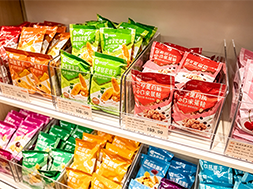
In 2022, a food factory in North China faced a downturn in offline channels and transformed its business by selling crispy pork powder on Douyin (TikTok). Within 18 months, it achieved monthly sales of 6 million yuan. Initially, the factory suffered losses from live-streaming sales, but managed to increase sales volume by supporting small and medium-sized influencers. It reversed the losses by reducing costs through various means and promoting high-margin packages. Optimizing shipping and after-sales service stabilized store traffic. Subsequently, it cultivated private domain traffic, expanded across multiple platforms, and even revitalized its offline channels. Traditional factories need to balance production and online operations to survive in the market.
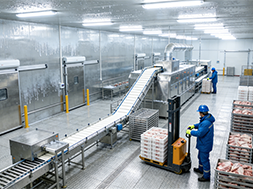
A large-scale recall of frozen food products in the US due to glass shards contaminated the food was highlighted. Physical foreign objects can carry microorganisms, cause temperature fluctuations on production lines, and create unsanitary areas in equipment, making frozen products susceptible to Listeria growth. Chlorine dioxide can achieve comprehensive disinfection of workshops, equipment, water, and tools, eliminating the risk of secondary contamination. Companies need to simultaneously conduct equipment inspections and standardized disinfection. Xiuba can provide complete disinfection solutions for the food industry.

AI is profoundly reshaping the food industry. Domestic and foreign food companies are implementing five major applications: intelligent production, AI quality inspection, formula development, supply chain prediction, and low-carbon production, to achieve cost reduction and quality improvement. In the future, the industry will move towards data assetization, full-chain collaboration, and the widespread application of AI technology in small and medium-sized factories.
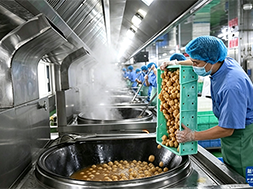
Mold easily grows in food factories during spring and summer, contaminating products and even producing carcinogenic toxins. This solution provides a complete practical guide to mold prevention in workshops, covering seven dimensions: environmental control, chemical and physical disinfection, equipment and raw materials, personnel management, and intelligent monitoring.
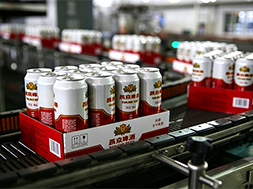
Biofilm growth in beverage and brewery pipelines can pose food safety risks. This article introduces the four-step CIP cleaning process, the advantages and disadvantages of various disinfectants, key points to avoid cleaning pitfalls, and recommends efficient disinfection solutions.
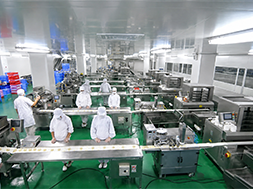
Chlorine dioxide is suitable for air and surface disinfection in food processing workshops. It has broad-spectrum and high-efficiency characteristics, but the concentration, time, ventilation and personnel protection must be strictly controlled, and the operation must be carried out in accordance with the instructions.

Disinfection in fruit and vegetable processing suffers from drawbacks such as the production of harmful byproducts, damage to nutritional value, and incomplete sterilization by traditional disinfectants. Chlorine dioxide, on the other hand, produces no toxic byproducts, is safe for use at low concentrations, and can also protect color and lock in nutrients. Xiuba food-grade chlorine dioxide boasts an activation rate exceeding 95%, a complete product range, and comprehensive certifications. With years of industry experience, Xiuba can provide complete solutions for cleaning and disinfecting food and fruits and vegetables.
Northeast of Huangshan Road and Chuangye Intersection, Small and Medium sized Enterprise Entrepreneurship Industrial Park, Shanwang Town, Linqu County, Weifang City, Shandong Province
Copyright © 2025 by Shandong Huashi Pharmaceutical Co., Ltd All Rights Reserved


 Language
 中文
中文 Русский
 Chlorine Dioxide Disinfectant Manufacturer


