Welcome to Our Factory for a Visit! Free customized disinfection solutions
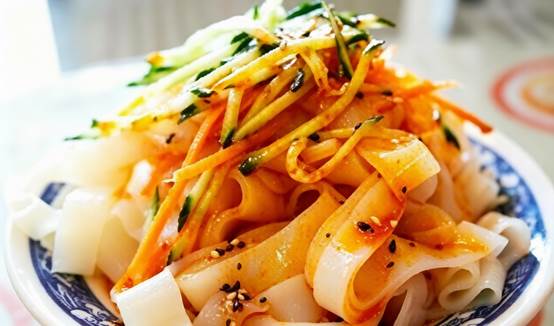
In the hot summer, a bowl of Liangpi can bring cool and happiness, which is a good choice for relieving the heat. However, Liangpi is easy to become sticky and sour during processing, which affects the taste and may cause food safety problems.
What on earth causes Liangpi to become sticky and sour?
Research shows that microorganisms in water are the main reason for the deterioration of Liangpi. If the production water is not thoroughly disinfected, bacteria and mold will multiply in large numbers, and decompose starch and protein, leading to deterioration of Liangpi. This problem has puzzled Liangpi enterprises for a long time and has become a key problem to be solved in the industry. The emergence of chlorine dioxide sterilization technology provides new solutions for Liangpi enterprises, and more and more enterprises begin to adopt this technology as a response strategy.
Chlorine dioxide: the "sterilization guard" in the processing of Liangpi
Sterilization principle: strong oxidation+efficient inactivation
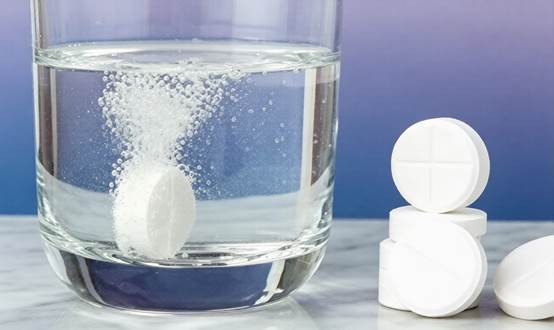
Chlorine dioxide (ClO ₂), as an internationally recognized green disinfectant, has shown outstanding performance in the field of sterilization. Its oxidation ability is 2.6 times that of chlorine gas, which can quickly penetrate microbial cell membranes, destroy intracellular protein and enzyme systems, and effectively eliminate bacteria, viruses, and fungi.
The sterilization efficiency of chlorine dioxide is extremely high, with a concentration of only 0.5-1mg/L, it can eliminate 99% of bacteria within 1 minute, and the sterilization efficiency is 10 times that of chlorine gas. In addition, microorganisms are not easily resistant to it, ensuring stability and reliability for long-term use.
For this reason, don't worry about the sterilization problem in food processing. I recommend trying Xiuba's stable chlorine dioxide solution. It uses high-purity formula, with strong and stable bactericidal power. The concentration can be precisely controlled according to different production processes to meet diverse process requirements. This solution is produced strictly in accordance with the GB/T20783-2006 standard and has excellent quality. Whether it is the water purification of Liangpi processing, the disinfection of sedimentation tank, or the entire food processing process, Xiuba Solution can deal with it efficiently and protect food safety production in an all-round way.
Application scenario: Full process protection from water source to sedimentation tank
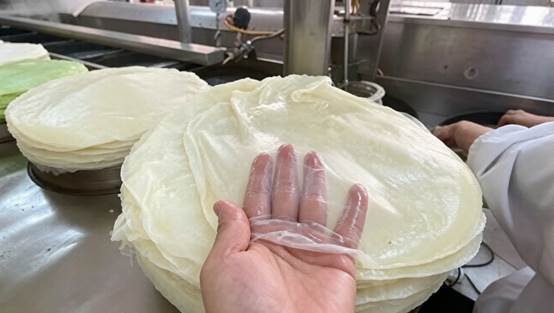
Chlorine dioxide plays an important role in the processing of Liangpi, especially in the sterilization of production water. Adding an appropriate amount of chlorine dioxide to water can effectively kill microorganisms, ensure clean and safe water source, and provide basic guarantee for Liangpi production. In addition, chlorine dioxide is also used for sedimentation tank disinfection. Regular treatment can reduce microbial growth and ensure water quality safety. Therefore, chlorine dioxide has built a comprehensive protection in the production of water for Liangpi.
Why can chlorine dioxide prevent Liangpi from getting sticky and sour?
Dual function: bactericidal and bacteriostatic
Chlorine dioxide can effectively prevent Liangpi from getting sticky and sour through its dual functions of sterilization and bacteriostasis. It can quickly eliminate bacteria in water, form a protective layer on the surface of Liangpi, inhibit microbial reproduction, extend the shelf life for 3-5 days, and maintain the color, elasticity and flavor of Liangpi.
Addressing the issue of traditional disinfectants
Traditional disinfectants such as sodium hypochlorite may have residual chlorine odor, affect taste, and even generate carcinogenic substance trichloromethane. Chlorine dioxide avoids these problems. It is non-toxic by-product, does not react with organics, and has high safety. It meets the GB2760-2006 standard, and is suitable for Liangpi processing industry.
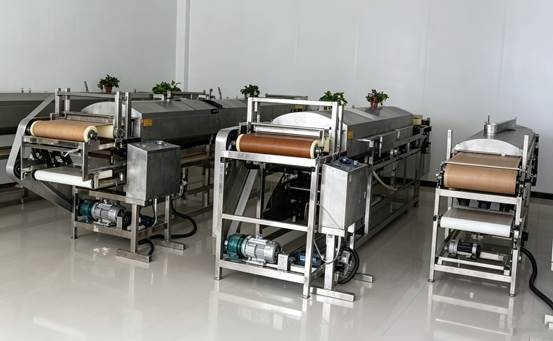
Water quality safety: the "lifeline" of Liangpi production
In addition to chlorine dioxide sterilization technology, Liangpi processing also needs to ensure water quality safety from multiple dimensions.
Core issue 1: Water source selection
Enterprises should prioritize the use of municipal water supply, as it has undergone strict treatment and testing to ensure stable and safe water quality. If self provided water sources are required, key indicators such as heavy metals and microorganisms must be regularly tested to ensure compliance with production standards. The location of water source should be far away from pollution sources, such as industrial wastewater discharge area and pesticide residue farmland, to ensure the quality and safety of Liangpi.
Core issue 2: Water quality pretreatment
Water quality pretreatment is very important to the production of Liangpi, including three-stage filtration: sand filtration, activated carbon filtration and precision filtration. Sand filtration removes large particle impurities, activated carbon adsorbs odors and harmful substances, and precision filtration removes small particles and microorganisms to ensure pure water quality. Hard water softening treatment prevents the formation of scale, avoids equipment blockage and affects sterilization efficiency, and ensures smooth production.
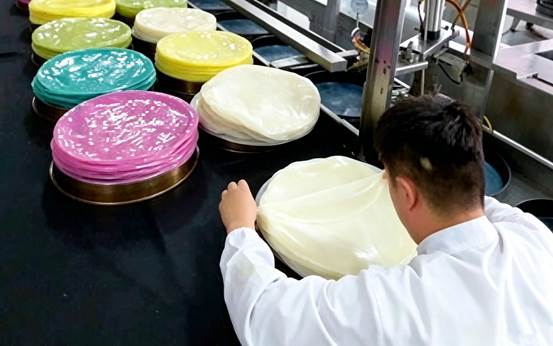
Core issue 3: Daily management
Enterprises need to establish a strict water quality monitoring mechanism, testing key indicators such as total bacterial count, residual chlorine, turbidity, etc. every week, and adjusting them in a timely manner when the indicators are abnormal to ensure that the water quality meets the standards. At the same time, pipelines and water storage tanks should be regularly cleaned to prevent the growth of microorganisms in biofilms, which can cause secondary pollution and affect product quality. Regular cleaning is a key measure to ensure water quality safety.
Three key points for scientific use of chlorine dioxide
The first element: precise control of concentration
Accurate control of chlorine dioxide concentration is crucial. Enterprises should adjust the dosage according to the actual water quality, with a recommended range of 0.2-1.0mg/L. Insufficient concentration may not effectively kill bacteria, while excessive concentration may affect product quality or pose safety risks. Therefore, precise control of concentration is the key to ensuring the effectiveness of chlorine dioxide.
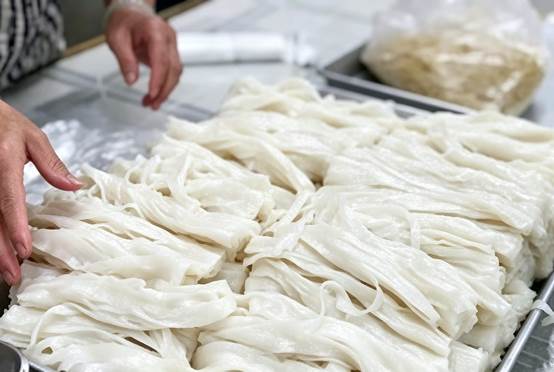
Second element: Avoid mixing with acidic substances
When using chlorine dioxide, it is necessary to avoid mixing with acidic substances to avoid reducing its bactericidal effect. Enterprises should store chlorine dioxide separately from acidic substances and follow correct operating procedures to ensure its bactericidal performance.
The third element: employee training
Employees directly operate chlorine dioxide, and its standardization affects the safety and effectiveness of use. Therefore, professional training must be provided to employees, including the properties of chlorine dioxide, usage methods, precautions, and emergency measures. Ensure that employees are proficient in operating procedures to ensure safe and effective use of chlorine dioxide, give play to its sterilization advantages, and ensure the quality and safety of Liangpi production.
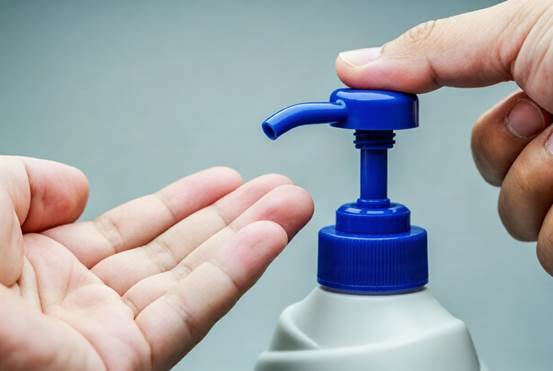
Liangpi, as a popular local specialty food, is not only a delicacy, but also carries profound regional culture and people's good memories. However, to ensure the quality of Liangpi, we cannot do without the strong support of modern technology.
Chlorine dioxide sterilization technology is becoming the "invisible guardian" of Liangpi processing industry due to its advantages of high efficiency, safety and low cost. It helps enterprises solve technical problems, achieve cost reduction and efficiency improvement, and is also a commitment to consumer health. The combination of technology and traditional food will make Liangpi more popular in the new era and bring consumers safe and delicious enjoyment.
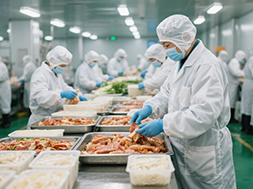
When using chlorine dioxide for disinfection in food production, the disinfectant concentration is a critical control point in the HACCP system. Test strips are convenient to use but have a relatively large margin of error; portable testing instruments offer higher accuracy but require regular calibration and maintenance. Enterprises can adopt a three-tiered monitoring solution: primarily online sensors, supplemented by portable instrument inspection and calibration, and emergency verification using test strips. This enables continuous monitoring, data retention and traceability, ensuring both disinfection effectiveness and food safety.
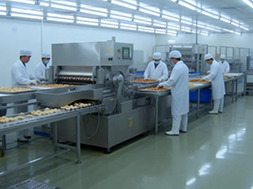
Chlorine dioxide fumigation can achieve thorough disinfection of food factory workshops, but it can easily produce residual odors that contaminate products. After 2-4 hours of disinfection, residual gases can be eliminated with the help of negative pressure exhaust, three-stage ventilation, neutralizing agents, and activated carbon. Raw material packaging should be removed or sealed in advance, easily absorbent parts should be protected, residues should be tested after disinfection, and sufficient ventilation should be ensured before production to guarantee food safety.
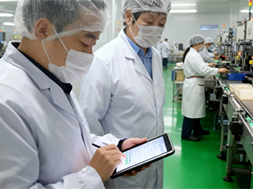
Microorganisms detected after disinfection in food factories often indicate secondary contamination. Do not blindly change disinfectants. Instead, identify the problem through three steps: on-site sampling and investigation, microbial tracing, and verification of the disinfection process. Then, classify and rectify the issues. Disinfection of workshops requires a combination of products, solutions, and services.
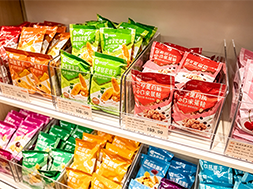
In 2022, a food factory in North China faced a downturn in offline channels and transformed its business by selling crispy pork powder on Douyin (TikTok). Within 18 months, it achieved monthly sales of 6 million yuan. Initially, the factory suffered losses from live-streaming sales, but managed to increase sales volume by supporting small and medium-sized influencers. It reversed the losses by reducing costs through various means and promoting high-margin packages. Optimizing shipping and after-sales service stabilized store traffic. Subsequently, it cultivated private domain traffic, expanded across multiple platforms, and even revitalized its offline channels. Traditional factories need to balance production and online operations to survive in the market.
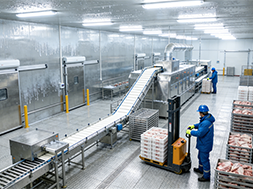
A large-scale recall of frozen food products in the US due to glass shards contaminated the food was highlighted. Physical foreign objects can carry microorganisms, cause temperature fluctuations on production lines, and create unsanitary areas in equipment, making frozen products susceptible to Listeria growth. Chlorine dioxide can achieve comprehensive disinfection of workshops, equipment, water, and tools, eliminating the risk of secondary contamination. Companies need to simultaneously conduct equipment inspections and standardized disinfection. Xiuba can provide complete disinfection solutions for the food industry.
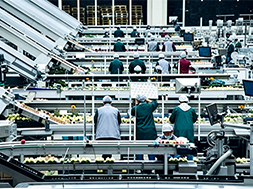
AI is profoundly reshaping the food industry. Domestic and foreign food companies are implementing five major applications: intelligent production, AI quality inspection, formula development, supply chain prediction, and low-carbon production, to achieve cost reduction and quality improvement. In the future, the industry will move towards data assetization, full-chain collaboration, and the widespread application of AI technology in small and medium-sized factories.
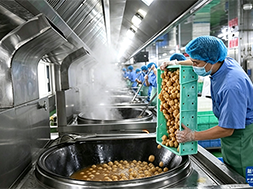
Mold easily grows in food factories during spring and summer, contaminating products and even producing carcinogenic toxins. This solution provides a complete practical guide to mold prevention in workshops, covering seven dimensions: environmental control, chemical and physical disinfection, equipment and raw materials, personnel management, and intelligent monitoring.
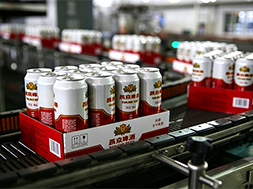
Biofilm growth in beverage and brewery pipelines can pose food safety risks. This article introduces the four-step CIP cleaning process, the advantages and disadvantages of various disinfectants, key points to avoid cleaning pitfalls, and recommends efficient disinfection solutions.
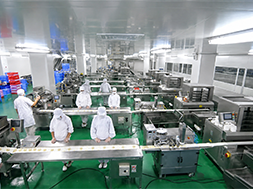
Chlorine dioxide is suitable for air and surface disinfection in food processing workshops. It has broad-spectrum and high-efficiency characteristics, but the concentration, time, ventilation and personnel protection must be strictly controlled, and the operation must be carried out in accordance with the instructions.
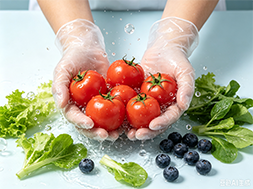
Disinfection in fruit and vegetable processing suffers from drawbacks such as the production of harmful byproducts, damage to nutritional value, and incomplete sterilization by traditional disinfectants. Chlorine dioxide, on the other hand, produces no toxic byproducts, is safe for use at low concentrations, and can also protect color and lock in nutrients. Xiuba food-grade chlorine dioxide boasts an activation rate exceeding 95%, a complete product range, and comprehensive certifications. With years of industry experience, Xiuba can provide complete solutions for cleaning and disinfecting food and fruits and vegetables.
Northeast of Huangshan Road and Chuangye Intersection, Small and Medium sized Enterprise Entrepreneurship Industrial Park, Shanwang Town, Linqu County, Weifang City, Shandong Province
Copyright © 2025 by Shandong Huashi Pharmaceutical Co., Ltd All Rights Reserved


 Language
 中文
中文 Русский
 Chlorine Dioxide Disinfectant Manufacturer


