Welcome to Our Factory for a Visit! Free customized disinfection solutions
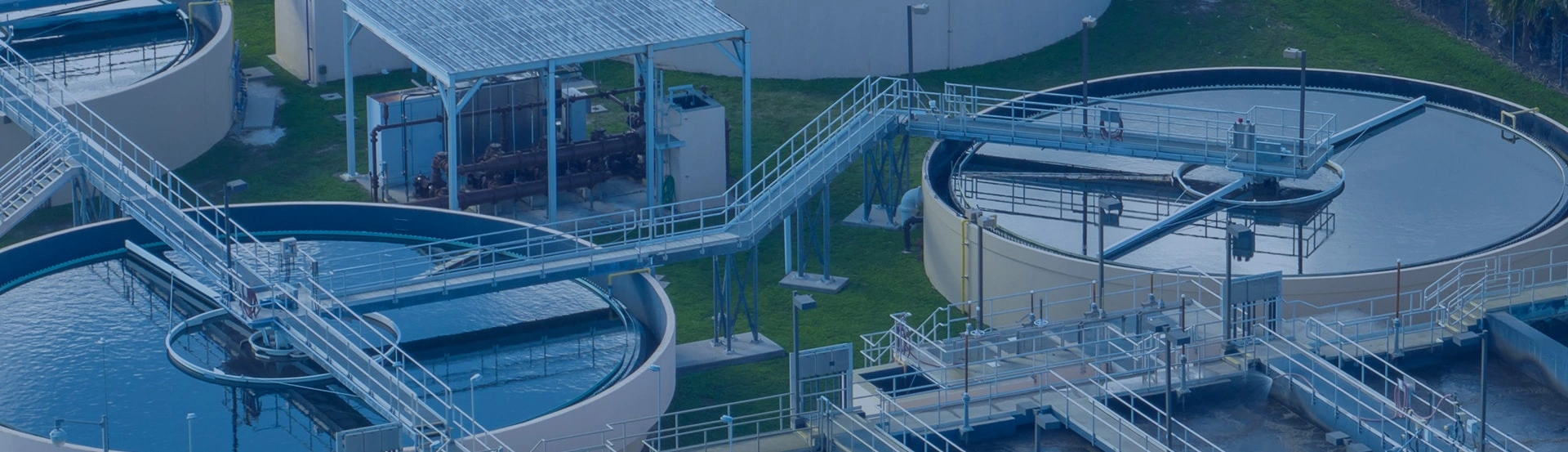
Once the drinking water encounters sudden pollution, the most important thing is to restore the safe water supply as soon as possible, whether it is the surge of microorganisms in the water source caused by rainstorm, the excessive organic matter caused by industrial leakage, or the secondary pollution caused by the damage of the pipe network. In the front-line work of water treatment in the past 40 years, we have participated in the emergency disposal of water pollution for many times. The most profound experience is that emergency disinfection must simultaneously meet the three requirements of quick effect, comprehensive sterilization and no toxic by-products.
Among various disinfection methods, chlorine dioxide is the most reliable and practical choice to deal with sudden drinking water pollution. Combined with many years of on-site operation experience, I have explained its actual use in emergency water supply treatment completely.
Why is chlorine dioxide preferred for emergency water supply?
People who have been doing water treatment for a long time know that the traditional liquid chlorine and sodium hypochlorite have obvious shortcomings in treating polluted water sources. When ammonia nitrogen in the water is high (it is common when rainstorm is poured back and farmland sewage flows in), chlorine will soon turn into chloramine, and the bactericidal capacity will drop sharply. What is more dangerous is that when there are organic substances such as humic acid in the water source, chlorination is easy to produce carcinogens such as chloroform. In case of emergency, it is equivalent to just solving the pollution and bringing new risks.
Chlorine dioxide is completely different from them. It is a strong oxidant, not an ordinary chlorination agent. It will not hydrolyze in water. It can directly penetrate the cell membrane of bacteria and viruses in molecular form and completely inactivate the bacteria. The most important point is that it will not generate hazardous substances such as trihalomethanes with organic substances in the water. In terms of emergency water supply safety, this is difficult to be replaced by other chemicals.
Standard operating procedures for chlorine dioxide in emergency situations
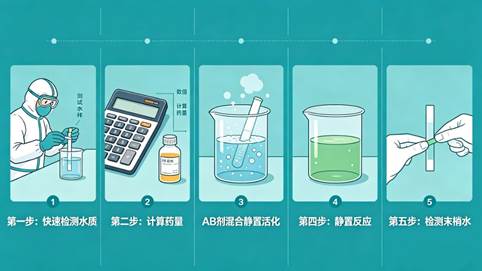
The emergency site is short of time, but the steps should not be disordered. In actual disposal, we generally follow five steps:
Step 1: quickly judge the water quality and determine the risk level
The first thing to do on site is not to add chemicals, but to quickly measure turbidity pH、 Oxygen consumption and ammonia nitrogen. If the water is particularly turbid, it must be coagulated and precipitated first to reduce the turbidity below 1ntu, otherwise chlorine dioxide will be consumed by sediment, and the amount really used for sterilization is not enough.
Step 2: calculate the dosage accurately, not by feeling
The most taboo for emergency dosing is "about a little". The usual dosage of chlorine dioxide in drinking water is generally 0.1~0.5mg/l. In case of sudden microbial pollution, the end margin of the pipe network shall be controlled within the safe range of 0.1~0.8mg/l. Our practical experience is that for seriously polluted water sources, the front-end dosage can be temporarily increased to 1.0~2.0mg/l.
Step 3: correct activation and dosing, which is the most critical step
Chlorine dioxide powder and ab agent must be activated before they can release effective components, which is the most easily overlooked detail on site. The correct method is: put agent a and agent B into the activation container according to the proportion, add clean water and let it stand for 10-15 minutes, wait until the solution turns into a stable dark yellow green, and then put it into the water inlet pipe with a metering pump. Directly pouring the dry powder into the water is not only a waste, but also can not achieve the emergency disinfection effect.
Step 4: leave enough reaction time to ensure thorough killing
After dosing, the water should stay in the pool or pipe for at least 30 minutes. In case of high-risk pollution such as virus and Cryptosporidium, it should be extended to more than 45 minutes to ensure that the oxidation and sterilization are completely completed.
Step 5: the end water must be tested to be qualified before water supply
Before water supply is restored, samples must be taken at the farthest end of the pipe network for inspection. It is necessary to ensure that the residual chlorine dioxide is not less than 0.1mg/l (to ensure that there is still continuous sterilization capacity), and also to check the microbial indicators. Only when both items are qualified can water be supplied to residents formally.
Emergency material reserve and product selection
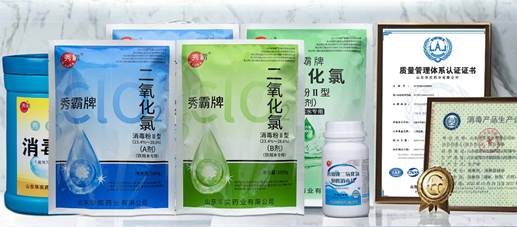
People who have been on the scene for many years know that there are two things that people fear most about sudden pollution: equipment falling off the chain and unreliable chemicals. This is also the reason why local emergency departments and waterworks will include chlorine dioxide disinfectant in the emergency supplies that must be stored.
The stability, compliance and content of disinfection products for emergency use are more important than anything else. In many processes, such as flood control and drought relief, emergency water supply quality in case of sudden water source pollution, we will give priority to recommend products with regular health license and approval documents for drinking water health and safety products and stable ingredients. Xiuba chlorine dioxide disinfectant is used in many emergency situations. Xiuba also produces tablets, powders, solutions and other dosage forms according to different needs, which is convenient for quick access in different situations. It has sufficient effective content, fast activation speed, and less impurities after dissolution. The dosing calculation has a solid foundation and will not deviate. Whether it is the emergency dosing of centralized water plants or the decentralized temporary water supply in villages and towns, it can adapt quickly and maintain a stable disinfection effect under complex water quality such as high turbidity, low temperature and high organic matter.
There is no room for carelessness in emergency disposal. If the effective ingredients of the drug are poor, the whole dosage will be miscalculated and the consequences will be unimaginable. Therefore, when selecting emergency supplies, we will identify manufacturers with strength and complete qualifications. Shandong Huashi Pharmaceutical Co., Ltd. is not only a central emergency reserve material unit, but also a high-tech enterprise, specialized and special new enterprise. Its products have strict standards from R & D, production to quality control. As its main emergency disinfection product, xiuba chlorine dioxide can withstand the rigorous test of emergency scenarios and is more reliable to use.
Important reminder: do not "overdose" in emergency disinfection
All year round, I have to remind a common misunderstanding: chlorine dioxide is safe, but the more it is added, the better.
In case of pollution, some people are nervous and will deliberately increase the dosage, resulting in the residual chlorine dioxide in the terminal water exceeding 0.8mg/l. Excessive water will make the water pungent and taste worse. Some people will feel slightly uncomfortable after drinking it. The purpose of emergency disinfection is to make water safe, not to turn water into liquid medicine. Adding according to data and controlling according to indicators are truly professional practices.
Sudden drinking water pollution is a real test of a city's emergency capacity. Only when chlorine dioxide is used correctly and correctly, coupled with such stable, compliant and adaptable emergency disinfection materials as xiuba brand chlorine dioxide, can we truly keep the people's drinking water safety line when the crisis comes.
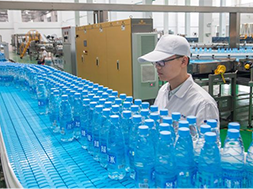
Chlorine dioxide can efficiently disinfect drinking water, is not easy to generate carcinogenic disinfection by-products, and will produce chlorite and other residues, which must comply with the national standard limits. It shall be accurately added according to the water quality and equipped with qualified equipment and process. The safety of compliant use is high. Water supply enterprises need to do a good job in control and monitoring to ensure the safety of water quality.
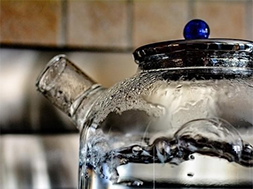
Chlorine dioxide is a who Certified grade A1 safe disinfectant with high sterilization efficiency, few harmful by-products, strong water quality adaptability and multiple water purification functions; Compared with traditional chlorine disinfection, it is safer and more environmental friendly, and can be widely used in drinking water, sewage treatment, food and beverage disinfection and other fields.
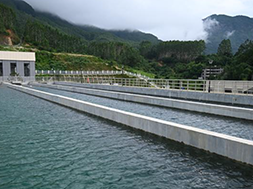
Chlorine dioxide can sterilize and remove odors in water treatment plants and is unlikely to generate trihalomethanes. However, in practical applications, it can fail to remove odors or even produce new unpleasant smells. Organic matter in the water source, bromide ions, and low temperatures can affect treatment effectiveness. Furthermore, its removal capacity for geosmin and 2-methylisoborneol is limited, and improper dosage can also cause odor problems. Water treatment plants need to strengthen water quality monitoring, dynamically adjust dosages, and, when necessary, combine ozone-activated carbon processes to ensure that the odor of the treated drinking water meets standards.
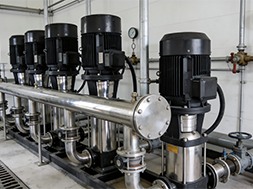
When adding chlorine dioxide to the water pumping station to maintain residual chlorine in the pipeline network, it is necessary to avoid pipeline corrosion caused by local high concentrations. The dosage should be accurately controlled by flow-linked dosing, pipeline mixing, and online residual chlorine monitoring, while also paying attention to under-scale corrosion, thus balancing disinfection and pipeline protection.
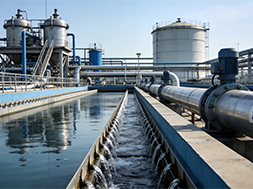
Pipeline network renovations can easily alter the hydraulic conditions of the network, increasing flow velocity and creating stagnant zones that consume chlorine dioxide, leading to fluctuations in water quality. Water plants can ensure the quality of water supplied to the end points through monitoring and prediction, dynamic chemical dosing, pipeline flushing, and the activation of contingency plans.
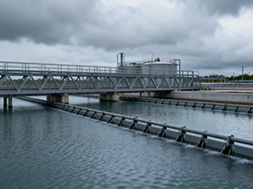
Traditional chlorine disinfection is prone to producing carcinogenic halogenated by-products; chlorine dioxide oxidizes and kills bacteria, with almost no such by-products, good inactivation effect, and the ability to remove odor and inhibit algae, but it generates by-products such as chlorite, requires higher raw material and operation and maintenance costs, and is suitable for water plants that can be upgraded and managed in a coordinated manner, rather than being simply and directly replaced.
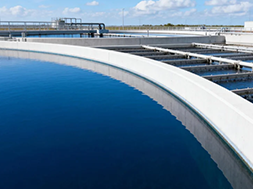
This study simulates a scenario where a small town's water plant experiences a sudden pollution outbreak caused by medical wastewater and the failure of chlorine dioxide disinfection. It analyzes the reasons why pollutants consume disinfectant and provides four-step emergency response measures. Furthermore, it proposes long-term improvement suggestions in terms of monitoring, supplies, contingency plans, and drills to enhance the emergency response capabilities of small and medium-sized water plants.
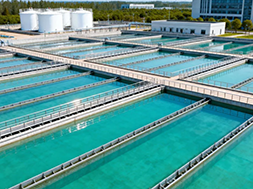
Switching from sodium hypochlorite to chlorine dioxide disinfection in water plants is not just about replacing equipment; it's a complete system upgrade. Chlorine dioxide disinfection is more effective, produces fewer byproducts, and has lower overall costs. However, many water plants only replace the hardware, neglecting personnel training and adapting management systems. The core of this transformation is shifting from experience-based to scientific operation.
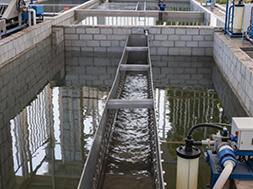
The actual dosage of chlorine dioxide at water treatment plants often exceeds the theoretical value, influenced by factors such as reducing agents in the water, sediment in the pipe network, water quality fluctuations, and byproduct consumption. By leveraging monitoring and local operational data to optimize dosage, we can provide water quality assessments and customized dosage solutions.
Northeast of Huangshan Road and Chuangye Intersection, Small and Medium sized Enterprise Entrepreneurship Industrial Park, Shanwang Town, Linqu County, Weifang City, Shandong Province
Copyright © 2025 by Shandong Huashi Pharmaceutical Co., Ltd All Rights Reserved


 Language
 中文
中文 Русский
 Chlorine Dioxide Disinfectant Manufacturer