Welcome to Our Factory for a Visit! Free customized disinfection solutions

In 1811, Humphrey Davey first synthesized and collected chlorine dioxide gas by reacting an aqueous solution of potassium chlorate with hydrochloric acid. In 1834, Watt and Burgess discovered the bleaching properties of the compound. The industrial application of chlorine dioxide was first successfully achieved in pulp bleaching, and then extended to textile fibers, with these two industries accounting for more than 95% of chlorine dioxide production.
The application of chlorine dioxide in water treatment began in 1944 when the Niagara Falls Water Plant in the United States successfully used chlorine dioxide to control the odor caused by algae growth and phenol pollution in the water. This demonstrated the significant advantages of chlorine dioxide in drinking water disinfection, especially in treating raw water containing phenol and odor.
Subsequently, extensive research was conducted on the disinfection mechanism and applications of chlorine dioxide. Chlorine dioxide has a wide range of uses, and it is currently used both domestically and internationally for pulp and fiber bleaching; treatment of drinking water, industrial wastewater, hospital sewage, and industrial circulating cooling water; disinfection, sterilization, and algae removal in poultry slaughtering, indoor sanitation, and beer manufacturing; oil extraction; food preservation; poultry and livestock production; aquaculture; and plant preservation.
1.1 Used for drinking water and industrial water treatment
Chlorine is a commonly used oxidizing disinfectant in water treatment, but its disinfection has several drawbacks: chlorine reacts with humic acids in water to form carcinogenic trihalomethanes (THMs); it reacts with phenols to form chlorophenols with an unpleasant odor; it reacts with ammonia in water to form chloramines with low disinfection efficacy; its disinfection efficacy decreases significantly at high pH levels; and long-term use can lead to antibiotic resistance in some microorganisms. Therefore, there has been considerable interest and extensive research into alternative disinfectants, with chlorine dioxide attracting significant attention in recent years. Due to its numerous advantages over chlorine-based disinfectants, including high safety, chlorine dioxide has been approved for use in a wide range of fields in many countries since the 1980s. In addition to its bactericidal effect on common bacteria, chlorine dioxide is also effective against spores and hepatitis A and B viruses. Furthermore, chlorine dioxide can deodorize, detached, decolorize, remove iron and manganese, and reduce the formation of carcinogens in water, making it an ideal disinfectant for drinking water. Since chlorine dioxide was first used to treat drinking water in Europe in 1950, it has now been adopted by thousands of water plants.
The application of chlorine dioxide in industrial water treatment systems abroad began in the 1970s. The advent of stable chlorine dioxide products paved the way for its application in industrial water treatment. Its dosing method and testing system are the same as chlorine, and it is hoped that chlorine dioxide will soon replace chlorine in industrial water treatment in my country. Microorganisms present in industrial cooling water and wastewater cause microbial-induced corrosion of equipment, resulting in significant economic losses. To inhibit the growth and reproduction of microorganisms, biocides are needed in water treatment systems. Chlorine dioxide is a new and effective biocide with a strong killing effect on the main bacteria present in industrial water. Compared with traditional chlorine biocides, it has the following advantages: ① Lower dosage, better bactericidal effect, and faster action. ② The bactericidal effect is not affected by pH, making it particularly suitable for alkaline water treatment systems such as those for synthetic ammonia. ③ It does not produce organochlorine carcinogens during sterilization, meeting environmental protection requirements. ④ Chlorine dioxide has stronger oxidizing power than chlorine and can remove cyanide, phenols, sulfides, and malodorous substances from industrial wastewater. ⑤ Reduced energy consumption and treatment costs.
Although producing 1 kg of chlorine dioxide requires 11.6 kW · h of energy, while producing 1 kg of chlorine gas requires 2 kW · h, the daily dosage of chlorine dioxide for industrial cooling water is only a fraction of the dosage of chlorine gas, or even a fraction of the dosage. Therefore, from a total cost perspective, chlorine dioxide is more economical than chlorine gas.
1.2 Used in the paper industry
Chlorine dioxide is an excellent bleaching agent, currently used almost entirely in North America, Western Europe, and Japan to replace chlorine for bleaching pulp. As a bleaching agent, chlorine dioxide thoroughly removes pigments and impurities with excellent results. Due to its gentle nature and lack of fiber damage, no other bleaching agent has been found to date to match it. It has been reported that the paper industry's use of stabilized chlorine dioxide can also effectively disperse viscous and inorganic deposits in pulp, thereby eliminating the formation of solid lumps and improving paper quality.
1.3 Used in the medical industry
In medicine, stabilized chlorine dioxide can be used for sterilizing medical devices, contact lenses, and for embalming corpses in funeral homes. It can also treat gray hair; drugs derived from stabilized chlorine dioxide and estradiol or estradiol can promote the growth of melanin cells in hair, showing significant effects in treating gray hair. After six months of treatment, hair can almost completely turn black, with long-lasting results.
1.4 Used in the food industry
The World Health Organization classifies stabilized chlorine dioxide as a Class A1 highly effective and safe disinfectant, and it is widely used in the food industry abroad. Soaking meat and seafood in stabilized chlorine dioxide can kill pathogens without modifying proteins, thus effectively extending shelf life and achieving a preservation effect. Stabilized chlorine dioxide can also be used for disinfecting water used in fish and shrimp farming, and for sterilizing dairy farms, food processing equipment, pipelines, storage tanks, and mixing tanks. Adding an appropriate amount of stabilized chlorine dioxide to the wall paint in food production workshops can effectively prevent mold growth.
Studies have shown that stable chlorine dioxide has a good killing effect on Escherichia coli, Salmonella typhi, Mycobacterium tuberculosis, poliovirus, hepatitis A and B viruses, herpesvirus, and Giardia lamblia cysts. The disinfection and sterilization effect of stable chlorine dioxide is achieved through the release of hypochlorous acid molecules and nascent oxygen to achieve a strong oxidizing effect, oxidizing and decomposing the amino acids in the proteins of pathogens and viruses. It also reacts with inorganic and organic matter in the air, water, or on various surfaces, while having virtually no effect on higher animal cells and plant fibers. In particular, the reactants after disinfection are essentially non-toxic, attracting strong interest and widespread attention. Long-term practice has proven that it is currently the most ideal chemical disinfectant and sterilizer, and will be more widely used in disinfection and sterilization in industries such as catering, food preservation, medical care, and aquaculture.
1.5 Used in the daily chemical industry
A series of new solid chlorine dioxide products have been developed. For example, chlorine dioxide can be added to various surfactants to create bactericidal detergents, whose cleaning power far exceeds that of ordinary laundry detergents. It can also kill various infectious germs, making it very popular with housewives. Indoor air conditioning systems, adding a small amount of solid chlorine dioxide can keep the indoor air fresh. Chlorine dioxide has many other applications, such as in leather depilatories to enhance washing functions. Slow-release solid chlorine dioxide products can also be used as air fresheners in homes or public places, significantly improving the living environment. It can also be sprayed onto clothing, books, or decorative materials, or mixed into precast building coatings for anti-corrosion and anti-insect properties.
1.6 Used for wastewater treatment
Due to its strong oxidizing properties and the fact that it does not generate carcinogenic or mutagenic substances, chlorine dioxide's application is expanding from a single disinfectant field to the broader area of water treatment. There are increasing reports on the application and research of chlorine dioxide in wastewater treatment. Its mechanism largely involves utilizing its strong oxidizing properties to degrade organic pollutants in water into a few volatile or non-volatile organic compounds, which are then further degraded into carbon dioxide and water. Chlorine dioxide has achieved good results in the treatment of coal gas wastewater, high-concentration cyanide-containing wastewater, p-aminoanisole wastewater, phenol and formaldehyde wastewater, and dyeing and printing wastewater.
Although chlorine dioxide possesses strong oxidizing power, studies have shown that its reaction with organic and inorganic substances exhibits strong selectivity, and its oxidizing power is highly correlated with the types of substituents on the organic matter. This limitation restricts the widespread application of chlorine dioxide in the oxidative degradation of organic wastewater. The reason for this may be that the activation energy of the reaction between chlorine dioxide and certain organic substances is too high, making the reaction difficult to occur. Therefore, researching suitable catalysts to lower the reaction activation energy is a major research direction for chlorine dioxide in the oxidative treatment of organic wastewater.
1.7 Used for other purposes
In addition, Feng Jingxian et al. used a strong oxidizing, stable chlorine dioxide solution to convert sulfur in kerosene into odorless kerosene. Chlorine dioxide is used in oilfield production-enhancing fluids and as a water injection unblocking agent. Chlorine dioxide can also be used to degrade pesticides and recalcitrant substances such as polycyclic aromatic hydrocarbons (PAHs).
In summary, there are various methods for preparing chlorine dioxide, and the development and application of chlorine dioxide are very active abroad. my country should accelerate the research and development of various chlorine dioxide products to achieve broad economic and environmental benefits.
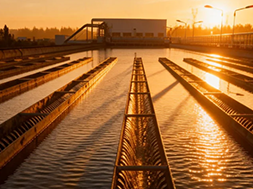
Chlorine dioxide disinfection pipelines in water plants are prone to blockage due to salt crystallization caused by disproportionation reactions. This can be prevented by optimizing the purity of the solution, designing the pipeline properly, regularly flushing and insulating, and conducting thorough inspections and chemical cleaning (hydrochloric acid should not be used). These multi-dimensional measures can help prevent crystallization and ensure the stable operation of the disinfection system.
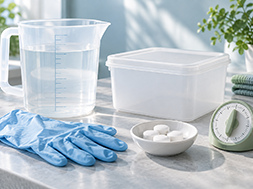
The pestis pestis leakage incident in the Russian laboratory reminded the public that pestis can be spread by fleas, infected animals, and droplets. The prevention and control should focus on the environment and rat flea management, instead of blind disinfection and sterilization. Xiuba chlorine dioxide disinfection tablet can only be used for preventive disinfection of object surface according to instructions. It has no special killing effect of pestis bacilli, and cannot be used as special epidemic prevention materials for pestis. It needs to be operated in a standardized way. Do not over disinfect due to network rumors.
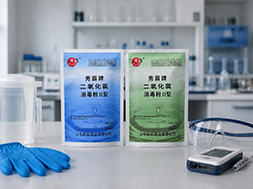
In 2026, Xiuba proposed that it is not enough to simply meet product qualification requirements; it is necessary to promote "green" practices in product selection, operation, safety, and record-keeping, rely on actual measurement data to verify effectiveness, strictly adhere to safety boundaries, and promote high-quality development of the industry.

Traditional chlorine preparations are prone to producing harmful chlorination by-products and will eventually be phased out; Chlorine dioxide relies on a unique electron transfer oxidation mechanism, producing almost no organic chlorides, with high sterilization efficiency and lower risk of by-products. Xiuba relies on years of large-scale production and university research cooperation, with complete product qualifications, strict control of disinfection residues, and a balance between effective disinfection and ecological green, in line with the industry's green and low-carbon development trend.

Focusing on three core selection dimensions—cost, safety, and broad-spectrum disinfection—this article compares chlorine dioxide with disinfectants such as ozone and peracetic acid, highlighting its significant advantages in terms of sterilization mechanism, usage safety, and long-term cost. The product is suitable for various scenarios including water supply, food processing, and wastewater treatment. Addressing market issues of misleading labeling, the article provides purchasing advice and recommends Xiuba Chlorine Dioxide, a brand with deep industry experience and complete certifications.
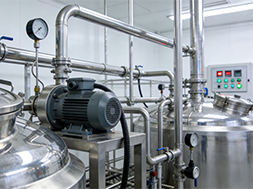
This article points out that during CIP cleaning, adding chlorine dioxide before alkaline washing and during acid-alkali rinsing has poor effects; the optimal point is after acid washing, when the acidic clean environment is suitable for the agent, and it is also necessary to drain residual acid, control the temperature, and circulate for 15-20 minutes to improve the disinfection effect.
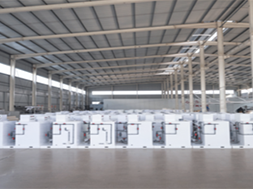
This article compares the applicable scenarios of chemical and electrolytic chlorine dioxide generators, explaining the manufacturer selection criteria from five dimensions: qualifications, accessories, case studies, after-sales service, and process compatibility. It also introduces five major development trends, including intelligent and modular equipment. Xiuba XB series equipment complies with GB 28931-2024 standards, has complete qualifications, and offers 24/7 full-process service. It is suitable for multiple industries and can reduce maintenance costs and operational risks.
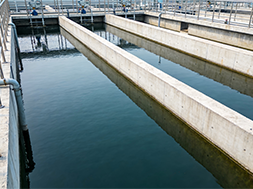
Chlorine dioxide is safe, efficient, and suitable for multiple industries, with the market continuously expanding and benefiting from ongoing policy support.Shandong Huashi Pharmaceutical's Xiuba division has been deeply involved in the industry for many years and can provide a full range of chlorine dioxide disinfection products and related technical services.
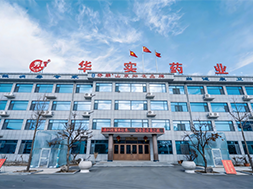
Xiuba has been deeply involved in chlorine dioxide disinfection for nearly 30 years, possessing mature technology and a rich product line. The brand has completed a strategic transformation, shifting from simply selling products to providing customized disinfection services throughout the entire process, integrating industry resources, and specifically addressing various disinfection pain points for companies in the drinking water, food, and medical fields.
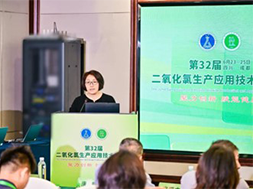
Shandong Huashi Pharmaceutical took part in the 32nd National Chlorine Dioxide Technology Symposium held in Chengdu this June. Our technical team shared professional research on chlorine dioxide disinfection for medical and public health scenarios and exchanged industry technologies with over 70 experts and manufacturers. This participation fully proves our solid R&D strength and professional standing in the chlorine dioxide disinfection field.
Northeast of Huangshan Road and Chuangye Intersection, Small and Medium sized Enterprise Entrepreneurship Industrial Park, Shanwang Town, Linqu County, Weifang City, Shandong Province
Copyright © 2025 by Shandong Huashi Pharmaceutical Co., Ltd All Rights Reserved


 Language
 中文
中文 Русский
 Chlorine Dioxide Disinfectant Manufacturer


