Welcome to Our Factory for a Visit! Free customized disinfection solutions

Chlorine dioxide bleaching technology is widely used worldwide due to its unique oxidizing properties and advantages such as low wastewater color and low levels of harmful substances. Theoretically , ClO2 has an effective chlorine content as high as 263%, while ordinary bleaching powder has an effective chlorine content of no more than 42%, bleaching powder concentrate has an effective chlorine content of 60%–75%, and sodium chlorite has a theoretical effective chlorine content of 157%. Comparatively, ClO2 has a much higher bleaching efficiency. The oxidation potential of ClO2 lies between that of pigments and impurities attached to fibers and that of cellulose. When bleaching silk fabrics and pulp , it can oxidize and remove pigments and impurities without interacting with or damaging the fibers. Therefore, ClO2 is suitable for bleaching high-strength, high-brightness high-grade pulp. In traditional bleaching agents, chlorine and hypochlorous acid have higher oxidation potentials than cellulose itself. Over time, the fibers themselves are oxidized, leading to fiber quality deterioration. The bleached pulp fails to meet the strength and brightness requirements for producing high-grade paper. Furthermore, it generates potent pollutants such as chlorophenols and chloramines, which have teratogenic or carcinogenic effects, seriously endangering fish and other aquatic life and polluting the ecological environment. However, in the past decade, no toxic chlorinated organic compounds have been found in the ClO2 bleaching process. It has not only improved paper quality and competitiveness but also significantly reduced environmental pollution.
Since the world's first pulp and paper mill using ClO2 to bleach pulp in 1946, countries with advanced pulp and paper technology have largely replaced CEH (chlorination-alkali treatment-hypochlorite bleaching) or CEHH (chlorination, alkali treatment, and two-stage calcium hypochlorite bleaching) pulp bleaching with ClO2 . In the late 1950s, in developed Western pulp and paper countries, chlorine dioxide was already the most common bleaching agent for chemical pulps. Currently, developed countries have switched to using chlorine dioxide as a pulp bleaching agent. The use of chlorine dioxide to bleach pulp in China's paper industry is still in its early stages, but its vast market potential holds immense promise. Due to the rapid growth in domestic paper sales, production cannot meet demand, and imports are increasing year by year. This huge market potential indicates that China's paper industry is a sunrise industry in the 21st century. Manufacturing high-quality, high-grade paper requires advanced production processes; therefore, chlorine dioxide bleaching technology will gradually be applied and promoted in China.
Decades ago, other countries began exploring the use of ClO2 to bleach pulp. In paper bleaching, the substitution rate of chlorine dioxide for chlorine gas can reach over 70%. Currently, almost all pulp in North America, Western Europe, and Japan is bleached using chlorine dioxide. Chlorine dioxide also has a strong ability to bleach fibers and textiles. Using chlorine dioxide to bleach fibers or textiles results in soft fibers, prevents yellowing, does not damage the fibers, and does not generate new contaminants.
Research on chlorine dioxide in my country started relatively late. However, with the continuous expansion of the chlorine dioxide application market, many water treatment plants and paper mills are increasingly aware of its bactericidal, algae-killing, and pulp bleaching properties. Domestic chlorine dioxide preparation technology is now very mature and its production cost is lower than that of foreign equipment, resulting in significant economic and social benefits in many fields. Among domestic paper mills currently using chlorine dioxide for pulp bleaching, the increased economic benefits from improved physical properties of bleached pulp and higher paper quality are considerable. More importantly, the adoption of elemental chlorine-free (ECF) bleaching technology significantly reduces organic halides (AOX) in bleaching wastewater, while also providing substantial environmental benefits by reducing wastewater color and acidity.
Historically, China's pulp production lines were relatively small, primarily using chlorine and hypochlorite as bleaching agents, with common bleaching processes including H₂, HH, and CEH. Until the mid-1990s, the Chinese government invested in and built several large-scale chemical pulp mills in Zhalantun (Inner Mongolia), Shaowu (Fujian), Heda (Guangxi), Fenghuang (Guangxi), and Ya'an (Sichuan). At that time, their designed pulping capacity was mostly around 50,000 tons per year. These pulp production lines imported chlorine dioxide generation systems from abroad, making them among the earliest enterprises in China to adopt chlorine dioxide bleaching. After the turn of the 21st century, China's pulp and paper industry experienced rapid development, with the construction of a large number of large-scale pulp production lines with an annual output of over 100,000 tons. These newly built pulp production lines almost entirely adopted chlorine dioxide bleaching technology.
Table 3-18 Some enterprises in my country currently using chlorine dioxide bleaching
sheet
|
Company Name |
Design scale / 10,000 tons |
Remark |
Company Name |
Design scale / 10,000 tons |
Remark |
|
Fujian Shaowu Zhongzhu Paper Industry |
5 |
Plans to build another new production line containing chlorine dioxide |
Hainan Jinhai Paper Industry |
50 |
|
|
Guangxi Heda Paper Industry |
6 |
Guangdong Dingfeng Paper Industry |
5 |
Former Guangning Paper Mill |
|
|
Nanning Phoenix Paper Industry |
8 |
Shandong Asia Pacific Resources International Co., Ltd. |
12 |
Former Shandong Rizhao Factory |
|
|
Guangxi Liujiang Paper Industry |
4 |
A second-hand pulping production line containing a chlorine dioxide preparation system was recently introduced, but it has not yet been put into operation. |
Yunnan Yunjinglin Paper |
4 |
Former Simao Factory, Yunnan |
|
Jilin Chenming Paper Industry |
5 |
The former Jilin Paper Mill has not yet started production. |
Sichuan Ya'an Zhongzhu Paper Industry |
5 |
Former Sichuan Ya'an Factory |
|
Inner Mongolia Zhalantun Paper Industry |
4 |
Enterprise shutdown |
Guizhou Chitianhua Paper Industry |
8 |
Soon to go into production |
|
Hunan Tiger Yuanjiang Paper Industry |
7 |
Hunan Tiger Group |
Hunan Tiger Huaihua Project |
20 |
Under construction |
|
Sichuan Yongfeng New Project |
12 |
Under construction |
|||
|
Shandong Bohui Paper Industry |
8 |
Under construction |
|||
|
Chongqing Lee & Man Paper Industry |
8 |
Under construction |
For newly built pulp mills, chlorine dioxide bleaching is an excellent choice. Furthermore, with increasing national and corporate attention to bleaching wastewater pollution, particularly the control of organochlorine emissions, more and more existing pulping production lines will adopt chlorine dioxide bleaching. We can expect that chlorine dioxide bleaching technology will see increasing application in China's paper industry in the future .
Most of the existing enterprises in my country with chlorine dioxide production capabilities have adopted oxygen delignification technology. This is the most typical design for bleaching processes. From a cost perspective, many enterprises currently use a combination of chlorine dioxide and chlorine, known as the D/C stage. The combination of approximately 30%–50% chlorine dioxide and chlorine effectively demonstrates the protective effect of chlorine dioxide on fibers and its selective destruction of lignin chromophores. This significantly improves the strength and brightness of pulp compared to using 100% chlorine, although the content of organic chlorides in the wastewater is higher than with 100% chlorine dioxide. Not only newly built plants, but also existing bleaching production lines can be retrofitted to incorporate chlorine dioxide bleaching. Various small-scale chlorine dioxide generators developed for small-scale pulping production lines are currently in the trial and promotion stage and are expected to enter the market soon. Small-scale chlorine dioxide generators are typically inexpensive and require less investment, making them particularly suitable for the technical retrofitting of older small pulping lines.
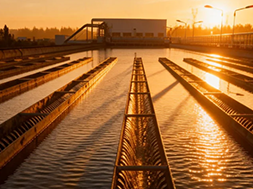
Chlorine dioxide disinfection pipelines in water plants are prone to blockage due to salt crystallization caused by disproportionation reactions. This can be prevented by optimizing the purity of the solution, designing the pipeline properly, regularly flushing and insulating, and conducting thorough inspections and chemical cleaning (hydrochloric acid should not be used). These multi-dimensional measures can help prevent crystallization and ensure the stable operation of the disinfection system.
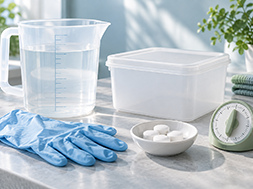
The pestis pestis leakage incident in the Russian laboratory reminded the public that pestis can be spread by fleas, infected animals, and droplets. The prevention and control should focus on the environment and rat flea management, instead of blind disinfection and sterilization. Xiuba chlorine dioxide disinfection tablet can only be used for preventive disinfection of object surface according to instructions. It has no special killing effect of pestis bacilli, and cannot be used as special epidemic prevention materials for pestis. It needs to be operated in a standardized way. Do not over disinfect due to network rumors.
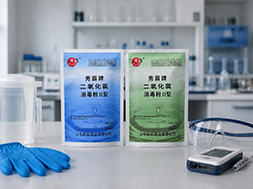
In 2026, Xiuba proposed that it is not enough to simply meet product qualification requirements; it is necessary to promote "green" practices in product selection, operation, safety, and record-keeping, rely on actual measurement data to verify effectiveness, strictly adhere to safety boundaries, and promote high-quality development of the industry.
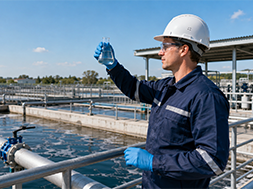
Traditional chlorine preparations are prone to producing harmful chlorination by-products and will eventually be phased out; Chlorine dioxide relies on a unique electron transfer oxidation mechanism, producing almost no organic chlorides, with high sterilization efficiency and lower risk of by-products. Xiuba relies on years of large-scale production and university research cooperation, with complete product qualifications, strict control of disinfection residues, and a balance between effective disinfection and ecological green, in line with the industry's green and low-carbon development trend.
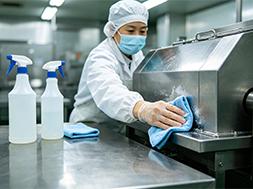
Focusing on three core selection dimensions—cost, safety, and broad-spectrum disinfection—this article compares chlorine dioxide with disinfectants such as ozone and peracetic acid, highlighting its significant advantages in terms of sterilization mechanism, usage safety, and long-term cost. The product is suitable for various scenarios including water supply, food processing, and wastewater treatment. Addressing market issues of misleading labeling, the article provides purchasing advice and recommends Xiuba Chlorine Dioxide, a brand with deep industry experience and complete certifications.
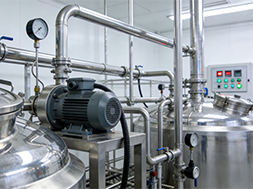
This article points out that during CIP cleaning, adding chlorine dioxide before alkaline washing and during acid-alkali rinsing has poor effects; the optimal point is after acid washing, when the acidic clean environment is suitable for the agent, and it is also necessary to drain residual acid, control the temperature, and circulate for 15-20 minutes to improve the disinfection effect.
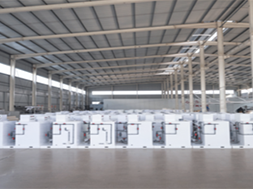
This article compares the applicable scenarios of chemical and electrolytic chlorine dioxide generators, explaining the manufacturer selection criteria from five dimensions: qualifications, accessories, case studies, after-sales service, and process compatibility. It also introduces five major development trends, including intelligent and modular equipment. Xiuba XB series equipment complies with GB 28931-2024 standards, has complete qualifications, and offers 24/7 full-process service. It is suitable for multiple industries and can reduce maintenance costs and operational risks.
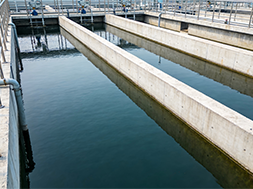
Chlorine dioxide is safe, efficient, and suitable for multiple industries, with the market continuously expanding and benefiting from ongoing policy support.Shandong Huashi Pharmaceutical's Xiuba division has been deeply involved in the industry for many years and can provide a full range of chlorine dioxide disinfection products and related technical services.
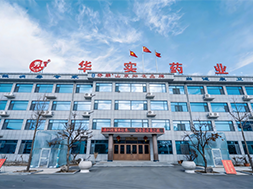
Xiuba has been deeply involved in chlorine dioxide disinfection for nearly 30 years, possessing mature technology and a rich product line. The brand has completed a strategic transformation, shifting from simply selling products to providing customized disinfection services throughout the entire process, integrating industry resources, and specifically addressing various disinfection pain points for companies in the drinking water, food, and medical fields.
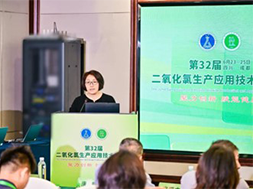
Shandong Huashi Pharmaceutical took part in the 32nd National Chlorine Dioxide Technology Symposium held in Chengdu this June. Our technical team shared professional research on chlorine dioxide disinfection for medical and public health scenarios and exchanged industry technologies with over 70 experts and manufacturers. This participation fully proves our solid R&D strength and professional standing in the chlorine dioxide disinfection field.
Northeast of Huangshan Road and Chuangye Intersection, Small and Medium sized Enterprise Entrepreneurship Industrial Park, Shanwang Town, Linqu County, Weifang City, Shandong Province
Copyright © 2025 by Shandong Huashi Pharmaceutical Co., Ltd All Rights Reserved


 Language
 中文
中文 Русский
 Chlorine Dioxide Disinfectant Manufacturer


