Welcome to Our Factory for a Visit! Free customized disinfection solutions

Used in skin protectants, cleansers, and disinfectants
Chlorine dioxide's direct application to the human body began with skin diseases, and it has obtained several patents abroad: For skin cleansing, there are Bunyan's US. Pat. 4035483 and Alliger's US. Pat. 4737307; for treating skin lesions and acne, there is Alliger's US. Pat. 4084747; and for treating herpes and fungal infections, there is Krossr's US. Pat. 4956184. These patents have achieved good results in treating scabies, psoriasis, eczema, dandruff, hemorrhoids, varicose ulcers, wounds, acne, genital herpes, leg ulcers, and even in treating colon, muscle, bone, and tendon injuries and infections, preventing cross-infection and co-infections.
Generally, it is used in sprays, ointments, or washes at a concentration below 200 mg/L ClO₂ , or formulated as an ointment (US. Pat. 6114398), with the ointment containing 1000 mg/L chlorine dioxide. In some cases, other oral antibiotics are required, such as detoxifying and blood-activating herbs from traditional Chinese medicine. Combining these with topical ClO₂ can enhance the effect, as in cases of psoriasis.
Used for gynecological disinfection
For vaginitis, vaginal odor, endometriosis, vulvar dryness, leukoplakia of the mucous membranes caused by bacterial and yeast infections, and tinea manuum, 50mg/L ClO₂ can be used for direct rinsing, wiping, or application. ClO₂ can be used for environmental disinfection in maternity wards and nurseries .
Ratcliff applied ClO₂ to treat gynecological conditions such as vaginal infections, endometriosis, and vulvar dryness. He pointed out that any bodily orifice infected with bacteria or yeast, or with conditions like leukoplakia or tinea manuum, can be treated with ClO₂. One of the most interesting examples is a female secretary suffering from vaginitis and unbearable itching. She tried using a mouthwash containing ClO₂ to rinse her vagina and applying a wet compress to her vulva. In less than three days, a miracle occurred: the vaginitis was cured. This is because the vaginal mucosa is similar to the oral cavity; bacteria can break down proteins, producing sulfides (such as methanethiol) that cause a foul odor. Therefore, ClO₂ can be used to treat vaginitis.
Used for ophthalmic disinfection and treatment of eye diseases.
Contact lenses were originally disinfected with borax-based agents, then with hydrogen peroxide, and are now gradually being disinfected with ClO₂ , a method for which patents have been obtained (US. Pat. 4997626, US. Pat. 5276673, US. Pat. 5078908, and US. Pat. 5129999, etc.). Because trace amounts of ClO₂ are non-toxic and harmless to the eyes and can be tolerated, Ripley applies ClO₂ directly to the eyes. Previously used ophthalmic medications had low efficacy and short duration of action. Ripley utilizes the stability of solid ClO₂ , packaging it in an opaque bottle with polyethylene microbeads containing transition metals such as palladium or platinum in the neck. When used, the bottle is inverted; as the solid ClO₂ solution flows through the porous polyethylene microbeads, it is catalyzed and activated by palladium into ClO₂ monomers . This isotonic, neutral solution containing 5 mg/L of ClO₂ monomer can be used to treat eye diseases. For example, for conjunctivitis, three drops three times a day usually cures the condition in 3-5 days. Neutral, isotonic saline solution at 3-5 mg/L can be directly used to treat conjunctivitis, boils, and pink eye. Using this isotonic, neutral, low-concentration ClO₂ monomer solution instead of sterile saline is of course more effective. It can be used as an irrigation solution to remove blood clots, tissue fragments, and other debris to facilitate surgery, while also having bactericidal, disinfectant, and postoperative infection prevention effects. This irrigation solution can also be used in other surgical procedures.
Used for surgical disinfection and wound rinsing.
It can replace povidone-iodine, antibiotic saline, and ordinary saline as a disinfectant and wound rinsing solution to prevent postoperative infection. The concentration should be 5-20 mg/L ClO ₂ isotonic neutral solution.

Chlorine dioxide disinfection pipelines in water plants are prone to blockage due to salt crystallization caused by disproportionation reactions. This can be prevented by optimizing the purity of the solution, designing the pipeline properly, regularly flushing and insulating, and conducting thorough inspections and chemical cleaning (hydrochloric acid should not be used). These multi-dimensional measures can help prevent crystallization and ensure the stable operation of the disinfection system.
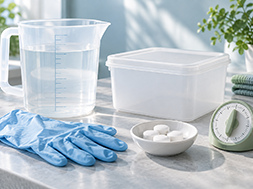
The pestis pestis leakage incident in the Russian laboratory reminded the public that pestis can be spread by fleas, infected animals, and droplets. The prevention and control should focus on the environment and rat flea management, instead of blind disinfection and sterilization. Xiuba chlorine dioxide disinfection tablet can only be used for preventive disinfection of object surface according to instructions. It has no special killing effect of pestis bacilli, and cannot be used as special epidemic prevention materials for pestis. It needs to be operated in a standardized way. Do not over disinfect due to network rumors.
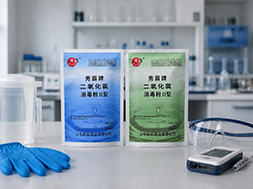
In 2026, Xiuba proposed that it is not enough to simply meet product qualification requirements; it is necessary to promote "green" practices in product selection, operation, safety, and record-keeping, rely on actual measurement data to verify effectiveness, strictly adhere to safety boundaries, and promote high-quality development of the industry.

Traditional chlorine preparations are prone to producing harmful chlorination by-products and will eventually be phased out; Chlorine dioxide relies on a unique electron transfer oxidation mechanism, producing almost no organic chlorides, with high sterilization efficiency and lower risk of by-products. Xiuba relies on years of large-scale production and university research cooperation, with complete product qualifications, strict control of disinfection residues, and a balance between effective disinfection and ecological green, in line with the industry's green and low-carbon development trend.

Focusing on three core selection dimensions—cost, safety, and broad-spectrum disinfection—this article compares chlorine dioxide with disinfectants such as ozone and peracetic acid, highlighting its significant advantages in terms of sterilization mechanism, usage safety, and long-term cost. The product is suitable for various scenarios including water supply, food processing, and wastewater treatment. Addressing market issues of misleading labeling, the article provides purchasing advice and recommends Xiuba Chlorine Dioxide, a brand with deep industry experience and complete certifications.
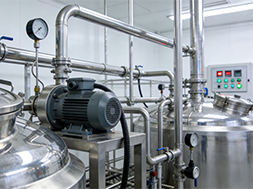
This article points out that during CIP cleaning, adding chlorine dioxide before alkaline washing and during acid-alkali rinsing has poor effects; the optimal point is after acid washing, when the acidic clean environment is suitable for the agent, and it is also necessary to drain residual acid, control the temperature, and circulate for 15-20 minutes to improve the disinfection effect.
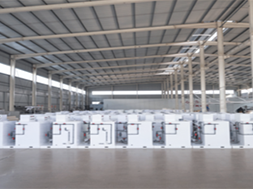
This article compares the applicable scenarios of chemical and electrolytic chlorine dioxide generators, explaining the manufacturer selection criteria from five dimensions: qualifications, accessories, case studies, after-sales service, and process compatibility. It also introduces five major development trends, including intelligent and modular equipment. Xiuba XB series equipment complies with GB 28931-2024 standards, has complete qualifications, and offers 24/7 full-process service. It is suitable for multiple industries and can reduce maintenance costs and operational risks.
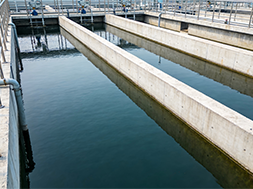
Chlorine dioxide is safe, efficient, and suitable for multiple industries, with the market continuously expanding and benefiting from ongoing policy support.Shandong Huashi Pharmaceutical's Xiuba division has been deeply involved in the industry for many years and can provide a full range of chlorine dioxide disinfection products and related technical services.
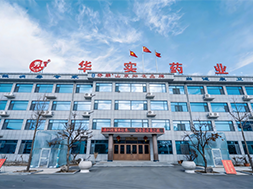
Xiuba has been deeply involved in chlorine dioxide disinfection for nearly 30 years, possessing mature technology and a rich product line. The brand has completed a strategic transformation, shifting from simply selling products to providing customized disinfection services throughout the entire process, integrating industry resources, and specifically addressing various disinfection pain points for companies in the drinking water, food, and medical fields.
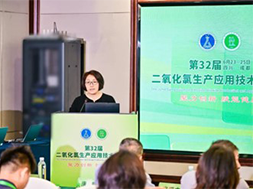
Shandong Huashi Pharmaceutical took part in the 32nd National Chlorine Dioxide Technology Symposium held in Chengdu this June. Our technical team shared professional research on chlorine dioxide disinfection for medical and public health scenarios and exchanged industry technologies with over 70 experts and manufacturers. This participation fully proves our solid R&D strength and professional standing in the chlorine dioxide disinfection field.
Northeast of Huangshan Road and Chuangye Intersection, Small and Medium sized Enterprise Entrepreneurship Industrial Park, Shanwang Town, Linqu County, Weifang City, Shandong Province
Copyright © 2025 by Shandong Huashi Pharmaceutical Co., Ltd All Rights Reserved


 Language
 中文
中文 Русский
 Chlorine Dioxide Disinfectant Manufacturer


