Welcome to Our Factory for a Visit! Free customized disinfection solutions

Many business buyers always have an unwritten triad of irreconcilable elements when choosing disinfectants, which are cost-effectiveness, product safety, and broad-spectrum disinfection. These are also several standard dimensions for disinfectant updates and replacements. In practical application scenarios, many disinfection processes also have obvious shortcomings. For example, ozone, with its strong oxidation-reduction potential, is a well-known cell blaster that kills bacteria without chemical residues, but it is also difficult to widely accept due to equipment investment shortcomings and lack of sustained sterilization ability. Secondly, there is peracetic acid, although it also has broad-spectrum bactericidal power, its strong corrosiveness and irritability make many producers hesitant. Of course, among numerous broad-spectrum disinfectants, the fourth generation chlorine dioxide, after transitioning from laboratory to industrial production, has embarked on an extraordinary path of disinfection efficacy competition, consistently topping the list of disinfectants.
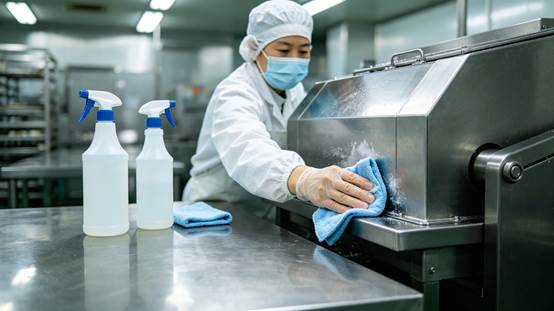
Dimensionality reduction of chlorine dioxide in its microscopic mechanism of action
Among oxidative disinfectants, chlorine dioxide disinfection technology is highly popular and is applied in many industries such as food processing disinfection, drinking water treatment, hospital sewage disinfection, etc. This is mainly reflected in the biochemical advantages of substances such as chlorine dioxide itself. From the perspective of disinfection mechanism, chlorine dioxide is a disinfectant that undergoes active reactions with molecular free radical properties, and its electron transfer activity becomes a special bactericidal reaction. It is simply a disinfection reaction mechanism that utilizes the effect of molecules penetrating the biological cell membrane to forcibly infiltrate the cell and undergo chain breaking treatment with thiol containing enzymes, thereby rendering the protein synthesis system inactive. This is enough to glimpse the irreversible disinfection effect of chlorine dioxide in the disinfection process. So, chlorine dioxide can easily achieve near global inactivation of substances such as bacteria, fungal spores, viruses, and even algae.
On the other hand, when comparing other oxidative disinfection chemical reactions, one can observe in detail which one is better or worse, and make a judgment of superiority or inferiority. Although ozone has a high potential, its extremely short half-life makes it impossible to achieve broad-spectrum sterilization in complex water bodies. Its ability to withstand long-lasting sterilization is insufficient. The key to peracetic acid lies in its strong oxidation, strong corrosion, and much higher bactericidal power, but it lacks safety. And to a certain extent, substances such as spores are still affected by their organic interference, which can easily lead to chlorination reactions and instead cause secondary pollution problems. Among all disinfectant categories, some official data have already been compared and quantitatively summarized in a more scientific way: that is, the disinfection effect of chlorine dioxide can indeed have significant advantages in comprehensive dimensions such as long-lasting force and broad-spectrum sterilization range.
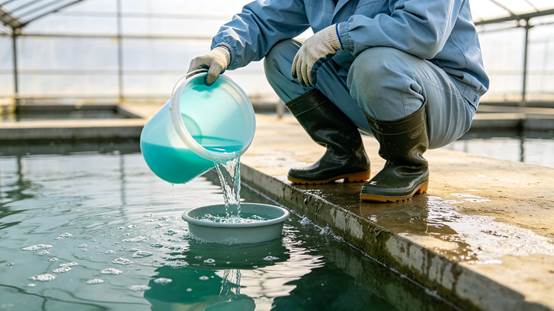
The essential difference between the safety dimension of chlorine dioxide and other disinfectants
In terms of the outcome of all disinfection reactions, safety is the priority indicator for establishing a type of disinfection process. This is mainly due to the differences in the risk of generating many disinfectant by-products and adapting to different application scenarios. Ozone can potentially react with bromide ions in water, leading to an excessive increase in carcinogens such as bromate. Additionally, peracetic acid, due to its pungent odor during chemical reactions, can cause malignant problems such as respiratory mucosal infections in humans. These irreversible damages have a certain negative effect in disinfection treatment, which highlights the insufficient effectiveness of the original disinfection reaction. So, in the disinfection performance comparison table, we often see that the safety and stability columns related to ozone and peracetic acid are rated as "poor", and the advantage control group of this conclusion is chlorine dioxide.
Chlorine dioxide is a substance that has been rated as a safe disinfectant by the International Health Organization. Its oxidation reaction is very pure, without excessive chlorination reaction, does not produce carcinogenic by-products, and does not have strong corrosive or oxidizing reactions. The sterilization process is mild and long-lasting, making it the mainstream disinfectant for food processing and drinking water disinfection in the United States.
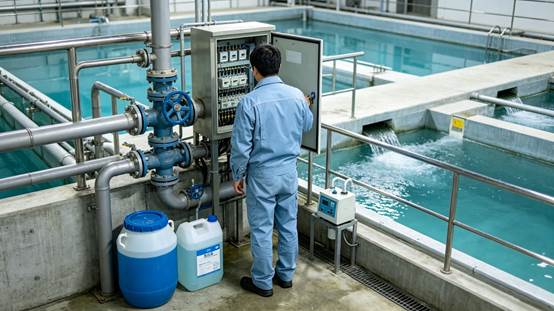
The comprehensive cost advantage of chlorine dioxide has become the decisive advantage in disinfection stability
Sodium hypochlorite was widely used domestically in the past, mainly due to its cost advantage. However, in terms of long-term economic effects, a comparison between sodium hypochlorite disinfectant with repeated disinfection and mixing effects and chlorine dioxide disinfectant with stable sterilization and precise disinfection shows that chlorine dioxide disinfectant is more economical in long-term use. Many products of chlorine dioxide are activated on-site, which makes their concentration higher than sodium hypochlorite, and there is no need to worry about their easy decomposition like peracetic acid, nor about their high equipment investment like Sprout. Its good adaptability to water temperature differences and strong acceptance of water quality pH fluctuations make it a disinfection king with higher stability in the disinfection industry.
When enterprises choose chlorine dioxide instead of chlorine gas, there is a possibility of reducing comprehensive operating costs by about 30%. This cost advantage can bring substantial economic returns to institutions and enterprises that have been engaged in long-term food processing, drinking water purification, and hospital pollution control. In the current environment where safety and residue requirements are becoming increasingly stringent in the comprehensive market, chlorine dioxide disinfectant is truly an irreplaceable and intelligent choice.
But when companies choose products for the chlorine dioxide market, they may also be deceived by some unscrupulous merchants' exaggerated advertising and false labeling values. Therefore, when choosing disinfectant products such as chlorine dioxide, it is necessary to comprehensively evaluate them based on the reputation and authoritative reporting qualifications of numerous brands on the market, and examine the technical parameters and performance of the products more, so as not to blindly purchase and increase operational burden due to ineffective disinfection effects.
In the chlorine dioxide disinfection market, Xiuba can be said to be an old brand enterprise that has been continuously producing and manufacturing for nearly 40 years, and has obtained numerous authoritative organization certifications and licenses such as GMP from the Ministry of Agriculture and the Ministry of Health. Each product also uses the international gold measurement method - the five supplement iodine method - to test the product content and label it, providing experimental endorsement for the real data of the product. On the long-term development of production and manufacturing in Huashi Pharmaceutical enterprises related to Xiuba, we continuously collaborate with domestic 985 and key universities to conduct product innovation research. Currently, in order to stabilize the activation rate of chlorine dioxide, Xiuba has innovatively adopted passivation wrapping technology to extend the product's service life and sterilization ability, truly making chlorine dioxide a benchmark for disinfection technology and continuously upgrading it. Choosing Xiuba is not only about choosing a chlorine dioxide, but also about choosing an efficient sterilization technology that is safe, stable, and suitable for multiple scenarios. Xiuba has accumulated nearly 40 years of tough and stable development through its technological strength, demonstrating its strong performance in the disinfectant product market. It is a high-quality product accumulated in the market and a guarantee of disinfection achievements.
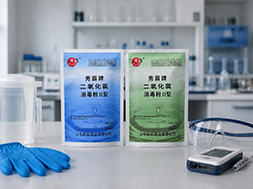
In 2026, Xiuba proposed that it is not enough to simply meet product qualification requirements; it is necessary to promote "green" practices in product selection, operation, safety, and record-keeping, rely on actual measurement data to verify effectiveness, strictly adhere to safety boundaries, and promote high-quality development of the industry.
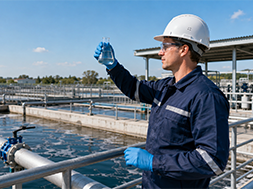
Traditional chlorine preparations are prone to producing harmful chlorination by-products and will eventually be phased out; Chlorine dioxide relies on a unique electron transfer oxidation mechanism, producing almost no organic chlorides, with high sterilization efficiency and lower risk of by-products. Xiuba relies on years of large-scale production and university research cooperation, with complete product qualifications, strict control of disinfection residues, and a balance between effective disinfection and ecological green, in line with the industry's green and low-carbon development trend.
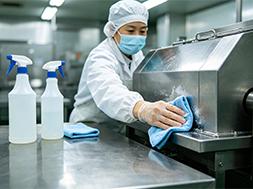
Focusing on three core selection dimensions—cost, safety, and broad-spectrum disinfection—this article compares chlorine dioxide with disinfectants such as ozone and peracetic acid, highlighting its significant advantages in terms of sterilization mechanism, usage safety, and long-term cost. The product is suitable for various scenarios including water supply, food processing, and wastewater treatment. Addressing market issues of misleading labeling, the article provides purchasing advice and recommends Xiuba Chlorine Dioxide, a brand with deep industry experience and complete certifications.
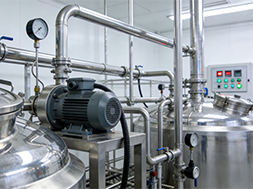
This article points out that during CIP cleaning, adding chlorine dioxide before alkaline washing and during acid-alkali rinsing has poor effects; the optimal point is after acid washing, when the acidic clean environment is suitable for the agent, and it is also necessary to drain residual acid, control the temperature, and circulate for 15-20 minutes to improve the disinfection effect.
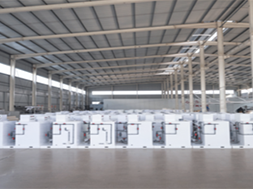
This article compares the applicable scenarios of chemical and electrolytic chlorine dioxide generators, explaining the manufacturer selection criteria from five dimensions: qualifications, accessories, case studies, after-sales service, and process compatibility. It also introduces five major development trends, including intelligent and modular equipment. Xiuba XB series equipment complies with GB 28931-2024 standards, has complete qualifications, and offers 24/7 full-process service. It is suitable for multiple industries and can reduce maintenance costs and operational risks.
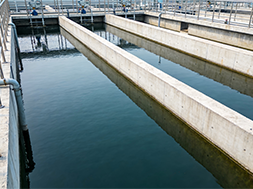
Chlorine dioxide is safe, efficient, and suitable for multiple industries, with the market continuously expanding and benefiting from ongoing policy support.Shandong Huashi Pharmaceutical's Xiuba division has been deeply involved in the industry for many years and can provide a full range of chlorine dioxide disinfection products and related technical services.
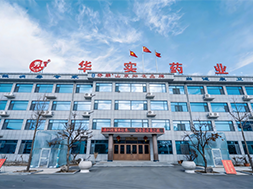
Xiuba has been deeply involved in chlorine dioxide disinfection for nearly 30 years, possessing mature technology and a rich product line. The brand has completed a strategic transformation, shifting from simply selling products to providing customized disinfection services throughout the entire process, integrating industry resources, and specifically addressing various disinfection pain points for companies in the drinking water, food, and medical fields.
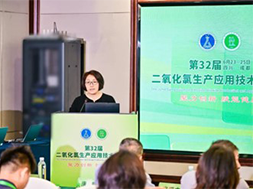
Shandong Huashi Pharmaceutical took part in the 32nd National Chlorine Dioxide Technology Symposium held in Chengdu this June. Our technical team shared professional research on chlorine dioxide disinfection for medical and public health scenarios and exchanged industry technologies with over 70 experts and manufacturers. This participation fully proves our solid R&D strength and professional standing in the chlorine dioxide disinfection field.
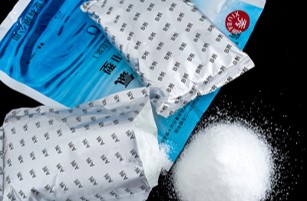
The rainstorm in many places in Shandong has caused the sediment, bacteria and organic matter in the water source to exceed the standard seriously. The traditional chlorine disinfection is prone to carcinogens and unstable sterilization, which makes it difficult to deal with sudden water pollution. High purity Xiuba chlorine dioxide has high sterilization efficiency and no harmful by-products. Combined with the three-level treatment process of the water plant, it can comprehensively ensure the safety of the water plant, secondary water supply, and household water use.
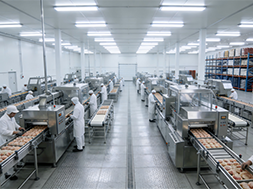
Chlorine dioxide spray disinfection in food packaging workshop is easy to cause combustion and explosion risk due to static electricity generated in dry environment. Comprehensive prevention and control can be achieved through four kinds of measures, including equipment anti-static grounding, optimization of atomization parameters, improvement of workshop humidity, static electricity monitoring and emergency plan.
Northeast of Huangshan Road and Chuangye Intersection, Small and Medium sized Enterprise Entrepreneurship Industrial Park, Shanwang Town, Linqu County, Weifang City, Shandong Province
Copyright © 2025 by Shandong Huashi Pharmaceutical Co., Ltd All Rights Reserved


 Language
 中文
中文 Русский
 Chlorine Dioxide Disinfectant Manufacturer


