Welcome to Our Factory for a Visit! Free customized disinfection solutions

Hospital wastewater can contain pathogenic microorganisms, antibiotic-resistant bacteria, pharmaceutical residues, and other contaminants. If it is not properly collected and treated, it may create environmental and public-health risks. However, the microbial concentration in hospital wastewater varies greatly with hospital type, department, flow, and sampling conditions, so unsupported fixed counts of bacteria or viruses per liter should not be used as universal data. The key objective of disinfection is to reduce viable pathogens to the level required by the applicable discharge standard while controlling the risks introduced by the treatment process itself.
Chlorine dioxide and potassium peroxymonosulfate composite disinfectants are both used in some hospital-wastewater treatment applications, but there is no universal 'safety champion.' Their suitability depends on the registered product formulation, wastewater quality, target microorganisms, contact system, operating capability, discharge requirements, and total life-cycle cost.
Round One: Disinfection Performance - Which Technology Fits the Target Microorganisms?
1. Chlorine dioxide: a strong oxidizing disinfectant with mature water-treatment applications
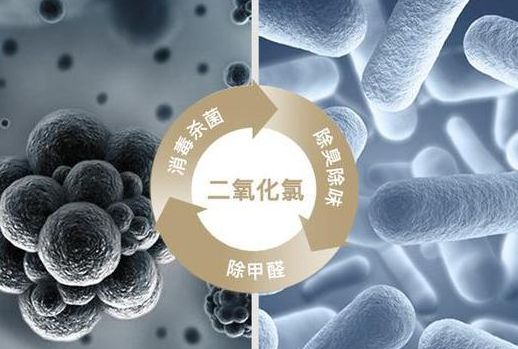
Chlorine dioxide is a strong oxidant that can inactivate microorganisms by oxidizing proteins, sulfur-containing amino acids, membrane-associated structures, and other essential cellular components. Under appropriate concentration, contact time, temperature, and wastewater conditions, it can be effective against many bacteria and some viruses. However, it is not technically sound to claim an instantaneous >99% kill rate or universal inactivation of poliovirus or hepatitis B virus without specifying the test method and process conditions. Its disinfection performance is relatively less affected by pH than that of free chlorine, but temperature, organic load, reducing substances, suspended solids, and contact time still matter. For hospital wastewater, dosage and contact time should therefore be determined from validated process conditions rather than a single broad pH or temperature claim.
2. Potassium peroxymonosulfate composite disinfectants: formulation-dependent oxidizing systems rather than a single universal chemistry
Products marketed for hospital-wastewater disinfection are often potassium peroxymonosulfate composite formulations rather than pure potassium peroxymonosulfate alone. Their antimicrobial performance may result from active oxygen together with other formulation components, and some commercial products also contain additional oxidizing or chlorine-releasing ingredients. Therefore, the mechanism, dose, contact time, residual behavior, and safety profile must be based on the specific registered product and its instructions. It is not appropriate to claim that every formulation provides a long-lasting residual after discharge, guarantees long-term suppression of microbial regrowth, reduces COD, flocculates suspended solids, and removes odor at the same time. Oxidation of some organic matter and odor compounds may occur, but the actual effect depends on wastewater composition, dose, and the complete treatment train.
Round Two: Safety and Environmental Control - What Risks Must Be Managed?
1. Chlorine dioxide: effective, but generation and by-products require control
Free-chlorine disinfection can form trihalomethanes and other halogenated disinfection by-products when it reacts with natural organic matter. Chlorine dioxide follows a different reaction pathway and can reduce the formation of some typical halogenated organic by-products compared with free chlorine, but it should not be described as risk-free. Chlorite and chlorate are important transformation products that may require control, and some generator routes can also introduce chlorine. Chlorine dioxide gas is irritating and hazardous at elevated airborne concentrations, so generation systems require ventilation, leak detection, interlocks, compatible materials, and trained operators. PPE should be selected according to the SDS and exposure assessment rather than a one-size-fits-all rule. Because chlorine dioxide is normally generated and used on site, equipment reliability and monitoring are part of the safety system.
2. Potassium peroxymonosulfate composite disinfectants: easier handling does not mean zero risk
Potassium peroxymonosulfate composite disinfectants do not release chlorine dioxide gas during normal use, but it is incorrect to describe them as 'zero pollution,' 'harmless to humans and animals,' or safe to handle without protective equipment. Peroxymonosulfate-containing products are oxidizing chemicals; depending on formulation they may be acidic, irritating to the eyes, skin, or respiratory tract, and incompatible with certain chemicals. Their decomposition and reaction products also depend on the complete formulation and wastewater chemistry, so they cannot simply be summarized as 'only potassium sulfate and water.' Operators should follow the product SDS, label, storage requirements, mixing restrictions, and required PPE. In residential areas, odor may be lower than with some on-site chlorine dioxide systems, but environmental compliance still depends on the treated effluent, not on the absence of a noticeable smell.
Round Three: Cost and Application - Which Option Is More Practical?
1. Chlorine dioxide: potentially economical at stable scale, but only with appropriate infrastructure
Chlorine dioxide can be cost-effective in continuous hospital-wastewater disinfection when flow and chemical demand are stable, but fixed figures such as 0.5-1 yuan per tonne or a threshold of more than 1,000 tonnes per day are not universal. Total cost should include the generator, feed chemicals, conversion efficiency, power, ventilation, leak detection, online monitoring, maintenance, spare parts, labor, and by-product monitoring. Feedstock prices also change with time and location. A well-designed generator can reduce manual work through automation, but it still requires routine inspection and competent operation; the economics should be established through a project-specific life-cycle calculation.
2. Potassium peroxymonosulfate composite disinfectants: simpler dosing may suit smaller systems, but cost depends on formulation and demand
Many solid composite disinfectants can be dosed without an on-site chlorine dioxide generator, which may simplify the equipment configuration for smaller hospitals, clinics, or decentralized systems. However, this does not make every product 'plug-and-play.' Dissolution, dosing, mixing, contact time, chemical storage, corrosion compatibility, and operator protection still need to be managed. Statements that the cost is always two to three times that of chlorine dioxide or always 1-2 yuan per tonne should be replaced by a calculation using the actual product dose, purchase price, wastewater quality, treatment target, and labor and equipment requirements.
Practical Guide: Three Principles for Selecting a Hospital-Wastewater Disinfectant
1. Consider treatment capacity and operating capability together. A larger hospital may benefit from an automated chlorine dioxide generation system when it has the required infrastructure and trained personnel, while a smaller facility may prefer a validated solid or liquid disinfectant dosing system. Plant size alone should not decide the technology; wastewater quality, required contact time, redundancy, maintenance capability, and discharge target are equally important.
2. Consider the surrounding environment, but do not rank technologies solely by odor. Hospitals near residential areas or sensitive water bodies should prioritize containment, ventilation, chemical-storage safety, effluent toxicity, disinfectant residuals, and compliance with local discharge requirements. A lower-odor product is not automatically environmentally safer, and chlorine dioxide should not automatically be excluded simply because the site is near a residential area.
3. Use combined processes only when each step has a validated purpose. It is not a general rule that chlorine dioxide should be used first and potassium peroxymonosulfate later for 'long-term control.' Sequential oxidants can consume one another or change downstream chemistry, and residual oxidant in final effluent is not necessarily desirable. If a combined process is considered, compatibility, oxidant demand, reaction products, contact time, toxicity, and final microbiological performance should be verified by bench or pilot testing before full-scale operation.
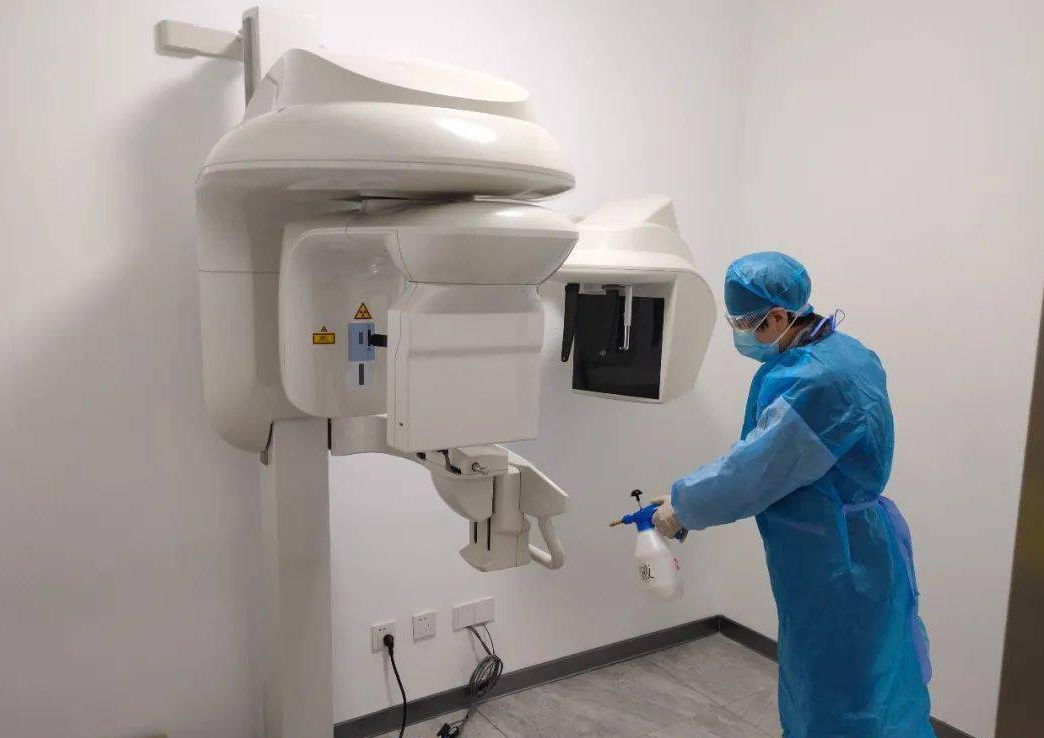
Hospital-wastewater disinfection is a process-control and compliance task, not a competition between two brand names or chemical labels. Choosing an unsuitable disinfectant does not automatically 'mutate pathogens into superbugs'; antibiotic resistance is driven by complex biological and environmental pressures, and disinfectant selection should not be described with that direct cause-and-effect claim. The more reliable approach is to characterize the wastewater, define the applicable microbial and pollutant limits, compare validated disinfection options, and monitor the final effluent. China's GB 18466-2005 was amended in 2026, with strengthened requirements for medical wastewater risk control, so current projects should use the applicable version together with local requirements and the facility's permit conditions. Chlorine dioxide and potassium peroxymonosulfate composite products can both be useful when correctly selected, but neither is universally safer, cheaper, or more effective in every hospital.

Chlorine dioxide and potassium persulfate are commonly used for disinfection of hospital wastewater. The former has a fast sterilization speed and low cost, but it has a pungent odor and requires supporting equipment, making it suitable for large hospitals. The latter has a long-lasting sterilization time, is environmentally friendly and easy to use, but is more expensive, making it suitable for small and medium-sized medical institutions. The two can also be used in combination.
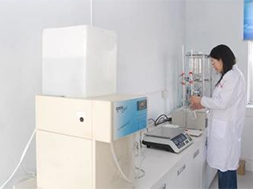
AB agent dosing devices generate free radicals through agent mixing to oxidize organic matter. They are easy to operate, quick to deploy, and have low hazardous chemical risks, but the agent cost is relatively high. Chlorine dioxide generators produce chlorine dioxide on-site, providing long-lasting disinfection and are more cost-effective for large-scale use, but their hazardous chemical management and maintenance are complex. For small water volumes, emergency situations, and degradation of persistent organic matter, AB agent dosing devices are recommended. For large water volumes, those focusing on sterilization, and those requiring professional operation and maintenance, chlorine dioxide generators are preferable. A comprehensive five-step selection process is possible, or both can be used in combination. It is recommended to conduct small-scale water sample testing to determine the optimal solution.
Chlorine dioxide is a broad-spectrum and highly effective disinfectant. With its strong oxidizing properties, it can kill Gram-positive and Gram-negative bacteria, drug-resistant bacteria, and bacterial spores. It can also penetrate bacterial biofilms. It can take effect quickly even at low concentrations and is often used for disinfection of drinking water, food, and medical products. However, it is necessary to control the concentration and duration of action when using it.
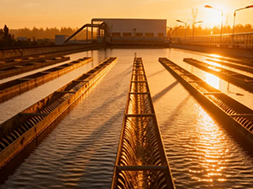
Chlorine dioxide disinfection pipelines in water plants are prone to blockage due to salt crystallization caused by disproportionation reactions. This can be prevented by optimizing the purity of the solution, designing the pipeline properly, regularly flushing and insulating, and conducting thorough inspections and chemical cleaning (hydrochloric acid should not be used). These multi-dimensional measures can help prevent crystallization and ensure the stable operation of the disinfection system.
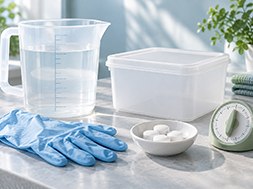
The pestis pestis leakage incident in the Russian laboratory reminded the public that pestis can be spread by fleas, infected animals, and droplets. The prevention and control should focus on the environment and rat flea management, instead of blind disinfection and sterilization. Xiuba chlorine dioxide disinfection tablet can only be used for preventive disinfection of object surface according to instructions. It has no special killing effect of pestis bacilli, and cannot be used as special epidemic prevention materials for pestis. It needs to be operated in a standardized way. Do not over disinfect due to network rumors.
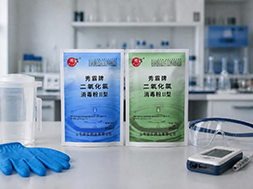
In 2026, Xiuba proposed that it is not enough to simply meet product qualification requirements; it is necessary to promote "green" practices in product selection, operation, safety, and record-keeping, rely on actual measurement data to verify effectiveness, strictly adhere to safety boundaries, and promote high-quality development of the industry.
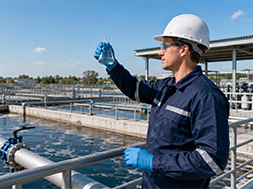
Traditional chlorine preparations are prone to producing harmful chlorination by-products and will eventually be phased out; Chlorine dioxide relies on a unique electron transfer oxidation mechanism, producing almost no organic chlorides, with high sterilization efficiency and lower risk of by-products. Xiuba relies on years of large-scale production and university research cooperation, with complete product qualifications, strict control of disinfection residues, and a balance between effective disinfection and ecological green, in line with the industry's green and low-carbon development trend.
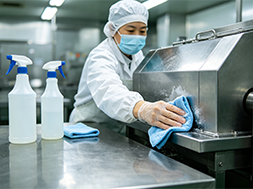
Focusing on three core selection dimensions—cost, safety, and broad-spectrum disinfection—this article compares chlorine dioxide with disinfectants such as ozone and peracetic acid, highlighting its significant advantages in terms of sterilization mechanism, usage safety, and long-term cost. The product is suitable for various scenarios including water supply, food processing, and wastewater treatment. Addressing market issues of misleading labeling, the article provides purchasing advice and recommends Xiuba Chlorine Dioxide, a brand with deep industry experience and complete certifications.
Northeast of Huangshan Road and Chuangye Intersection, Small and Medium sized Enterprise Entrepreneurship Industrial Park, Shanwang Town, Linqu County, Weifang City, Shandong Province
Copyright © 2025 by Shandong Huashi Pharmaceutical Co., Ltd All Rights Reserved


 Language
 中文
 Русский
 Chlorine Dioxide Disinfectant Manufacturer