Welcome to Our Factory for a Visit! Free customized disinfection solutions
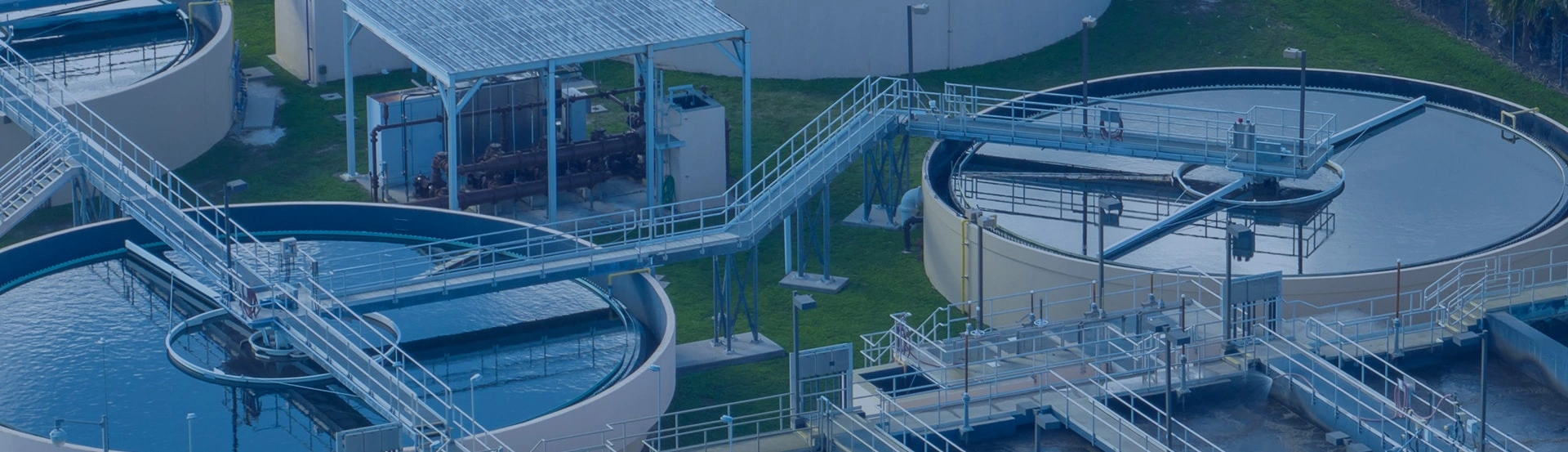
In recent years, as urban and municipal water supply systems have continued to improve, standardized source-water treatment, purification, disinfection, and distribution-network management have significantly enhanced the microbiological safety of drinking water. Chlorine dioxide, as one of the oxidation and disinfection technologies that can be used in drinking-water treatment, has been adopted by an increasing number of water plants because of its strong oxidation capability and its suitability for certain complex water-quality conditions. However, many water plant managers have encountered a puzzling situation: the reference chlorine dioxide dosage estimated from design conditions and water-quality parameters often requires continuous adjustment during actual operation, and the actual dosage frequently differs from the initial estimate.
What causes this difference? The key reason is that laboratory calculations and design estimates are based on relatively fixed conditions, whereas a water plant operates in a constantly changing dynamic water system.
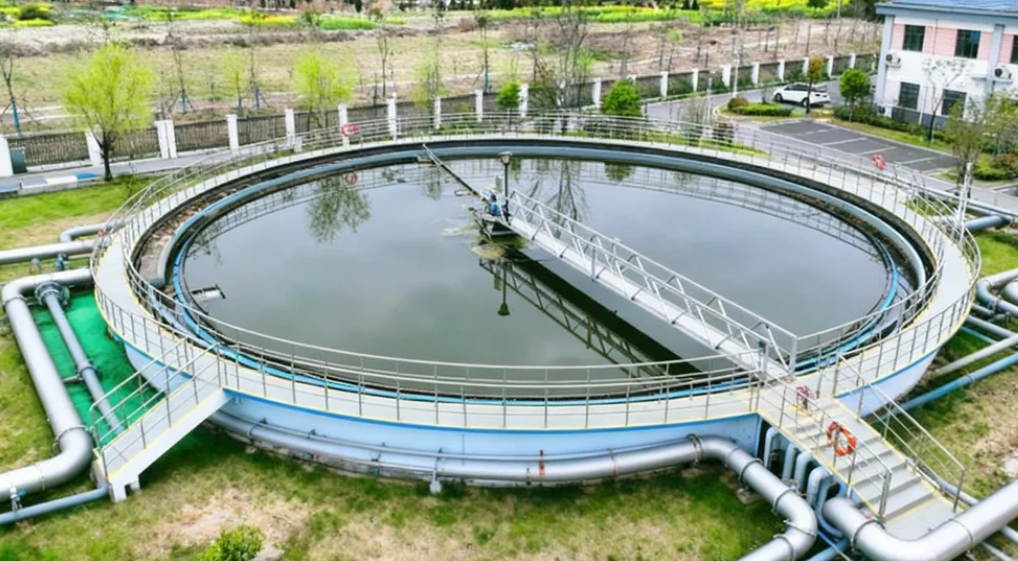
When estimating the required chlorine dioxide dosage, engineers generally consider factors such as reducing substances in the source water, organic-matter characteristics, iron and manganese concentrations, target microbial-control requirements, contact time, and the target chlorine dioxide residual. These data can be used to establish an initial reference dosage range for equipment selection and commissioning.
However, a water plant deals with a continuously changing water system:
Water quality may change at any time. Wet and dry seasons, day-night temperature differences, rainfall runoff, algal variations, and upstream agricultural activities may all alter the oxidation demand of the source water.
The distribution system creates continuous demand. Biofilms, corrosion products, and deposits in aging pipelines can create ongoing wall demand for disinfectant and accelerate the decay of chlorine dioxide residual.
Temperature and pH also have effects. Water temperature influences chlorine dioxide reaction rates, disinfection kinetics, and decay. Within the common drinking-water pH range, chlorine dioxide disinfection performance is relatively less sensitive to pH changes, although pH may still affect certain oxidation reactions and by-product formation.
Reducing substances in source water, such as ferrous iron, manganous manganese, sulfides, and certain highly reactive organic or inorganic components, can react preferentially with chlorine dioxide and create additional oxidant demand. If estimates are based only on a limited number of routine water-quality indicators, this actual demand may not be fully reflected.
It should be noted that, for pure chlorine dioxide, ammonia nitrogen is not a major direct chemical-demand factor in the same way that it is for free chlorine. If a water plant uses a mixed chlorine dioxide/chlorine generation system, the influence of ammonia nitrogen on the overall disinfection system should be evaluated according to the actual composition of the generated disinfectant.
Biofilms, corrosion products, and long-term deposits on the inner surfaces of pipelines may react with chlorine dioxide, creating continuous wall demand and causing chlorine dioxide to decay during transportation.
This decay is not simply a matter of physical “absorption,” nor can it be assumed that chlorine dioxide consumption will increase exponentially as pipelines age. Actual decay depends on multiple factors, including pipe material, pipe age, corrosion condition, biofilm, water temperature, water age, flow velocity, and historical operating conditions.
After chlorine dioxide participates in oxidation reactions, it also undergoes transformation. In drinking-water applications, chlorite is one of the important related products that requires attention. Under certain generation systems and operating conditions, chlorate may also need to be monitored.
Therefore, this should not simply be interpreted as “chemical waste.” Rather, it is part of the oxidation and transformation process of chlorine dioxide. When adjusting dosage, a water plant should not focus only on chlorine dioxide residual, but should also consider the control requirements for relevant by-products.
Algal growth periods, heavy rainfall and surface runoff, agricultural non-point-source inputs following fertilization, and abnormal upstream discharges may all cause rapid changes in source-water quality, making previously used chlorine dioxide demand parameters less applicable.
Therefore, rather than treating all such changes as “seasonal factors,” it is more accurate to say that both seasonal variation and sudden water-quality disturbances can change the oxidation demand of source water, making a permanently fixed dosage unsuitable for all operating periods.
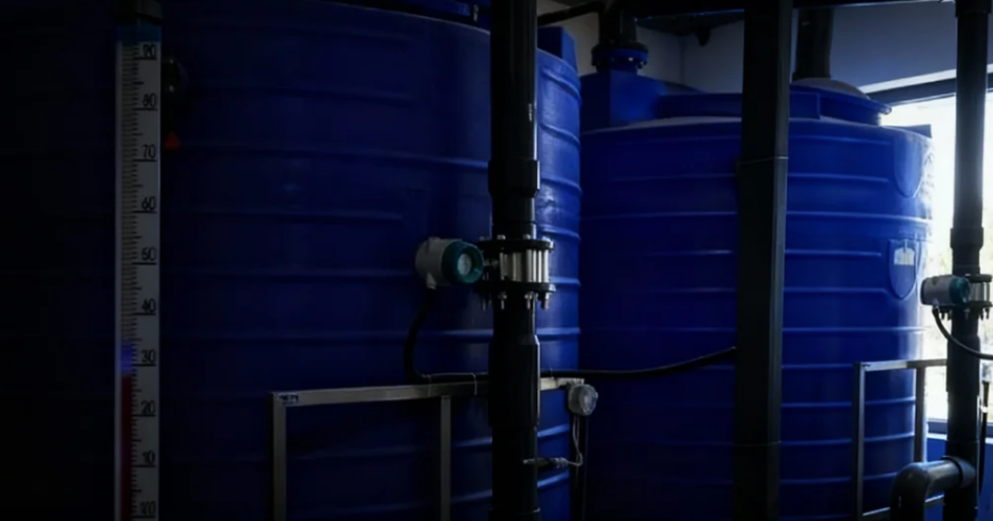
To reduce the difference between initial estimates and actual operating values, several measures should be used together:
Upgrade real-time monitoring systems: Install and properly operate online chlorine dioxide monitoring equipment. Under conditions where the required contact time is met, combine flow-proportional dosing with chlorine dioxide residual feedback and adjust operating parameters according to actual conditions. Online instruments should also be regularly calibrated and compared with laboratory test results.
Establish a water-quality early-warning mechanism: Monitor changes in source-water quality, including temperature, turbidity, pH, iron, manganese, organic-matter-related indicators, and sudden pollution events. When significant changes occur, conduct verification testing and adjust the disinfection strategy in advance.
Use intelligent distribution-network simulation: A hydraulic model alone should not be used to directly predict “how much chemical is needed.” A more appropriate method is to combine a distribution-network hydraulic model with a disinfectant decay model to simulate water age, residence time, and chlorine dioxide residual changes in different areas, with continuous calibration using field monitoring data.
Make data-driven decisions: Accumulate long-term operating data and combine source-water quality, treatment flow, actual dosage, contact time, finished-water residual, distribution-end residual, and relevant by-product indicators. Gradually establish a chlorine dioxide demand and decay model suited to the characteristics of the local water source and distribution network.
For drinking-water projects, dosage itself is not the final control objective. According to GB 5749—2022, Standards for Drinking Water Quality, when chlorine dioxide is used for disinfection, the corresponding contact-time and chlorine dioxide control requirements for finished water and distribution-end water must also be met. Therefore, a truly scientific operating approach is to adjust dosage according to dynamic water-quality conditions so that disinfection performance, contact time, chlorine dioxide residual, and relevant by-product indicators all remain under control.
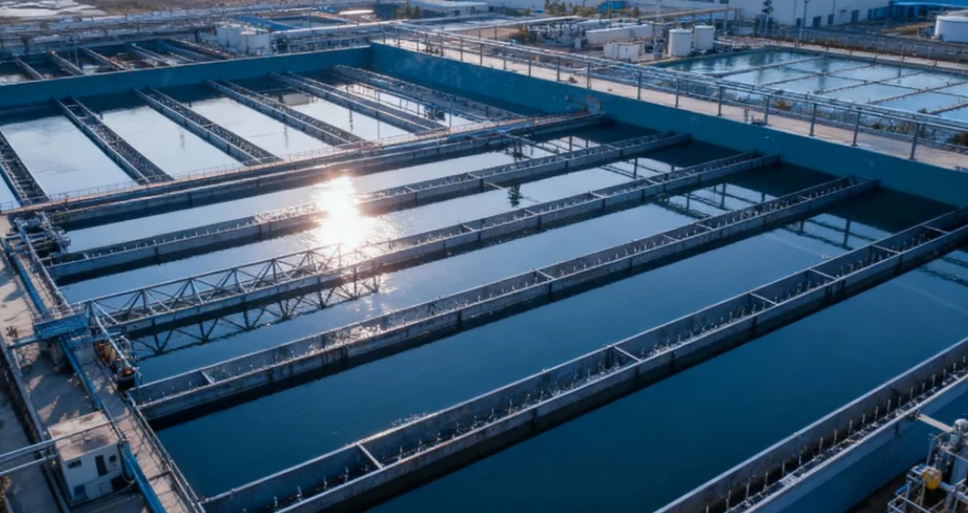
For complex water plant disinfection requirements, suitable products, stable equipment, and professional technical support are all important. XIUBA has long focused on chlorine dioxide disinfection and water-treatment applications and can provide products, equipment, and related technical services according to the actual operating conditions of different water plants.
Customized dosing strategies: Develop corresponding dosing and control strategies based on source-water quality, treatment capacity, contact conditions, distribution-network conditions, target control requirements, field testing, and operating data.
Full-process technical support: Provide technical support according to actual project needs, from water-quality and operating-condition assessment, product and equipment selection, to installation, commissioning, and subsequent operating optimization.
Continuous operating-data analysis: Help water plants gradually establish localized databases covering chlorine dioxide demand, dosing, residual, and relevant by-products, and use historical data analysis to optimize subsequent operating parameters.
Our team has many years of experience in water treatment and disinfection applications and understands the difference between design estimates and actual operation. We provide not only products, but also aim to offer more complete application services according to actual project needs, including preliminary water-quality analysis and operating-condition assessment, product and equipment configuration during project implementation, and subsequent operating optimization guidance.
If you are struggling to maintain stable control of chlorine dioxide dosage or want to optimize an existing disinfection system, we can provide preliminary analysis and solution-design services based on actual water quality and operating conditions, helping water plants improve the stability, rationality, and operating economy of chlorine dioxide dosing while meeting drinking-water safety and relevant standards.
Let every chlorine dioxide dosing decision have a clear basis, and let every parameter adjustment be supported by data. This is not merely a chemical-dosing issue, but an important part of ensuring safe and stable water-supply operations.
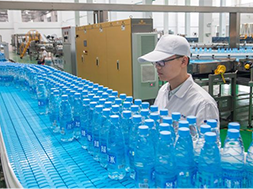
Chlorine dioxide can efficiently disinfect drinking water, is not easy to generate carcinogenic disinfection by-products, and will produce chlorite and other residues, which must comply with the national standard limits. It shall be accurately added according to the water quality and equipped with qualified equipment and process. The safety of compliant use is high. Water supply enterprises need to do a good job in control and monitoring to ensure the safety of water quality.
Chlorine dioxide is a who Certified grade A1 safe disinfectant with high sterilization efficiency, few harmful by-products, strong water quality adaptability and multiple water purification functions; Compared with traditional chlorine disinfection, it is safer and more environmental friendly, and can be widely used in drinking water, sewage treatment, food and beverage disinfection and other fields.
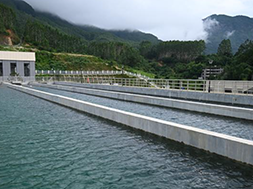
Chlorine dioxide can sterilize and remove odors in water treatment plants and is unlikely to generate trihalomethanes. However, in practical applications, it can fail to remove odors or even produce new unpleasant smells. Organic matter in the water source, bromide ions, and low temperatures can affect treatment effectiveness. Furthermore, its removal capacity for geosmin and 2-methylisoborneol is limited, and improper dosage can also cause odor problems. Water treatment plants need to strengthen water quality monitoring, dynamically adjust dosages, and, when necessary, combine ozone-activated carbon processes to ensure that the odor of the treated drinking water meets standards.
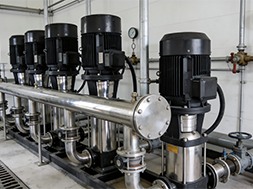
When adding chlorine dioxide to the water pumping station to maintain residual chlorine in the pipeline network, it is necessary to avoid pipeline corrosion caused by local high concentrations. The dosage should be accurately controlled by flow-linked dosing, pipeline mixing, and online residual chlorine monitoring, while also paying attention to under-scale corrosion, thus balancing disinfection and pipeline protection.
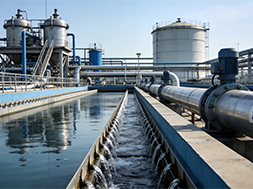
Pipeline network renovations can easily alter the hydraulic conditions of the network, increasing flow velocity and creating stagnant zones that consume chlorine dioxide, leading to fluctuations in water quality. Water plants can ensure the quality of water supplied to the end points through monitoring and prediction, dynamic chemical dosing, pipeline flushing, and the activation of contingency plans.
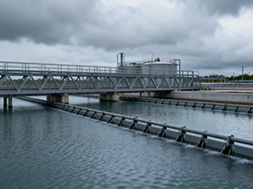
Traditional chlorine disinfection is prone to producing carcinogenic halogenated by-products; chlorine dioxide oxidizes and kills bacteria, with almost no such by-products, good inactivation effect, and the ability to remove odor and inhibit algae, but it generates by-products such as chlorite, requires higher raw material and operation and maintenance costs, and is suitable for water plants that can be upgraded and managed in a coordinated manner, rather than being simply and directly replaced.
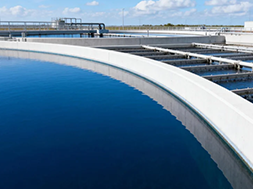
This study simulates a scenario where a small town's water plant experiences a sudden pollution outbreak caused by medical wastewater and the failure of chlorine dioxide disinfection. It analyzes the reasons why pollutants consume disinfectant and provides four-step emergency response measures. Furthermore, it proposes long-term improvement suggestions in terms of monitoring, supplies, contingency plans, and drills to enhance the emergency response capabilities of small and medium-sized water plants.
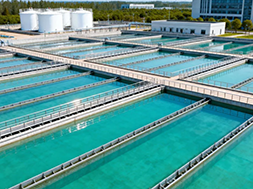
Switching from sodium hypochlorite to chlorine dioxide disinfection in water plants is not just about replacing equipment; it's a complete system upgrade. Chlorine dioxide disinfection is more effective, produces fewer byproducts, and has lower overall costs. However, many water plants only replace the hardware, neglecting personnel training and adapting management systems. The core of this transformation is shifting from experience-based to scientific operation.
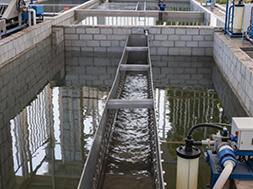
The actual dosage of chlorine dioxide at water treatment plants often exceeds the theoretical value, influenced by factors such as reducing agents in the water, sediment in the pipe network, water quality fluctuations, and byproduct consumption. By leveraging monitoring and local operational data to optimize dosage, we can provide water quality assessments and customized dosage solutions.
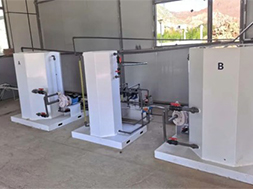
A water plant in a county in Qinghai Province with a capacity of 30,000 cubic meters per day was found to have excessive byproducts from sodium hypochlorite disinfection. It was upgraded to a Xiuba chlorine dioxide dosing system. Four on-site tests showed that residual chlorine dioxide in the effluent was within acceptable limits, achieving stable compliance. Water treatment upgrades need to be tailored to specific on-site conditions to create a complete closed-loop disinfection process.
Northeast of Huangshan Road and Chuangye Intersection, Small and Medium sized Enterprise Entrepreneurship Industrial Park, Shanwang Town, Linqu County, Weifang City, Shandong Province
Copyright © 2025 by Shandong Huashi Pharmaceutical Co., Ltd All Rights Reserved


 Language
 中文
中文 Русский
 Chlorine Dioxide Disinfectant Manufacturer


