Welcome to Our Factory for a Visit! Free customized disinfection solutions

In the field of disinfection and water treatment, a persistent and deeply ingrained misconception exists: simply because chlorine dioxide contains the word "chlorine," it's easily mistakenly categorized by the general public and even non-professionals as a chlorine-based disinfectant, conflating it with traditional chlorine-containing disinfectants like 84 disinfectant, bleaching powder, and sodium hypochlorite. This is incorrect. From a fundamental chemical structure and microscopic disinfection principle to macroscopic national classification standards and actual usage effects, chlorine dioxide (ClO₂ ) is absolutely not a chlorine-based disinfectant. It is a stable, highly efficient, and safe strong oxidant. These two substances differ significantly in their core properties, applicable scenarios, and safety performance; they are fundamentally different. Clarifying this distinction not only allows for more scientific and precise disinfection practices but also helps avoid key misconceptions when choosing products, effectively safeguarding the safety of drinking water and the ecological environment. This is a key focus that the disinfection industry has been striving to clarify and popularize for years.
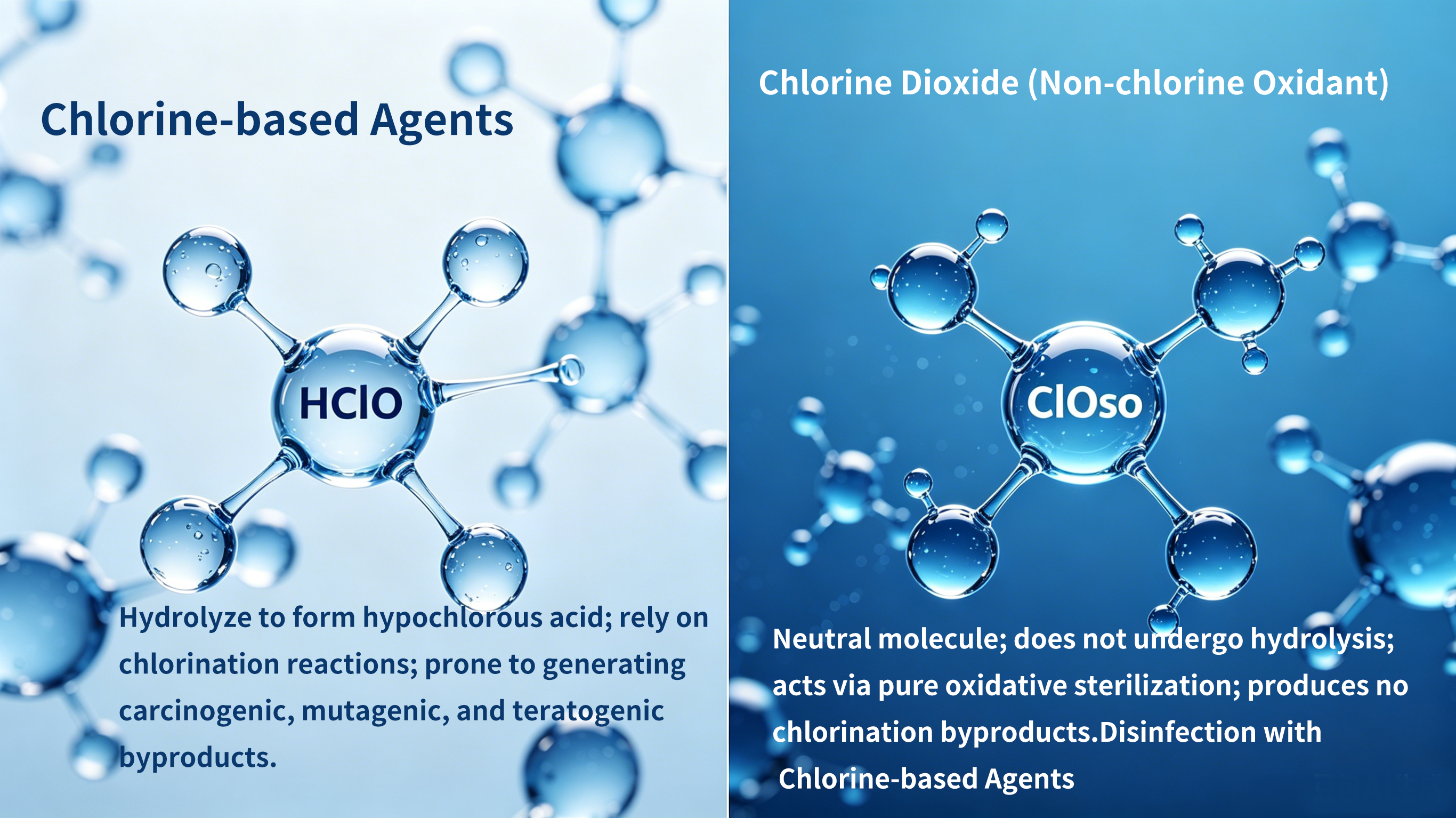
To truly understand what chlorine dioxide is, we must start with its most basic chemical properties and explain it layer by layer. A core characteristic of traditional chlorine-based disinfectants is that they rely on "available chlorine" for sterilization. Sodium hypochlorite, sodium dichloroisocyanurate, trichloroisocyanuric acid, and bleaching powder, which we encounter daily, are all substances of this type. When they dissolve in water, they inevitably undergo hydrolysis to produce hypochlorous acid. While these disinfectants also involve oxidation, their molecular structure contains reactive chlorine atoms, which readily react with organic matter (such as humic acid) in complex aquatic environments, resulting in electrophilic substitution reactions—what we commonly call "chlorination reactions."
This non-selective chemical reaction presents two particularly fatal problems: First, its bactericidal effect is extremely unstable, easily affected by water pH and ammonia nitrogen levels. If the ammonia nitrogen content in the water is high, its bactericidal ability will be significantly reduced, or even completely lost. Second, and more seriously, the chlorination reaction produces trihalomethanes and haloacetic acids, which are disinfection byproducts with known carcinogenic, teratogenic, and mutagenic risks. This is the core reason why the use of traditional chlorine-based disinfectants is strictly limited and even gradually phased out in high-end scenarios with extremely high safety requirements, such as drinking water treatment and food processing.
Now let's look at chlorine dioxide. Its chemical formula is ClO₂ , which is a single neutral molecule composed of one chlorine atom and two oxygen atoms. From the perspective of chemical bonding, its molecular structure is completely different from that of chlorine preparations, and it does not contain the "effective chlorine" component unique to chlorine preparations. When chlorine dioxide dissolves in water, it will never undergo hydrolysis or ionization. Under normal conditions, it exists stably mainly in the molecular state and will never generate hypochlorous acid.
Its sterilization mechanism completely abandons the chlorination pathway of traditional chlorine agents, relying instead on its extremely high oxidation-reduction potential to perform a "pure oxidation, electron-snap" reaction. It can directly penetrate the cell wall of microorganisms, precisely destroying the enzyme system, nucleic acid structure, and protein activity of pathogens, thus completely inactivating them at the root. This selective oxidation mechanism fundamentally cuts off the generation pathway of chlorination byproducts. As long as it is used correctly and the dosage is strictly controlled, it ultimately produces only trace amounts of chlorite and chlorate, fully complying with the strictest national drinking water safety standards. It is precisely because of this core advantage that chlorine dioxide is listed as an A1-level safe disinfectant by the World Health Organization (WHO), on the same level as oxygen and ozone; the U.S. Environmental Protection Agency (EPA) has also explicitly recognized its safety as a drinking water treatment chemical, confirming that it does not produce carcinogenic, mutagenic, or teratogenic byproducts.
If you find the chemical principles too abstract and difficult to understand, then look at the official national classification standards, which will clearly show the boundary between the two. This is based on clear laws and regulations. In the " Guidelines for the Use of Disinfectants" issued by the National Health Commission , "chlorine-containing disinfectants" and "chlorine dioxide disinfectants" are clearly listed as two completely independent items, with no subordinate or overlapping relationship whatsoever, leaving no room for ambiguity.
In terms of specific testing and inspection, the evaluation systems for the two are completely different: chlorine-based preparations must use "available chlorine content" as the core testing indicator to determine their bactericidal ability; however, using the same method to measure available chlorine to test chlorine dioxide is completely ineffective. It must use "chlorine dioxide purity" and "activation rate" as the core judgment criteria. Furthermore, their production processes differ significantly. Chlorine-based preparations are mostly produced through simple compounding or electrolysis, while high-purity chlorine dioxide requires complex chemical generation or stabilization technologies. From an industry standard perspective, this completely refutes the erroneous claim that "chlorine dioxide is a chlorine-based preparation" and provides the most authoritative basis for distinguishing between the two.
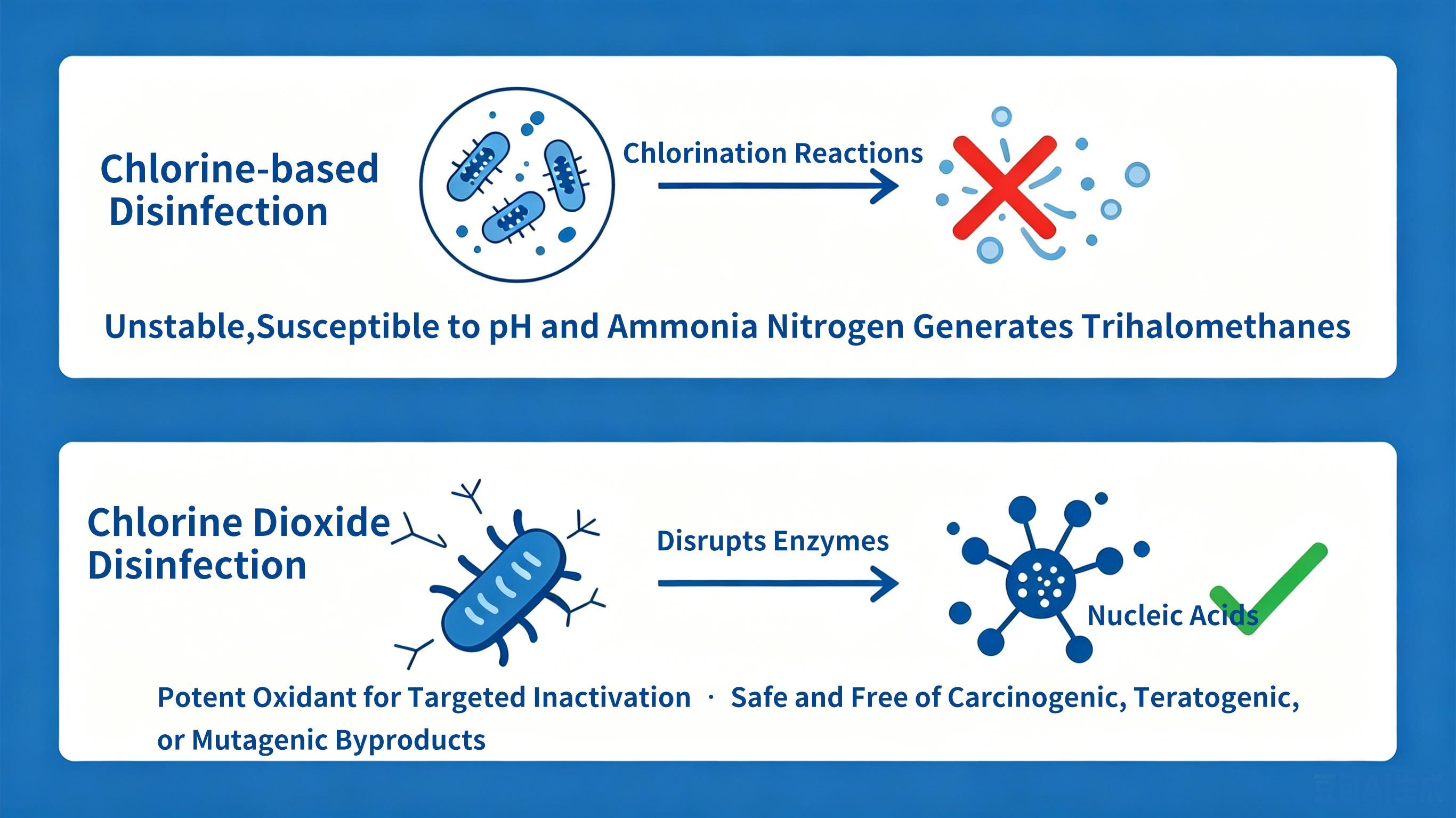
In practical applications, chlorine dioxide, as a non-chlorine-based strong oxidant , fully demonstrates its advantages . It boasts a broad and rapid bactericidal range— effectively inactivating vegetative bacteria, viruses, fungi, and even stubborn spores. Furthermore, it has an exceptionally wide applicable pH range; its bactericidal effect is completely unaffected by impurities such as ammonia nitrogen and organic matter in water bodies with pH 2 to 10. Simultaneously, it is odorless and residue-free , does not alter the taste of the water after disinfection , and does not cause secondary pollution to the environment. Specifically, in different scenarios: in water treatment plants , it effectively avoids the formation of chlorination byproducts and improves the taste of the water; in hospital wastewater treatment, it effectively inactivates various drug-resistant bacteria and viruses; in food processing plants, it does not corrode equipment surfaces and leaves no residual toxicity; and in aquaculture, it does not harm the gills of fish and shrimp. This perfectly aligns with the current industry trend towards green, environmentally friendly, and safe disinfection.
Of course, for chlorine dioxide to truly unleash its core advantages as a non-chlorine product, a crucial prerequisite is the selection of high-purity, compliantly manufactured, and unadulterated chlorine-based products. Take Shandong Huashi Pharmaceutical's Xiuba brand chlorine dioxide disinfectant as an example . Leveraging 43 years of experience in dedicated chlorine dioxide R&D and production , it is manufactured according to the standards for non-chlorine oxidizing disinfectants. Addressing the inconvenience of use in different scenarios, Xiuba has also developed several dosage forms, including powder, tablets, and solutions. These not only boast high purity and rapid activation but also leave no residue after dissolution , making them exceptionally convenient to use. They are suitable for both drinking water disinfection and food factory sterilization.
What's even more reassuring is that every Xiuba brand chlorine dioxide disinfectant product has professional certifications. It not only possesses a hygiene permit for drinking water safety products but also has inspection reports from authoritative third-party institutions. Furthermore, it has successfully passed ISO triple management system certification and CE EU certification, demonstrating its quality . Whether for routine drinking water disinfection, high-standard disinfection in food factories, or handling emergencies such as hospital wastewater treatment and public environment disinfection, Xiuba chlorine dioxide, with its high purity, safety, and stability, delivers the benefits of non-chlorine strong oxidants, giving users peace of mind.
At this point, many people might still wonder: if chlorine dioxide isn't a chlorine-based disinfectant, why does its name include the word "chlorine"? This is simply a matter of standard chemical naming conventions—the name only tells you what elements the substance contains and what category it belongs to; it has absolutely nothing to do with chlorine-based disinfectants . Just as carbon dioxide contains carbon, but it's not the allotrope that causes the greenhouse effect, chlorine dioxide contains chlorine, but its core chemical characteristics and disinfection methods are completely different from those of chlorine-based disinfectants. Classifying it as a chlorine-based disinfectant based solely on its name not only leads to misunderstanding but can also cause safety issues. For example, using chlorine dioxide as if it were a chlorine-based disinfectant—such as copying the concentration and contact time, or even randomly combining it with other chemicals—will not only result in significantly poor disinfection but may also create safety hazards due to improper control of the "activation rate."
From the perspective of industry development, the government is increasingly tightening its control over disinfection byproducts, and the public is placing greater emphasis on health and environmental protection. Traditional chlorine-based disinfectants are finding increasingly fewer applications. Conversely, non-chlorine-based strong oxidizing disinfectants, represented by chlorine dioxide, are gradually becoming the mainstream choice in the mid-to-high-end disinfection sector due to their safety, effectiveness , and environmental friendliness, leading the entire disinfection industry towards a green and safe direction.
Therefore , whether viewed from a microscopic chemical structure and sterilization principle, or from a macroscopic national classification and actual usage effect, chlorine dioxide is an independent and effective strong oxidant, completely different from traditional chlorine preparations, and should absolutely not be confused with them. The word "chlorine" in its name only indicates that it contains chlorine, and cannot be used as a basis for classification. When performing disinfection and water treatment, the old method of "classifying by name" should not be used to define it. The true difference between the two should be clearly understood, and high-purity, compliantly produced chlorine dioxide products should be prioritized. In the future, as non-chlorine oxidation technologies become more mature, chlorine dioxide will certainly play a role in more key areas , becoming a major force in safe disinfection and green epidemic prevention, safeguarding the health and safety of all industries.
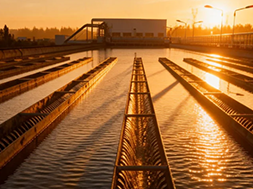
Chlorine dioxide disinfection pipelines in water plants are prone to blockage due to salt crystallization caused by disproportionation reactions. This can be prevented by optimizing the purity of the solution, designing the pipeline properly, regularly flushing and insulating, and conducting thorough inspections and chemical cleaning (hydrochloric acid should not be used). These multi-dimensional measures can help prevent crystallization and ensure the stable operation of the disinfection system.
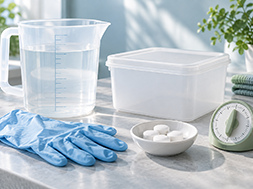
The pestis pestis leakage incident in the Russian laboratory reminded the public that pestis can be spread by fleas, infected animals, and droplets. The prevention and control should focus on the environment and rat flea management, instead of blind disinfection and sterilization. Xiuba chlorine dioxide disinfection tablet can only be used for preventive disinfection of object surface according to instructions. It has no special killing effect of pestis bacilli, and cannot be used as special epidemic prevention materials for pestis. It needs to be operated in a standardized way. Do not over disinfect due to network rumors.
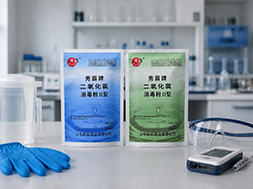
In 2026, Xiuba proposed that it is not enough to simply meet product qualification requirements; it is necessary to promote "green" practices in product selection, operation, safety, and record-keeping, rely on actual measurement data to verify effectiveness, strictly adhere to safety boundaries, and promote high-quality development of the industry.
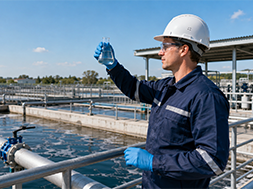
Traditional chlorine preparations are prone to producing harmful chlorination by-products and will eventually be phased out; Chlorine dioxide relies on a unique electron transfer oxidation mechanism, producing almost no organic chlorides, with high sterilization efficiency and lower risk of by-products. Xiuba relies on years of large-scale production and university research cooperation, with complete product qualifications, strict control of disinfection residues, and a balance between effective disinfection and ecological green, in line with the industry's green and low-carbon development trend.

Focusing on three core selection dimensions—cost, safety, and broad-spectrum disinfection—this article compares chlorine dioxide with disinfectants such as ozone and peracetic acid, highlighting its significant advantages in terms of sterilization mechanism, usage safety, and long-term cost. The product is suitable for various scenarios including water supply, food processing, and wastewater treatment. Addressing market issues of misleading labeling, the article provides purchasing advice and recommends Xiuba Chlorine Dioxide, a brand with deep industry experience and complete certifications.
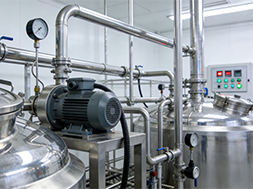
This article points out that during CIP cleaning, adding chlorine dioxide before alkaline washing and during acid-alkali rinsing has poor effects; the optimal point is after acid washing, when the acidic clean environment is suitable for the agent, and it is also necessary to drain residual acid, control the temperature, and circulate for 15-20 minutes to improve the disinfection effect.
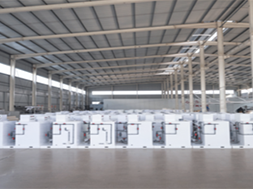
This article compares the applicable scenarios of chemical and electrolytic chlorine dioxide generators, explaining the manufacturer selection criteria from five dimensions: qualifications, accessories, case studies, after-sales service, and process compatibility. It also introduces five major development trends, including intelligent and modular equipment. Xiuba XB series equipment complies with GB 28931-2024 standards, has complete qualifications, and offers 24/7 full-process service. It is suitable for multiple industries and can reduce maintenance costs and operational risks.
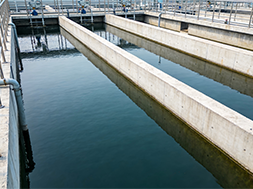
Chlorine dioxide is safe, efficient, and suitable for multiple industries, with the market continuously expanding and benefiting from ongoing policy support.Shandong Huashi Pharmaceutical's Xiuba division has been deeply involved in the industry for many years and can provide a full range of chlorine dioxide disinfection products and related technical services.
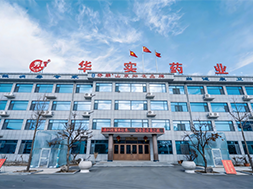
Xiuba has been deeply involved in chlorine dioxide disinfection for nearly 30 years, possessing mature technology and a rich product line. The brand has completed a strategic transformation, shifting from simply selling products to providing customized disinfection services throughout the entire process, integrating industry resources, and specifically addressing various disinfection pain points for companies in the drinking water, food, and medical fields.
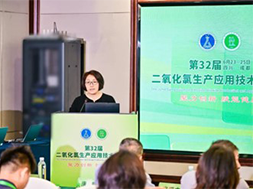
Shandong Huashi Pharmaceutical took part in the 32nd National Chlorine Dioxide Technology Symposium held in Chengdu this June. Our technical team shared professional research on chlorine dioxide disinfection for medical and public health scenarios and exchanged industry technologies with over 70 experts and manufacturers. This participation fully proves our solid R&D strength and professional standing in the chlorine dioxide disinfection field.
Northeast of Huangshan Road and Chuangye Intersection, Small and Medium sized Enterprise Entrepreneurship Industrial Park, Shanwang Town, Linqu County, Weifang City, Shandong Province
Copyright © 2025 by Shandong Huashi Pharmaceutical Co., Ltd All Rights Reserved


 Language
 中文
中文 Русский
 Chlorine Dioxide Disinfectant Manufacturer


