Welcome to Our Factory for a Visit! Free customized disinfection solutions
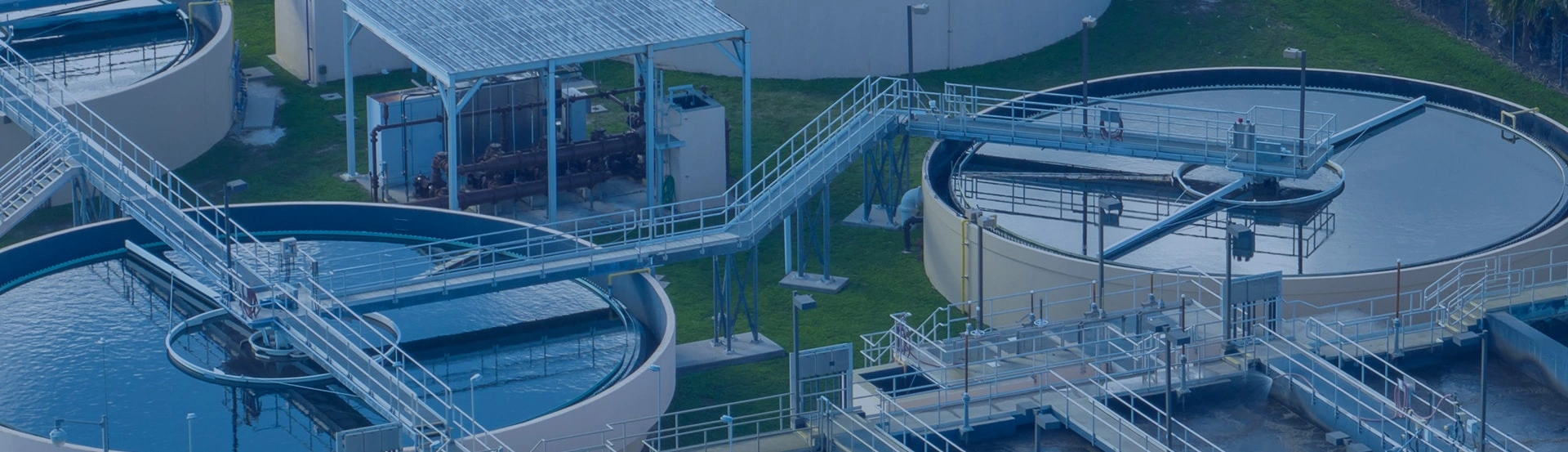
In a water treatment plant, the clean water tank is the direct destination for storing qualified tap water. Chlorine dioxide comes into direct contact with water here, which is also a decisive factor in the disinfection results.
The disinfection quality of this stage is the CT value that we are all familiar with (i.e. disinfectant concentration x contact time). Whether the CT value meets the standard directly affects the effluent quality of the water plant. But in reality, many factory areas have a large amount of additives, which not only waste but also increase by-products, resulting in substandard water quality testing.
Given the slow flow of water in the clean water tank and the longer the contact time with chlorine dioxide, how to clean the bottom and even the contact surface of the tank wall is a very important issue. How to make pure tap water meet the standard to complete this disinfection journey, Xiuba will specifically talk about some details and techniques of practical operation.
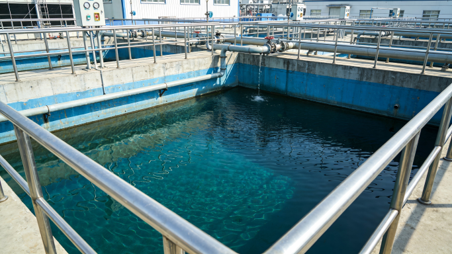
Dead zone, a place where water flows secretly to fish
The problem of different CT values measured in different areas of the clean water tank is influenced by CFD (Computational Fluid Dynamics) problems, and there are indeed some areas inside the tank that are not conducive to disinfection.
The inlet of the old style clean water tank is designed as a corridor, and the water flowing in through this pipeline will create a backflow area on both sides due to habitual curling, as the space is suddenly released. Reflux means spinning in place, and circulating flow is equivalent to staying for a certain period of time before being washed away. Like many unreasonable deflectors or corners of bends, it is easy to generate stagnant water flow due to backflow, and the flow velocity in the entire clean water tank area varies, which inevitably leads to varying degrees of disinfection.
The harm of dead zone lies in the fact that chlorine dioxide disinfectant will be consumed prematurely due to low water flow rate, while the main flow area does not have enough disinfection time, resulting in difficulty in meeting CT values.
Tip 1: Don't let the water rush, design a reasonable speed bump
Many old clean water tanks are designed to directly connect the inlet and outlet, allowing water to flow through directly. So it will also cause water flow drift near the diversion wall, and it will jump out of the pool without stopping in time. There is no need to go to great lengths to rebuild the clean water tank. Using diversion walls to achieve separation is also a direct tool for managing water flow.
When optimizing the design, it is possible to simulate the principles of computational fluid dynamics and set up a porous guide plate. At the corner of the water inlet, first avoid a sharp 90 degree turn, and then use a guide plate transition curve buffer zone to naturally slow down the water flow to a smooth distribution. This porous structure plays a role in controlling the separation of water flow from the pool wall, thereby eliminating the possibility of dead zones. Further research and experiments have confirmed that the porous baffle structure can achieve uniform water flow diversion, enabling the water flow to switch to a push flow state.
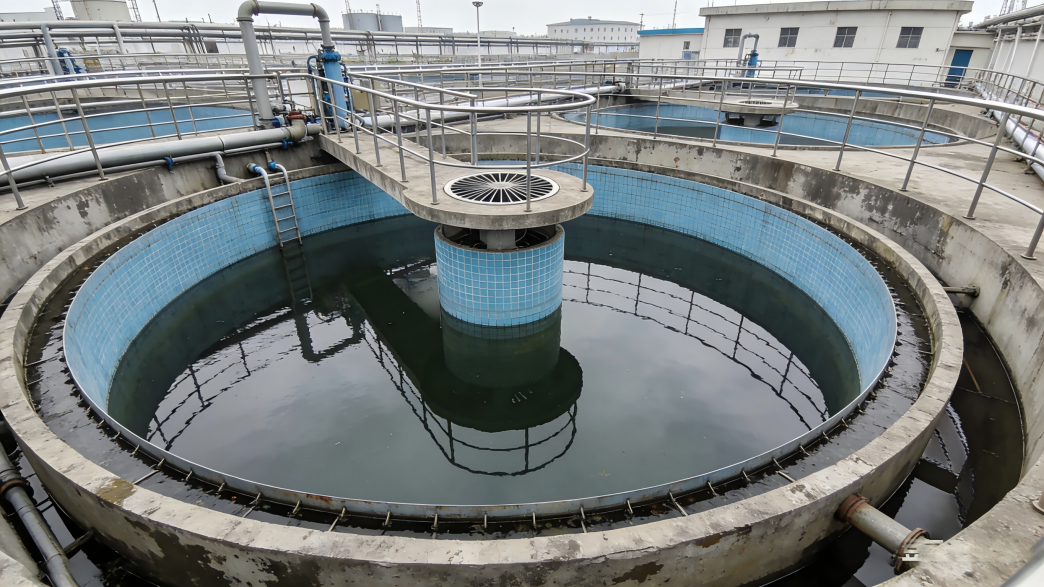
Tip 2: Water inlet and outlet layout - be gentle when entering and even when exiting
The inlet and outlet positions are always designed with twists and turns, like a maze. In this way, it is inevitable that the water inlet will rush in like a high-pressure water gun. This jet entry method will cause the water flow to be extremely fast, which can easily lead to backflow and rotation on both sides of the water flow, resulting in a dead zone.
Adopt multi-point diffusion or vertical water inlet. The inlet does not need to be too large, it should be designed as multiple evenly distributed outlet holes. You can also set up a stable flow zone before the inlet for a transition. This is mainly done to prevent the fierce intrusion of water flow, allowing it to move slowly and form a dead zone by regulating the flow rate of the water flow.
The arrangement of the water outlet is equally crucial. The same principle, with only one small opening at the end, is also prone to the phenomenon of rapid backflow of water flow, which can create disinfection problems. By using a porous water collection area, the water flow is forced to divert into the porous area at the end, so as to uniformly converge and prevent the problem of uneven flow velocity.
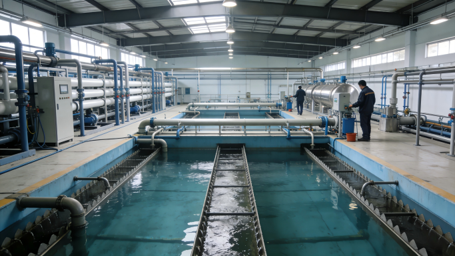
Tip 3: Break the conventional aspect ratio and utilize thin layer flow
It is an ideal state for tap water to be in a pushing flow state, which is also the root of the common understanding that the ratio of the total length to the single width of the internal corridor of the clean water tank should be greater than 50. In this state, the water flow can undergo a thorough disinfection reaction as if it were flowing slowly in a pipeline.
But in reality, the size of water plants varies, and there are also easily differences in the size of water tanks. In this situation, it is necessary to set up a backflow wall to create a space environment of "thin layer flow" such as push flow.
The specific approach is to reduce the width of each corridor and increase the number of diversion walls.
The water flow is arranged in multiple parallel thin layers by the corridor, and each layer of water flow has a uniform distribution condition of tassels, which can achieve sufficient contact time for mixing in the vertical area. Only by evenly distributing tap water in multiple channels and ensuring consistent water flow can there be the same disinfection reaction time.
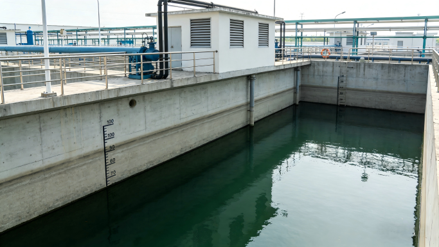
Tip 4: Art of on-site fine-tuning
The already constructed pools can also be adjusted slightly. Conduct trace detection tests by adding salt or fluorescent dyes. Mainly search for the true dead zone of the clean water tank and how severe the short flow is. This line is the boundary to be treated for disinfection of the clean water tank.
Complete the dead zone partition, which makes it easier to place simple rectifier plates and adds a hydraulic agitation transition step to this area. This dead zone can also be used to flexibly adjust the regulation of different water flow levels during full pool operation and low water level operation, adding a lot of convenience. This is equivalent to zero cost control optimization, and water level control is more convenient and easy to operate.
When the dead zone is eliminated, the CT value will steadily meet the standard. Many chlorine dioxide disinfection techniques have invisible physical interference, which is often overlooked. Do not mistake disinfectants for the culprit, it is still necessary to hold both parties responsible in the disinfection reaction process accountable. Identifying the drawbacks is the correct logic of disinfection thinking.
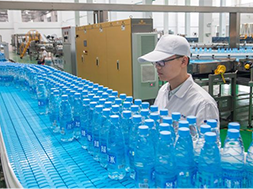
Chlorine dioxide can efficiently disinfect drinking water, is not easy to generate carcinogenic disinfection by-products, and will produce chlorite and other residues, which must comply with the national standard limits. It shall be accurately added according to the water quality and equipped with qualified equipment and process. The safety of compliant use is high. Water supply enterprises need to do a good job in control and monitoring to ensure the safety of water quality.
Chlorine dioxide is a who Certified grade A1 safe disinfectant with high sterilization efficiency, few harmful by-products, strong water quality adaptability and multiple water purification functions; Compared with traditional chlorine disinfection, it is safer and more environmental friendly, and can be widely used in drinking water, sewage treatment, food and beverage disinfection and other fields.
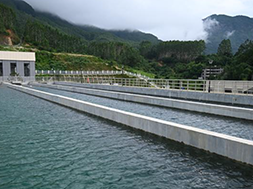
Chlorine dioxide can sterilize and remove odors in water treatment plants and is unlikely to generate trihalomethanes. However, in practical applications, it can fail to remove odors or even produce new unpleasant smells. Organic matter in the water source, bromide ions, and low temperatures can affect treatment effectiveness. Furthermore, its removal capacity for geosmin and 2-methylisoborneol is limited, and improper dosage can also cause odor problems. Water treatment plants need to strengthen water quality monitoring, dynamically adjust dosages, and, when necessary, combine ozone-activated carbon processes to ensure that the odor of the treated drinking water meets standards.
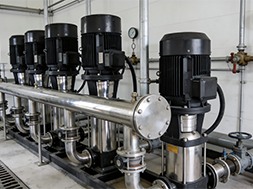
When adding chlorine dioxide to the water pumping station to maintain residual chlorine in the pipeline network, it is necessary to avoid pipeline corrosion caused by local high concentrations. The dosage should be accurately controlled by flow-linked dosing, pipeline mixing, and online residual chlorine monitoring, while also paying attention to under-scale corrosion, thus balancing disinfection and pipeline protection.
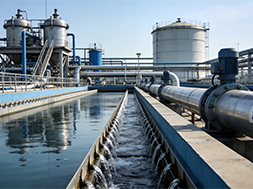
Pipeline network renovations can easily alter the hydraulic conditions of the network, increasing flow velocity and creating stagnant zones that consume chlorine dioxide, leading to fluctuations in water quality. Water plants can ensure the quality of water supplied to the end points through monitoring and prediction, dynamic chemical dosing, pipeline flushing, and the activation of contingency plans.
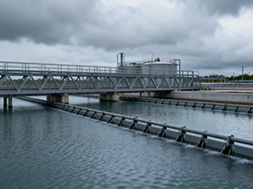
Traditional chlorine disinfection is prone to producing carcinogenic halogenated by-products; chlorine dioxide oxidizes and kills bacteria, with almost no such by-products, good inactivation effect, and the ability to remove odor and inhibit algae, but it generates by-products such as chlorite, requires higher raw material and operation and maintenance costs, and is suitable for water plants that can be upgraded and managed in a coordinated manner, rather than being simply and directly replaced.
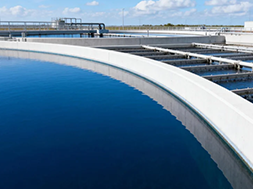
This study simulates a scenario where a small town's water plant experiences a sudden pollution outbreak caused by medical wastewater and the failure of chlorine dioxide disinfection. It analyzes the reasons why pollutants consume disinfectant and provides four-step emergency response measures. Furthermore, it proposes long-term improvement suggestions in terms of monitoring, supplies, contingency plans, and drills to enhance the emergency response capabilities of small and medium-sized water plants.
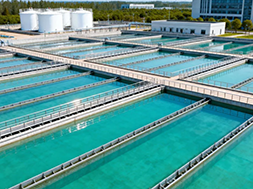
Switching from sodium hypochlorite to chlorine dioxide disinfection in water plants is not just about replacing equipment; it's a complete system upgrade. Chlorine dioxide disinfection is more effective, produces fewer byproducts, and has lower overall costs. However, many water plants only replace the hardware, neglecting personnel training and adapting management systems. The core of this transformation is shifting from experience-based to scientific operation.
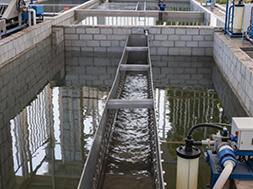
The actual dosage of chlorine dioxide at water treatment plants often exceeds the theoretical value, influenced by factors such as reducing agents in the water, sediment in the pipe network, water quality fluctuations, and byproduct consumption. By leveraging monitoring and local operational data to optimize dosage, we can provide water quality assessments and customized dosage solutions.
Northeast of Huangshan Road and Chuangye Intersection, Small and Medium sized Enterprise Entrepreneurship Industrial Park, Shanwang Town, Linqu County, Weifang City, Shandong Province
Copyright © 2025 by Shandong Huashi Pharmaceutical Co., Ltd All Rights Reserved


 Language
 中文
中文 Русский
 Chlorine Dioxide Disinfectant Manufacturer