Welcome to Our Factory for a Visit! Free customized disinfection solutions
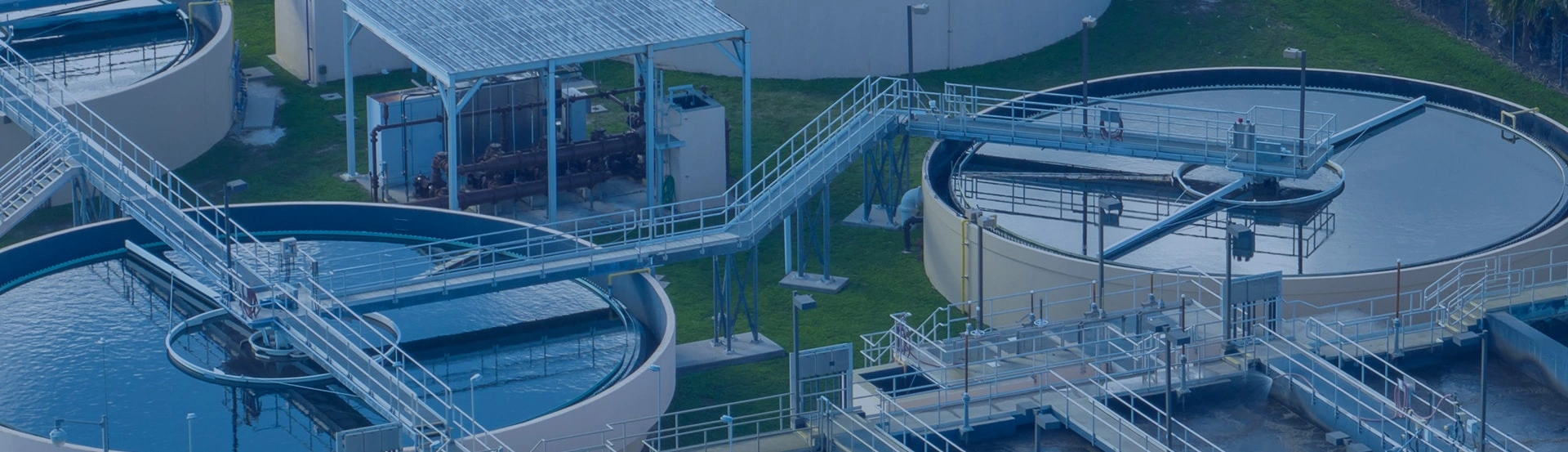
Drinking water safety has become an increasingly important public-health concern. In addition to microbiological contamination, drinking water may also contain metals such as lead, cadmium, and mercury that require strict control.
This raises an important question: as a commonly used oxidizing and disinfecting technology in water treatment, can chlorine dioxide actually solve heavy-metal contamination problems?
The first point to understand is that chlorine dioxide is primarily an oxidant and disinfectant. It is not a universal heavy-metal removal agent. Its effects vary significantly depending on the specific metal involved, and understanding these limitations is more important than simply claiming that it “removes heavy metals.”
Drinking water may contain many different metallic contaminants. Among them, lead, cadmium, and mercury are of particular health concern. Long-term consumption at concentrations above applicable drinking-water requirements may create different types of health risks.
Mercury is toxic, but different chemical forms of mercury vary considerably in their absorption, distribution, and toxicity. Long-term exposure above safe levels may adversely affect the nervous system and kidneys. Mercury contamination in drinking water should therefore be confirmed through reliable testing, and treatment should be selected according to its chemical form and source rather than judged by appearance, taste, or odor.
Lead exposure is particularly important for children, who are more sensitive to its effects. Long-term excessive exposure may affect neurological development and growth. In adults, sustained high lead exposure can also affect the nervous system, kidneys, blood, and cardiovascular system. When elevated lead is detected in drinking water, potential sources such as the source water, distribution network, plumbing fittings, and internal building water systems should be investigated.
Cadmium mainly affects the kidneys and skeletal system. Long-term excessive intake may damage renal tubular function and interfere with mineral metabolism and bone health. It is more appropriate to focus on these well-established health concerns rather than making broad statements that cadmium necessarily causes hemolytic anemia.
It is also important to distinguish iron and manganese from metals such as lead, cadmium, and mercury. Elevated iron and manganese may cause color, deposits, taste and odor problems, and distribution-system issues, whereas lead, cadmium, and mercury are more directly associated with toxicological health risks. Different metals therefore require different treatment strategies.
When people learn about the risks of metal contamination, a natural question follows: can chlorine dioxide remove these metals directly?
The answer is that chlorine dioxide can serve as an oxidation pretreatment for certain metals, but it should not be regarded as the primary removal technology for lead, cadmium, or mercury.
For iron and manganese, chlorine dioxide can provide useful oxidation under suitable water-quality and process conditions. It can oxidize part of the dissolved ferrous iron into higher-valence iron species that are more likely to form particulate matter, and it can also promote the oxidation of dissolved manganese into higher-valence manganese oxides.
However, oxidation and removal are not the same process.
After oxidation, iron and manganese do not simply disappear from the water. The resulting particulate oxides generally need to be removed through coagulation, sedimentation, filtration, or other solid-liquid separation processes.
A more accurate statement is therefore:
Chlorine dioxide can be used as an oxidation pretreatment for certain iron and manganese removal processes, creating favorable conditions for subsequent filtration or separation.
Actual performance depends on pH, water temperature, natural organic matter, initial metal concentration, chlorine dioxide dosage, and the performance of the downstream filtration system.
For mercury, cadmium, lead, and many other metals, the direct removal effect of chlorine dioxide is generally limited. It cannot replace dedicated technologies such as precipitation, adsorption, ion exchange, or membrane separation.
If lead, cadmium, or mercury is detected above the applicable requirement, the first step should be to determine its source and chemical form. Appropriate technologies such as chemical precipitation, coagulation and adsorption, specialized adsorbents, ion exchange, or membrane separation can then be selected.
The original statement that chlorine dioxide “reduces cyanide into harmless substances” also requires correction.
Chlorine dioxide is an oxidizing agent, not a reducing agent. Under suitable conditions, it may participate in the oxidation of certain reducing contaminants such as cyanide or sulfide. However, the final reaction products and whether they meet safety requirements depend on the contaminant, dose, pH, reaction time, and subsequent treatment.
Although chlorine dioxide is not a universal heavy-metal removal technology, it can function as an oxidation and disinfection step within a complete drinking-water treatment train.
Natural organic matter can sometimes complex with certain metals, influencing their chemical form and subsequent treatment behavior. Chlorine dioxide can oxidize some reactive organic compounds and may therefore alter the interaction between organic matter and metals under certain water-quality conditions.
However, this should not be interpreted as meaning that oxidation of organic matter will automatically make every heavy metal easier to remove. Natural organic matter is highly complex, and oxidation can also create new intermediate products. Whether such treatment improves removal must be evaluated for the specific water and target contaminant.
Chlorine dioxide can also control many microorganisms and, under suitable conditions, help control certain biofilms.
However, destroying a biofilm does not automatically reduce the concentration of metals in the water. Biofilms can adsorb metals, but disturbance of the biofilm may also release previously accumulated material. The principal value of biofilm control is therefore maintaining hygienic and operational stability, not direct heavy-metal removal.
In real drinking-water treatment, chlorine dioxide may be integrated with other treatment processes. For iron and manganese systems that benefit from oxidation pretreatment, chlorine dioxide may first alter the chemical form of the metals, while downstream sedimentation or filtration completes the removal.
For lead, cadmium, mercury, and other toxic metals, treatment should be selected according to metal speciation and water quality. Coagulation, specialized adsorption, ion exchange, and membrane processes all have specific application ranges. Chlorine dioxide should not be described as a universal enhancer of heavy-metal removal.
Similarly, the claim that changing metal valence with chlorine dioxide always improves ion-exchange efficiency is overly broad. The relationship between oxidation state and resin selectivity varies among metals and treatment systems and must be validated for the specific contaminant.
Care is also required when chlorine dioxide is combined with membrane processes. Microbial control may help reduce biological fouling pressure in some pretreatment systems, but membrane materials vary widely in their resistance to oxidizing agents. Compatibility data from the membrane manufacturer should therefore be consulted before chlorine dioxide is used.
Chlorine dioxide can also oxidize certain compounds responsible for taste, odor, and color and may therefore improve some sensory aspects of water quality.
However, chlorine dioxide should not be considered a pH-adjustment chemical. Its transformation products may include chlorite, chlorate, and chloride, and the process should not be used as a way to create “acidic substances” to promote metal precipitation.
Metal precipitation is highly dependent on pH and metal chemistry, and in some cases lowering pH can actually increase metal solubility. Where pH adjustment is required, it should be carried out through a dedicated and validated chemical treatment process.
Overall, the principal functions of chlorine dioxide in drinking-water treatment are oxidation and disinfection.
For certain targets such as iron and manganese, it can serve as an oxidation pretreatment and support subsequent removal by filtration or other separation processes. For priority toxic metals such as mercury, cadmium, and lead, however, chlorine dioxide cannot replace dedicated removal technologies.
When one or more metal parameters are abnormal, the appropriate approach is to identify the contaminant, concentration, chemical form, and source, and then select suitable treatment such as coagulation and precipitation, adsorption, ion exchange, membrane filtration, or another targeted process.
A more accurate way to understand its role is:
Chlorine dioxide can participate in oxidation pretreatment for certain metals, but it is not a universal heavy-metal removal agent.
Its value is maximized when it is placed in the correct position within a complete treatment process and combined with appropriate downstream technologies.
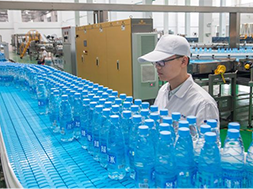
Chlorine dioxide can efficiently disinfect drinking water, is not easy to generate carcinogenic disinfection by-products, and will produce chlorite and other residues, which must comply with the national standard limits. It shall be accurately added according to the water quality and equipped with qualified equipment and process. The safety of compliant use is high. Water supply enterprises need to do a good job in control and monitoring to ensure the safety of water quality.
Chlorine dioxide is a who Certified grade A1 safe disinfectant with high sterilization efficiency, few harmful by-products, strong water quality adaptability and multiple water purification functions; Compared with traditional chlorine disinfection, it is safer and more environmental friendly, and can be widely used in drinking water, sewage treatment, food and beverage disinfection and other fields.
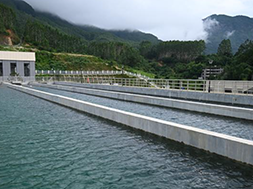
Chlorine dioxide can sterilize and remove odors in water treatment plants and is unlikely to generate trihalomethanes. However, in practical applications, it can fail to remove odors or even produce new unpleasant smells. Organic matter in the water source, bromide ions, and low temperatures can affect treatment effectiveness. Furthermore, its removal capacity for geosmin and 2-methylisoborneol is limited, and improper dosage can also cause odor problems. Water treatment plants need to strengthen water quality monitoring, dynamically adjust dosages, and, when necessary, combine ozone-activated carbon processes to ensure that the odor of the treated drinking water meets standards.
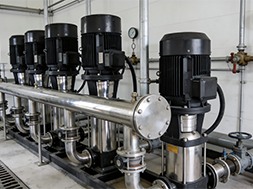
When adding chlorine dioxide to the water pumping station to maintain residual chlorine in the pipeline network, it is necessary to avoid pipeline corrosion caused by local high concentrations. The dosage should be accurately controlled by flow-linked dosing, pipeline mixing, and online residual chlorine monitoring, while also paying attention to under-scale corrosion, thus balancing disinfection and pipeline protection.
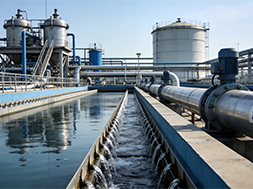
Pipeline network renovations can easily alter the hydraulic conditions of the network, increasing flow velocity and creating stagnant zones that consume chlorine dioxide, leading to fluctuations in water quality. Water plants can ensure the quality of water supplied to the end points through monitoring and prediction, dynamic chemical dosing, pipeline flushing, and the activation of contingency plans.
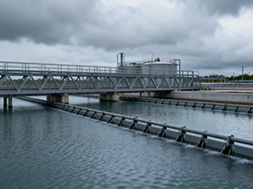
Traditional chlorine disinfection is prone to producing carcinogenic halogenated by-products; chlorine dioxide oxidizes and kills bacteria, with almost no such by-products, good inactivation effect, and the ability to remove odor and inhibit algae, but it generates by-products such as chlorite, requires higher raw material and operation and maintenance costs, and is suitable for water plants that can be upgraded and managed in a coordinated manner, rather than being simply and directly replaced.
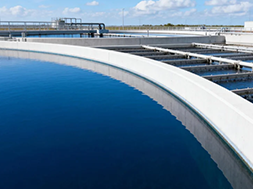
This study simulates a scenario where a small town's water plant experiences a sudden pollution outbreak caused by medical wastewater and the failure of chlorine dioxide disinfection. It analyzes the reasons why pollutants consume disinfectant and provides four-step emergency response measures. Furthermore, it proposes long-term improvement suggestions in terms of monitoring, supplies, contingency plans, and drills to enhance the emergency response capabilities of small and medium-sized water plants.
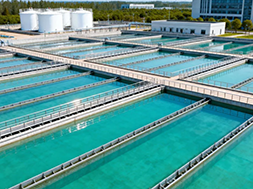
Switching from sodium hypochlorite to chlorine dioxide disinfection in water plants is not just about replacing equipment; it's a complete system upgrade. Chlorine dioxide disinfection is more effective, produces fewer byproducts, and has lower overall costs. However, many water plants only replace the hardware, neglecting personnel training and adapting management systems. The core of this transformation is shifting from experience-based to scientific operation.
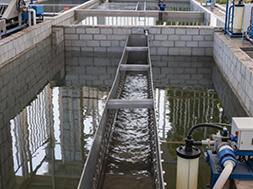
The actual dosage of chlorine dioxide at water treatment plants often exceeds the theoretical value, influenced by factors such as reducing agents in the water, sediment in the pipe network, water quality fluctuations, and byproduct consumption. By leveraging monitoring and local operational data to optimize dosage, we can provide water quality assessments and customized dosage solutions.
Northeast of Huangshan Road and Chuangye Intersection, Small and Medium sized Enterprise Entrepreneurship Industrial Park, Shanwang Town, Linqu County, Weifang City, Shandong Province
Copyright © 2025 by Shandong Huashi Pharmaceutical Co., Ltd All Rights Reserved


 Language
 中文
中文 Русский
 Chlorine Dioxide Disinfectant Manufacturer