Welcome to Our Factory for a Visit! Free customized disinfection solutions
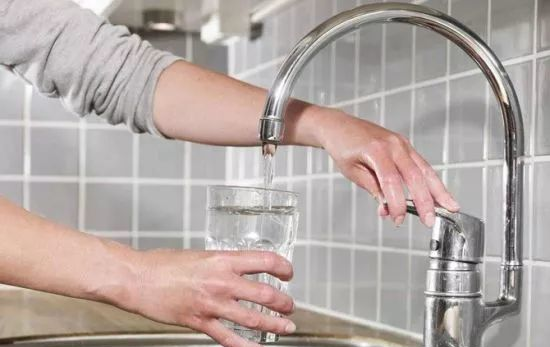
How is water quality protected at every stage, from treated water leaving the plant to the water at residents' taps?
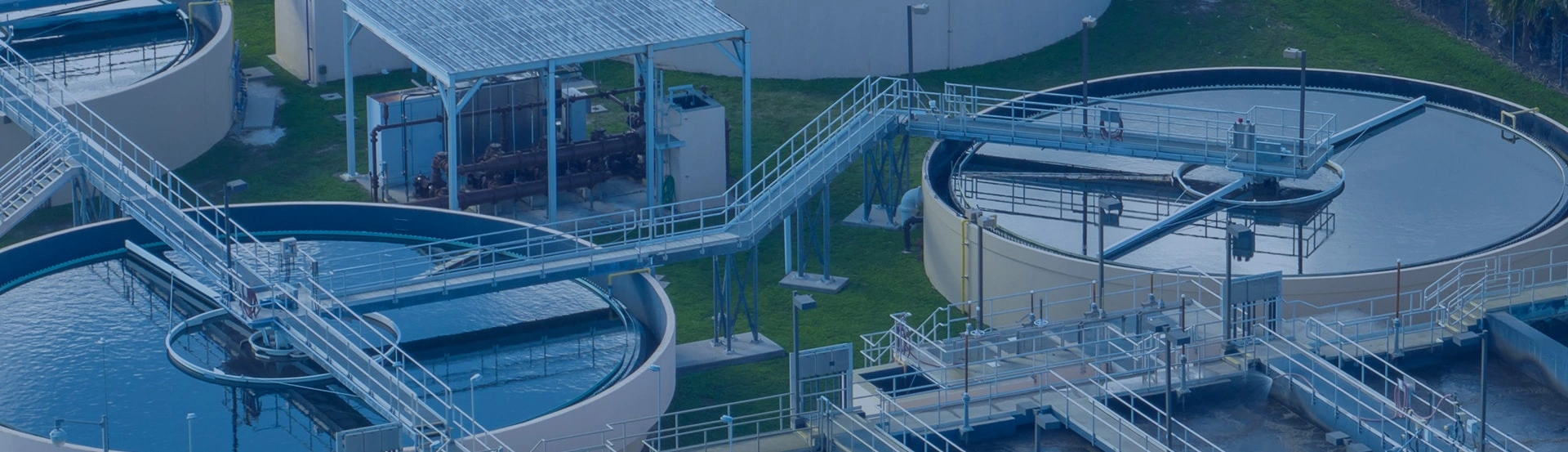
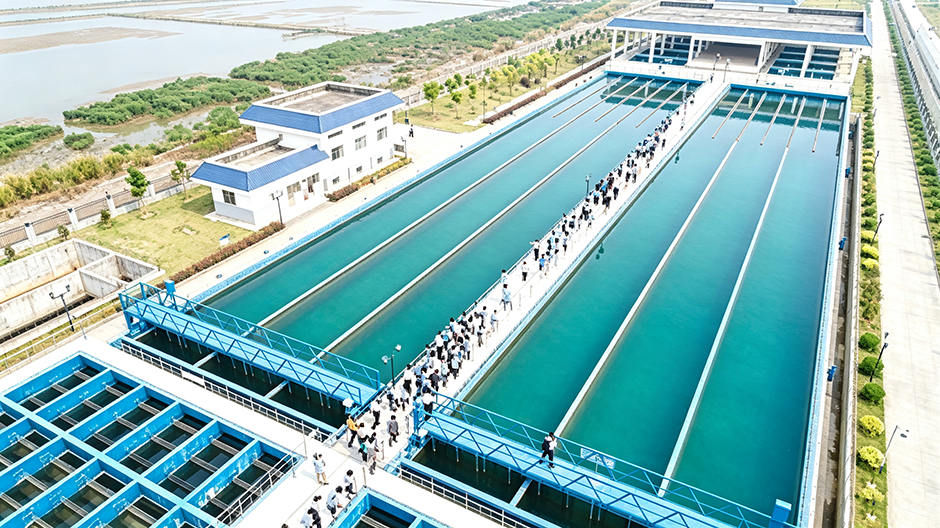
When you turn on the tap in the morning, the clear water has already passed through multiple stages, including raw-water intake, coagulation, sedimentation, filtration, disinfection and distribution. Water quality depends not only on the water leaving the treatment plant, but also on changes in the raw water, the disinfection process, the distribution network and secondary water-supply facilities. The following sections focus on how water utilities control chlorine dioxide disinfection by-products and safeguard every link from the plant outlet to the user's tap.
I. The Role of Chlorine Dioxide Disinfection and the Risks of By-products
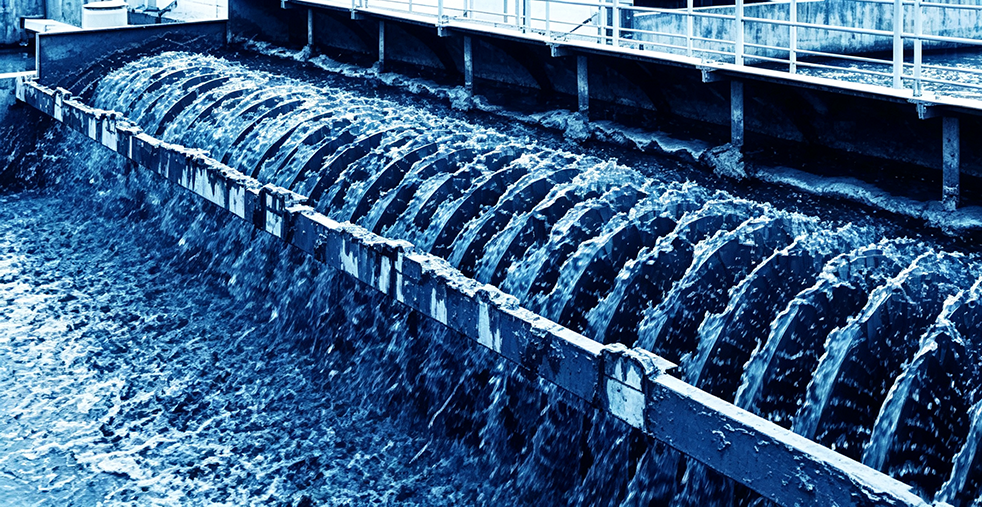
Chlorine dioxide can be used to disinfect drinking water and provides effective inactivation of a wide range of microorganisms. However, chlorite may form when it oxidizes organic matter, iron, manganese and other substances in water. Poor control of generation equipment, raw-material quality or operating conditions may also increase chlorate and other by-products. These risks do not arise only when the disinfectant is overdosed. Disinfection performance, dose, generator operating status and residual concentrations in the finished water must all be controlled at the same time.
Heavy rainfall, drought, algal growth and reservoir stratification may change raw-water turbidity, organic-matter content, ammonia nitrogen, iron, manganese and other indicators, thereby altering oxidant demand and by-product formation. Water utilities should adjust pretreatment and disinfection parameters promptly in response to raw-water conditions and cross-check online monitoring results against laboratory analyses rather than relying on a fixed dose.
II. Building Three Lines of Defence from Source to Tap
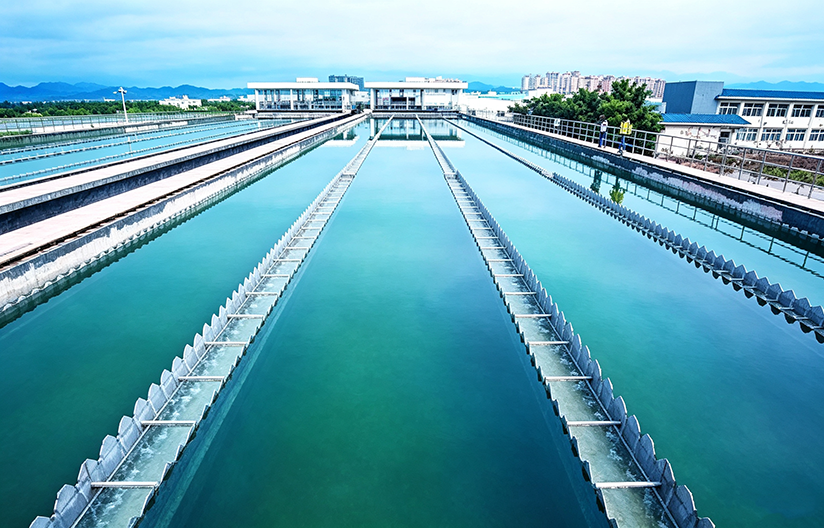
Effective control of chlorine dioxide by-products requires source prevention, process control and full-process monitoring to operate in coordination.
First line of defence: Precise dosing and dynamic control
Automatic dosing systems can dynamically adjust the chlorine dioxide dose by integrating data such as raw-water flow, turbidity, pH, temperature, oxidant demand and the disinfectant residual in finished water. Online instruments must be calibrated regularly and verified against laboratory results. Disinfection strategies should be validated through testing based on raw-water quality, contact time and distribution-network conditions. Fixed parameters should not be copied mechanically, and different disinfectants should not be switched solely according to day and night schedules.
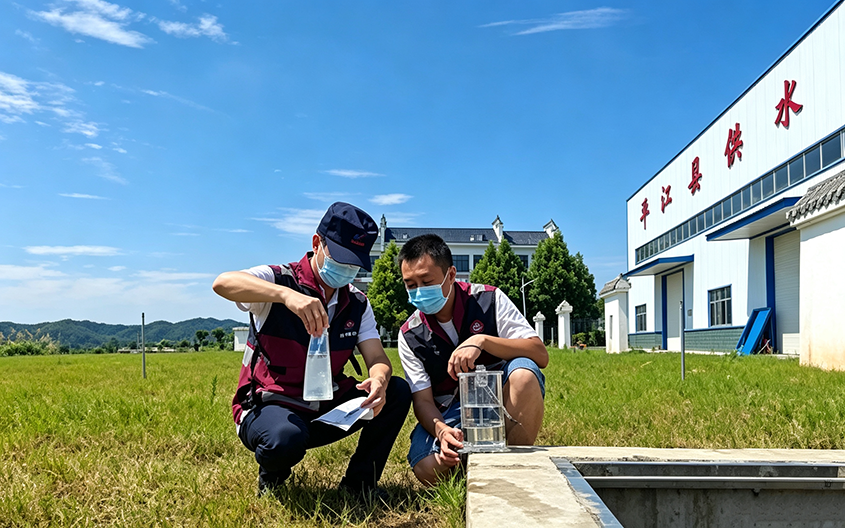
Second line of defence: Coordinated control of generation equipment and treatment processes
Water utilities should use chlorine dioxide generation equipment that complies with applicable standards and should properly manage raw-material storage, metered dosing, gas-liquid separation, interlock alarms and residual-liquid disposal in order to reduce by-product risks caused by equipment deviations. Depending on water-quality conditions, chlorite may be controlled through ferrous reduction, suitable activated-carbon processes or other validated methods. Advanced treatment such as ozone-activated carbon can improve the removal of certain organic contaminants and odour-causing substances, but its actual performance must be demonstrated using the specific water and test data. Because chlorate is difficult to remove through conventional treatment once it has formed, control should focus on raw materials and the generation process.
Third line of defence: Full-process monitoring and early warning of abnormalities
The monitoring system should cover the water source, plant influent, individual treatment units, finished water, critical points in the distribution network, secondary water-supply facilities and water at the point of use. Online equipment can continuously track indicators such as turbidity, pH and disinfectant residual. Any abnormal result should also be confirmed by laboratory testing, after which the utility should follow its emergency plan by adjusting treatment, strengthening network flushing or arranging temporary water supply as appropriate. Final water quality should comply with the applicable drinking-water quality standards.
III. Standardized Operation, Maintenance and Emergency Response Are Equally Important
Stable water-quality control depends on routine maintenance. Operators should inspect chlorine dioxide generators, metering pumps, valves, gas-liquid separation devices, online instruments and water-supply pipelines according to a planned schedule, and promptly address leakage, blockage, metering deviations and equipment ageing. Chlorite, chlorate and other indicators should be measured using validated analytical methods. Before rapid methods are used, their accuracy, detection limit and resistance to interference should also be verified.
Water suppliers should also establish risk-based emergency plans and maintain mobile testing, emergency dosing, temporary water-treatment and emergency water-delivery equipment. When raw-water pollution, extreme weather or equipment failure occurs, the type and concentration of the contaminant should first be identified before targeted treatment measures are selected. For chlorate, priority should be given to controlling its source of formation; unverified chemicals or a fixed removal rate should not be presented as a universal solution.
IV. How Residents Should Respond to Water-quality Abnormalities
Water that meets standards at the treatment-plant outlet does not mean residents can neglect the maintenance of internal plumbing, secondary water-supply facilities or household water purifiers. The following points should be observed in daily use:
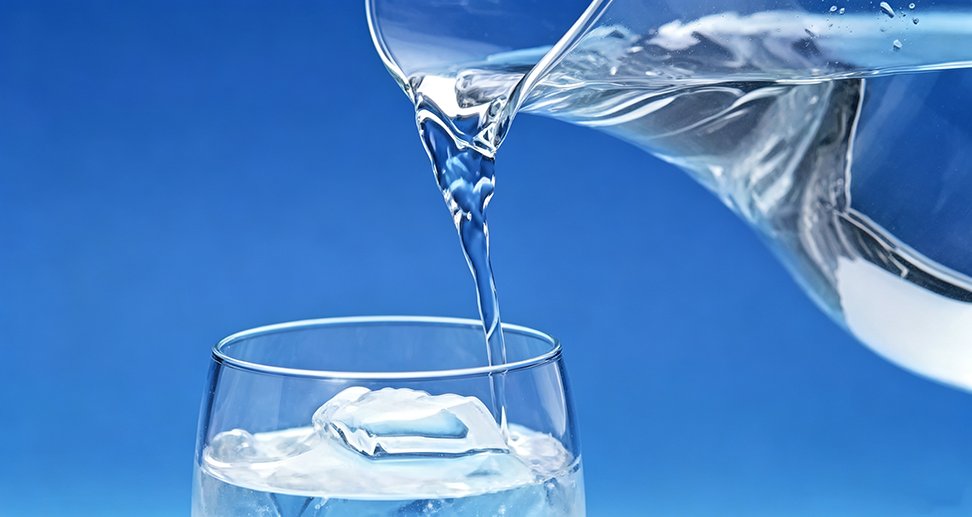
After water has not been used for a long period, or when the initial flow appears yellow or turbid, flush the tap until the water is clear and its temperature is stable before using it for drinking or cooking. Replace water-purifier cartridges in accordance with the product instructions, actual water consumption and changes in outlet-water performance. A clear glass can only help identify colour, turbidity and visible matter; it cannot replace professional testing. If an unusual odour, colour or turbidity persists, contact the property manager or water supplier and do not add disinfectants to household pipes on your own.
From the water source to the household tap, water quality depends on source-water protection, treatment-plant processes, distribution-network maintenance, secondary water-supply management and correct use by consumers. Scientific control of disinfectant dosing, continuous monitoring of by-products, standardized equipment maintenance and prompt response to abnormalities are essential for making every stage of the water-supply system more stable and reliable.
Chlorine dioxide can efficiently disinfect drinking water, is not easy to generate carcinogenic disinfection by-products, and will produce chlorite and other residues, which must comply with the national standard limits. It shall be accurately added according to the water quality and equipped with qualified equipment and process. The safety of compliant use is high. Water supply enterprises need to do a good job in control and monitoring to ensure the safety of water quality.
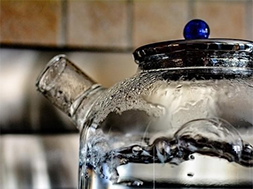
Chlorine dioxide is a who Certified grade A1 safe disinfectant with high sterilization efficiency, few harmful by-products, strong water quality adaptability and multiple water purification functions; Compared with traditional chlorine disinfection, it is safer and more environmental friendly, and can be widely used in drinking water, sewage treatment, food and beverage disinfection and other fields.
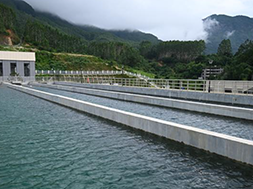
Chlorine dioxide can sterilize and remove odors in water treatment plants and is unlikely to generate trihalomethanes. However, in practical applications, it can fail to remove odors or even produce new unpleasant smells. Organic matter in the water source, bromide ions, and low temperatures can affect treatment effectiveness. Furthermore, its removal capacity for geosmin and 2-methylisoborneol is limited, and improper dosage can also cause odor problems. Water treatment plants need to strengthen water quality monitoring, dynamically adjust dosages, and, when necessary, combine ozone-activated carbon processes to ensure that the odor of the treated drinking water meets standards.
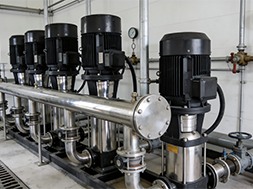
When adding chlorine dioxide to the water pumping station to maintain residual chlorine in the pipeline network, it is necessary to avoid pipeline corrosion caused by local high concentrations. The dosage should be accurately controlled by flow-linked dosing, pipeline mixing, and online residual chlorine monitoring, while also paying attention to under-scale corrosion, thus balancing disinfection and pipeline protection.
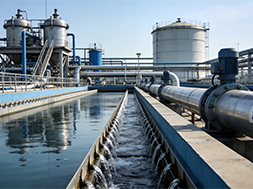
Pipeline network renovations can easily alter the hydraulic conditions of the network, increasing flow velocity and creating stagnant zones that consume chlorine dioxide, leading to fluctuations in water quality. Water plants can ensure the quality of water supplied to the end points through monitoring and prediction, dynamic chemical dosing, pipeline flushing, and the activation of contingency plans.
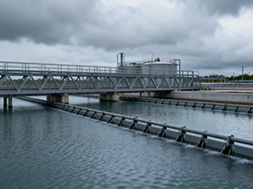
Traditional chlorine disinfection is prone to producing carcinogenic halogenated by-products; chlorine dioxide oxidizes and kills bacteria, with almost no such by-products, good inactivation effect, and the ability to remove odor and inhibit algae, but it generates by-products such as chlorite, requires higher raw material and operation and maintenance costs, and is suitable for water plants that can be upgraded and managed in a coordinated manner, rather than being simply and directly replaced.
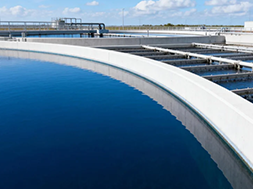
This study simulates a scenario where a small town's water plant experiences a sudden pollution outbreak caused by medical wastewater and the failure of chlorine dioxide disinfection. It analyzes the reasons why pollutants consume disinfectant and provides four-step emergency response measures. Furthermore, it proposes long-term improvement suggestions in terms of monitoring, supplies, contingency plans, and drills to enhance the emergency response capabilities of small and medium-sized water plants.
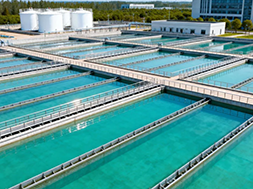
Switching from sodium hypochlorite to chlorine dioxide disinfection in water plants is not just about replacing equipment; it's a complete system upgrade. Chlorine dioxide disinfection is more effective, produces fewer byproducts, and has lower overall costs. However, many water plants only replace the hardware, neglecting personnel training and adapting management systems. The core of this transformation is shifting from experience-based to scientific operation.
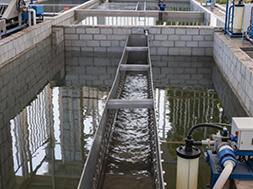
The actual dosage of chlorine dioxide at water treatment plants often exceeds the theoretical value, influenced by factors such as reducing agents in the water, sediment in the pipe network, water quality fluctuations, and byproduct consumption. By leveraging monitoring and local operational data to optimize dosage, we can provide water quality assessments and customized dosage solutions.
Northeast of Huangshan Road and Chuangye Intersection, Small and Medium sized Enterprise Entrepreneurship Industrial Park, Shanwang Town, Linqu County, Weifang City, Shandong Province
Copyright © 2025 by Shandong Huashi Pharmaceutical Co., Ltd All Rights Reserved


 Language
 中文
中文 Русский
 Chlorine Dioxide Disinfectant Manufacturer