Welcome to Our Factory for a Visit! Free customized disinfection solutions
With the capacity expansion of urban water supply plants, new pipelines are gradually put into use while old pipe networks remain in service, forming a mixed water delivery system of new and old facilities. This overlapping pipe network structure has become a common operational scenario for most renovated and expanded water plants. Against this background, maintaining stable and qualified disinfection effect of chlorine dioxide across the entire pipe network has become a key practical problem restricting daily water treatment operation and water quality stability.
1. Differences in Disinfection Characteristics Between New and Old Pipe Networks
Most traditional old pipe networks are constructed with cast iron and galvanized steel pipes. After long-term operation, inner pipe walls inevitably produce corrosion deposits and attached biofilms. These attachments will continuously consume chlorine dioxide during water delivery, resulting in rapid attenuation of disinfectant residuals and insufficient disinfection effect at pipe network terminals.
In contrast, newly laid pipe networks mostly adopt PE pipes, stainless steel and other corrosion-resistant new materials. The inner wall of new pipes is smooth, with almost no scaling or biofilm adhesion, and the consumption of chlorine dioxide is far lower than that of old pipes.
The structural and material differences between the two types of pipelines lead to completely different disinfection demands. Old pipe networks require a relatively higher chlorine dioxide dosage to guarantee effective residual disinfectant at terminal water supply points. Excessive dosing in new pipe networks, however, will not improve disinfection efficiency but will easily cause the accumulation of disinfection by-products and affect finished water safety.
2. Core Principles of Differentiated Chlorine Dioxide Dosing
2.1 Zoned Monitoring and Precise Dosing
The overall water supply scope is divided into three functional areas: pure old pipe network area, pure new pipe network area, and new-old mixed pipe network area. Online water quality monitoring equipment is installed in each area to track real-time chlorine dioxide residual concentration and water quality changes. On this basis, targeted dosing standards are formulated: appropriately increase the basic dosage for old pipe areas with high disinfectant consumption; adopt standard benchmark dosage for new pipe areas with low consumption; and implement dynamic adjustable dosing for mixed areas according to real-time monitored attenuation data.
2.2 Time-Phased Dynamic Adjustment
Combined with the daily water consumption rule of the water supply area, optimize the dosing amount in different periods. During peak water consumption hours, the pipeline water flow speed increases, the hydraulic retention time shortens, and the effective disinfection contact time is insufficient, so the chlorine dioxide dosage needs to be moderately increased. During off-peak night hours, water flow slows down and water body stays in the pipe network for a long time, so the dosage can be properly reduced to avoid excessive accumulation of disinfection by-products caused by long-term residual disinfectant retention.
2.3 Terminal Supplementary Disinfection and Safety Guarantee
For terminal pipe sections, dead water zones and branch pipe ends of old pipe networks where water flow is slow and disinfectant attenuation is the most serious, set up fixed supplementary dosing points. Equip small chlorine dioxide replenishment devices at key weak links to make up for the insufficient residual disinfectant in remote pipe networks, so as to ensure the water quality compliance of the whole pipe network, especially the terminal water supply points.
3. Detailed Phased Implementation Plan
Phase 1: Full Pipe Network Water Quality Diagnosis and Data Sorting
Carry out separate tracking monitoring of water quality and chlorine dioxide attenuation in new and old pipe networks respectively, and draw accurate attenuation curves of chlorine dioxide for different pipe sections. Operational data shows that the chlorine dioxide attenuation rate of old pipe networks can reach 40%–60% within the first 5 kilometers of water delivery, while the attenuation rate of new pipe networks is only 20%–30% under the same conditions. The sorted actual attenuation data serves as the basic basis for formulating differentiated dosing schemes.
Phase 2: Graded and Zoned Dosing Implementation
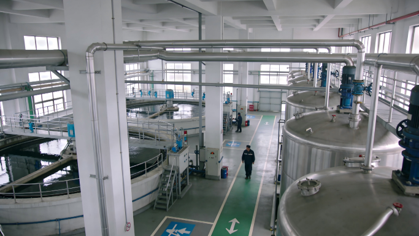
The factory outlet chlorine dioxide concentration is stably controlled within 0.6–0.8 mg/L. Specifically, the upper limit of the concentration range is applied to old pipe network areas to offset high disinfectant consumption; the lower limit is adopted for new pipe network areas to control by-product generation. Set up dosing relay nodes at key pipe network junctions, and fine-tune the real-time dosage according to the monitored residual chlorine data of each pipe section to realize precise regional control.
Phase 3: Intelligent Coupling and Predictive Regulation
Build a coupled operation system of pipe network hydraulic model and water quality model. Combined with daily water consumption prediction, pipe network structure characteristics, seasonal water temperature changes and other influencing factors, realize predictive and proactive dosing adjustment. Change the traditional passive remedial regulation mode after water quality problems occur, and realize intelligent and precise whole-process control of disinfection effect.
4. Key Control Points in Operation
4.1 Strict Control of Disinfection By-Products
Chlorine dioxide will react with organic substances in water to produce by-products such as chlorite. In actual operation, the dosing in new pipe areas must be strictly controlled to avoid excessive disinfection. Prevent the excessive accumulation of disinfection by-products caused by redundant disinfectant, and ensure that finished water indexes meet national water quality standards.
4.2 Pipe Network Corrosion Monitoring and Balance Control
Old pipe networks have inherent aging and corrosion risks. The adjustment of chlorine dioxide dosage will indirectly affect the pipe corrosion rate. It is necessary to regularly monitor the concentration of metal ions such as iron and manganese in pipe network water, dynamically balance the relationship between disinfection effect guarantee and pipe corrosion control, and avoid aggravating pipeline aging while ensuring water quality safety.
4.3 Improve Emergency Response Mechanisms
Formulate targeted emergency disposal plans for abnormal residual chlorine. When continuous low residual chlorine or unqualified water quality is monitored in local pipe sections, take rapid disposal measures in time, including adjusting water pump operation modes to optimize water flow paths and starting standby terminal supplementary dosing points to quickly restore qualified disinfection indicators.
5. Practical Engineering Case
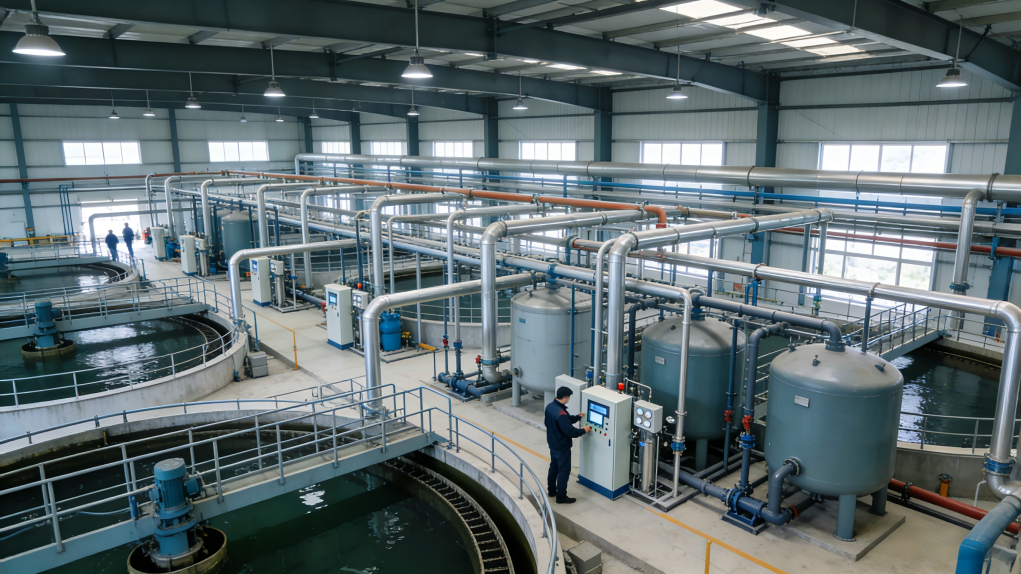
A medium-sized urban water plant adopted a mixed operation mode of new and old pipe networks after capacity expansion. In view of the prominent problem of unbalanced disinfection effect in different pipe sections, the plant adopted a composite operation mode of "factory basic dosing + regional supplementary dosing". The basic chlorine dioxide concentration of factory finished water was stably maintained at 0.7 mg/L. Meanwhile, three fixed supplementary dosing points were added in the old pipe network area with severe attenuation to raise the local disinfectant concentration to 0.9 mg/L.
After three months of stable operation and debugging, the residual chlorine qualification rate of the whole plant’s pipe network increased from 87% to 98%. Meanwhile, the total content of disinfection by-products such as trihalomethanes decreased by 15%, realizing dual improvement of disinfection effect and water quality safety.
The core of the differentiated dosing strategy for mixed pipe networks is balanced regulation rather than average allocation. It is necessary to formulate targeted disinfection schemes according to the actual water delivery characteristics and disinfectant consumption rules of new and old pipelines, instead of adopting a single unified dosing standard for the whole network.
The coexistence of new and old pipe networks is a long-term operation state for most renovated and expanded water plants. Optimizing the chlorine dioxide disinfection strategy for mixed pipe networks is a key link to stabilize urban water supply quality. Through zoned management, dynamic adjustment and intelligent control, the precise matching of disinfection dosage and pipe network operation characteristics can be realized, effectively guaranteeing the long-term safety and stability of urban drinking water supply.
Chlorine dioxide can efficiently disinfect drinking water, is not easy to generate carcinogenic disinfection by-products, and will produce chlorite and other residues, which must comply with the national standard limits. It shall be accurately added according to the water quality and equipped with qualified equipment and process. The safety of compliant use is high. Water supply enterprises need to do a good job in control and monitoring to ensure the safety of water quality.
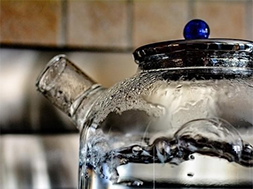
Chlorine dioxide is a who Certified grade A1 safe disinfectant with high sterilization efficiency, few harmful by-products, strong water quality adaptability and multiple water purification functions; Compared with traditional chlorine disinfection, it is safer and more environmental friendly, and can be widely used in drinking water, sewage treatment, food and beverage disinfection and other fields.
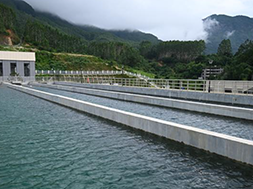
Chlorine dioxide can sterilize and remove odors in water treatment plants and is unlikely to generate trihalomethanes. However, in practical applications, it can fail to remove odors or even produce new unpleasant smells. Organic matter in the water source, bromide ions, and low temperatures can affect treatment effectiveness. Furthermore, its removal capacity for geosmin and 2-methylisoborneol is limited, and improper dosage can also cause odor problems. Water treatment plants need to strengthen water quality monitoring, dynamically adjust dosages, and, when necessary, combine ozone-activated carbon processes to ensure that the odor of the treated drinking water meets standards.
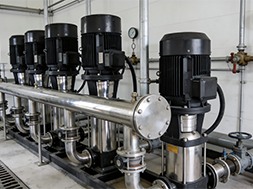
When adding chlorine dioxide to the water pumping station to maintain residual chlorine in the pipeline network, it is necessary to avoid pipeline corrosion caused by local high concentrations. The dosage should be accurately controlled by flow-linked dosing, pipeline mixing, and online residual chlorine monitoring, while also paying attention to under-scale corrosion, thus balancing disinfection and pipeline protection.
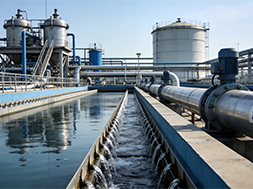
Pipeline network renovations can easily alter the hydraulic conditions of the network, increasing flow velocity and creating stagnant zones that consume chlorine dioxide, leading to fluctuations in water quality. Water plants can ensure the quality of water supplied to the end points through monitoring and prediction, dynamic chemical dosing, pipeline flushing, and the activation of contingency plans.
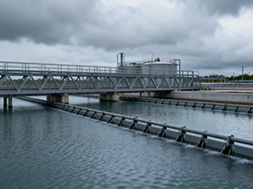
Traditional chlorine disinfection is prone to producing carcinogenic halogenated by-products; chlorine dioxide oxidizes and kills bacteria, with almost no such by-products, good inactivation effect, and the ability to remove odor and inhibit algae, but it generates by-products such as chlorite, requires higher raw material and operation and maintenance costs, and is suitable for water plants that can be upgraded and managed in a coordinated manner, rather than being simply and directly replaced.
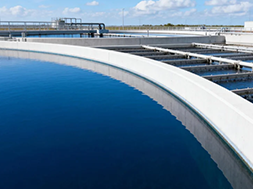
This study simulates a scenario where a small town's water plant experiences a sudden pollution outbreak caused by medical wastewater and the failure of chlorine dioxide disinfection. It analyzes the reasons why pollutants consume disinfectant and provides four-step emergency response measures. Furthermore, it proposes long-term improvement suggestions in terms of monitoring, supplies, contingency plans, and drills to enhance the emergency response capabilities of small and medium-sized water plants.
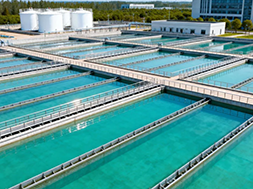
Switching from sodium hypochlorite to chlorine dioxide disinfection in water plants is not just about replacing equipment; it's a complete system upgrade. Chlorine dioxide disinfection is more effective, produces fewer byproducts, and has lower overall costs. However, many water plants only replace the hardware, neglecting personnel training and adapting management systems. The core of this transformation is shifting from experience-based to scientific operation.
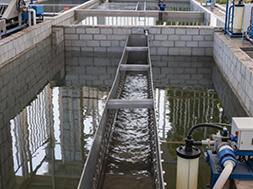
The actual dosage of chlorine dioxide at water treatment plants often exceeds the theoretical value, influenced by factors such as reducing agents in the water, sediment in the pipe network, water quality fluctuations, and byproduct consumption. By leveraging monitoring and local operational data to optimize dosage, we can provide water quality assessments and customized dosage solutions.
Northeast of Huangshan Road and Chuangye Intersection, Small and Medium sized Enterprise Entrepreneurship Industrial Park, Shanwang Town, Linqu County, Weifang City, Shandong Province
Copyright © 2025 by Shandong Huashi Pharmaceutical Co., Ltd All Rights Reserved


 Language
 中文
中文 Русский
 Chlorine Dioxide Disinfectant Manufacturer