Welcome to Our Factory for a Visit! Free customized disinfection solutions

Li Feilong invented a chlorine dioxide ultra-nano air disinfection technology. Using an aerosol release machine made of an ultrasonic oscillator (oscillation frequency range: 1.50~2.60MHz) made of stainless steel, and a chlorine dioxide disinfectant prepared by a dedicated EPDioxide portable dual-reagent chlorine dioxide activation preparation technology, micron-sized activated chlorine dioxide aerosol droplets (particle size between 1~10μm) that do not wet the environment are released. After 60min, the temperature and humidity are controlled at 12~40℃ and 50%~75%, respectively. The experimental reference product of the air disinfection rate [concentration × aerosol release amount] is 625×10−6 mL /m3.
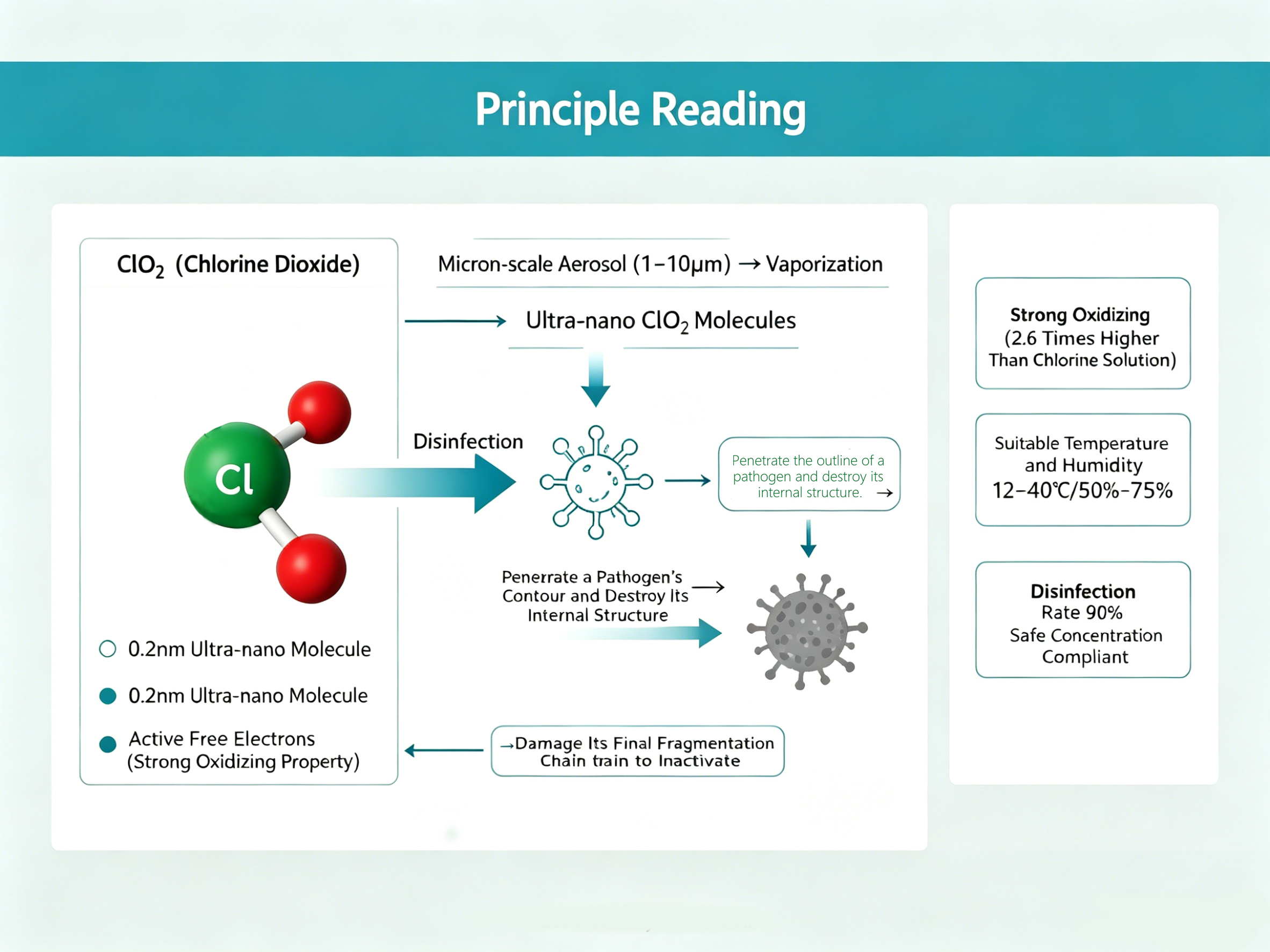
Air disinfection technology mechanism
Chlorine dioxide molecules consist of one chlorine atom and two oxygen atoms, totaling 19 electrons. One unpaired, active free electron exists in the outer orbital, giving it a strong oxidizing effect. Simultaneously, the generation of nascent oxygen can break down the amino acid chains that make up proteins in microorganisms, disrupting their enzyme systems. This effect is beyond the capabilities of chlorine-containing disinfectants that typically only denature proteins.
In terms of elimination mechanism, chlorine dioxide primarily uses its strong oxidizing power to strip electrons from the surface of single-celled organisms or viruses, causing the cellular enzyme system to lose activity and leading to natural death, thus achieving a sterilization effect. The elimination mechanism can be broadly divided into two types: In the first mechanism, chlorine dioxide can rapidly react with amino acids such as cysteine, tryptophan, and tyrosine, altering the original protein characteristics of the virus and causing it to lose activity. For example, it reacts with the RNA of poliovirus, disrupting RNA synthesis and preventing transcription and replication. The second elimination mechanism shows that chlorine dioxide can directly react with fatty acids surrounding the virus. Both of these mechanisms contribute to the inactivity or inactivation of the virus. Another disinfection method focuses on the physiological effects of chlorine dioxide.
Because chlorine dioxide can disrupt the permeability of the outer membrane, it increases the permeability of proteins and lipids in the outer membrane, leading to the gradual decomposition of pathogens. The survival and metabolism of microorganisms are greatly influenced by the redox potential of the environment in which they exist. Chlorine dioxide gas molecules are neutral compounds in the tetravalent oxidation state of chlorine. They urgently seek to acquire five electrons from the environment to become chloride ions (Cl− ) , thus possessing extremely high oxidizing power and capable of killing microorganisms they come into contact with. Because it is a single-electron transfer system, it readily forms chlorite ions ( ClO2− ) through reduction , making chlorine dioxide a highly efficient oxide. Among a series of redox reactions, the important reaction equations are shown in equations (4-25) to (4-27):

The transmission patterns of airborne pathogens vary depending on their particle size: microparticles or airborne droplets containing pathogens with diameters between 0.2 μm and 5 μm can travel up to 100 dm and remain suspended in the air for extended periods. Inhalation of such airborne particles can lead to infection, such as smallpox, tuberculosis, Legionella, and rubella. Airborne droplets with diameters greater than 5 μm can also be dispersed within a 30 dm range through coughing and talking, causing the spread of diseases such as influenza and mumps. The superior mechanism of chlorine dioxide's ability to disinfect suspended colonies should be attributed to its ability to dissolve in aqueous solution to form stable small molecules. Chlorine dioxide gas molecules have a strong oxidizing ability that can steal 5 electrons. At room temperature (20-25℃), it can evaporate and vaporize from aqueous solution, disperse into the space, and easily penetrate into pathogen cells as extremely small 0.2nm gas molecules. With an oxidizing ability about 2.6 times higher than that of chlorine solution, it can quickly oxidize and destroy the glucose enzyme system of bacteria, thereby killing suspended colonies in the air.
Device diagram
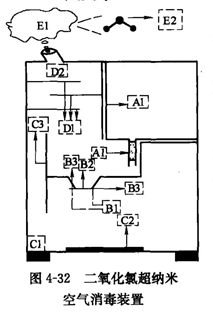
The chlorine dioxide ultra-nano air disinfection device consists of five important components (A, B, C, D, E) (see Figure 4-32). The ultra-nano disinfection technology generates the following process: a drug supply tank A1, a liquid level balance replenisher A2, a current controller B1, an ultrasonic oscillator B2, an annular fixing pad B3, an air supply cooling fan C1, an air inlet filter C2, an air supply cooling baffle C3, an aerosol particle size sieve plate D1, an inclined aerosol nozzle D2, micron-level disinfection aerosol E1, and chlorine dioxide gas molecules E2. The device operates according to the above-mentioned disinfection technology and controls these important factors.
Technical solution
(1) Micron-sized activated chlorine dioxide aerosol droplets (particle size between 1 and 8 μm) are released by an ultrasonic oscillator made of stainless steel (oscillation frequency range: 1.50 to 2.60 MHz). The temperature of the indoor space is controlled between 12 and 40°C and the humidity is between 50% and 75%. A fan is used to evenly disperse the aerosol droplets in the indoor space, so that chlorine dioxide gas molecules (ClO2 ) with a diameter of about 0.2 nm can evaporate and separate from the micron-sized aerosol droplets in an ultra-nano-sized molecular form, thereby exerting the indoor air disinfection effect of rapid fumigation and sterilization.
(2) This air disinfection system must be used with chlorine dioxide activated disinfectant prepared using EPDioxide portable dual-reagent chlorine dioxide activation technology to ensure a neutral pH (using a dedicated stainless steel oscillator that does not oxidize or corrode) and maintain the effectiveness and integrity of chlorine dioxide molecule release (oscillation frequency output energy is lower than molecular bond energy). Under normal indoor conditions (without special pollutants), after rapidly releasing a sufficient amount of ultrasonic mist for 30 minutes, the experimental reference product [concentration × mist release amount] can achieve a 90% colony disinfection rate: 625 × 10⁻⁶ mL / m³ . Furthermore, for a 33m³ indoor space (temperature 23℃, humidity 75%, indoor gas volume approximately 100m³ ) , by continuously releasing 2.5× 10⁻⁴ activated chlorine dioxide mist (2.5mL/min), after 30 minutes , when the concentration of chlorine dioxide molecules in the space increases to 0.068×10⁻⁶ ( below the US OSHA safe limit of 0.10× 10⁻⁶ for airborne concentration ), the total number of suspended bacteria and fungal colonies in the air can be reduced to below 500 CFU/m³ ( the EPA's recommended total colony limit in the Indoor Air Quality Bulletin), meeting the basic indoor airborne colony quality requirements. If , after 90 minutes of continuous release, the concentration of chlorine dioxide molecules in the space increases to 0.21×10⁻⁶ , still below the US OSHA hazard limit of 0.30× 10⁻⁶ for airborne concentration , then the suspended bacteria can be reduced to below 200 CFU/m³ , achieving even better air disinfection efficiency.
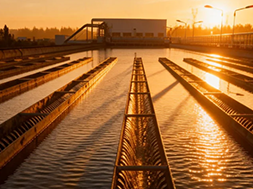
Chlorine dioxide disinfection pipelines in water plants are prone to blockage due to salt crystallization caused by disproportionation reactions. This can be prevented by optimizing the purity of the solution, designing the pipeline properly, regularly flushing and insulating, and conducting thorough inspections and chemical cleaning (hydrochloric acid should not be used). These multi-dimensional measures can help prevent crystallization and ensure the stable operation of the disinfection system.
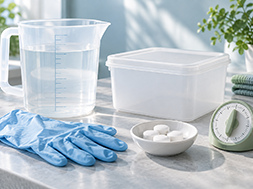
The pestis pestis leakage incident in the Russian laboratory reminded the public that pestis can be spread by fleas, infected animals, and droplets. The prevention and control should focus on the environment and rat flea management, instead of blind disinfection and sterilization. Xiuba chlorine dioxide disinfection tablet can only be used for preventive disinfection of object surface according to instructions. It has no special killing effect of pestis bacilli, and cannot be used as special epidemic prevention materials for pestis. It needs to be operated in a standardized way. Do not over disinfect due to network rumors.
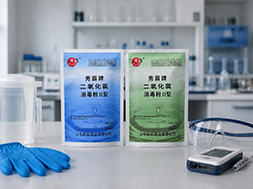
In 2026, Xiuba proposed that it is not enough to simply meet product qualification requirements; it is necessary to promote "green" practices in product selection, operation, safety, and record-keeping, rely on actual measurement data to verify effectiveness, strictly adhere to safety boundaries, and promote high-quality development of the industry.
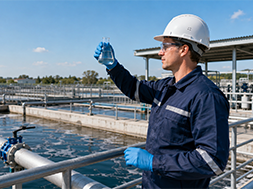
Traditional chlorine preparations are prone to producing harmful chlorination by-products and will eventually be phased out; Chlorine dioxide relies on a unique electron transfer oxidation mechanism, producing almost no organic chlorides, with high sterilization efficiency and lower risk of by-products. Xiuba relies on years of large-scale production and university research cooperation, with complete product qualifications, strict control of disinfection residues, and a balance between effective disinfection and ecological green, in line with the industry's green and low-carbon development trend.
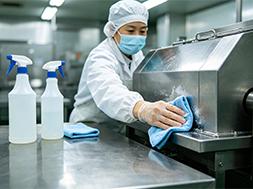
Focusing on three core selection dimensions—cost, safety, and broad-spectrum disinfection—this article compares chlorine dioxide with disinfectants such as ozone and peracetic acid, highlighting its significant advantages in terms of sterilization mechanism, usage safety, and long-term cost. The product is suitable for various scenarios including water supply, food processing, and wastewater treatment. Addressing market issues of misleading labeling, the article provides purchasing advice and recommends Xiuba Chlorine Dioxide, a brand with deep industry experience and complete certifications.
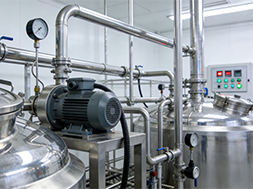
This article points out that during CIP cleaning, adding chlorine dioxide before alkaline washing and during acid-alkali rinsing has poor effects; the optimal point is after acid washing, when the acidic clean environment is suitable for the agent, and it is also necessary to drain residual acid, control the temperature, and circulate for 15-20 minutes to improve the disinfection effect.
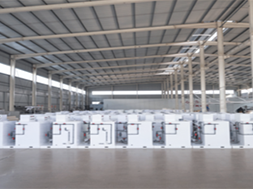
This article compares the applicable scenarios of chemical and electrolytic chlorine dioxide generators, explaining the manufacturer selection criteria from five dimensions: qualifications, accessories, case studies, after-sales service, and process compatibility. It also introduces five major development trends, including intelligent and modular equipment. Xiuba XB series equipment complies with GB 28931-2024 standards, has complete qualifications, and offers 24/7 full-process service. It is suitable for multiple industries and can reduce maintenance costs and operational risks.
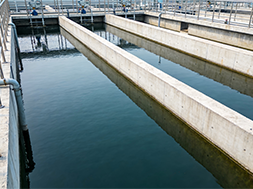
Chlorine dioxide is safe, efficient, and suitable for multiple industries, with the market continuously expanding and benefiting from ongoing policy support.Shandong Huashi Pharmaceutical's Xiuba division has been deeply involved in the industry for many years and can provide a full range of chlorine dioxide disinfection products and related technical services.
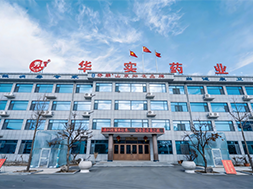
Xiuba has been deeply involved in chlorine dioxide disinfection for nearly 30 years, possessing mature technology and a rich product line. The brand has completed a strategic transformation, shifting from simply selling products to providing customized disinfection services throughout the entire process, integrating industry resources, and specifically addressing various disinfection pain points for companies in the drinking water, food, and medical fields.
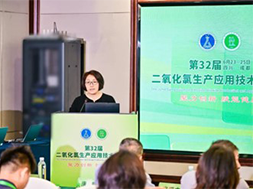
Shandong Huashi Pharmaceutical took part in the 32nd National Chlorine Dioxide Technology Symposium held in Chengdu this June. Our technical team shared professional research on chlorine dioxide disinfection for medical and public health scenarios and exchanged industry technologies with over 70 experts and manufacturers. This participation fully proves our solid R&D strength and professional standing in the chlorine dioxide disinfection field.
Northeast of Huangshan Road and Chuangye Intersection, Small and Medium sized Enterprise Entrepreneurship Industrial Park, Shanwang Town, Linqu County, Weifang City, Shandong Province
Copyright © 2025 by Shandong Huashi Pharmaceutical Co., Ltd All Rights Reserved


 Language
 中文
中文 Русский
 Chlorine Dioxide Disinfectant Manufacturer


