Welcome to Our Factory for a Visit! Free customized disinfection solutions

On the evening of May 19, 2026, Weishi County in Henan Province, an ordinary northern county town, was disrupted by a day of heavy rain.
Residents in the county and urban areas suddenly began to experience symptoms of vomiting and diarrhea in batches, and hospitals and clinics formed long queues late at night. Students from some schools were collectively recruited, while adults and children from some families fell down together. On social media, the video footage of citizens queuing up and children holding their stomachs is heart wrenching.
Soon, a speculation spread in the community - there was a problem with the tap water.
This speculation is not groundless. At 4 pm that afternoon, Weishi County Jincai Water Affairs Co., Ltd. just issued a water outage notice: due to a sudden burst and leakage of the DN800 water supply main pipeline at the water plant, emergency repairs are needed and the entire city will be shut down. From 9pm that evening to 9am the next morning.
Stop drinking water and then experience collective diarrhea.
The timeline is there, no one can stop everyone from thinking in that direction.
Official investigation: Rainwater poured into the water source well
On the evening of May 20th, the joint investigation team of Weishi County issued the first notice with cautious wording - residents' symptoms have improved after outpatient treatment, and they have gradually returned home. Pathological samples have been sent for testing, and the cause is under investigation.
No direct tap water was provided.
But on May 21st, a press release from Xinhua News Agency provided the answer: rainwater flowed back into a tap water source well, causing sudden drinking water pollution.
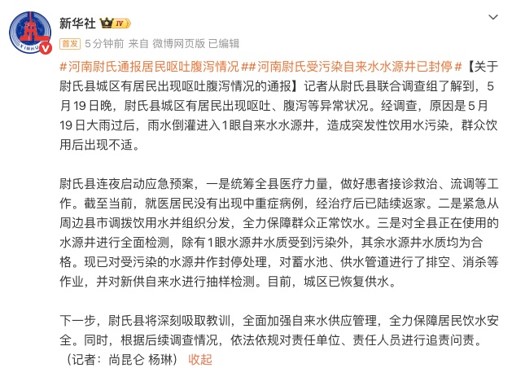
After the heavy rain, the rainwater carried a large number of bacteria and pollutants on the surface and directly poured into this water source well. Through the water supply network, it flows into the faucets of thousands of households and into the stomachs of residents.
It's that simple. Just so direct.
We not only need to ask:
Firstly, where has the protection of the water source well gone.
According to the "Sanitary Standards for Drinking Water", centralized water supply sources need to be equipped with strict protective barriers to prevent rainwater and sewage from flowing back. Under normal circumstances, a water source well that has been properly protected will not be contaminated by a single rain. The wellhead is too low, the wellbore is damaged, and the isolation belt is missing - no matter which link is flawed, it all points to the same fact: routine inspections have gone through the motions.
Secondly, the disinfection of the water plant did not cover the bottom.
For the disinfection of tap water after sudden water source pollution, the tap water safety department did not do a good job in disinfection treatment. According to the regular flow disinfection process, it is necessary to carry out disinfection operations in emergency response stage and routine recovery stage according to the standardized process. The specific operation is as follows:
1. Emergency response phase (pollution investigation and control period)
Whole area evacuation and preliminary disinfection and sterilization: completely evacuate the polluted pipe network and reservoir, soak the tank wall and pipeline inner wall with high concentration disinfectant for disinfection and sterilization, and then flush and empty to remove residual pollutants.
Staged circulating disinfection of pipeline network: Before restoring water supply, excessive chlorine disinfection method is used: the residual free chlorine in the pipeline network water is increased to 0.5-1mg/L, and after circulating soaking for 2-4 hours, it is emptied and rinsed to completely kill the pathogens carried by pollutants.
Continuous water quality sampling: Samples are taken from the end of the pipeline every 2-4 hours to test for residual disinfectant and microbial indicators. Only after meeting the standards can the water supply be gradually restored.
2. Normal recovery stage (after meeting the standard water supply)
According to different disinfection methods, it is necessary to strictly control the remaining amount of disinfectant to ensure sustained antibacterial effect:
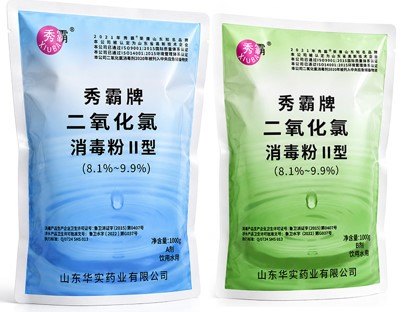
Chlorine dioxide disinfection: The residual chlorine dioxide in peripheral water should not be less than 0.02mg/L, which is suitable for controlling odor and color problems, and has fewer disinfection by-products. You can refer to using Xiuba brand chlorine dioxide disinfectant AB, and the specific dosage can be consulted with technical personnel according to the degree of pollution of the water source.
Liquid chlorine/sodium hypochlorite disinfection: Ensure that the residual free chlorine in the water at the end of the pipeline network is ≥ 0.05mg/L, which can continuously inhibit bacterial growth without producing excessive disinfection by-products.
Ozone+UV combined disinfection: Ozone disinfection requires a peripheral ozone level of ≥ 0.02mg/L. Combined with UV radiation, it can quickly kill stubborn pathogens such as Cryptosporidium, but a small amount of chlorine needs to be added later to maintain sustained antibacterial ability.
3. Additional disinfection requirements for secondary water supply
For the secondary water supply facilities in the community, additional completion is required:
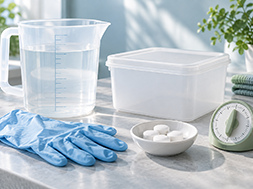
Fully empty the water tank, manually clean the attachments on the inner wall, wipe and disinfect with chlorine containing disinfectant, let it stand for 30 minutes, and then rinse it clean.
According to the requirements of the new version of the standards, at least one comprehensive cleaning and disinfection+water quality testing should be completed each year, and the results should be publicly announced after disinfection.
Thirdly, why was there no warning for water quality monitoring.
They are doing tests every month. However, when encountering sudden rainwater backflow during the monthly inspection, the frequency of this "monthly inspection" exposes its fragility. There is a sufficient time window between the backflow of rainwater into polluted water sources and the large-scale occurrence of symptoms among residents. If water plants can monitor water quality more frequently and establish real-time warning mechanisms, even if problems are detected only a few hours in advance, they can avoid attracting a large number of residents.
The lesson of Weishi County can be applied to any county in the country. Today is heavy rain pouring into the water source well, tomorrow it may be construction that cuts off the pipeline, and the day after tomorrow it may be industrial wastewater seeping into the ground. For water supply companies, every extreme weather is a stress test; For regulatory authorities, every loophole needs to be discovered in advance during daily inspections.
For these ordinary people who turn on the faucet, what they want is actually very simple - water to drink. Don't worry, don't guess the water quality based on the weather, don't worry about whether the water is safe today.
Water is the source of life. If the most basic defense line of this city cannot be stabilized, all other developments will appear illusory.
Weishi County said that they have deeply learned from their lessons, will comprehensively strengthen water supply management, and will hold accountable according to law.
I just want to say one thing: Don't wait until the next heavy rain.
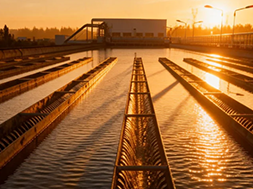
Chlorine dioxide disinfection pipelines in water plants are prone to blockage due to salt crystallization caused by disproportionation reactions. This can be prevented by optimizing the purity of the solution, designing the pipeline properly, regularly flushing and insulating, and conducting thorough inspections and chemical cleaning (hydrochloric acid should not be used). These multi-dimensional measures can help prevent crystallization and ensure the stable operation of the disinfection system.
The pestis pestis leakage incident in the Russian laboratory reminded the public that pestis can be spread by fleas, infected animals, and droplets. The prevention and control should focus on the environment and rat flea management, instead of blind disinfection and sterilization. Xiuba chlorine dioxide disinfection tablet can only be used for preventive disinfection of object surface according to instructions. It has no special killing effect of pestis bacilli, and cannot be used as special epidemic prevention materials for pestis. It needs to be operated in a standardized way. Do not over disinfect due to network rumors.
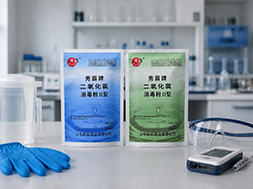
In 2026, Xiuba proposed that it is not enough to simply meet product qualification requirements; it is necessary to promote "green" practices in product selection, operation, safety, and record-keeping, rely on actual measurement data to verify effectiveness, strictly adhere to safety boundaries, and promote high-quality development of the industry.
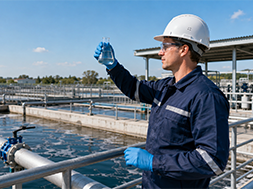
Traditional chlorine preparations are prone to producing harmful chlorination by-products and will eventually be phased out; Chlorine dioxide relies on a unique electron transfer oxidation mechanism, producing almost no organic chlorides, with high sterilization efficiency and lower risk of by-products. Xiuba relies on years of large-scale production and university research cooperation, with complete product qualifications, strict control of disinfection residues, and a balance between effective disinfection and ecological green, in line with the industry's green and low-carbon development trend.
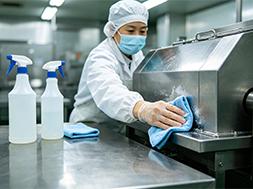
Focusing on three core selection dimensions—cost, safety, and broad-spectrum disinfection—this article compares chlorine dioxide with disinfectants such as ozone and peracetic acid, highlighting its significant advantages in terms of sterilization mechanism, usage safety, and long-term cost. The product is suitable for various scenarios including water supply, food processing, and wastewater treatment. Addressing market issues of misleading labeling, the article provides purchasing advice and recommends Xiuba Chlorine Dioxide, a brand with deep industry experience and complete certifications.
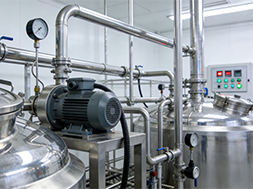
This article points out that during CIP cleaning, adding chlorine dioxide before alkaline washing and during acid-alkali rinsing has poor effects; the optimal point is after acid washing, when the acidic clean environment is suitable for the agent, and it is also necessary to drain residual acid, control the temperature, and circulate for 15-20 minutes to improve the disinfection effect.
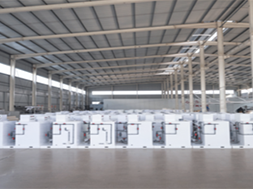
This article compares the applicable scenarios of chemical and electrolytic chlorine dioxide generators, explaining the manufacturer selection criteria from five dimensions: qualifications, accessories, case studies, after-sales service, and process compatibility. It also introduces five major development trends, including intelligent and modular equipment. Xiuba XB series equipment complies with GB 28931-2024 standards, has complete qualifications, and offers 24/7 full-process service. It is suitable for multiple industries and can reduce maintenance costs and operational risks.
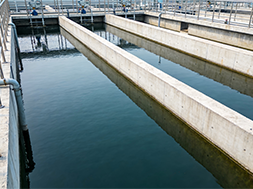
Chlorine dioxide is safe, efficient, and suitable for multiple industries, with the market continuously expanding and benefiting from ongoing policy support.Shandong Huashi Pharmaceutical's Xiuba division has been deeply involved in the industry for many years and can provide a full range of chlorine dioxide disinfection products and related technical services.
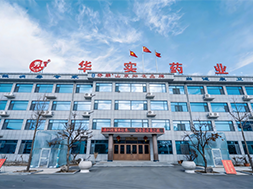
Xiuba has been deeply involved in chlorine dioxide disinfection for nearly 30 years, possessing mature technology and a rich product line. The brand has completed a strategic transformation, shifting from simply selling products to providing customized disinfection services throughout the entire process, integrating industry resources, and specifically addressing various disinfection pain points for companies in the drinking water, food, and medical fields.
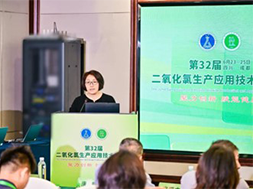
Shandong Huashi Pharmaceutical took part in the 32nd National Chlorine Dioxide Technology Symposium held in Chengdu this June. Our technical team shared professional research on chlorine dioxide disinfection for medical and public health scenarios and exchanged industry technologies with over 70 experts and manufacturers. This participation fully proves our solid R&D strength and professional standing in the chlorine dioxide disinfection field.
Northeast of Huangshan Road and Chuangye Intersection, Small and Medium sized Enterprise Entrepreneurship Industrial Park, Shanwang Town, Linqu County, Weifang City, Shandong Province
Copyright © 2025 by Shandong Huashi Pharmaceutical Co., Ltd All Rights Reserved


 Language
 中文
中文 Русский
 Chlorine Dioxide Disinfectant Manufacturer


