Welcome to Our Factory for a Visit! Free customized disinfection solutions

Drinking water disinfection is extremely challenging, as not all water qualities can be easily controlled with disinfectants. China's diverse topography means that many northern cities and areas with limestone formations generally have high water hardness. Due to these regional differences, conventional water treatment and disinfection processes are often insufficient for these specific water bodies, leading to rapid changes in disinfection attenuation rates and significantly reduced disinfection effectiveness.
Why can't ordinary chlorine dioxide processes directly disinfect hard water to meet standards?
Hard water has a high calcium and magnesium content, which directly affects the activation efficiency and stability of chlorine dioxide disinfection.
Ordinary chlorine dioxide disinfection faces two major challenges:
Firstly, in hard water, the factors that cause chlorine dioxide to lose its activity mainly come from alkaline substances and metal ions in the water. Chlorine dioxide directly reacts with iron, manganese, and organic matter in the water. If the concentration of iron and manganese is too high, it will directly affect the rapid consumption of the effective chlorine concentration, and thus become less effective in eliminating organic matter.
Secondly, the chlorine dioxide disinfectant after cremation, due to long-distance pipeline transportation, will be affected by the high ionic strength of hard water, causing the residual chlorine in the terminal water to be almost completely consumed, making it difficult to achieve the ideal value for terminal secondary water supply.
While chlorine dioxide disinfection does have limitations to some extent, the actual technical solutions also involve differences between products. Its presence determines the quality of disinfection, which is where the control capability of stable, slow-release chlorine dioxide technology lies. This is where Xiuba's technological barrier lies, enabling it to handle various complex water bodies.
Erxiuba's slow-release technology redefines cost-effectiveness with stabilized chlorine dioxide disinfectant.
All Xiuba series products are developed using exclusive scientific research technology and have mature industrial production capabilities. They possess over 20 years of leading expertise in product stability and buffering technology. In its technological development for the drinking water sector, Xiuba products ensure a significantly lower decay rate for chlorine dioxide disinfectant, guaranteeing a disinfection effect that is a fraction of that of ordinary products under the same dosing conditions.
One typical data point clearly demonstrates this advantage: to achieve a terminal residual chlorine level of 0.3 mg/L, the initial dosage is only about 0.35 mg/L, which is far lower than the initial value of 0.6 mg/L for general chlorine dioxide disinfection products.
Hard water tests not only the decay rate but also, and more importantly, the ability to maintain disinfection capabilities. Xiuba chlorine dioxide meets these requirements, demonstrating direct killing effects against E. coli and Staphylococcus aureus without leaving residue. Furthermore, due to its high stability, Xiuba chlorine dioxide produces virtually no chloroform, carbon tetrachloride, or other special byproducts, effectively ensuring the safety and reliability of disinfection treatment during long-distance transportation.
Considering the overall cost of the disinfectant, effective control of the decay rate of Xiuba chlorine dioxide disinfectant means it has a higher comprehensive utilization value. Low dosage means low risk, no byproducts, and no issue of reduced disinfection effectiveness. Achieving a lower total input within the effective range is a unique cost-effectiveness advantage.
In addition to pharmaceuticals, our intelligent system offers a wide range of supporting applications.
Of course, there are still more differentiated disinfection properties when it comes to hard water. Therefore, considering the complexity of water quality, Xiuba has fully developed products to match different types and provide disinfection application products for more diverse water quality needs.
One type is Xiuba binary/univalent chlorine dioxide powder, specially designed for large-scale water plants. It features a binary packaging design (A/B agents) for on-site activation and more thorough release of active ingredients. The other type is Xiuba chlorine dioxide effervescent tablets, which solve the problem of uneven secondary water supply ratios. They allow for direct, precise dosage, easily addressing the challenge of hard water disintegration.
In addition to disinfection products, we also equip businesses with safer and more precisely modulated chlorine dioxide generators, enabling fully automated and stable operation through precise dosage control. Even with fluctuations in hard water, it has the ability to autonomously adjust the activation time, ensuring the agent is always in ideal working condition, eliminating concerns about frequent dosing and increased costs due to rapid degradation.
In the context of high-quality development of drinking water, Xiuba has gone through nearly 40 years of trials and tribulations, and every step it has taken has been based on product quality. This focus on technological upgrades with low loss and high returns has given Xiuba extraordinary product strength.
Xiuba conveys this commitment to all the companies it serves through its products. While supporting their production and development, Xiuba also reinforces its unwavering commitment to winning the market through quality. Xiuba is not just selling chlorine dioxide; it is continuously achieving breakthroughs in chlorine dioxide technology to address China's water quality challenges, developing more innovative products, and ultimately enabling more cities to enjoy unrestricted access to safe drinking water.
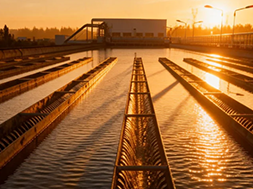
Chlorine dioxide disinfection pipelines in water plants are prone to blockage due to salt crystallization caused by disproportionation reactions. This can be prevented by optimizing the purity of the solution, designing the pipeline properly, regularly flushing and insulating, and conducting thorough inspections and chemical cleaning (hydrochloric acid should not be used). These multi-dimensional measures can help prevent crystallization and ensure the stable operation of the disinfection system.
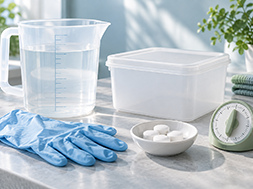
The pestis pestis leakage incident in the Russian laboratory reminded the public that pestis can be spread by fleas, infected animals, and droplets. The prevention and control should focus on the environment and rat flea management, instead of blind disinfection and sterilization. Xiuba chlorine dioxide disinfection tablet can only be used for preventive disinfection of object surface according to instructions. It has no special killing effect of pestis bacilli, and cannot be used as special epidemic prevention materials for pestis. It needs to be operated in a standardized way. Do not over disinfect due to network rumors.
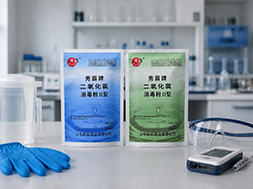
In 2026, Xiuba proposed that it is not enough to simply meet product qualification requirements; it is necessary to promote "green" practices in product selection, operation, safety, and record-keeping, rely on actual measurement data to verify effectiveness, strictly adhere to safety boundaries, and promote high-quality development of the industry.
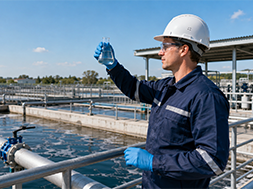
Traditional chlorine preparations are prone to producing harmful chlorination by-products and will eventually be phased out; Chlorine dioxide relies on a unique electron transfer oxidation mechanism, producing almost no organic chlorides, with high sterilization efficiency and lower risk of by-products. Xiuba relies on years of large-scale production and university research cooperation, with complete product qualifications, strict control of disinfection residues, and a balance between effective disinfection and ecological green, in line with the industry's green and low-carbon development trend.
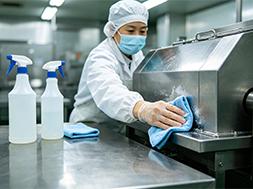
Focusing on three core selection dimensions—cost, safety, and broad-spectrum disinfection—this article compares chlorine dioxide with disinfectants such as ozone and peracetic acid, highlighting its significant advantages in terms of sterilization mechanism, usage safety, and long-term cost. The product is suitable for various scenarios including water supply, food processing, and wastewater treatment. Addressing market issues of misleading labeling, the article provides purchasing advice and recommends Xiuba Chlorine Dioxide, a brand with deep industry experience and complete certifications.
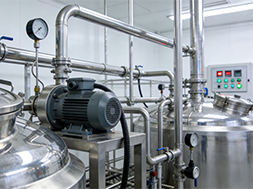
This article points out that during CIP cleaning, adding chlorine dioxide before alkaline washing and during acid-alkali rinsing has poor effects; the optimal point is after acid washing, when the acidic clean environment is suitable for the agent, and it is also necessary to drain residual acid, control the temperature, and circulate for 15-20 minutes to improve the disinfection effect.
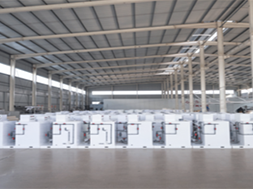
This article compares the applicable scenarios of chemical and electrolytic chlorine dioxide generators, explaining the manufacturer selection criteria from five dimensions: qualifications, accessories, case studies, after-sales service, and process compatibility. It also introduces five major development trends, including intelligent and modular equipment. Xiuba XB series equipment complies with GB 28931-2024 standards, has complete qualifications, and offers 24/7 full-process service. It is suitable for multiple industries and can reduce maintenance costs and operational risks.
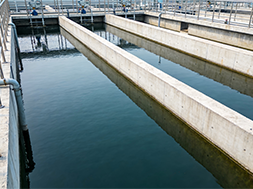
Chlorine dioxide is safe, efficient, and suitable for multiple industries, with the market continuously expanding and benefiting from ongoing policy support.Shandong Huashi Pharmaceutical's Xiuba division has been deeply involved in the industry for many years and can provide a full range of chlorine dioxide disinfection products and related technical services.
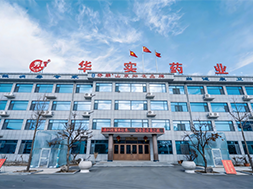
Xiuba has been deeply involved in chlorine dioxide disinfection for nearly 30 years, possessing mature technology and a rich product line. The brand has completed a strategic transformation, shifting from simply selling products to providing customized disinfection services throughout the entire process, integrating industry resources, and specifically addressing various disinfection pain points for companies in the drinking water, food, and medical fields.
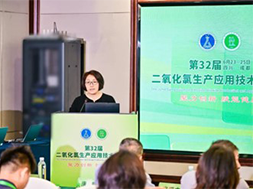
Shandong Huashi Pharmaceutical took part in the 32nd National Chlorine Dioxide Technology Symposium held in Chengdu this June. Our technical team shared professional research on chlorine dioxide disinfection for medical and public health scenarios and exchanged industry technologies with over 70 experts and manufacturers. This participation fully proves our solid R&D strength and professional standing in the chlorine dioxide disinfection field.
Northeast of Huangshan Road and Chuangye Intersection, Small and Medium sized Enterprise Entrepreneurship Industrial Park, Shanwang Town, Linqu County, Weifang City, Shandong Province
Copyright © 2025 by Shandong Huashi Pharmaceutical Co., Ltd All Rights Reserved


 Language
 中文
中文 Русский
 Chlorine Dioxide Disinfectant Manufacturer


