Welcome to Our Factory for a Visit! Free customized disinfection solutions

Here's the thing.
Last week I visited an old friend. He has worked in the food industry for more than ten years. Now he is the quality director of a medium-sized meat processing factory. As soon as I arrived at the door of the workshop, I subconsciously prepared to wear shoe covers and spray disinfectant. Unexpectedly, he stopped me and said, "don't bother so much. Now we have changed a disinfection product, which is much more convenient than the bottle you have in your hand."
I looked down at the disinfectant in my hand. The words "sodium dichloroisocyanurate" on the label were particularly conspicuous. The pungent smell made people's nose sour. I had accidentally sprayed it on my hands before, and there was a faint burning sensation. I quickly asked him what he had changed. He pointed to the equipment on the wall and said firmly: "now the whole factory uses this kind of thing called 'chlorine dioxide'
I was stunned: chlorine dioxide? Isn't that what the waterworks use to disinfect? Why are food factories using this?
He laughed and joked: "yes, the water plant dares to feed you something. We'll take it to the disinfection workshop. Can you say it's not reliable?"
The remark made me speechless. After I went back, I checked a lot of information and found that the way behind this was much deeper than I thought, and it was also related to the survival of every food factory and the food safety of each and every one of us.
Food factory disinfection has always been a "dilemma" choice
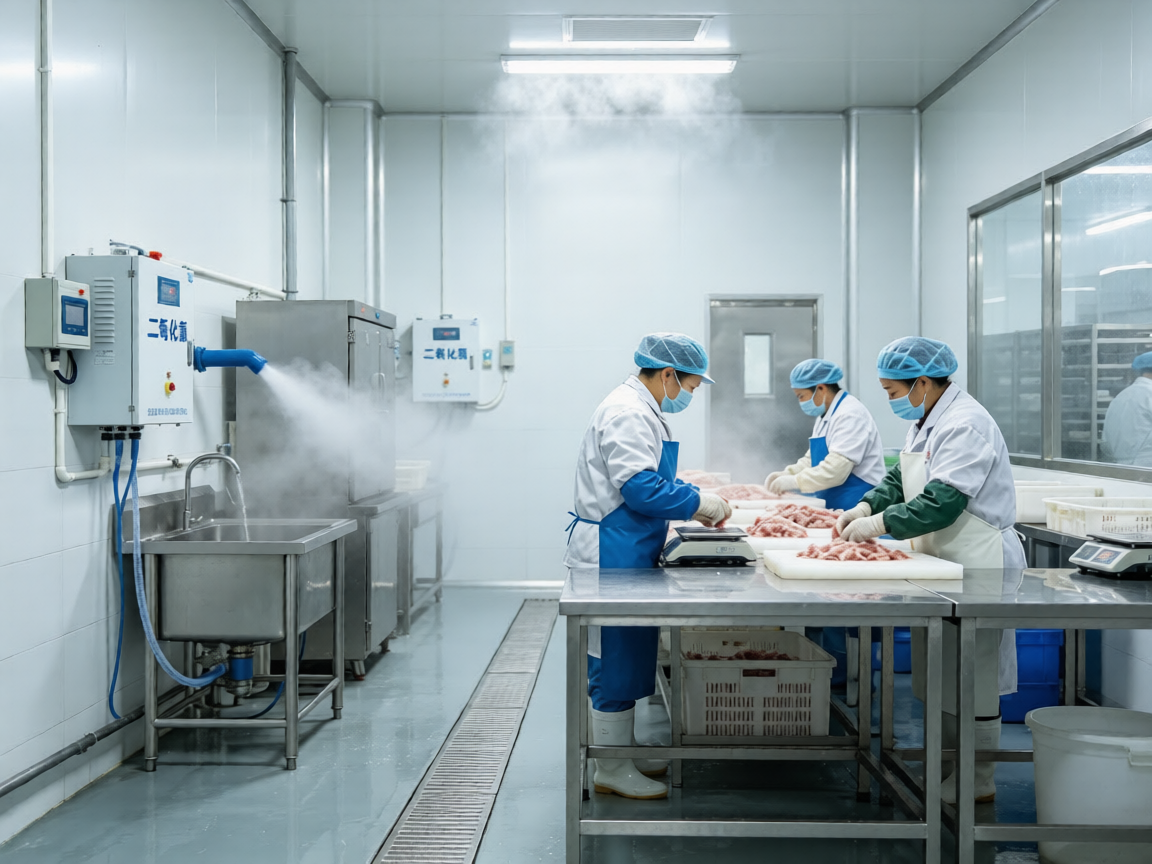
First, let's talk about why food factories have to disinfect. Everyone in the food industry knows it, and ordinary consumers can understand it. Raw meat, vegetables, aquatic products and other raw materials, from entering the factory to leaving the factory as finished products, have to go through cleaning, cutting, processing, packaging and other links. As long as one link is not properly disinfected, the whole batch of goods may be completely discarded and suffer heavy losses.
What is more frightening is that once pathogenic bacteria are left on food and sent to consumers, serious food safety accidents will be triggered - manufacturers will not only bear huge compensation, but also their hard-earned reputation will collapse completely, and may even face shutdown for rectification.
Therefore, disinfection products are just needed by food factories. There is no way to save them and there is no choice.
The difficulty lies in what kind of disinfection is used?
Previously, sodium dichloroisocyanurate (referred to as "dichloro" in the industry) was the absolute main force. Not only is the price cheap, but the sterilization effect is justifiable. Whether it is a large food factory or a small or medium-sized workshop, it is basically used. It is regarded as an "old man" in the industry. Dichloride is also commonly known as YOULUJING. As an oxidizing bactericide, it has a wide range of sterilization, but its shortcomings are also prominent, but we didn't have a better choice before.
But this "old man" has a fatal problem - residual chlorine after disinfection.
To put it bluntly, after detoxification, chlorides will remain in the water. If these residues are attached to the food surface, they will not only change the taste of the food itself, but also may produce carcinogens such as chloroform, with great potential safety hazards. For this reason, dichloromethane has been banned by the state for disinfection of drinking water, but many food factories have not realized its harm.
What is more annoying is that dichloromethane is particularly corrosive to metals. The stainless steel equipment and transmission pipelines in the workshop will slowly rust and peel off after long-term disinfection with dichloromethane. It will cost a lot of money to repair once. It will also be a big expense over time.
My friend told me that their factory used to spend enough money on equipment maintenance every month to buy several tons of chlorine dioxide. Now in retrospect, it has lost a lot.
Moreover, dichloromethane has a pungent smell. Even if workers wear masks, they can't stop the pungent smell. After long-term contact, their skin will be allergic and red. There were several old employees in the factory who finally chose to resign because of long-term exposure to dichloromethane. In his words, "I didn't make much money. My health broke down first. It's not worth it."
When he said this, his tone was full of helplessness: "it's not that I didn't know there was a problem with dichloromethane, but I didn't know what else to use before."
This may have spoken the voice of many food factory owners.
Why can chlorine dioxide break out of the siege?
In fact, chlorine dioxide is not a new thing. It has been around for a long time. In the history of disinfectant development, it belongs to the fourth generation disinfectant, which is much more advanced than dichloromethane (the second generation disinfectant), and has more advantages in safety and practicality.
As early as the 1950s, foreign countries began to use it to disinfect tap water; In 2000, it was listed as grade A1 disinfectant by the World Health Organization - the highest safety level among disinfectants. It can directly contact food without worrying about the safety problems caused by residues.
However, in recent years, the domestic food industry has really started to use chlorine dioxide on a large scale.
Why not use it before?
The main reason is that the previous chlorine dioxide is too unstable, difficult to store and troublesome to use. It will be invalid if you don't pay attention to it. Now the technology is mature, especially the manufacturers specialized in chlorine dioxide, such as xiuba, have made the products into a stable form. The shelf life can reach two years. It is much easier to transport and store, and it doesn't have to be hard to use. Nowadays, the chlorine dioxide generator commonly used in water plants also has a more energy-saving type of electrolysis method, further reducing the use cost, which also lays a foundation for the popularization and use of food factories.
What's so good about chlorine dioxide? I specially made a detailed comparison between it and dichloromethane. You can understand why more and more food factories are willing to replace it.
In terms of safety, chlorine dioxide wins out completely.
After dichloromethane disinfection, residual chloroform is a clear carcinogen, and long-term contact will cause great harm to human body; However, the by-product of chlorine dioxide is only a small amount of chloride, which is not only extremely low in content, but also does not produce harmful substances such as chloroform, and the safety is not a level at all. However, it should be noted that if the concentration of chlorine dioxide is too high, it will also have slight irritation, which will mainly affect the eyes and respiratory tract. However, as long as the operation is standardized and the concentration is well controlled, it can be completely avoided.
More importantly, chlorine dioxide will not react with organic substances in food to produce toxic substances. Food factories are full of protein and fat. When disinfected with chlorine dioxide, it is easy to produce halogenated hydrocarbons, a toxic by-product. However, chlorine dioxide has no such concern. Even if it directly contacts food, it can ensure safety.
My friend said that the air quality in the workshop was much better after their factory replaced chlorine dioxide: "once I entered the workshop, the pungent smell made me dizzy. I wanted to run after half an hour. Now I don't feel uncomfortable after a day. The workers rarely complain about the difficulty of disinfection."
The sterilization effect is better than that of chlorine dioxide.
This may be a bit surprising. After all, the "chlorine content" of dichloromethane looks higher, and many people who are not familiar with it will think that it is more powerful in sterilization.
But in fact, the principle of sterilization is completely different. Chlorine dioxide is an oxidizing disinfectant, which can directly destroy the cell wall of bacteria and decompose the protein shell of viruses. The sterilization speed is particularly fast, and the bacteria killed by it will not produce drug resistance; However, if the rate of disinfection of dichloromethane is slow and the concentration is not well controlled, it is easy to lose efficacy, which is equivalent to white disinfection, and may also leave potential safety hazards.
Take E. coli and Staphylococcus aureus, which are common pathogenic bacteria in food factories, for example. Chlorine dioxide can be completely killed in a few minutes, while chlorine dioxide often takes a longer time and may not be completely killed. This is also one of the reasons why many food factories still have excessive colonies after disinfection.
More importantly, chlorine dioxide can solve the "hard bone" of dichloromethane - biofilm.
Many food factory owners may not know what biofilm is. In short, it is a "protective film" formed by bacteria on the surface of equipment. The bacteria hidden inside are particularly stubborn, and ordinary disinfectants can't kill them at all. This is also the core reason why many food factories have eliminated the poison, but the colonies still exceed the standard - dichlorochloride can't break through the membrane at all.
But chlorine dioxide can. It can easily penetrate into the biofilm, eliminate all the hidden bacteria at one time, disinfect more thoroughly, and greatly reduce the potential food safety hazards, so that the food factory can have more confidence in sampling inspection.
Chlorine dioxide is more friendly to equipment and environment.
Dichloro is an acid disinfectant with very low pH value and strong corrosivity to metals. The stainless steel equipment and transmission pipelines in the workshop will become rough and rusty after long-term disinfection with dichloride. Instead, it is easier to hide dirt and accept dirt, forming a vicious cycle of "incomplete disinfection → equipment rusting → hiding dirt and accept dirt → incomplete re disinfection". The more disinfection, the more trouble it is. It also increases the equipment maintenance cost.
Chlorine dioxide is neutral and hardly corrosive to metals. After chlorine dioxide was replaced in my friend's factory, the service life of the equipment was significantly prolonged. He calculated an account for me: "equipment maintenance alone can save more than 100000 yuan a year, which is more than the disinfection money saved. It's so cost-effective."
Moreover, chlorine dioxide has no pungent smell, and the workers' acceptance is much higher. In the past, disinfection was the work that no one wanted to do in the workshop, and everyone hid; Now it's different. The workers all say that "it's like ordinary cleaning. They don't have to wear two-layer masks to suffer any more", and their work efficiency has also improved a lot.
The cost of use is almost the same.
Many food factories are not willing to change chlorine dioxide. At first, they thought it was expensive. To tell the truth, chlorine dioxide is indeed a little more expensive than dichloromethane according to the purchase price alone, but if the general ledger is calculated, the situation is completely different - chlorine dioxide saves more money and worry.
When using dichloride for disinfection, it must be used in conjunction with dechlorination agent, otherwise the residue will exceed the standard and fail to pass the sampling inspection, and dechlorination agent is also a big expense; In addition, for the dichloro corrosion equipment, the money for equipment maintenance and replacement is also a huge sum of money saved for a long time; Coupled with the pungent smell of dichloromethane, workers are prone to health problems. Subsequent medical compensation, recruitment and training are invisible hidden expenses. It should also be noted that the production of disinfection products requires a health license. Unqualified dichlorous products not only have poor effect, but also may bring more potential safety hazards and compliance risks. Once they are found by sampling inspection, the losses will be greater.
Adding up all these money, chlorine dioxide is more cost-effective and less worrying. My friend made an account for me. After their factory replaced chlorine dioxide, the comprehensive cost decreased by about 20%. "The most important thing is that they don't have to worry every day about failing the sampling inspection, and don't worry about the health problems of the workers. It saves too much trouble, which is the most valuable.".
Then why are there so many factories unused?
Speaking of this, you may ask, since chlorine dioxide is so good, why hasn't it been popularized in the food industry? I checked around and found that there are three main reasons, which are very realistic and also the difficulties faced by many small and medium-sized food factories.
First, cognition cannot keep up. Many small and medium-sized food factory owners have no professional background, and their understanding of disinfectants is still "cheap and can kill bacteria". They do not know that there are so many potential safety hazards of chlorine dioxide, nor do they understand the advantages of chlorine dioxide. Moreover, the technical principle of chlorine dioxide is indeed more complex than that of dichloromethane. It is a headache to listen to "oxidation-reduction potential" and "chlorite residue". No one specially came to explain and guide, so it is difficult for them to jump out of the comfort zone and replace the dichloromethane that has been used for many years.
Second, usage habits are difficult to change. After using dichloromethane for so many years, we are familiar with the whole process from procurement, storage, use and detection, and we are used to this mode. Changing to chlorine dioxide means modifying the operating specifications and retraining the workers. Many manufacturers feel that "less is better than more". They are too lazy to toss around and prefer to stick to the old method, even if they know that there is a problem with chlorine dioxide.
Third, the previous supply did not work. In the early years, there were few manufacturers that could make stable chlorine dioxide in China, and the product quality was uneven. Some manufacturers did not even have relevant qualifications, and the low-quality chlorine dioxide produced was poor and unstable. Some food factories feel that this inferior product has no effect, so they feel that "chlorine dioxide is unreliable". As the saying goes, once bitten by a snake, they will be afraid of the well rope for ten years, and many manufacturers will never try again. As you know, all regular disinfection product manufacturers need to obtain the health license issued by the provincial health department. Poor quality products do not have these qualifications at all, and the effect and safety are naturally not guaranteed.
But now it's different. As the technology becomes more and more mature, there are more and more reliable chlorine dioxide manufacturers like xiuba. These problems are slowly being solved. More and more food factories are taking the initiative to replace chlorine dioxide. After all, safety and compliance are the long-term way for food factories.
Why can xiuba become a "class representative"?
When it comes to chlorine dioxide, we can't bypass the brand xiuba. At the beginning, I also wondered why xiuba could gain a firm foothold in the food industry and become the first choice of many manufacturers because there are so many manufacturers of disinfectants in the market?
Later, after chatting with several friends in the industry and checking the background of Zha xiuba, I realized that they really "focus on one thing", made the best of chlorine dioxide, and really understood the needs of food factories.
In 43 years since its establishment, xiuba has focused on the category of chlorine dioxide. Unlike some large chemical plants, which do everything, chlorine dioxide is only done by accident, and it is not refined at all. Moreover, as a regular disinfection product manufacturer, xiuba has also obtained relevant health licenses and records according to law, which fully meets the requirements of the state for the production of disinfection products, and the food factory is relieved to use them.
The advantage of focus is that it can make the product good and stable enough. Xiuba's chlorine dioxide is a stable solid, with a shelf life of two years and an effective content of more than 10%. It will not become invalid after a few months, and the disinfection effect is guaranteed. In contrast, the chlorine dioxide produced by some small factories has little effect after a period of time. Its sterilization capacity is very poor. It is useless and a waste of money.
And their product line is especially complete, which can meet the various disinfection needs of food factories. The disinfection scenes of the food factory are too scattered: some need to disinfect the workshop air, some need to disinfect the equipment surface, some need to disinfect the raw materials, and some need to treat the production sewage. The disinfection needs of different scenes are different, and the dosage forms required are also different.
According to these different scenarios, xiuba has developed more than a dozen dosage forms, including powders, tablets and liquids, as well as supporting automatic chlorine dioxide dosing equipment. No matter how the food factory wants to use it or what scenario it uses, it can find suitable products, and it doesn't need to go back to ponder and match it, which saves a lot of trouble.
More importantly, they not only sell products, but also provide a complete set of solutions. Buying disinfectants is never a one shot deal. Professional guidance is needed on how to use, how much concentration to use, and how to detect the disinfection effect, especially for small and medium-sized manufacturers who do not know professional knowledge. This is too important, and it is also the core reason why many manufacturers choose xiuba.
Xiuba has a special technical service team, who will come to the food factory to design an exclusive disinfection scheme, train workers on how to operate, and make regular return visits to adjust the scheme according to the actual production situation of the food factory to ensure the disinfection effect and compliance. My friend said that when they replaced chlorine dioxide in their factory, xiuba's technicians stayed on the site for three days. From equipment transformation to operation specification, they taught them by hand until every worker could operate skillfully. This kind of considerate and professional service is beyond the reach of ordinary chemical enterprises.
All of xiuba's products have passed the record of disinfection products issued by the health and Health Commission, and have also obtained the sanitary license for drinking water hygiene and safety products - that is, the qualification that can be directly used for drinking water disinfection. This means that their products, from raw materials to process to finished products, have been subject to the most stringent testing, and meet the national health standards and norms. Food factories basically do not have to be afraid of compliance issues, nor do they have to be afraid of unqualified sampling inspection, so they can produce safely.
Say a few last words
Writing here, I think of the first scene. My friend pointed to the chlorine dioxide dosing device on the wall, smiled and said, "it's much safer than the bottle you have in your hand.".
At that time, I thought he was just showing off his new equipment and didn't take it very seriously. Looking back now, this sentence is actually an important upgrade of the disinfection concept in the food industry - from the previous "sterilization is OK" to "thorough sterilization, safety, compliance and worry free".
This change looks small, but it is actually related to the food safety of each of us and the future of each food factory. After all, there is nothing trivial about food safety, and every detail should not be sloppy. Disinfection is the first line of defense for food safety.
Chlorine dioxide, especially the professional, stable and reliable products like xiuba, is making this change easier and more worry-free. It is also silently guarding the safety of every bite of our food and the long-term development of the food factory.
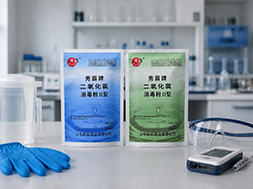
In 2026, Xiuba proposed that it is not enough to simply meet product qualification requirements; it is necessary to promote "green" practices in product selection, operation, safety, and record-keeping, rely on actual measurement data to verify effectiveness, strictly adhere to safety boundaries, and promote high-quality development of the industry.
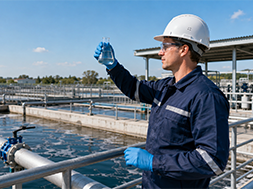
Traditional chlorine preparations are prone to producing harmful chlorination by-products and will eventually be phased out; Chlorine dioxide relies on a unique electron transfer oxidation mechanism, producing almost no organic chlorides, with high sterilization efficiency and lower risk of by-products. Xiuba relies on years of large-scale production and university research cooperation, with complete product qualifications, strict control of disinfection residues, and a balance between effective disinfection and ecological green, in line with the industry's green and low-carbon development trend.
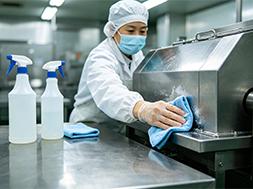
Focusing on three core selection dimensions—cost, safety, and broad-spectrum disinfection—this article compares chlorine dioxide with disinfectants such as ozone and peracetic acid, highlighting its significant advantages in terms of sterilization mechanism, usage safety, and long-term cost. The product is suitable for various scenarios including water supply, food processing, and wastewater treatment. Addressing market issues of misleading labeling, the article provides purchasing advice and recommends Xiuba Chlorine Dioxide, a brand with deep industry experience and complete certifications.
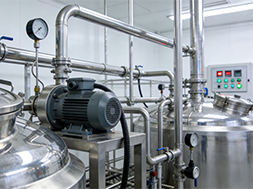
This article points out that during CIP cleaning, adding chlorine dioxide before alkaline washing and during acid-alkali rinsing has poor effects; the optimal point is after acid washing, when the acidic clean environment is suitable for the agent, and it is also necessary to drain residual acid, control the temperature, and circulate for 15-20 minutes to improve the disinfection effect.
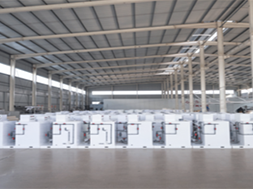
This article compares the applicable scenarios of chemical and electrolytic chlorine dioxide generators, explaining the manufacturer selection criteria from five dimensions: qualifications, accessories, case studies, after-sales service, and process compatibility. It also introduces five major development trends, including intelligent and modular equipment. Xiuba XB series equipment complies with GB 28931-2024 standards, has complete qualifications, and offers 24/7 full-process service. It is suitable for multiple industries and can reduce maintenance costs and operational risks.
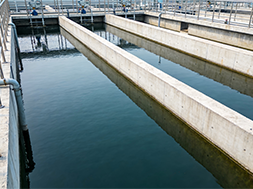
Chlorine dioxide is safe, efficient, and suitable for multiple industries, with the market continuously expanding and benefiting from ongoing policy support.Shandong Huashi Pharmaceutical's Xiuba division has been deeply involved in the industry for many years and can provide a full range of chlorine dioxide disinfection products and related technical services.
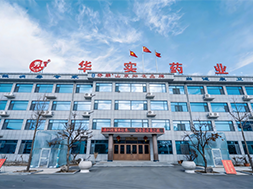
Xiuba has been deeply involved in chlorine dioxide disinfection for nearly 30 years, possessing mature technology and a rich product line. The brand has completed a strategic transformation, shifting from simply selling products to providing customized disinfection services throughout the entire process, integrating industry resources, and specifically addressing various disinfection pain points for companies in the drinking water, food, and medical fields.
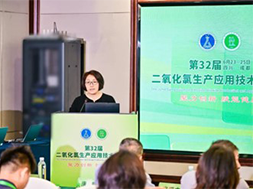
Shandong Huashi Pharmaceutical took part in the 32nd National Chlorine Dioxide Technology Symposium held in Chengdu this June. Our technical team shared professional research on chlorine dioxide disinfection for medical and public health scenarios and exchanged industry technologies with over 70 experts and manufacturers. This participation fully proves our solid R&D strength and professional standing in the chlorine dioxide disinfection field.
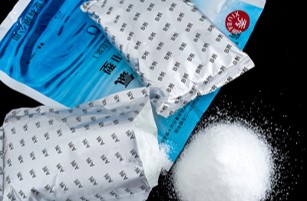
The rainstorm in many places in Shandong has caused the sediment, bacteria and organic matter in the water source to exceed the standard seriously. The traditional chlorine disinfection is prone to carcinogens and unstable sterilization, which makes it difficult to deal with sudden water pollution. High purity Xiuba chlorine dioxide has high sterilization efficiency and no harmful by-products. Combined with the three-level treatment process of the water plant, it can comprehensively ensure the safety of the water plant, secondary water supply, and household water use.
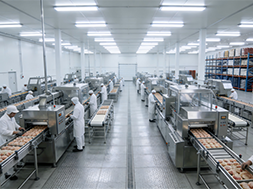
Chlorine dioxide spray disinfection in food packaging workshop is easy to cause combustion and explosion risk due to static electricity generated in dry environment. Comprehensive prevention and control can be achieved through four kinds of measures, including equipment anti-static grounding, optimization of atomization parameters, improvement of workshop humidity, static electricity monitoring and emergency plan.
Northeast of Huangshan Road and Chuangye Intersection, Small and Medium sized Enterprise Entrepreneurship Industrial Park, Shanwang Town, Linqu County, Weifang City, Shandong Province
Copyright © 2025 by Shandong Huashi Pharmaceutical Co., Ltd All Rights Reserved


 Language
 中文
中文 Русский
 Chlorine Dioxide Disinfectant Manufacturer


