Welcome to Our Factory for a Visit! Free customized disinfection solutions

Recently, everyone's started "raising crayfish," but I know what you're raising is more like "cyber crayfish" ( OpenClaw ), referring to an AI-powered automated robot that helps us with tasks . Today, however, I'm bringing you solutions to the pain points of "real crayfish" farming.

Ensuring the safe consumption of crayfish is a crucial issue for the food processing industry . The answer lies in a "safety guardian" you may have heard of but may not know much about —chlorine dioxide disinfectant. It not only effectively disinfects and sterilizes but also leaves no harmful residues, making it ideal for cleaning and preservation during food processing.
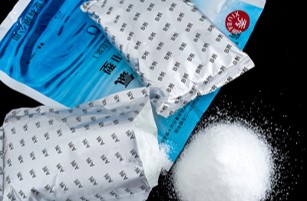
two disinfectants from Xiuba brand chlorine dioxide disinfectant powder for food-related products, a product of Shandong Huashi Pharmaceutical Co., Ltd., as examples to discuss how to effectively control quality in food processing workshops.
These two chlorine dioxide disinfectants are not only high in purity and low in impurities, but also offer two formulations—a 10% single-agent formulation and a 40 % binary AB formulation—suitable for food processing environments . Many customers ask, what's the difference between the 10% and 40% formulations? How should I choose?
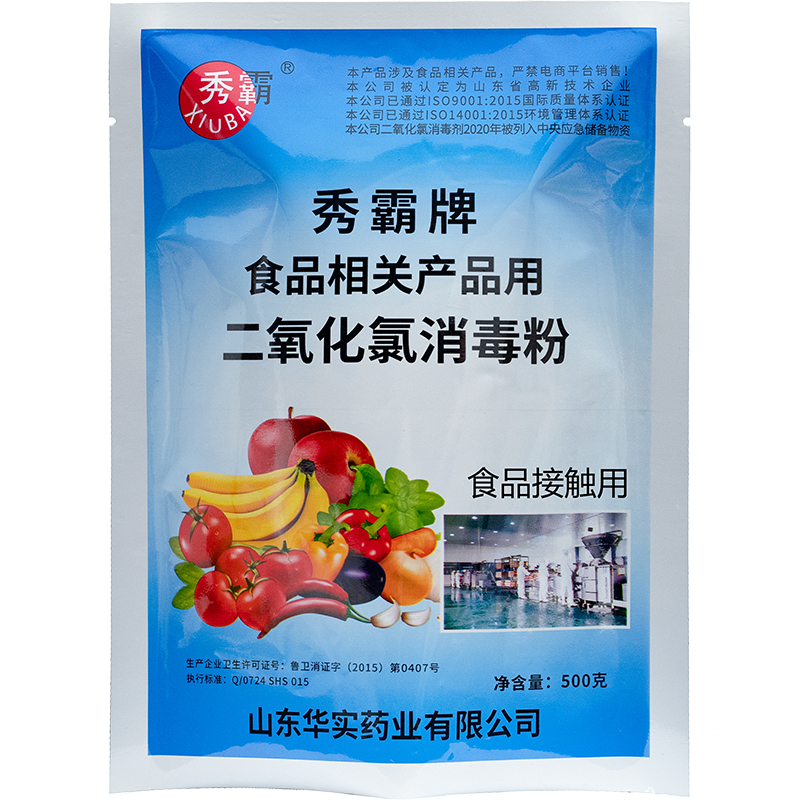
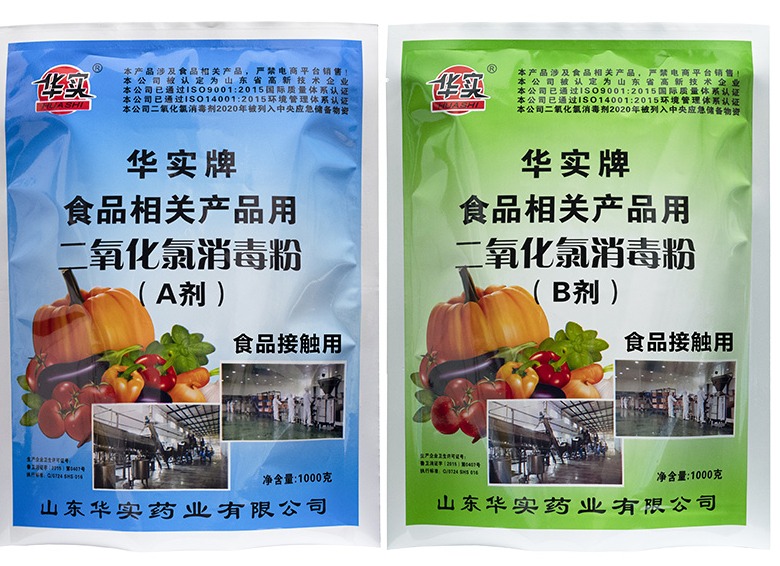
In short , different concentrations result in different treatment capacities. The binary AB formulation of chlorine dioxide disinfectant powder has a higher concentration, with agent A ( 40 % ± 4 % ) used in conjunction with agent B ( activator) . This allows for the treatment of a larger volume of water or disinfection area per unit dosage, resulting in higher activity and stronger bursts of action , making it more economical for large-scale, continuous processing . Conversely, the 10% single -agent formulation offers a moderate concentration and ease of use . Its 10 % ± 1% concentration allows for flexible mixing and precise control , making it suitable for small to medium-scale operations or precise formulation needs . Both formulations guarantee accurate concentration and extremely low impurities, allowing for flexible selection based on production habits and equipment conditions.
Specifically, what concentration should be used in each stage of crayfish processing? Based on extensive industry experience, we've compiled this "quick reference table" for you:
|
Disinfection scene |
Recommended concentration (ppm) |
Remark |
|
Hand disinfection |
10 - 20 ppm |
Soaking hands before entering the workshop effectively kills bacteria. |
|
Footwear/ Foot Bath Disinfection |
30 - 50 ppm |
Soak the water boots to disinfect them and prevent cross-contamination. |
|
Air disinfection |
100 - 200 ppm |
Used for fumigation or spraying in workshop spaces to reduce airborne microbial content. |
|
Disinfection of production water |
1 - 5 ppm |
Used for process water or cleaning water, meeting drinking water disinfection standards. |
|
Cleaning crayfish raw materials |
30 - 50 ppm |
Soaking helps preserve freshness and control initial bacterial colonies. |
When choosing a supplier, product quality is fundamental, but what gives people even more peace of mind is the responsibility and commitment behind the company .
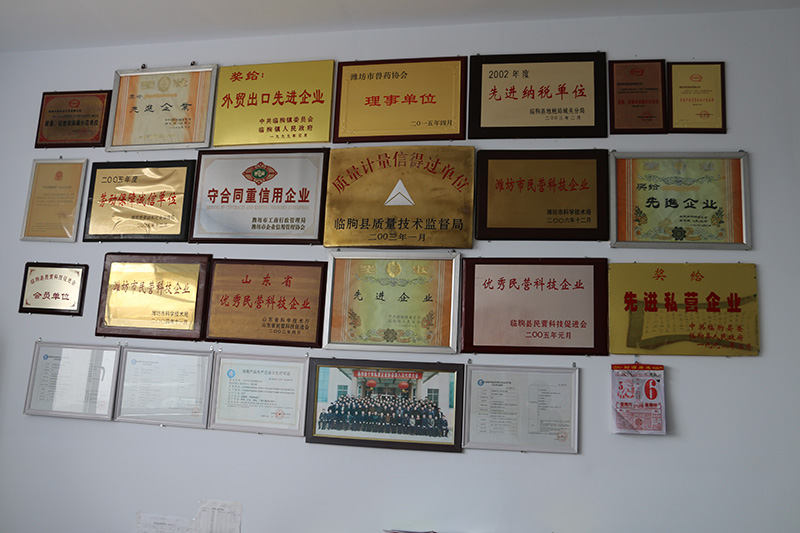
In 2026, Xiuba proposed that it is not enough to simply meet product qualification requirements; it is necessary to promote "green" practices in product selection, operation, safety, and record-keeping, rely on actual measurement data to verify effectiveness, strictly adhere to safety boundaries, and promote high-quality development of the industry.
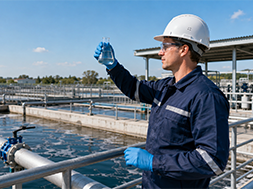
Traditional chlorine preparations are prone to producing harmful chlorination by-products and will eventually be phased out; Chlorine dioxide relies on a unique electron transfer oxidation mechanism, producing almost no organic chlorides, with high sterilization efficiency and lower risk of by-products. Xiuba relies on years of large-scale production and university research cooperation, with complete product qualifications, strict control of disinfection residues, and a balance between effective disinfection and ecological green, in line with the industry's green and low-carbon development trend.
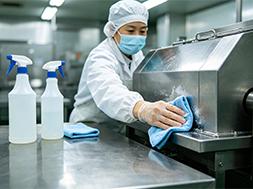
Focusing on three core selection dimensions—cost, safety, and broad-spectrum disinfection—this article compares chlorine dioxide with disinfectants such as ozone and peracetic acid, highlighting its significant advantages in terms of sterilization mechanism, usage safety, and long-term cost. The product is suitable for various scenarios including water supply, food processing, and wastewater treatment. Addressing market issues of misleading labeling, the article provides purchasing advice and recommends Xiuba Chlorine Dioxide, a brand with deep industry experience and complete certifications.
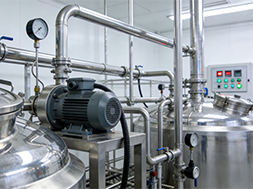
This article points out that during CIP cleaning, adding chlorine dioxide before alkaline washing and during acid-alkali rinsing has poor effects; the optimal point is after acid washing, when the acidic clean environment is suitable for the agent, and it is also necessary to drain residual acid, control the temperature, and circulate for 15-20 minutes to improve the disinfection effect.
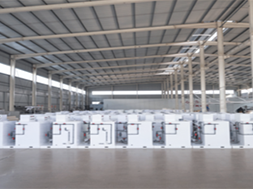
This article compares the applicable scenarios of chemical and electrolytic chlorine dioxide generators, explaining the manufacturer selection criteria from five dimensions: qualifications, accessories, case studies, after-sales service, and process compatibility. It also introduces five major development trends, including intelligent and modular equipment. Xiuba XB series equipment complies with GB 28931-2024 standards, has complete qualifications, and offers 24/7 full-process service. It is suitable for multiple industries and can reduce maintenance costs and operational risks.
Chlorine dioxide is safe, efficient, and suitable for multiple industries, with the market continuously expanding and benefiting from ongoing policy support.Shandong Huashi Pharmaceutical's Xiuba division has been deeply involved in the industry for many years and can provide a full range of chlorine dioxide disinfection products and related technical services.
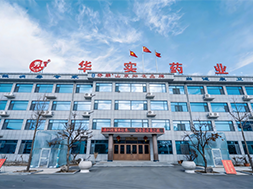
Xiuba has been deeply involved in chlorine dioxide disinfection for nearly 30 years, possessing mature technology and a rich product line. The brand has completed a strategic transformation, shifting from simply selling products to providing customized disinfection services throughout the entire process, integrating industry resources, and specifically addressing various disinfection pain points for companies in the drinking water, food, and medical fields.
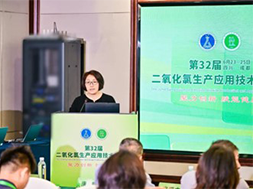
Shandong Huashi Pharmaceutical took part in the 32nd National Chlorine Dioxide Technology Symposium held in Chengdu this June. Our technical team shared professional research on chlorine dioxide disinfection for medical and public health scenarios and exchanged industry technologies with over 70 experts and manufacturers. This participation fully proves our solid R&D strength and professional standing in the chlorine dioxide disinfection field.
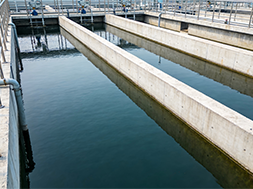
The rainstorm in many places in Shandong has caused the sediment, bacteria and organic matter in the water source to exceed the standard seriously. The traditional chlorine disinfection is prone to carcinogens and unstable sterilization, which makes it difficult to deal with sudden water pollution. High purity Xiuba chlorine dioxide has high sterilization efficiency and no harmful by-products. Combined with the three-level treatment process of the water plant, it can comprehensively ensure the safety of the water plant, secondary water supply, and household water use.
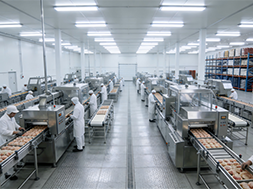
Chlorine dioxide spray disinfection in food packaging workshop is easy to cause combustion and explosion risk due to static electricity generated in dry environment. Comprehensive prevention and control can be achieved through four kinds of measures, including equipment anti-static grounding, optimization of atomization parameters, improvement of workshop humidity, static electricity monitoring and emergency plan.
Northeast of Huangshan Road and Chuangye Intersection, Small and Medium sized Enterprise Entrepreneurship Industrial Park, Shanwang Town, Linqu County, Weifang City, Shandong Province
Copyright © 2025 by Shandong Huashi Pharmaceutical Co., Ltd All Rights Reserved


 Language
 中文
中文 Русский
 Chlorine Dioxide Disinfectant Manufacturer


