Welcome to Our Factory for a Visit! Free customized disinfection solutions
When discussing hospital wastewater disinfection, disinfectants are inevitably part of the conversation. Disinfectants cover a broad range of products, and chlorine dioxide has been increasingly adopted in medical wastewater treatment projects because of its strong oxidizing capacity and broad-spectrum disinfection properties.
However, an important question follows:
Could long-term use of chlorine dioxide make microorganisms increasingly difficult to inactivate, similar to what may occur with prolonged use of certain antimicrobial drugs, and gradually increase the difficulty of disinfection?
First, one key concept must be clarified:
Disinfectant tolerance and antibiotic resistance are not the same thing.
Chlorine dioxide primarily inactivates microorganisms through multi-target oxidative action. This differs significantly from many antibiotics that act on specific biological targets. Therefore, chlorine dioxide disinfection should not be directly equated with mechanisms of antibiotic resistance.
Based on current understanding, the risk of properly used chlorine dioxide inducing typical, stable, heritable resistance appears relatively low. However, actual disinfection performance can still be affected by microorganism type, water quality, microbial load, biofilms, suspended solids, effective concentration, and contact time.
The disinfection capability of chlorine dioxide mainly comes from its strong oxidizing properties.
It can oxidize microbial membranes, proteins, and key enzyme systems, and can further affect important intracellular biomolecules, disrupting normal physiological functions.
Because chlorine dioxide acts through multiple oxidative targets, microorganisms are generally less likely to develop the type of stable, heritable resistance commonly associated with some single-target antimicrobial drugs.
However, this does not mean that all microorganisms are equally sensitive to chlorine dioxide.
Different microorganisms have different levels of natural tolerance. Spores, biofilms, and protective effects created by complex wastewater environments can all influence actual disinfection performance.
Therefore, the real question is not simply whether “chlorine dioxide will stop working,” but rather:
Under long-term disinfection pressure, could the microbial community structure change so that microorganisms with naturally higher tolerance or greater environmental protection make up a larger proportion of the surviving population?
Under continuous disinfection selection pressure, the microbial community in wastewater may undergo certain changes.
These changes can be understood from several perspectives, but this does not mean that every chlorine dioxide disinfection system will inevitably follow a fixed “three-stage evolution.”
During the initial period of disinfection, microorganisms that are relatively sensitive to chlorine dioxide, such as most Escherichia coli and some enteric pathogens, can decline significantly under effective disinfection conditions.
This is an important basis for achieving microbiological control in hospital wastewater treatment.
As sensitive microorganisms are substantially reduced, microorganisms that already possess greater environmental tolerance may represent a larger proportion of the remaining population after disinfection.
For example:
Spore-forming microorganisms in their spore state are generally more tolerant to disinfection than their vegetative cells.
Some Pseudomonas and Acinetobacter species can produce extracellular polymeric substances and form biofilms, providing a degree of physical and chemical protection.
Some mycobacteria have specialized cell-wall structures and can show relatively high tolerance to various environmental stresses and certain disinfectants.
It is important to emphasize that:
Many of these phenomena involve natural tolerance, biofilm protection, or phenotypic tolerance. They do not necessarily mean that the microorganism has developed stable, heritable “resistance.”
Long-term exposure to sublethal disinfection conditions may theoretically allow more tolerant microbial subpopulations to survive more readily, leading to changes in microbial community structure.
Some microorganisms may also improve survival under low-level oxidative stress through enhanced oxidative-stress defenses, cell aggregation, extracellular polymeric protection, or improved damage-repair mechanisms.
However, this should be interpreted cautiously:
Current evidence that long-term chlorine dioxide use can consistently induce widespread, stable, heritable resistance or cross-resistance remains limited. Therefore, this potential risk should not be presented as an inevitable outcome.
A more scientifically appropriate statement is:
Long-term low-dose or sublethal exposure may increase the opportunity for more tolerant microbial subpopulations to be selected.
Theoretically, if more tolerant microorganisms account for a greater proportion of the post-treatment microbial population, or if protective factors such as biofilms and particles become more important, the effective disinfection exposure required to achieve the same level of inactivation may need to be reassessed under otherwise similar conditions.
The CT concept is often used to help evaluate disinfection performance, where C represents the effective disinfectant concentration and T represents the contact time.
However, in practical engineering applications, this should not be simplified to:
“If the microorganisms become harder to kill, simply increase the chlorine dioxide dosage.”
Actual disinfection performance is also affected by:
Therefore, when disinfection performance declines, the first question should be:
Has microbial tolerance actually changed, or have the effective concentration, contact time, mixing conditions, or pretreatment performance deviated from the original design conditions?
Whether a hospital wastewater disinfection system enters a so-called “dosage competition” depends on multiple factors.
Disinfection intensity and effective contact: Proper dosing combined with sufficient effective contact can reduce sublethal exposure and the number of surviving microorganisms. From a risk-management perspective, this can reduce opportunities for continuously selecting more tolerant subpopulations.
Microbial sources and continuous input: Microorganisms in hospital wastewater are continuously introduced from patient excreta, domestic wastewater, and other sources. The microbial community therefore remains dynamic and should not be viewed as a closed culture system in which a single microbial population evolves continuously over a long period.
System complexity: Organic matter, Fe²⁺, Mn²⁺, sulfides, and other reducing substances in wastewater can create chlorine dioxide demand, reducing the actual effective concentration and potentially creating conditions for sublethal exposure.
There is no need for alarm, but appropriate risk awareness is necessary.
The real issue to avoid is not simply “using chlorine dioxide for many years,” but rather:
Long-term underdosing, inadequate mixing, insufficient contact time, poor pretreatment performance, and persistent biofilms.
The following measures can help optimize the system.
The chlorine dioxide dosage and effective contact time should be reasonably determined according to wastewater quality, treatment flow, and microbiological control objectives, while avoiding prolonged operation under clearly insufficient sublethal conditions.
At the same time, effluent quality, actual chlorine dioxide performance, and microbiological indicators should be monitored regularly, and operating parameters should be dynamically optimized based on actual data.
CT can be an important tool for evaluating the disinfection process, but it should not be used independently of water quality, mixing conditions, and hydraulic performance.
Biological treatment, sedimentation, filtration, and other upstream processes should be optimized to reduce organic matter and suspended-solid loads as much as possible.
This can not only reduce non-target consumption of chlorine dioxide, but also reduce the protection provided to microorganisms by particles and biofilms.
From an engineering perspective:
Many cases in which microorganisms appear to be “increasingly difficult to kill” are not actually caused by heritable resistance. Instead, the disinfectant may simply not be reaching the target microorganisms at a sufficiently effective concentration.
If a chlorine dioxide-only process cannot consistently achieve the expected performance under certain water-quality conditions or against specific target microorganisms, combined treatment with ultraviolet disinfection, ozone, or other suitable technologies may be considered based on project evaluation.
Whether combined or rotational disinfection should be adopted should depend on:
It should not be adopted solely for the purpose of “preventing tolerance.”
During routine operation, microbiological indicators required by applicable regulations and project specifications should remain the primary monitoring targets.
Institutions with stronger research capabilities may also combine:
to comprehensively evaluate environmental microbiological risks in hospital wastewater.
One point should be emphasized:
Antibiotic resistance genes cannot be directly equated with genes responsible for chlorine dioxide tolerance.
Therefore, test results should always be interpreted according to the specific purpose of the investigation.
Hospital wastewater disinfection is a continuously managed and dynamic process.
Long-term use of chlorine dioxide does not mean that so-called “disinfectant-resistant bacteria” will inevitably develop.
A more accurate understanding is:
Continuous disinfection selection pressure may alter the microbial community structure in wastewater, allowing naturally more tolerant microorganisms or those protected by biofilms and environmental conditions to represent a greater proportion of the surviving population.
However, this does not mean that:
Long-term chlorine dioxide use will inevitably induce stable, heritable resistant microorganisms.
From an engineering management perspective, the real concern is prolonged sublethal exposure.
Insufficient dosage, inadequate mixing, insufficient contact time, poor pretreatment, and persistent biofilms can all allow some microorganisms to survive continuously.
Therefore, through scientific dosage management, effective pretreatment, appropriate contact conditions, necessary combined treatment, and continuous monitoring, the risk of repeatedly selecting more tolerant microbial subpopulations can be reduced while improving the long-term stability of hospital wastewater disinfection.
For chlorine dioxide, the professional approach should not be:
“If it is used for many years, microorganisms will definitely become resistant.”
Nor should it be:
“Microorganisms can never develop any tolerance to chlorine dioxide.”
A more scientifically appropriate conclusion is:
The multi-target oxidative mechanism of chlorine dioxide makes typical stable, heritable resistance relatively difficult to develop. However, natural microbial tolerance, biofilm protection, and long-term sublethal exposure still deserve attention, and potential risks should therefore be reduced through standardized operation and continuous monitoring.

The tidal discharge of hospital outpatient sewage leads to frequent on-off of chlorine dioxide disinfection system, posing efficiency, equipment and safety hazards. Relying on five layers of protection to ensure operational safety, cooperating with operation and maintenance measures such as phased operation, encrypted maintenance, and optimized drug supply, adjusting start and stop times reasonably, improving sewage disinfection efficiency, and building a solid public health defense line.
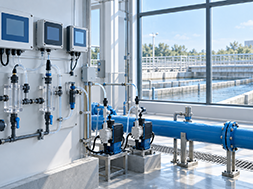
Xiuba chlorine dioxide can be used for advanced treatment of polluted water source. The front end pre oxidizes the odorant, iron and manganese, and the dosage is determined by test; The terminal disinfection shall comply with the requirements of the national standard to ensure the contact time and water margin. The product covers a variety of dosage forms and supporting equipment, which should be selected according to the national standard. Double dosing points are set, and the equipment is equipped with metering, monitoring and alarm functions to control the total dosage, monitor disinfection by-products, and ensure the water quality treatment effect by relying on detection test and whole process monitoring.
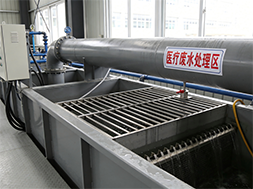
Regarding the control of hydrochloric acid and sodium chlorate raw materials for chlorine dioxide generators in hospital wastewater treatment, the quality requirements of raw materials are clearly defined in accordance with national standards such as GB28931-2024. On-site rapid acceptance can be carried out through visual inspection, odor identification, specific gravity and pH testing, and small-scale reaction. By implementing management measures such as raw material registration and sampling, separate storage, regular equipment cleaning, and monitoring of operating parameters, the disinfection effect can be stabilized, and cost reduction and efficiency improvement can be achieved.
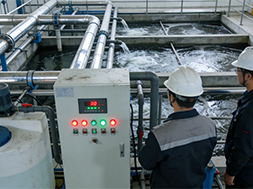
Hospital wastewater is prone to producing byproducts and residual resistant pathogens when disinfected alone. A chlorine dioxide-ozone-ultraviolet coupling process can be used for deep treatment. Chlorine dioxide is the main disinfection unit, ozone degrades recalcitrant pollutants, and ultraviolet light is used for final control. With the help of online monitoring, the reagents and energy consumption can be intelligently adjusted to balance treatment effect and cost. In the future, it will develop towards big data AI automatic control.
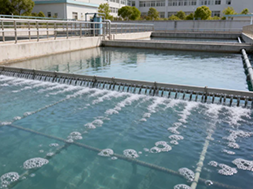
Sodium thiosulfate and other reducing substances in hospital wastewater may rapidly consume chlorine dioxide, leading to insufficient residual chlorine and reduced disinfection intensity in some areas. Solving this type of "disinfection gap" problem cannot rely solely on increasing the dosage. Instead, it requires a comprehensive disinfection assurance system built through measures such as source identification, homogenization adjustment, optimized mixing, rational dosage, upgraded monitoring, and supplementary disinfection.
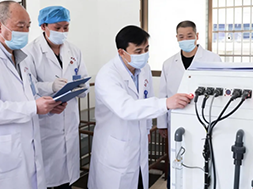
Chlorine dioxide kills bacteria through multi-target oxidation, and theoretically, it is unlikely to produce drug-resistant bacteria. However, long-term sublethal low-dose disinfection of wastewater systems can screen out resistant microorganisms, leading to bacterial succession. In such cases, it may be necessary to increase CT disinfection parameters to achieve the desired disinfection effect. The risk of increased microbial tolerance and the effectiveness of hospital wastewater disinfection can be mitigated by ensuring sufficient dosage and contact time, avoiding prolonged low-dose operation, combining UV/ozone disinfection, proper wastewater pretreatment, and regular monitoring of water quality microorganisms.

When chlorine dioxide is used to disinfect hospital wastewater, short-circuiting and disinfection dead zones can easily occur due to the short half-life of the agent. A three-stage mixing process, consisting of pipeline premixing, inlet enhanced mixing, and in-tank flow guidance, combined with an online intelligent control system and standardized equipment selection and daily operation and maintenance, can be used to achieve rapid and uniform distribution of chlorine dioxide in wastewater and ensure the disinfection effect of hospital wastewater.
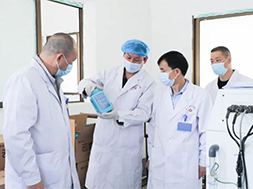
When hospital wastewater is disinfected with chlorine dioxide, pH directly affects the disinfection effect. The pH needs to be maintained within the range of 6.0–8.5. Water quality is controlled through monitoring, intelligent dosing, and coordinated regulation of upstream processes to ensure stable discharge compliance and save operating costs.
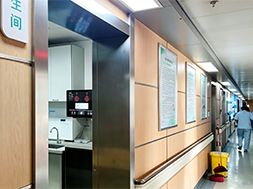
Excessive ammonia nitrogen in hospital wastewater stems from four main issues: pretreatment, biochemical processes, water volume, and process technology. This article provides a complete solution encompassing pretreatment, biochemical optimization, advanced treatment, and emergency nitrogen reduction, balancing stable compliance with operating costs, and simultaneously promoting solutions from chlorine dioxide disinfectant manufacturers.
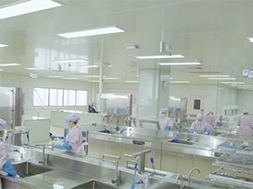
Abnormalities in hospital wastewater biochemical systems can lead to elevated COD and ammonia nitrogen levels, excessive consumption of chlorine dioxide causing disinfection failure, and posing a risk of pathogen leakage. This article introduces six emergency response measures and a corresponding long-term management plan to ensure wastewater meets discharge standards and safeguard public health and environmental safety.
Northeast of Huangshan Road and Chuangye Intersection, Small and Medium sized Enterprise Entrepreneurship Industrial Park, Shanwang Town, Linqu County, Weifang City, Shandong Province
Copyright © 2025 by Shandong Huashi Pharmaceutical Co., Ltd All Rights Reserved


 Language
 中文
中文 Русский
 Chlorine Dioxide Disinfectant Manufacturer


