Welcome to Our Factory for a Visit! Free customized disinfection solutions
Today’s topic is—
In hospital wastewater treatment systems that use chlorine dioxide for disinfection, chlorine dioxide generators are often required to operate continuously for long periods. Their stability depends not only on the equipment itself, but also heavily on the quality of raw materials such as hydrochloric acid and sodium chlorate, as well as on routine operation and management.
If raw material concentration fluctuates, impurity levels are abnormal, or the material source is not properly controlled, chlorine dioxide generation efficiency, equipment stability, and operational safety may all be affected. Therefore, establishing standardized procedures for raw material procurement, acceptance, storage, and traceability is an important foundation for the long-term stable operation of a chlorine dioxide generation system.
So, what should hospital wastewater treatment projects focus on when controlling raw material quality and conducting on-site acceptance?
The current GB 28931-2024, Hygienic Requirements for Chlorine Dioxide Disinfectant Generators, further clarifies the hygienic and safety requirements for generators and related raw materials, providing a standards-based foundation for raw material quality control.
Hydrochloric acid: It should comply with the currently effective national standard for Synthetic Hydrochloric Acid for Industrial Use, which is currently GB/T 320-2025. Using compliant and traceable industrial synthetic hydrochloric acid helps reduce the risk of using acid solutions of unknown composition, excessive impurities, or non-standard origin.
Sodium chlorate: It should comply with GB/T 1618-2018, Sodium Chlorate for Industrial Use. This standard specifies requirements for sodium chlorate purity, moisture, water-insoluble matter, and other relevant indicators.
When purchasing raw materials, hospitals are advised to require suppliers to provide quality certificates or test reports corresponding to the actual batch and to establish appropriate batch sampling and periodic verification mechanisms.
Hospital wastewater treatment is a long-term continuous operation. Only when raw material sources are traceable, batch quality can be verified, and abnormal situations can be investigated can the impact of raw material fluctuations on generator operation and disinfection performance be reduced.
Standards and quality documents are the foundation, but when raw materials are actually received, on-site inspection is still necessary to identify issues such as damaged packaging, abnormal batch information, unusual appearance, or concentration deviations.
It is important to note that on-site rapid acceptance should only serve as a low-risk screening method and cannot replace formal testing methods specified in applicable product standards.
A more appropriate on-site acceptance process should include:
Document verification → packaging and label inspection → visual screening → safe rapid quantitative testing → isolation and retesting of abnormal batches
For hydrochloric acid, the first checks should include packaging integrity, label information, and the appearance of the liquid.
If obvious abnormal coloration, turbidity, sediment, suspended matter, or other visible impurities are found, acceptance should be suspended. The relevant batch quality documents should be reviewed, and laboratory testing should be carried out if necessary.
It should be noted that yellow or brown coloration in hydrochloric acid may be related to iron ions, impurities, container contamination, or the manufacturing process. An abnormal appearance is only a warning sign and cannot by itself be used to determine that heavy metals exceed limits.
Sodium chlorate should normally have an appearance consistent with qualified product specifications. If obvious discoloration, moisture-induced caking, foreign matter, or significant differences from previous qualified batches are found, use should be suspended and further verification should be carried out.
Visual inspection is suitable for rapid screening, but it cannot replace formal testing of purity, moisture, impurities, and other relevant indicators.
Operators should not directly smell hydrochloric acid or other chemical raw materials to assess their quality.
Hydrochloric acid is strongly corrosive and irritating. Intentionally bringing the container close to the nose increases the risk of chemical exposure.
If an abnormal irritating odor, suspected leakage, container swelling, or packaging damage is noticed during normal handling or acceptance, operations should be stopped immediately. The source of the abnormality should be investigated under appropriate ventilation and personal protective conditions, and the incident should be handled according to the chemical abnormality response procedure.
Therefore, “smelling the material” should not be used as a formal raw material quality assessment method.
For hydrochloric acid, density measurement or a validated acid-base titration method can be used as an initial screening method to identify obvious concentration abnormalities.
For example, hydrochloric acid of a specific concentration has a corresponding density range at a defined temperature. However, actual assessment should be based on the specific product concentration, temperature, and supplier technical data rather than on a single universal density value.
Density measurement can only reflect the overall concentration characteristics of the solution. It cannot determine whether iron, heavy metals, organic matter, or other impurities meet quality requirements.
For concentrated hydrochloric acid, ordinary pH test strips are also not recommended as a quality acceptance basis because the pH is extremely low, the differentiation capability of the strips is limited, and pH itself does not represent hydrochloric acid purity or actual concentration.
For sodium chlorate, key indicators such as purity, moisture, and insoluble matter should primarily be verified using the supplier’s batch test report and the testing methods specified in the applicable product standard.
The chlorate testing methods described in the relevant appendix of T/CUWA 20062-2023 are mainly intended for monitoring chlorate by-products in water during drinking water treatment and should not be directly used as an on-site purity acceptance method for industrial sodium chlorate raw material.
It is not recommended to directly mix sodium chlorate and hydrochloric acid at a hospital wastewater treatment site and judge raw material quality by observing reaction intensity or the yellow-green color of chlorine dioxide gas.
Chlorine dioxide is a strong oxidizing substance. Open on-site preparation and visual observation may increase the risk of inhalation, leakage, and localized accumulation of high concentrations.
If verification of raw material performance is genuinely required, it should be conducted in a laboratory environment equipped with ventilation, off-gas absorption, protective measures, and standardized operating procedures. The assessment should be based on validated methods and quantitative test results.
It should also be noted that abnormal generation efficiency does not necessarily mean there is a raw material quality problem. It may also be related to metering pump accuracy, reagent ratio, reaction temperature, equipment scaling, mixing conditions, or generator operating parameters.
Therefore, raw material quality should not be judged solely by “reaction speed” or “color intensity.”
Before each batch of raw material is put into storage, a complete batch record should be established to create a traceable “raw material identity file.” This may include:
manufacturer, production date, batch number, specification or concentration, supplier test report, on-site acceptance results, and actual usage records.
Companies may also establish an appropriate retention-sample period according to their own quality traceability system. For example, samples may be retained throughout the actual use period of the batch and for an additional period afterward, allowing investigation and verification if abnormalities occur.
The retention period should be determined according to internal management requirements and actual storage conditions rather than being treated as a single universal mandatory period.
Hydrochloric acid, sodium chlorate, and other incompatible raw materials should be stored in separate or segregated areas with clear chemical identification, hazard information, and operating warning signs.
Specific safety distances, isolation methods, and storage quantities should be determined according to the hazardous properties of the raw materials, packaging type, site conditions, and applicable hazardous-chemical, fire-safety, and safety-management requirements. A fixed universal requirement such as “at least 5 meters apart” should not be applied mechanically.
Storage conditions should comply with the raw material SDS, product instructions, and generator manufacturer requirements. Particular attention should be paid to avoiding high temperatures, moisture, direct sunlight, packaging damage, and storage with incompatible substances.
For solid raw materials such as sodium chlorate, special attention should be paid to moisture protection and prevention of contamination by combustible materials, organic substances, or other incompatible materials.
Even when stable, high-quality raw materials are used, chlorine dioxide generation systems still require maintenance based on actual operating conditions.
The cleaning and maintenance intervals for reactors, metering systems, and associated pipelines should be determined according to the equipment manufacturer’s requirements, accumulated operating time, deposition or scaling conditions, generation efficiency, and on-site inspection results. A universal fixed interval such as once every one to two months should not be applied.
If there is a significant increase in reactor deposits, abnormal reduction in generation efficiency, or pipeline blockage, the following factors should be investigated together:
raw material quality;
raw material concentration and ratio;
metering equipment accuracy;
reaction water quality;
operating temperature and reaction conditions;
equipment corrosion, scaling, and maintenance status.
An increase in deposits should not automatically be attributed to raw material quality alone.
It is recommended to establish historical records linking raw material dosage, generator operating conditions, and chlorine dioxide output or generation capacity.
Long-term trend data can help identify:
abnormal raw material consumption;
fluctuations in generation efficiency;
metering equipment abnormalities;
changes in reactor condition.
For projects with suitable monitoring capability, the chlorine dioxide concentration in the generated solution or at the dosing point can be measured periodically and evaluated together with actual wastewater flow and dosing rate to determine whether the generation system is operating normally.
Chlorine dioxide residual in the final effluent and microbiological indicators can be used to evaluate overall disinfection performance. However, these parameters are also affected by wastewater quality, reducing load, contact time, and actual dosage, so they should not be used alone to determine whether raw material quality is acceptable.
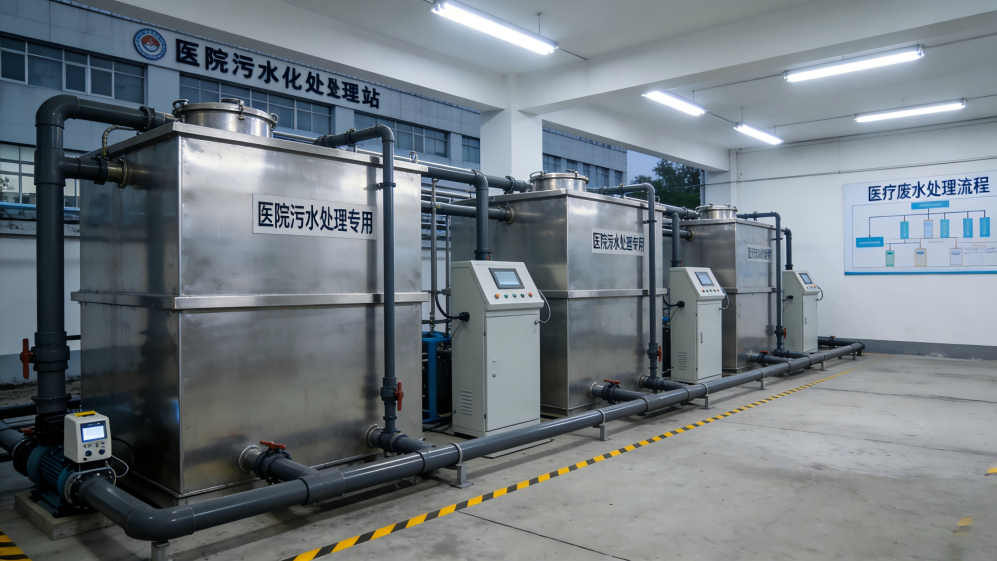
In actual projects, strengthening raw material batch acceptance, improving metering management, maintaining generators in a timely manner, and reducing abnormal shutdowns and repeated treatment caused by raw material problems may help reduce unnecessary chemical consumption and maintenance costs.
However, wastewater quality, equipment type, raw material prices, maintenance systems, and operating loads vary significantly among hospitals. Therefore, a universal claim such as “operating costs reduced by 25%” should not be used as a general performance promise.
A more appropriate approach is to:
Use long-term operating records to compare chemical consumption, equipment maintenance frequency, abnormal shutdowns, and effluent stability before and after optimization, and evaluate the economic benefits of raw material quality control based on actual data.
This provides more meaningful technical value than simply presenting a fixed cost-saving percentage.
Controlling raw material quality is not simply an additional procurement procedure. It is a way to establish stable operating conditions for the chlorine dioxide generation system from the source.
From supplier selection and batch document verification to packaging inspection, visual screening, safe rapid testing, standardized storage, operating monitoring, and equipment maintenance, every step may affect final generation efficiency and disinfection stability.
The core principles of raw material management for chlorine dioxide generators in hospital wastewater treatment should therefore be:
Traceable sources, verifiable batches, low-risk acceptance, isolation of abnormalities, recorded operation, and full traceability of problems.
Only by integrating raw material quality control with equipment operation management can hospitals improve the stability of wastewater disinfection and reduce the risk of effluent non-compliance caused by raw material or equipment abnormalities.

The tidal discharge of hospital outpatient sewage leads to frequent on-off of chlorine dioxide disinfection system, posing efficiency, equipment and safety hazards. Relying on five layers of protection to ensure operational safety, cooperating with operation and maintenance measures such as phased operation, encrypted maintenance, and optimized drug supply, adjusting start and stop times reasonably, improving sewage disinfection efficiency, and building a solid public health defense line.
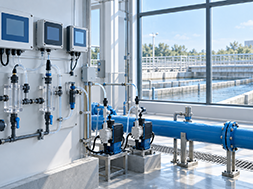
Xiuba chlorine dioxide can be used for advanced treatment of polluted water source. The front end pre oxidizes the odorant, iron and manganese, and the dosage is determined by test; The terminal disinfection shall comply with the requirements of the national standard to ensure the contact time and water margin. The product covers a variety of dosage forms and supporting equipment, which should be selected according to the national standard. Double dosing points are set, and the equipment is equipped with metering, monitoring and alarm functions to control the total dosage, monitor disinfection by-products, and ensure the water quality treatment effect by relying on detection test and whole process monitoring.
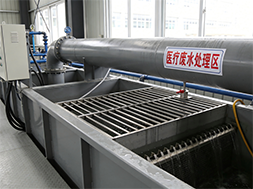
Regarding the control of hydrochloric acid and sodium chlorate raw materials for chlorine dioxide generators in hospital wastewater treatment, the quality requirements of raw materials are clearly defined in accordance with national standards such as GB28931-2024. On-site rapid acceptance can be carried out through visual inspection, odor identification, specific gravity and pH testing, and small-scale reaction. By implementing management measures such as raw material registration and sampling, separate storage, regular equipment cleaning, and monitoring of operating parameters, the disinfection effect can be stabilized, and cost reduction and efficiency improvement can be achieved.
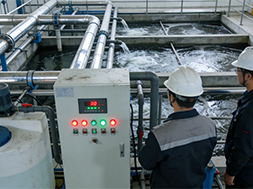
Hospital wastewater is prone to producing byproducts and residual resistant pathogens when disinfected alone. A chlorine dioxide-ozone-ultraviolet coupling process can be used for deep treatment. Chlorine dioxide is the main disinfection unit, ozone degrades recalcitrant pollutants, and ultraviolet light is used for final control. With the help of online monitoring, the reagents and energy consumption can be intelligently adjusted to balance treatment effect and cost. In the future, it will develop towards big data AI automatic control.
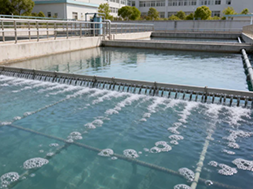
Sodium thiosulfate and other reducing substances in hospital wastewater may rapidly consume chlorine dioxide, leading to insufficient residual chlorine and reduced disinfection intensity in some areas. Solving this type of "disinfection gap" problem cannot rely solely on increasing the dosage. Instead, it requires a comprehensive disinfection assurance system built through measures such as source identification, homogenization adjustment, optimized mixing, rational dosage, upgraded monitoring, and supplementary disinfection.
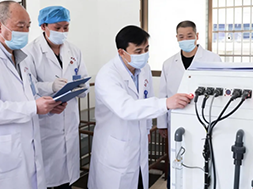
Chlorine dioxide kills bacteria through multi-target oxidation, and theoretically, it is unlikely to produce drug-resistant bacteria. However, long-term sublethal low-dose disinfection of wastewater systems can screen out resistant microorganisms, leading to bacterial succession. In such cases, it may be necessary to increase CT disinfection parameters to achieve the desired disinfection effect. The risk of increased microbial tolerance and the effectiveness of hospital wastewater disinfection can be mitigated by ensuring sufficient dosage and contact time, avoiding prolonged low-dose operation, combining UV/ozone disinfection, proper wastewater pretreatment, and regular monitoring of water quality microorganisms.

When chlorine dioxide is used to disinfect hospital wastewater, short-circuiting and disinfection dead zones can easily occur due to the short half-life of the agent. A three-stage mixing process, consisting of pipeline premixing, inlet enhanced mixing, and in-tank flow guidance, combined with an online intelligent control system and standardized equipment selection and daily operation and maintenance, can be used to achieve rapid and uniform distribution of chlorine dioxide in wastewater and ensure the disinfection effect of hospital wastewater.
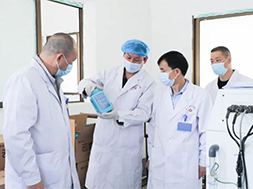
When hospital wastewater is disinfected with chlorine dioxide, pH directly affects the disinfection effect. The pH needs to be maintained within the range of 6.0–8.5. Water quality is controlled through monitoring, intelligent dosing, and coordinated regulation of upstream processes to ensure stable discharge compliance and save operating costs.
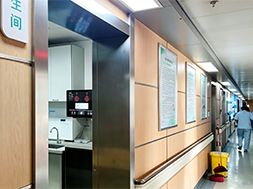
Excessive ammonia nitrogen in hospital wastewater stems from four main issues: pretreatment, biochemical processes, water volume, and process technology. This article provides a complete solution encompassing pretreatment, biochemical optimization, advanced treatment, and emergency nitrogen reduction, balancing stable compliance with operating costs, and simultaneously promoting solutions from chlorine dioxide disinfectant manufacturers.
Abnormalities in hospital wastewater biochemical systems can lead to elevated COD and ammonia nitrogen levels, excessive consumption of chlorine dioxide causing disinfection failure, and posing a risk of pathogen leakage. This article introduces six emergency response measures and a corresponding long-term management plan to ensure wastewater meets discharge standards and safeguard public health and environmental safety.
Northeast of Huangshan Road and Chuangye Intersection, Small and Medium sized Enterprise Entrepreneurship Industrial Park, Shanwang Town, Linqu County, Weifang City, Shandong Province
Copyright © 2025 by Shandong Huashi Pharmaceutical Co., Ltd All Rights Reserved


 Language
 中文
中文 Русский
 Chlorine Dioxide Disinfectant Manufacturer


