Welcome to Our Factory for a Visit! Free customized disinfection solutions
Every year on March 15th, multiple industry insider stories are revealed. In 2024, the cold drink industry experienced a "thunderstorm", and market regulatory departments in many places found that many popular cold drinks, ice cream, and other products had serious excessive levels of Escherichia coli during random inspections.
This has a significant impact on cold drink production enterprises, which means poor hygiene control in production, transportation and other links. The involved enterprises will face high fines, some of which may reach millions. More seriously, after the 315 exposure, the company's brand image was damaged, it fell into a crisis of trust, and it was difficult to restore operating profits.
But don't worry, the top players in the field of food production disinfection have rich experience. Next, we will delve into the root causes of the problem and explore how to maintain the "coolness on the tongue" from the production end.
1、 Excessive Escherichia coli: The full chain contamination trap behind an ice cream
Many people wonder: "How can bacteria survive when ice cream is frozen hard?" In fact, although E. coli prefers high temperatures, it does not die at low temperatures, but only "sleeps". Once the temperature fluctuates (such as melting and freezing during transportation), it will rapidly multiply. Pollution is often hidden in these links:
1. Raw materials: Potential hazard sources
Raw materials such as fresh milk may not be thoroughly sterilized and may contain Escherichia coli; Production water or contamination by fecal residues; Moisture storage of auxiliary materials can breed microorganisms.
2. Production: Bacterial breeding ground
Residual stains in the gaps of equipment such as mixing tanks form a "biofilm" that is difficult to remove; The mold disinfection is not thorough, and the moisture on the inner wall helps bacteria grow; Workshop water accumulation and mold stains can contaminate ice cream.
3. Personnel: Mobile pollution source
The worker did not wear gloves properly and brought bacteria into contact with their hands; Insufficient cleaning of work clothes has become a carrier of bacteria; Entering the workshop without strict disinfection resulted in the introduction of external bacteria.
4. Storage and transportation: cold chain vulnerability
Failure to refrigerate in a timely manner after production creates opportunities for bacterial growth; The temperature of the refrigerated truck is unstable during transportation, and bacteria proliferate wildly; The temperature fluctuation in the supermarket freezer is large, and the number of bacteria may increase exponentially.
2、 Chlorine dioxide: the safety guardian of cold drink production
Chlorine dioxide, as an internationally recognized and efficient disinfectant, is the safety guardian of cold drink production. Its core advantages include five:
1. Strong bactericidal power and low-temperature effectiveness, with a killing rate of 99.99% against Escherichia coli, Salmonella, and other bacteria. It still has strong bactericidal power at 0-10 ℃, suitable for ice cream cold chain, and can penetrate equipment gaps to break down biofilms and cut off pollution chains.
2. It does not damage the flavor, unlike chlorine preparations, it does not react with milk protein, does not cause fruit flavored ice cream to have a "strange taste", retains its natural aroma, and is disinfected without residue. It does not require repeated rinsing, avoids secondary pollution, and ensures a pure taste.
3. Strong adaptability, able to stably function regardless of the acidity or alkalinity of the workshop water quality. Unlike sodium hypochlorite, its sterilization effect is not affected when encountering organic matter in raw materials, making it suitable for complex sanitary conditions in cold drink production.
4. Mild and non corrosive, with much lower corrosiveness to stainless steel pipes and plastic molds than traditional disinfectants, reducing equipment loss and maintenance costs. It is used for disinfecting workshop floors and walls without damaging tiles and coatings, maintaining a clean environment.
5. Easy to operate, can be made into solutions for equipment cleaning, raw material water disinfection, and can also be made into gases for workshop space sterilization, achieving "all-round and no dead corners" protection. After decomposition, only harmless sodium chloride and oxygen are produced, without carcinogens, which meets food grade safety standards.
3、 Selected disinfection products, ensuring a safe life throughout the entire cycle
How do cold drink manufacturers and consumers choose disinfectant products? Professional brand Xiuba chlorine dioxide has gained the trust of many well-known cold drink enterprises due to its comprehensive performance.
It is highly efficient in sterilization, and can quickly kill food source microorganisms at extremely low concentrations, ensuring the safety of all production processes and products; Safe and reliable, decomposed into harmless salt and water, with no residue or other issues, does not affect the flavor of cold drinks, and complies with regulations; Stable properties, fast dissolution, easy concentration control and traceability; Environmentally friendly, thoroughly decomposed, with diverse forms of use and easy operation, it can be applied to integrate CIP cleaning processes to improve efficiency.
Xiuba chlorine dioxide is produced strictly in accordance with national standards, and each batch undergoes rigorous testing to reassure consumers. Choosing it not only provides efficient disinfectants, but also injects professional, reassuring, and convenient guarantees into cold drink brands, helping enterprises win consumers' lasting trust in quality and safety.
The coolness of summer should not be disturbed by safety hazards. With the reliable solution of chlorine dioxide from the selection company, cold drink enterprises can cut off the path of E. coli contamination from the source, easily solving hygiene concerns.

The tidal discharge of hospital outpatient sewage leads to frequent on-off of chlorine dioxide disinfection system, posing efficiency, equipment and safety hazards. Relying on five layers of protection to ensure operational safety, cooperating with operation and maintenance measures such as phased operation, encrypted maintenance, and optimized drug supply, adjusting start and stop times reasonably, improving sewage disinfection efficiency, and building a solid public health defense line.
Xiuba chlorine dioxide can be used for advanced treatment of polluted water source. The front end pre oxidizes the odorant, iron and manganese, and the dosage is determined by test; The terminal disinfection shall comply with the requirements of the national standard to ensure the contact time and water margin. The product covers a variety of dosage forms and supporting equipment, which should be selected according to the national standard. Double dosing points are set, and the equipment is equipped with metering, monitoring and alarm functions to control the total dosage, monitor disinfection by-products, and ensure the water quality treatment effect by relying on detection test and whole process monitoring.
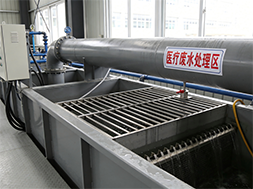
Regarding the control of hydrochloric acid and sodium chlorate raw materials for chlorine dioxide generators in hospital wastewater treatment, the quality requirements of raw materials are clearly defined in accordance with national standards such as GB28931-2024. On-site rapid acceptance can be carried out through visual inspection, odor identification, specific gravity and pH testing, and small-scale reaction. By implementing management measures such as raw material registration and sampling, separate storage, regular equipment cleaning, and monitoring of operating parameters, the disinfection effect can be stabilized, and cost reduction and efficiency improvement can be achieved.
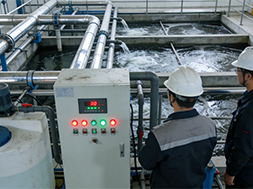
Hospital wastewater is prone to producing byproducts and residual resistant pathogens when disinfected alone. A chlorine dioxide-ozone-ultraviolet coupling process can be used for deep treatment. Chlorine dioxide is the main disinfection unit, ozone degrades recalcitrant pollutants, and ultraviolet light is used for final control. With the help of online monitoring, the reagents and energy consumption can be intelligently adjusted to balance treatment effect and cost. In the future, it will develop towards big data AI automatic control.
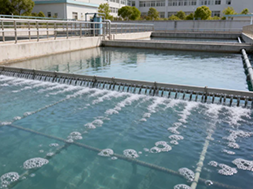
Sodium thiosulfate and other reducing substances in hospital wastewater may rapidly consume chlorine dioxide, leading to insufficient residual chlorine and reduced disinfection intensity in some areas. Solving this type of "disinfection gap" problem cannot rely solely on increasing the dosage. Instead, it requires a comprehensive disinfection assurance system built through measures such as source identification, homogenization adjustment, optimized mixing, rational dosage, upgraded monitoring, and supplementary disinfection.
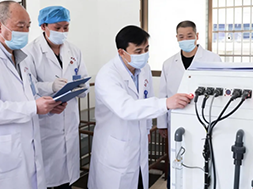
Chlorine dioxide kills bacteria through multi-target oxidation, and theoretically, it is unlikely to produce drug-resistant bacteria. However, long-term sublethal low-dose disinfection of wastewater systems can screen out resistant microorganisms, leading to bacterial succession. In such cases, it may be necessary to increase CT disinfection parameters to achieve the desired disinfection effect. The risk of increased microbial tolerance and the effectiveness of hospital wastewater disinfection can be mitigated by ensuring sufficient dosage and contact time, avoiding prolonged low-dose operation, combining UV/ozone disinfection, proper wastewater pretreatment, and regular monitoring of water quality microorganisms.
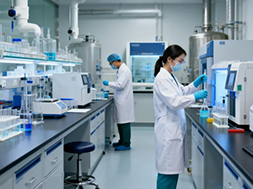
When chlorine dioxide is used to disinfect hospital wastewater, short-circuiting and disinfection dead zones can easily occur due to the short half-life of the agent. A three-stage mixing process, consisting of pipeline premixing, inlet enhanced mixing, and in-tank flow guidance, combined with an online intelligent control system and standardized equipment selection and daily operation and maintenance, can be used to achieve rapid and uniform distribution of chlorine dioxide in wastewater and ensure the disinfection effect of hospital wastewater.
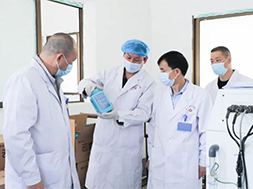
When hospital wastewater is disinfected with chlorine dioxide, pH directly affects the disinfection effect. The pH needs to be maintained within the range of 6.0–8.5. Water quality is controlled through monitoring, intelligent dosing, and coordinated regulation of upstream processes to ensure stable discharge compliance and save operating costs.
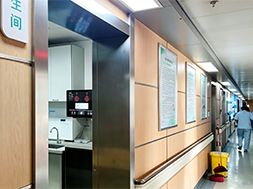
Excessive ammonia nitrogen in hospital wastewater stems from four main issues: pretreatment, biochemical processes, water volume, and process technology. This article provides a complete solution encompassing pretreatment, biochemical optimization, advanced treatment, and emergency nitrogen reduction, balancing stable compliance with operating costs, and simultaneously promoting solutions from chlorine dioxide disinfectant manufacturers.
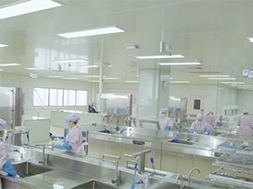
Abnormalities in hospital wastewater biochemical systems can lead to elevated COD and ammonia nitrogen levels, excessive consumption of chlorine dioxide causing disinfection failure, and posing a risk of pathogen leakage. This article introduces six emergency response measures and a corresponding long-term management plan to ensure wastewater meets discharge standards and safeguard public health and environmental safety.
Northeast of Huangshan Road and Chuangye Intersection, Small and Medium sized Enterprise Entrepreneurship Industrial Park, Shanwang Town, Linqu County, Weifang City, Shandong Province
Copyright © 2025 by Shandong Huashi Pharmaceutical Co., Ltd All Rights Reserved


 Language
 中文
中文 Русский
 Chlorine Dioxide Disinfectant Manufacturer


