Welcome to Our Factory for a Visit! Free customized disinfection solutions
Hospital wastewater has a complex composition and may contain relatively high levels of pathogenic microorganisms, making the disinfection stage critically important. Chlorine dioxide, with its strong oxidizing capacity and broad antimicrobial spectrum, is one of the disinfection technologies that can be used in hospital wastewater treatment.
Chlorine dioxide is highly reactive. This is beneficial for rapid oxidation and disinfection, but it also places higher demands on dosing and mixing control. Insufficient mixing at the dosing point may cause locally excessive or insufficient chlorine dioxide concentrations. Meanwhile, poor hydraulic conditions in the contact tank may lead to short-circuiting, recirculation, and dead zones, reducing the effective contact time and ultimately affecting overall disinfection performance.
Therefore, the real challenge in chlorine dioxide disinfection of hospital wastewater is not simply “adding the chemical,” but achieving:
Rapid mixing at the front end and sufficient effective contact at the back end.
After chlorine dioxide enters hospital wastewater, it can rapidly react with certain reducing substances, organic components, and target microorganisms.
If sufficient mixing is not achieved quickly after dosing, some areas may experience locally high chlorine dioxide concentrations that are rapidly consumed, while other areas may receive an insufficient dose.
Hospital wastewater flow and pollutant loads may also vary significantly at different times of the day. Therefore, relying only on a fixed dosing rate and slow mixing is unlikely to provide consistently stable disinfection performance.
To improve operational stability, four factors should be considered together:
Dosing-point mixing efficiency, contact-tank hydraulics, effective contact time, and dynamic process control.
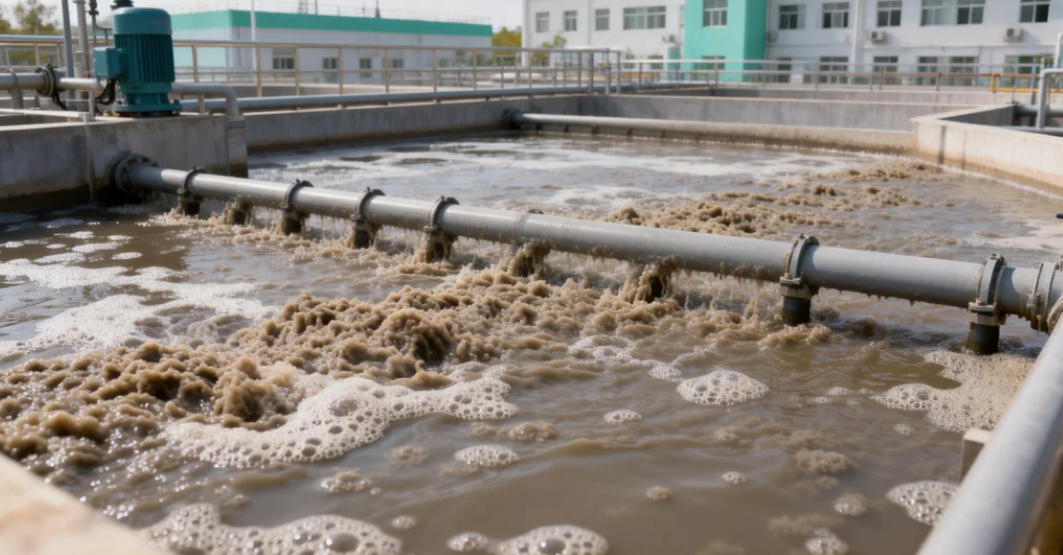
For chlorine dioxide dosing-point design, negative-pressure jet mixers, static mixers, or other suitable enhanced mixing devices may be selected according to actual operating conditions and installed at an appropriate location in the dosing pipeline.
As wastewater passes through the mixing device, jet action, shear forces, and turbulence help rapidly disperse the chlorine dioxide working solution into the main water stream, thereby improving initial mixing efficiency.
Specific flow velocity, mixing intensity, and dosing-point location should be determined by considering:
Engineering design should not simply apply fixed flow velocities or fixed mixing times. Actual mixing performance should instead be verified through engineering calculations, CFD simulation, or field testing.
Depending on the specific process requirements, the contact-tank inlet may be equipped with mechanical agitation, hydraulic mixing, or other enhanced mixing facilities.
When mechanical mixing is used, mixing intensity, impeller type, power input, and effective mixing time should be designed according to tank dimensions, water depth, flow rate, and wastewater characteristics rather than being determined solely by a fixed rotational speed.
For some projects, submersible mixers, perforated flow-guidance structures, or similar facilities may also be used to improve inlet-flow distribution.
The main function of perforated flow-guidance facilities is to redistribute the flow, improve velocity distribution across the section, and reduce localized preferential flow, thereby creating better conditions for subsequent contact.
The objective of this stage is not to pursue a fixed “95% uniformity,” but to minimize local concentration differences as much as possible so that chlorine dioxide enters the subsequent contact zone more evenly.
In addition to providing sufficient tank volume, contact-tank design should focus on reducing short-circuiting, dead zones, and excessive recirculation.
For multi-compartment contact tanks, properly arranged staggered baffles can force the wastewater to repeatedly change direction along the designed flow path, thereby increasing the effective contact volume.
Well-designed compartments and baffles can improve hydraulic conditions, increase actual effective retention time, and reduce the risk of some wastewater passing through the contact tank too quickly.
For existing elongated contact tanks, priority should be given to optimizing:
If multi-point dosing is genuinely necessary, it should only be implemented after adequate hydraulic analysis and process verification to avoid new operational risks caused by complex piping, uneven chemical distribution, or difficult maintenance.
At key positions in the contact tank, online monitoring equipment specifically suitable for chlorine dioxide residual measurement can be installed to continuously observe actual operating conditions.
It is important to distinguish:
Chlorine dioxide residual monitoring is not the same as conventional “residual chlorine” monitoring. Monitoring equipment should be selected according to the actual disinfectant system.
At the same time, wastewater flow-meter data can be used to establish flow-linked dosing control so that the chlorine dioxide dosing rate dynamically follows changes in treatment flow.
For projects with complex hydraulic conditions, computational fluid dynamics (CFD) can also be used to simulate the flow field and assist in optimizing:
The online monitoring system may integrate signals such as flow rate, chlorine dioxide residual, and equipment operating status to support coordinated control.
However, it should be emphasized that:
A single online monitoring point only reflects the chlorine dioxide concentration at that specific location and cannot directly prove that the entire contact tank is “uniformly mixed.”
Mixing uniformity should instead be periodically verified through:
Multi-point measurements, tracer testing, CFD simulation, and actual disinfection performance.
Low-flow night conditions, peak-flow periods, and sudden flow changes should also be separately evaluated, with dosing and mixing conditions adjusted according to the actual hydraulic load.
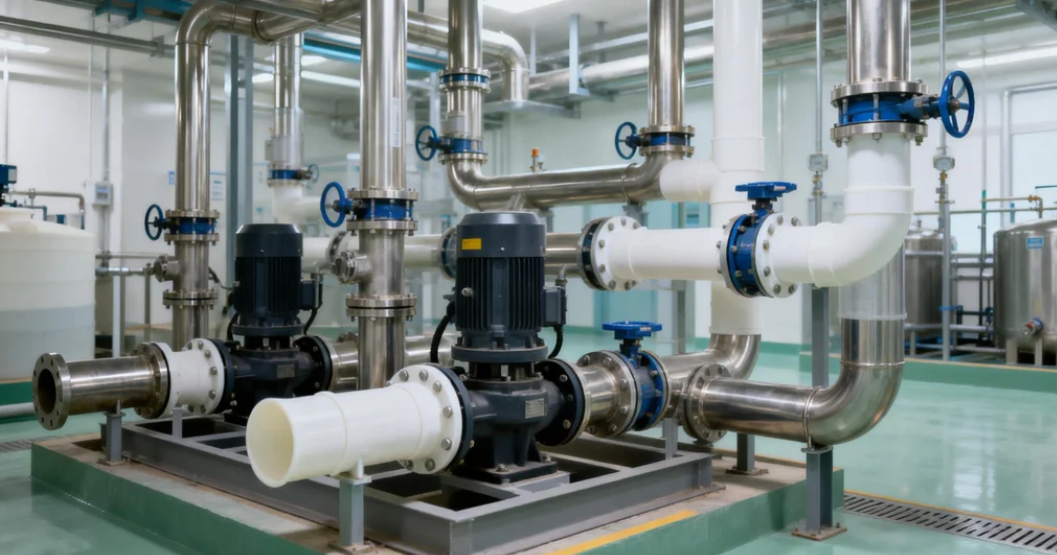
Pipelines, mixers, metering pumps, valves, and sealing materials that come into contact with chlorine dioxide should be selected from materials with verified resistance to corrosion and oxidation, taking into account chlorine dioxide concentration, temperature, pH, and the actual chemical environment.
Material selection should not be based simply on whether a material is “metal” or “plastic.” Long-term chemical compatibility must also be considered.
For critical dosing and mixing equipment, necessary standby capacity and emergency operating strategies should be provided according to the risk level, treatment capacity, and continuity requirements of the hospital wastewater treatment project.
Not every project needs to be rigidly designed with a “one operating, one standby” configuration, but critical processes should avoid prolonged disinfection failure caused by a single equipment fault.
Equipment design should fully consider safe maintenance, isolation, draining, flushing, and necessary bypass arrangements.
Maintenance convenience should be improved while ensuring treatment continuity and personnel safety.
Depending on the specific risks of the chlorine dioxide generation and dosing system, the following may be provided:
These measures can improve overall system reliability.
The selected mixing and contact-tank design should not be verified only once when the project is completed. It should be continuously evaluated during actual operation.
We recommend:
Conducting periodic hydraulic-performance verification.
A validated tracer method suitable for the wastewater system can be used to evaluate whether short-circuiting, dead zones, or insufficient effective retention time exist in the contact tank.
Conducting multi-point testing according to operating changes.
During commissioning, process changes, or abnormal operating conditions, chlorine dioxide residuals can be measured at different locations in the contact tank to understand concentration distribution.
The specific testing frequency should be determined according to project risk and operational-management requirements rather than mechanically fixed at “once every quarter.”
Verifying microbiological performance.
Wastewater samples should be collected before and after disinfection and tested for microorganisms according to applicable standards and monitoring requirements, using actual results to evaluate whether the disinfection process is stable and effective.
Establishing a mixing and disinfection-performance evaluation system.
Indicators such as flow rate, chlorine dioxide dosage, residual concentration, effective contact time, hydraulic operating conditions, and microbiological test results should be incorporated into the routine operation and monitoring system of the medical wastewater treatment facility.
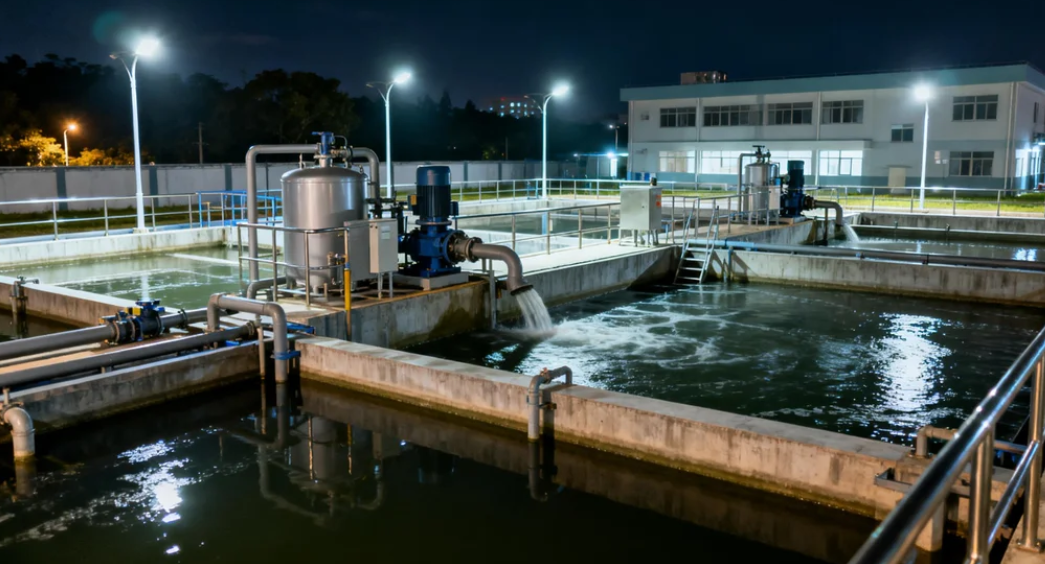
The above are engineering approaches for improving chlorine dioxide mixing, contact, and operational control in hospital wastewater treatment.
Different hospitals vary significantly in wastewater characteristics, treatment capacity, contact-tank configuration, and existing equipment conditions. Therefore, no single set of parameters can be directly applied to every project.
XIUBA will continue to focus on practical operating challenges in hospital wastewater disinfection and continuously optimize related solutions and technical services based on product application, equipment configuration, and field operating feedback.
Hospital wastewater disinfection is not simply a matter of chemical dosing. It is a complete engineering system.
The high reactivity of chlorine dioxide is not an obstacle. Rather, it reminds us to pay greater attention to dosing, mixing, effective contact time, and full-process monitoring.
Through the coordinated use of pipeline premixing, enhanced inlet mixing, and contact-tank hydraulic optimization, combined with dynamic dosing control and standardized operation and maintenance, the distribution uniformity of chlorine dioxide in wastewater can be improved, while short-circuiting and local underdosing can be reduced, creating more stable contact conditions for effective disinfection.
The professional operating goal is not to claim that:
“Chlorine dioxide can instantly and uniformly reach every drop of wastewater.”
Instead, the goal should be:
Achieve rapid mixing after dosing, minimize short-circuiting in the contact tank, ensure sufficient effective contact time, and use monitoring data to verify that the final disinfection performance consistently meets the required standard.
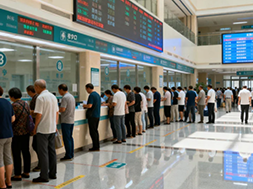
The tidal discharge of hospital outpatient sewage leads to frequent on-off of chlorine dioxide disinfection system, posing efficiency, equipment and safety hazards. Relying on five layers of protection to ensure operational safety, cooperating with operation and maintenance measures such as phased operation, encrypted maintenance, and optimized drug supply, adjusting start and stop times reasonably, improving sewage disinfection efficiency, and building a solid public health defense line.
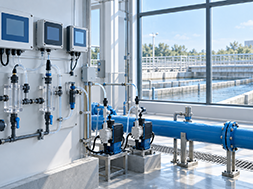
Xiuba chlorine dioxide can be used for advanced treatment of polluted water source. The front end pre oxidizes the odorant, iron and manganese, and the dosage is determined by test; The terminal disinfection shall comply with the requirements of the national standard to ensure the contact time and water margin. The product covers a variety of dosage forms and supporting equipment, which should be selected according to the national standard. Double dosing points are set, and the equipment is equipped with metering, monitoring and alarm functions to control the total dosage, monitor disinfection by-products, and ensure the water quality treatment effect by relying on detection test and whole process monitoring.
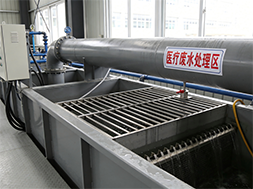
Regarding the control of hydrochloric acid and sodium chlorate raw materials for chlorine dioxide generators in hospital wastewater treatment, the quality requirements of raw materials are clearly defined in accordance with national standards such as GB28931-2024. On-site rapid acceptance can be carried out through visual inspection, odor identification, specific gravity and pH testing, and small-scale reaction. By implementing management measures such as raw material registration and sampling, separate storage, regular equipment cleaning, and monitoring of operating parameters, the disinfection effect can be stabilized, and cost reduction and efficiency improvement can be achieved.
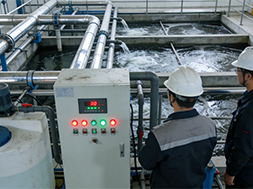
Hospital wastewater is prone to producing byproducts and residual resistant pathogens when disinfected alone. A chlorine dioxide-ozone-ultraviolet coupling process can be used for deep treatment. Chlorine dioxide is the main disinfection unit, ozone degrades recalcitrant pollutants, and ultraviolet light is used for final control. With the help of online monitoring, the reagents and energy consumption can be intelligently adjusted to balance treatment effect and cost. In the future, it will develop towards big data AI automatic control.
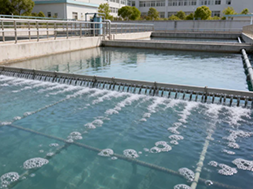
Sodium thiosulfate and other reducing substances in hospital wastewater may rapidly consume chlorine dioxide, leading to insufficient residual chlorine and reduced disinfection intensity in some areas. Solving this type of "disinfection gap" problem cannot rely solely on increasing the dosage. Instead, it requires a comprehensive disinfection assurance system built through measures such as source identification, homogenization adjustment, optimized mixing, rational dosage, upgraded monitoring, and supplementary disinfection.
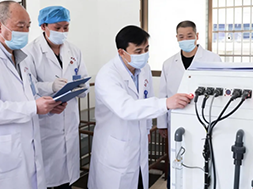
Chlorine dioxide kills bacteria through multi-target oxidation, and theoretically, it is unlikely to produce drug-resistant bacteria. However, long-term sublethal low-dose disinfection of wastewater systems can screen out resistant microorganisms, leading to bacterial succession. In such cases, it may be necessary to increase CT disinfection parameters to achieve the desired disinfection effect. The risk of increased microbial tolerance and the effectiveness of hospital wastewater disinfection can be mitigated by ensuring sufficient dosage and contact time, avoiding prolonged low-dose operation, combining UV/ozone disinfection, proper wastewater pretreatment, and regular monitoring of water quality microorganisms.

When chlorine dioxide is used to disinfect hospital wastewater, short-circuiting and disinfection dead zones can easily occur due to the short half-life of the agent. A three-stage mixing process, consisting of pipeline premixing, inlet enhanced mixing, and in-tank flow guidance, combined with an online intelligent control system and standardized equipment selection and daily operation and maintenance, can be used to achieve rapid and uniform distribution of chlorine dioxide in wastewater and ensure the disinfection effect of hospital wastewater.
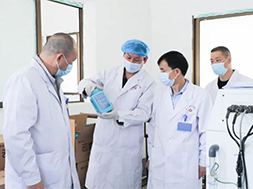
When hospital wastewater is disinfected with chlorine dioxide, pH directly affects the disinfection effect. The pH needs to be maintained within the range of 6.0–8.5. Water quality is controlled through monitoring, intelligent dosing, and coordinated regulation of upstream processes to ensure stable discharge compliance and save operating costs.
Excessive ammonia nitrogen in hospital wastewater stems from four main issues: pretreatment, biochemical processes, water volume, and process technology. This article provides a complete solution encompassing pretreatment, biochemical optimization, advanced treatment, and emergency nitrogen reduction, balancing stable compliance with operating costs, and simultaneously promoting solutions from chlorine dioxide disinfectant manufacturers.
Abnormalities in hospital wastewater biochemical systems can lead to elevated COD and ammonia nitrogen levels, excessive consumption of chlorine dioxide causing disinfection failure, and posing a risk of pathogen leakage. This article introduces six emergency response measures and a corresponding long-term management plan to ensure wastewater meets discharge standards and safeguard public health and environmental safety.
Northeast of Huangshan Road and Chuangye Intersection, Small and Medium sized Enterprise Entrepreneurship Industrial Park, Shanwang Town, Linqu County, Weifang City, Shandong Province
Copyright © 2025 by Shandong Huashi Pharmaceutical Co., Ltd All Rights Reserved


 Language
 中文
中文 Русский
 Chlorine Dioxide Disinfectant Manufacturer


