Welcome to Our Factory for a Visit! Free customized disinfection solutions
In non continuous discharge areas such as the outpatient department of hospitals, frequent on-off of chlorine dioxide disinfection systems has become the norm. How to maintain high-speed response and safe operation in this special scenario has become a challenge that hospital managers must face.
1、 Characteristics and Start Stop Challenges of Outpatient Wastewater
As one of the most active areas in hospitals, the outpatient department has obvious temporal characteristics in its sewage discharge - concentrated discharge during the day and almost zero discharge at night. This "tidal" emission mode requires frequent start stop of chlorine dioxide disinfection systems, which is in sharp contrast to the traditional 24-hour continuous operation mode.
Frequent start stop poses significant challenges, may result in decreased reaction efficiency, increased equipment wear, and may also pose safety hazards. System restart requires rebuilding stable reaction conditions, improper control can result in poor disinfection effectiveness. Below are the relevant solutions provided directly.
2、 Safety barrier: Multiple protections ensure zero accidents
Frequent start stop is a very concerning safety hazard. Chlorine dioxide is a strong oxidant, for which modern systems have established a five fold protection system:
1. Real time monitoring and interlocking control of concentration: Install chlorine dioxide concentration sensors in the reaction chamber, injection point, and storage area, and connect the data to the central controller. Any abnormal increase in concentration at any point will immediately trigger the emergency dilution program and cut off the material supply.
2. Negative pressure reaction and exhaust gas absorption device: The entire reaction and storage unit maintains a slight negative pressure state, and in case of accidental leakage, gas flows inward to prevent gas leakage. The exhaust gas absorption tower that is opened during shutdown (usually using alkali spray) can treat residual gases.
3. Dual power supply and uninterruptible power supply: Power maintenance in the outpatient area may affect system operation. UPS power supply should be configured to ensure that the monitoring and control units are not powered off, avoiding uncontrolled reactions caused by abnormal shutdowns.
4. Pipeline self-cleaning design: In response to the problem of residual chlorine dioxide solution decomposing in the pipeline during shutdown, a "shutdown automatic flushing" program is adopted to replace the liquid in the pipeline with a small amount of clean water to prevent crystallization blockage or local corrosion.
5. Remote monitoring and warning platform: The system is connected to the hospital's Internet of Things platform, and operational parameters are uploaded in real-time. Automatic push of warning information to the management personnel's mobile app for abnormal start stop, concentration fluctuation, insufficient drug remaining, etc., achieving "unmanned and supervised" operation.
3、 Refined operation and maintenance management strategy
Technological upgrading requires supporting management optimization. For the chlorine dioxide system in the outpatient area, it is recommended to implement the following operation and maintenance strategies:
1. Pre setting of operating parameters for different time periods: Based on the characteristics of outpatient scheduling, set "weekday mode", "weekend mode", and "holiday mode", and set different flow triggering thresholds, dosing factors, and safety inspection frequencies for each mode.
2. Preventive maintenance calendar: Frequent start stop of equipment requires strengthened maintenance of specific components. For example, the opening and closing life test of solenoid valves has been adjusted from once a quarter to once a month, and the inspection frequency of reaction chamber seals has doubled.
3. Pharmaceutical supply chain optimization: Due to the uneven consumption of pharmaceuticals in outpatient areas, the traditional regular supply model may lead to prolonged storage time of pharmaceuticals. Suggest establishing a "low inventory warning+emergency delivery" mechanism and agreeing with suppliers on a 4-hour emergency response time limit to reduce on-site storage risks.
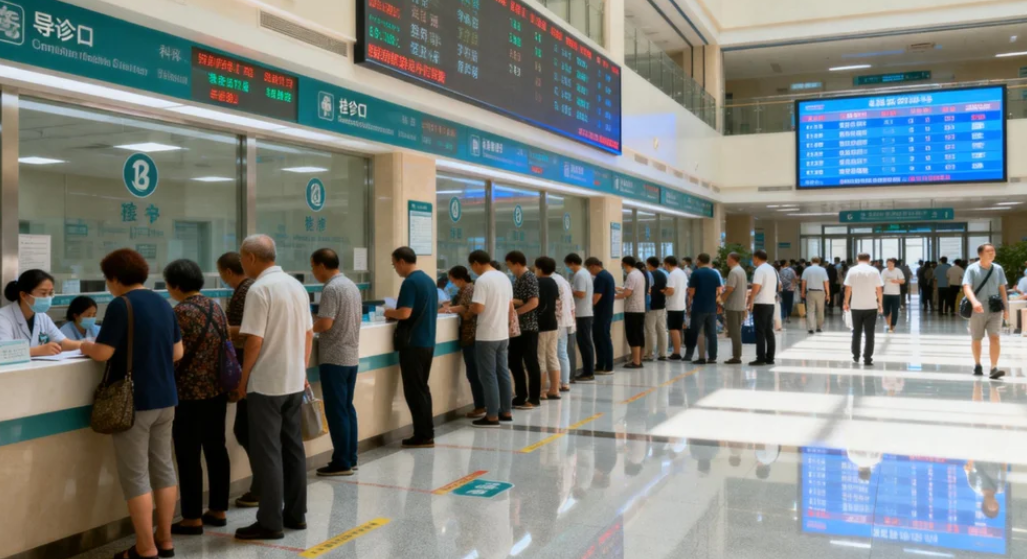
Another hospital optimized its operation strategy by advancing the system startup time to 30 minutes before the outpatient clinic, providing sufficient warm-up time; The shutdown time will be postponed to one hour after the end of the outpatient service to ensure that all sewage is properly treated. This simple adjustment increased the disinfection qualification rate by 15%.
The frequent on-off challenges of the sewage disinfection system in the outpatient department may seem like technical difficulties, but they are actually a touchstone of management wisdom. Hospital sewage treatment is not only related to compliant discharge, but also an important part of the public health system. In today's normalized epidemic prevention and control, the reliability of sewage disinfection in outpatient departments, as the forefront of hospitals, is particularly important.
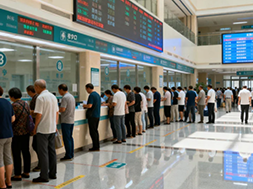
The tidal discharge of hospital outpatient sewage leads to frequent on-off of chlorine dioxide disinfection system, posing efficiency, equipment and safety hazards. Relying on five layers of protection to ensure operational safety, cooperating with operation and maintenance measures such as phased operation, encrypted maintenance, and optimized drug supply, adjusting start and stop times reasonably, improving sewage disinfection efficiency, and building a solid public health defense line.
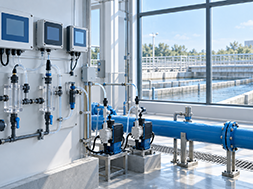
Xiuba chlorine dioxide can be used for advanced treatment of polluted water source. The front end pre oxidizes the odorant, iron and manganese, and the dosage is determined by test; The terminal disinfection shall comply with the requirements of the national standard to ensure the contact time and water margin. The product covers a variety of dosage forms and supporting equipment, which should be selected according to the national standard. Double dosing points are set, and the equipment is equipped with metering, monitoring and alarm functions to control the total dosage, monitor disinfection by-products, and ensure the water quality treatment effect by relying on detection test and whole process monitoring.
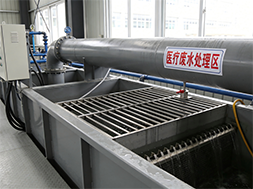
Regarding the control of hydrochloric acid and sodium chlorate raw materials for chlorine dioxide generators in hospital wastewater treatment, the quality requirements of raw materials are clearly defined in accordance with national standards such as GB28931-2024. On-site rapid acceptance can be carried out through visual inspection, odor identification, specific gravity and pH testing, and small-scale reaction. By implementing management measures such as raw material registration and sampling, separate storage, regular equipment cleaning, and monitoring of operating parameters, the disinfection effect can be stabilized, and cost reduction and efficiency improvement can be achieved.
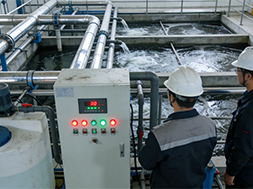
Hospital wastewater is prone to producing byproducts and residual resistant pathogens when disinfected alone. A chlorine dioxide-ozone-ultraviolet coupling process can be used for deep treatment. Chlorine dioxide is the main disinfection unit, ozone degrades recalcitrant pollutants, and ultraviolet light is used for final control. With the help of online monitoring, the reagents and energy consumption can be intelligently adjusted to balance treatment effect and cost. In the future, it will develop towards big data AI automatic control.
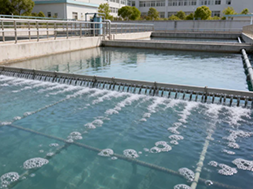
Sodium thiosulfate and other reducing substances in hospital wastewater may rapidly consume chlorine dioxide, leading to insufficient residual chlorine and reduced disinfection intensity in some areas. Solving this type of "disinfection gap" problem cannot rely solely on increasing the dosage. Instead, it requires a comprehensive disinfection assurance system built through measures such as source identification, homogenization adjustment, optimized mixing, rational dosage, upgraded monitoring, and supplementary disinfection.
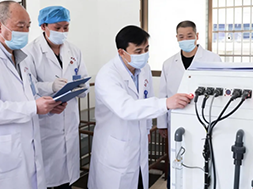
Chlorine dioxide kills bacteria through multi-target oxidation, and theoretically, it is unlikely to produce drug-resistant bacteria. However, long-term sublethal low-dose disinfection of wastewater systems can screen out resistant microorganisms, leading to bacterial succession. In such cases, it may be necessary to increase CT disinfection parameters to achieve the desired disinfection effect. The risk of increased microbial tolerance and the effectiveness of hospital wastewater disinfection can be mitigated by ensuring sufficient dosage and contact time, avoiding prolonged low-dose operation, combining UV/ozone disinfection, proper wastewater pretreatment, and regular monitoring of water quality microorganisms.

When chlorine dioxide is used to disinfect hospital wastewater, short-circuiting and disinfection dead zones can easily occur due to the short half-life of the agent. A three-stage mixing process, consisting of pipeline premixing, inlet enhanced mixing, and in-tank flow guidance, combined with an online intelligent control system and standardized equipment selection and daily operation and maintenance, can be used to achieve rapid and uniform distribution of chlorine dioxide in wastewater and ensure the disinfection effect of hospital wastewater.
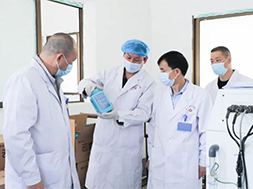
When hospital wastewater is disinfected with chlorine dioxide, pH directly affects the disinfection effect. The pH needs to be maintained within the range of 6.0–8.5. Water quality is controlled through monitoring, intelligent dosing, and coordinated regulation of upstream processes to ensure stable discharge compliance and save operating costs.
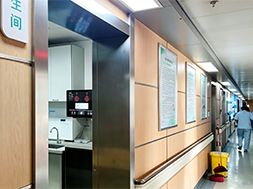
Excessive ammonia nitrogen in hospital wastewater stems from four main issues: pretreatment, biochemical processes, water volume, and process technology. This article provides a complete solution encompassing pretreatment, biochemical optimization, advanced treatment, and emergency nitrogen reduction, balancing stable compliance with operating costs, and simultaneously promoting solutions from chlorine dioxide disinfectant manufacturers.
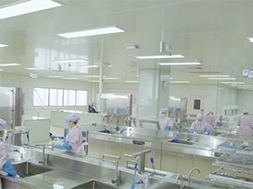
Abnormalities in hospital wastewater biochemical systems can lead to elevated COD and ammonia nitrogen levels, excessive consumption of chlorine dioxide causing disinfection failure, and posing a risk of pathogen leakage. This article introduces six emergency response measures and a corresponding long-term management plan to ensure wastewater meets discharge standards and safeguard public health and environmental safety.
Northeast of Huangshan Road and Chuangye Intersection, Small and Medium sized Enterprise Entrepreneurship Industrial Park, Shanwang Town, Linqu County, Weifang City, Shandong Province
Copyright © 2025 by Shandong Huashi Pharmaceutical Co., Ltd All Rights Reserved


 Language
 中文
中文 Русский
 Chlorine Dioxide Disinfectant Manufacturer


