Welcome to Our Factory for a Visit! Free customized disinfection solutions
Iodinated contrast media, certain pharmaceuticals and disinfectant residues in hospital wastewater may resist conventional treatment. Chlorine dioxide is a selective oxidant used for disinfection and, under specific conditions, for transforming certain organic pollutants. It does not effectively remove every refractory compound.
This article reviews its mechanisms, reaction conditions and practical considerations for selecting hospital wastewater treatment processes.

1. Effects of chlorine dioxide on refractory pollutants
Hospital wastewater may contain iodinated contrast media such as iohexol, antibiotics, disinfectant residues and by-products. Their structures and reactivities vary considerably, and conventional biological treatment or chlorination may remove some of them poorly. Chlorination may also form trihalomethanes and other by-products, with risks depending on water quality and reaction conditions.
Chlorine dioxide exhibits selective oxidation. Its theoretical oxidizing equivalent does not directly predict removal efficiency; each pollutant must be evaluated separately.
Contrast media: Iodinated agents such as iohexol are structurally stable, and routine chlorine dioxide disinfection cannot guarantee their removal. Target-compound analysis should assess transformation, including potential iodinated by-products. A decrease in parent-compound concentration does not establish complete mineralization.
Disinfectant residues: Removal of quaternary ammonium compounds depends on molecular structure, adsorption and biodegradation, among other processes. Complete destruction of their alkyl chains by chlorine dioxide cannot be assumed. Treatment should be selected through tests on actual wastewater.
Antibiotics: Chlorine dioxide may oxidize reactive functional groups in some antibiotics, but individual beta-lactams and tetracyclines differ in reactivity. Parent-compound removal, transformation products and residual biological activity should be assessed rather than assuming harmless products.
2. Reaction kinetics: factors affecting oxidation
Some reactions between chlorine dioxide and organic compounds can be described by second-order kinetics. Real wastewater, however, involves competing reactions and oxidant consumption, so no universal rate or reaction time applies. Disinfection contact time is not equivalent to the time required for refractory pollutant removal.
The main mechanisms and applicable conditions are described below.
Selective oxidation: Chlorine dioxide reacts readily with certain electron-rich groups, including some phenolic and amine structures, but not every pharmaceutical containing these groups degrades rapidly.
Radical mechanisms: Light or catalytic conditions may generate reactive species, but such combined oxidation processes require dedicated design and validation and are not an inherent feature of routine chlorine dioxide disinfection.
Water quality adaptability: Chlorine dioxide can act over a range of pH values, but reaction rates and by-product formation remain dependent on pH and water composition.
Reaction rates depend on initial pollutant concentration, oxidant demand, dosing method, temperature, pH and effective contact time. Suitable conditions should be determined using actual wastewater samples rather than a fixed temperature acceleration factor or universal optimum pH.
3. Chlorine dioxide dosing: practical considerations
1. Reaction time and treatment objectives
First distinguish pathogen inactivation from target organic pollutant removal, then establish operating conditions based on treatment objectives, water quality and test results.
2. Dosing location
Pretreatment dosing requires assessment of residual oxidant inhibition of downstream biological treatment. Dosing after biological treatment may serve disinfection or advanced treatment objectives. Final treatment should reflect water quality, discharge requirements and by-product risks without promising complete removal.
3. Dose control
Express the dose as actual chlorine dioxide concentration, distinguishing it from available chlorine equivalents. Determine dosage from water quality, oxidant demand and validation tests. Flow-paced dosing and validated residual monitoring may assist control; indiscriminate dose increases should be avoided.
4. Effective contact time
Contact time should satisfy applicable disinfection requirements, while oxidation of target pollutants must be validated separately. Proper contact tank and baffle design can reduce short-circuiting and improve effective contact.
5. Safety considerations
Use compliant chlorine dioxide generators or suitable disinfectant products in accordance with manufacturer instructions and safety procedures. Control by-products such as chlorite and chlorate, provide ventilation, leak alarms and personnel protection, and prohibit unvalidated chemical mixing.
6. Monitoring and adjustment
Regularly monitor target pollutants, disinfection performance and relevant transformation products, alongside chlorine dioxide residual, chlorite and chlorate. Residual control should follow applicable discharge requirements and process validation rather than a universal 0.5 mg/L limit.
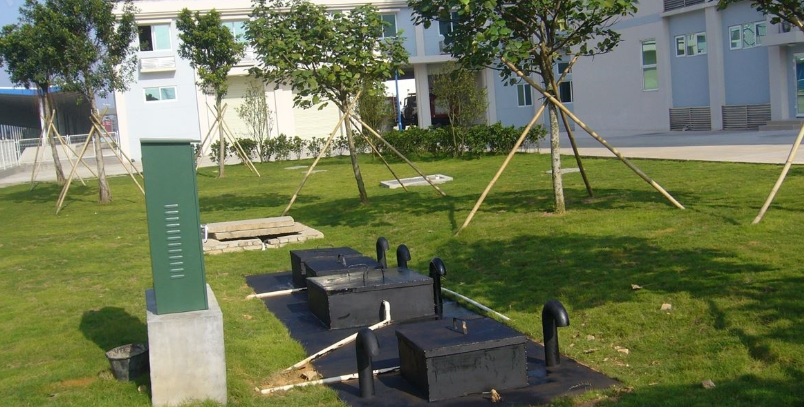
Staged treatment may be considered for hospital wastewater when supported by testing. Pretreatment should prioritize source control and protection of biological processes. Subsequent oxidation or other advanced treatment should be selected according to measured target pollutant removal. Multiple dosing points are not necessarily superior to a single point.
Combined technologies such as ozone or UV photocatalysis may also be evaluated. Synergy is not guaranteed; controlled tests should assess removal, by-products, toxicity and operating costs, avoiding unvalidated direct mixing.
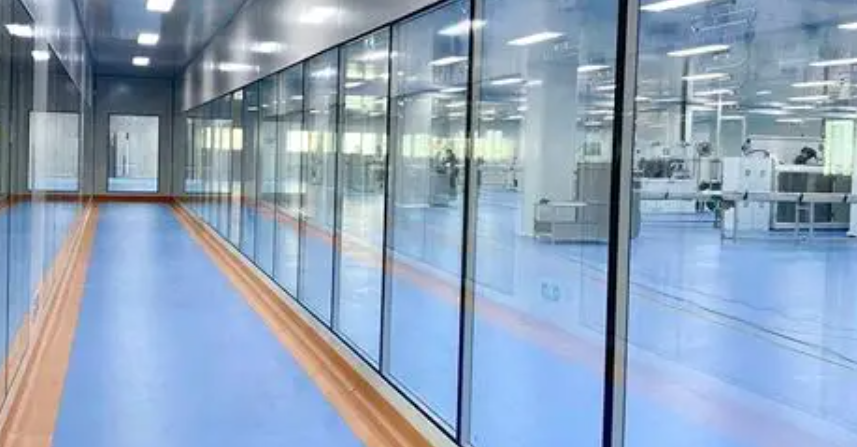
Refractory pollutants in hospital wastewater may pose risks to aquatic environments. Chlorine dioxide has value in disinfection and selective oxidation of certain pollutants, but cannot replace a complete wastewater treatment system. Source control, appropriate process combinations and ongoing monitoring can support risk reduction and compliant discharge.

Chlorine dioxide can efficiently degrade difficult-to-treat pollutants such as contrast agents and antibiotics in hospital wastewater. It is advisable to add it at multiple points in stages, ensuring a contact time of more than 30 minutes, and to conduct safety monitoring. It can also be combined with other processes to reduce the environmental harm of wastewater.
Excessive total phosphorus in hospital wastewater can be addressed by relying on a biological system for regulating polyphosphate metabolism: proper pretreatment and detoxification to stabilize water quality, control of key operating parameters in the anaerobic-aerobic tank, optimization of reflux and sludge management, addition of chemical agents when necessary, and regular monitoring to achieve effluent compliance.
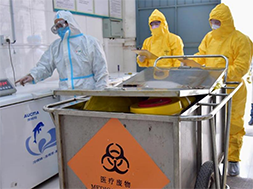
High COD in hospital wastewater can lead to high ammonia nitrogen levels, consuming chlorine dioxide disinfectant. Furthermore, some pathogens are resistant to disinfection, and blindly adding chemicals can easily produce byproducts. Therefore, it is necessary to strengthen biochemical pretreatment to reduce pollutants, precisely control the dosage of chemicals, and ensure the safety of wastewater disinfection.
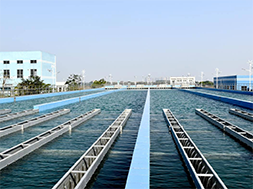
Divalent manganese is oxidized by chlorine dioxide to produce black manganese dioxide, which causes black water pollution, easily clogging pipe networks, staining, and producing odors. Treatment can be achieved through precise dosage control, process optimization, real-time monitoring, and corresponding pipe network maintenance.
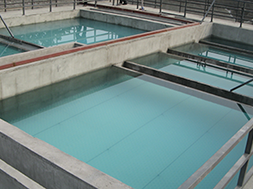
Hospital wastewater contains many pathogenic microorganisms. Compared with liquid chlorine and sodium hypochlorite, chlorine dioxide has a broad-spectrum and highly efficient bactericidal effect, produces fewer carcinogenic byproducts, has a wide pH adaptability range, and also has deodorizing and decolorizing effects. It has a long-lasting effect, is safe to use, and can decompose recalcitrant pollutants. Its comprehensive advantages are significant, and its application in hospital wastewater treatment is becoming increasingly widespread.
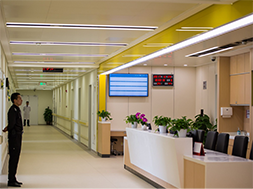
Small, grassroots hospitals often face difficulties in meeting wastewater treatment standards due to limitations in funding, personnel, and space. Xiuba helps these hospitals achieve compliant wastewater discharge through low-cost solutions involving minor facility modifications, process adaptation, and intelligent operation and maintenance.

The tidal discharge of hospital outpatient sewage leads to frequent on-off of chlorine dioxide disinfection system, posing efficiency, equipment and safety hazards. Relying on five layers of protection to ensure operational safety, cooperating with operation and maintenance measures such as phased operation, encrypted maintenance, and optimized drug supply, adjusting start and stop times reasonably, improving sewage disinfection efficiency, and building a solid public health defense line.
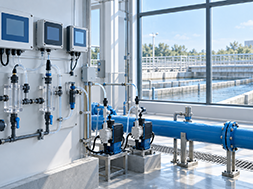
Xiuba chlorine dioxide can be used for advanced treatment of polluted water source. The front end pre oxidizes the odorant, iron and manganese, and the dosage is determined by test; The terminal disinfection shall comply with the requirements of the national standard to ensure the contact time and water margin. The product covers a variety of dosage forms and supporting equipment, which should be selected according to the national standard. Double dosing points are set, and the equipment is equipped with metering, monitoring and alarm functions to control the total dosage, monitor disinfection by-products, and ensure the water quality treatment effect by relying on detection test and whole process monitoring.
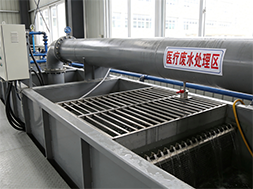
Regarding the control of hydrochloric acid and sodium chlorate raw materials for chlorine dioxide generators in hospital wastewater treatment, the quality requirements of raw materials are clearly defined in accordance with national standards such as GB28931-2024. On-site rapid acceptance can be carried out through visual inspection, odor identification, specific gravity and pH testing, and small-scale reaction. By implementing management measures such as raw material registration and sampling, separate storage, regular equipment cleaning, and monitoring of operating parameters, the disinfection effect can be stabilized, and cost reduction and efficiency improvement can be achieved.
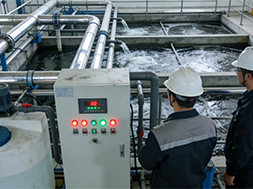
Hospital wastewater is prone to producing byproducts and residual resistant pathogens when disinfected alone. A chlorine dioxide-ozone-ultraviolet coupling process can be used for deep treatment. Chlorine dioxide is the main disinfection unit, ozone degrades recalcitrant pollutants, and ultraviolet light is used for final control. With the help of online monitoring, the reagents and energy consumption can be intelligently adjusted to balance treatment effect and cost. In the future, it will develop towards big data AI automatic control.
Northeast of Huangshan Road and Chuangye Intersection, Small and Medium sized Enterprise Entrepreneurship Industrial Park, Shanwang Town, Linqu County, Weifang City, Shandong Province
Copyright © 2025 by Shandong Huashi Pharmaceutical Co., Ltd All Rights Reserved


 Language
 中文
 Русский
 Chlorine Dioxide Disinfectant Manufacturer


