Welcome to Our Factory for a Visit! Free customized disinfection solutions
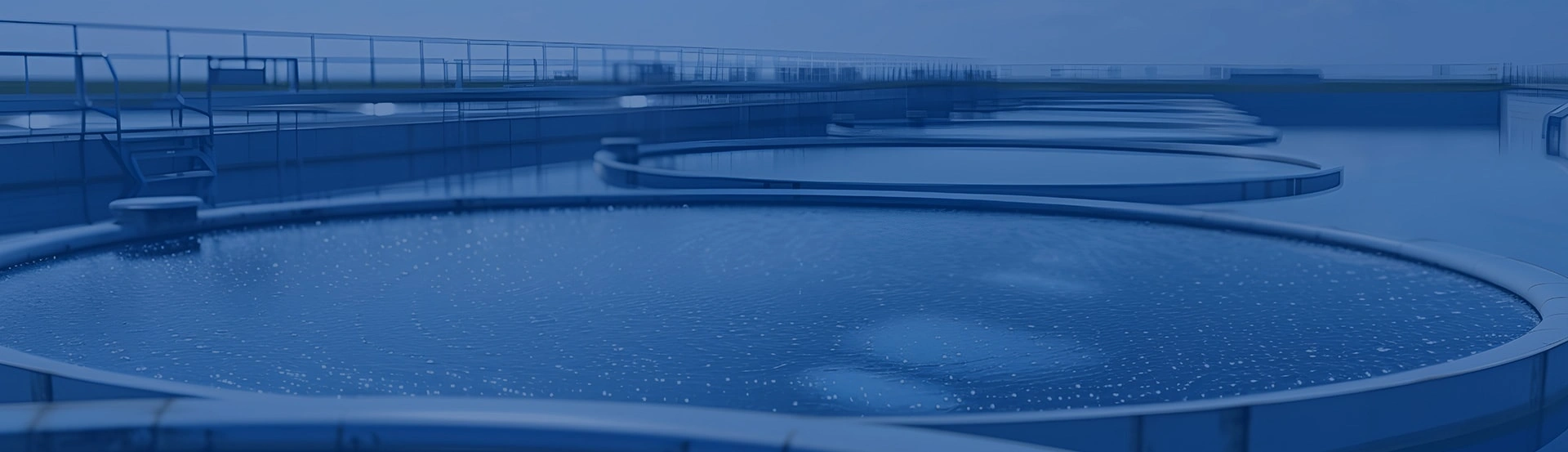
Hospital wastewater contains conventional pollutants and may also contain disinfectants, antibiotics and heavy metals. Excess phosphorus discharged into receiving waters increases the risk of eutrophication.
Enhanced biological phosphorus removal relies on anaerobic phosphorus release, aerobic uptake by phosphorus-accumulating organisms (PAOs), and wasting of phosphorus-rich sludge. Operation must be adapted to actual wastewater characteristics.
1. Pretreatment: Removing obstacles to biological treatment
Oxidants and other toxic pollutants may inhibit PAOs. Source control and pretreatment should reduce shock loads.
Dechlorination: Identify and measure residual oxidants entering biological treatment. Where necessary, use a validated dechlorination process, for example with sodium sulfite or sodium thiosulfate. Establish targets and reagent requirements through site testing; excess reducing agent can increase oxygen demand. Required disinfection must not be compromised.
Toxicity control: Segregate and manage special waste liquids containing metals, pharmaceuticals or laboratory reagents as required. Hydrolysis and acidification may improve biodegradability but do not guarantee antibiotic or metal removal. Select targeted treatment based on analytical results; EDTA addition is not a suitable stand-alone metal removal measure.
Flow and quality equalization: Size equalization tanks according to discharge patterns and design loads. Monitor influent total phosphorus and flow. When loading exceeds treatment capacity, use planned temporary storage and controlled return without releasing untreated wastewater.
2. Anaerobic and aerobic zones: Key operating parameters
PAOs use readily biodegradable carbon and store it intracellularly under anaerobic conditions, then take up phosphorus aerobically. Net removal requires wasting phosphorus-rich sludge.
Anaerobic zone: Phosphorus release and carbon storage
Carbon control: Assess readily biodegradable COD, volatile fatty acids (VFAs) and phosphorus loading to identify carbon deficiency. If necessary, use validated sources such as acetate, with requirements established by testing. Methanol is not a preferred routine PAO substrate; external fermentation liquids require hygiene and contamination assessment. ORP is supplementary and cannot replace VFA analysis.
DO and nitrate control: Minimize dissolved oxygen, nitrate and nitrite entering the anaerobic zone. DO below 0.2 mg/L may serve as an initial operating reference, not a universal limit. Maintain mixing, assess oxygen and oxidized nitrogen in recycle streams, and optimize anoxic denitrification and recycle routing where needed.
Aerobic zone: Phosphorus uptake and sludge stability
DO control: A range of 2–3 mg/L may be an initial reference for conventional activated sludge. Optimize aeration against phosphorus uptake, nitrification, temperature and energy use. Use calibrated DO instruments and check oxygen distribution to avoid local oxygen deficiency or unnecessary aeration.
Solids retention time (SRT): Balance PAO enrichment, nitrification requirements and temperature rather than prescribing 5–10 days universally. SRT is the total solids inventory divided by daily solids losses, including effluent solids. Waste sludge volume also depends on its solids concentration. Adjust MLSS and wasting according to design, settling and loading.
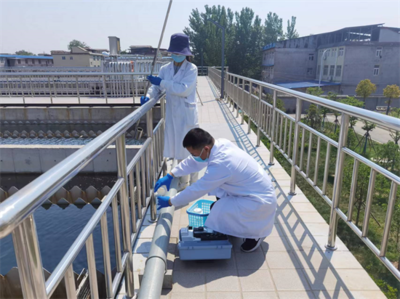
3. Supporting controls: Improving stability
Recycle optimization
In conventional A²/O treatment, aerobic mixed liquor is normally recycled to the anoxic zone for denitrification, not directly to the anaerobic zone. Set the recycle ratio according to nitrogen loading, denitrification capacity and process configuration to minimize oxidized nitrogen entering the anaerobic zone.
Adjust return activated sludge flow according to clarifier blanket level, return sludge concentration and biological solids balance. Avoid prolonged sludge retention in the clarifier that may release phosphorus, and waste phosphorus-rich sludge promptly.
Sludge characteristics
Monitor SV30, SVI, MLSS and effluent suspended solids, supported by microscopy. Neither high nor low SVI alone identifies the cause. Investigate loading, oxygen, nutrient balance and filamentous organisms before selecting corrective measures.
Supplementary chemical phosphorus removal
When total phosphorus approaches or exceeds the applicable discharge limit, implement planned combined biological and chemical removal. Select polyaluminium chloride (PAC) or suitable iron salts according to process conditions. Determine dose and dosing location by jar testing, considering pH, alkalinity, additional sludge and solids separation. Manage noncompliant effluent as required and retest.
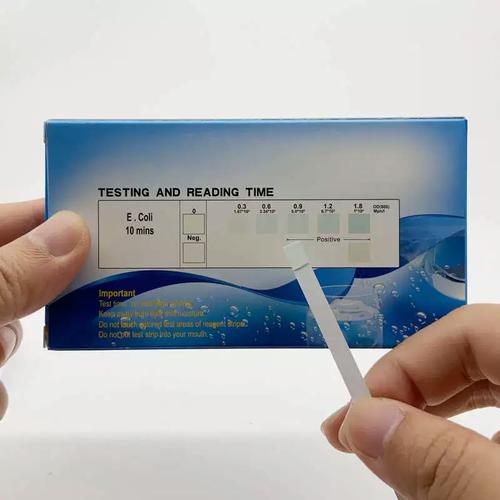
Establish monitoring across influent, biological zones and effluent, with frequency based on permit requirements, load variability and operating risk.
During operation, daily influent total phosphorus and carbon measurements may be used with flow to assess loading. Monitor anaerobic DO, ORP and oxidized nitrogen regularly, increasing frequency during disturbances.
Where feasible, monitor aerobic DO and pH online and measure MLSS, SV30 and SVI periodically. Evaluate removal using phosphate trends, sludge wasting and effluent suspended solids.
Measure effluent total phosphorus using applicable standard methods and comply with monitoring frequencies and limits specified by the discharge permit and relevant national and local standards. Verify direct and indirect discharge requirements separately rather than applying universal values.
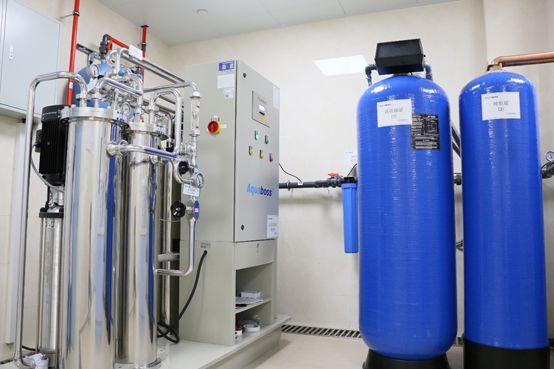
Controlling total phosphorus in hospital wastewater requires maintaining PAO activity, optimizing anaerobic–aerobic cycling and wasting phosphorus-rich sludge. Pretreatment, process optimization, supplementary removal where needed and dynamic monitoring can improve stability. Compliance must be demonstrated by actual analytical results.

Chlorine dioxide can efficiently degrade difficult-to-treat pollutants such as contrast agents and antibiotics in hospital wastewater. It is advisable to add it at multiple points in stages, ensuring a contact time of more than 30 minutes, and to conduct safety monitoring. It can also be combined with other processes to reduce the environmental harm of wastewater.
Excessive total phosphorus in hospital wastewater can be addressed by relying on a biological system for regulating polyphosphate metabolism: proper pretreatment and detoxification to stabilize water quality, control of key operating parameters in the anaerobic-aerobic tank, optimization of reflux and sludge management, addition of chemical agents when necessary, and regular monitoring to achieve effluent compliance.
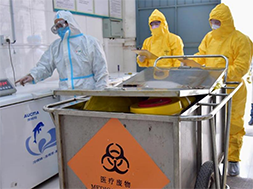
High COD in hospital wastewater can lead to high ammonia nitrogen levels, consuming chlorine dioxide disinfectant. Furthermore, some pathogens are resistant to disinfection, and blindly adding chemicals can easily produce byproducts. Therefore, it is necessary to strengthen biochemical pretreatment to reduce pollutants, precisely control the dosage of chemicals, and ensure the safety of wastewater disinfection.
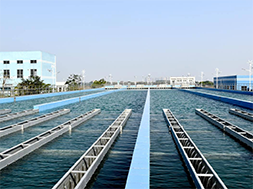
Divalent manganese is oxidized by chlorine dioxide to produce black manganese dioxide, which causes black water pollution, easily clogging pipe networks, staining, and producing odors. Treatment can be achieved through precise dosage control, process optimization, real-time monitoring, and corresponding pipe network maintenance.
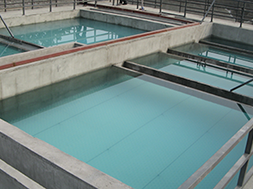
Hospital wastewater contains many pathogenic microorganisms. Compared with liquid chlorine and sodium hypochlorite, chlorine dioxide has a broad-spectrum and highly efficient bactericidal effect, produces fewer carcinogenic byproducts, has a wide pH adaptability range, and also has deodorizing and decolorizing effects. It has a long-lasting effect, is safe to use, and can decompose recalcitrant pollutants. Its comprehensive advantages are significant, and its application in hospital wastewater treatment is becoming increasingly widespread.
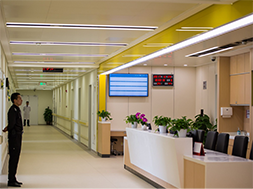
Small, grassroots hospitals often face difficulties in meeting wastewater treatment standards due to limitations in funding, personnel, and space. Xiuba helps these hospitals achieve compliant wastewater discharge through low-cost solutions involving minor facility modifications, process adaptation, and intelligent operation and maintenance.

The tidal discharge of hospital outpatient sewage leads to frequent on-off of chlorine dioxide disinfection system, posing efficiency, equipment and safety hazards. Relying on five layers of protection to ensure operational safety, cooperating with operation and maintenance measures such as phased operation, encrypted maintenance, and optimized drug supply, adjusting start and stop times reasonably, improving sewage disinfection efficiency, and building a solid public health defense line.
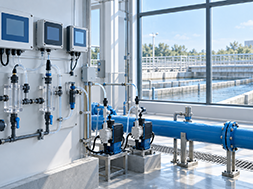
Xiuba chlorine dioxide can be used for advanced treatment of polluted water source. The front end pre oxidizes the odorant, iron and manganese, and the dosage is determined by test; The terminal disinfection shall comply with the requirements of the national standard to ensure the contact time and water margin. The product covers a variety of dosage forms and supporting equipment, which should be selected according to the national standard. Double dosing points are set, and the equipment is equipped with metering, monitoring and alarm functions to control the total dosage, monitor disinfection by-products, and ensure the water quality treatment effect by relying on detection test and whole process monitoring.
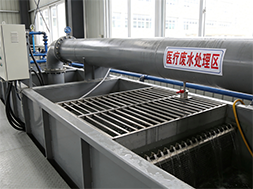
Regarding the control of hydrochloric acid and sodium chlorate raw materials for chlorine dioxide generators in hospital wastewater treatment, the quality requirements of raw materials are clearly defined in accordance with national standards such as GB28931-2024. On-site rapid acceptance can be carried out through visual inspection, odor identification, specific gravity and pH testing, and small-scale reaction. By implementing management measures such as raw material registration and sampling, separate storage, regular equipment cleaning, and monitoring of operating parameters, the disinfection effect can be stabilized, and cost reduction and efficiency improvement can be achieved.
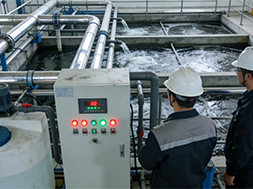
Hospital wastewater is prone to producing byproducts and residual resistant pathogens when disinfected alone. A chlorine dioxide-ozone-ultraviolet coupling process can be used for deep treatment. Chlorine dioxide is the main disinfection unit, ozone degrades recalcitrant pollutants, and ultraviolet light is used for final control. With the help of online monitoring, the reagents and energy consumption can be intelligently adjusted to balance treatment effect and cost. In the future, it will develop towards big data AI automatic control.
Northeast of Huangshan Road and Chuangye Intersection, Small and Medium sized Enterprise Entrepreneurship Industrial Park, Shanwang Town, Linqu County, Weifang City, Shandong Province
Copyright © 2025 by Shandong Huashi Pharmaceutical Co., Ltd All Rights Reserved


 Language
 中文
 Русский
 Chlorine Dioxide Disinfectant Manufacturer


