Welcome to Our Factory for a Visit! Free customized disinfection solutions
In routine drinking-water treatment, chlorine dioxide is valued for its oxidation and disinfection capabilities. When source water contains dissolved manganese, however, chlorine dioxide can oxidize Mn(II) into particulate manganese oxides. If those particles are not effectively removed before the water enters the distribution system, the result may be brown or black discoloration. The issue is therefore not that chlorine dioxide itself becomes a “black magic” chemical, but that oxidation and downstream solids removal are not properly matched.
The “Black Water” Mystery: What Happens When Manganese Is Oxidized?
Manganese occurs naturally in many groundwater and surface-water sources and may be present as soluble Mn(II), which is usually invisible in clear water. Chlorine dioxide can rapidly oxidize dissolved Mn(II) to higher-valence manganese oxides, commonly represented as MnO₂ or mixed MnOₓ solids. These particles are dark brown to black. Whether the water visibly darkens depends on the manganese concentration, chlorine dioxide dose, pH, temperature, dissolved organic matter, particle size and, most importantly, the ability of downstream clarification and filtration to remove the newly formed solids.
It is therefore more accurate to say that chlorine dioxide converts dissolved manganese into particulate manganese that must then be separated. Oxidation alone is not the same as removal.
When iron and manganese coexist, both reduced species can consume oxidant. Fe(II) generally reacts very rapidly with chlorine dioxide, while Mn(II) oxidation is also rapid under suitable conditions. However, it is too absolute to state that chlorine dioxide will always oxidize all iron first and only then begin oxidizing manganese. The actual competition depends on the concentrations of Fe(II), Mn(II), chlorine dioxide, organic matter and other reducing substances, as well as pH and temperature.
The Hidden Risk Behind “Black Water”: More Than an Appearance Problem
Particulate manganese can deposit in filters, storage facilities and distribution pipes. Over time, these deposits may accumulate on pipe walls and later be released when hydraulic conditions change, creating discolored-water events at customer taps. Manganese deposits can also foul fixtures and contribute to stains on laundry and sanitary surfaces. At sufficiently elevated concentrations, manganese may affect taste and appearance and can trigger strong consumer concern about water safety.
The most important operational risk is not simply that fresh MnO₂ particles are black, but that particulate manganese escapes treatment and enters the distribution system or that previously accumulated manganese deposits are destabilized and released. This is why black-water control must extend from the treatment plant into the distribution network.

Resolving the “Black Water” Problem: Match Oxidation with Separation
1. Coordinate pre-oxidation with coagulation, sedimentation and filtration
If chlorine dioxide or another oxidant is used to convert dissolved manganese into particulate manganese oxides, the treatment train must provide sufficient downstream particle removal. Depending on source-water quality and manganese loading, this may involve optimized coagulation and flocculation, sedimentation, granular-media filtration, catalytic media or other validated separation processes. The objective is to complete manganese removal before finished water enters the distribution network.
2. Optimize chlorine dioxide dose and dosing location
The chlorine dioxide dose should be based on the actual oxidant demand of the water and the target manganese concentration, while still meeting the disinfection objective. Excessive dosing is not automatically better, and insufficient dosing may leave dissolved manganese untreated. The dosing point should provide enough reaction time while allowing the resulting manganese particles to be captured by downstream treatment rather than formed after filtration or within the distribution system.
3. Use multiple treatment barriers
A robust manganese-control strategy may combine source-water management, oxidation, coagulation, clarification, filtration and, where appropriate, advanced treatment. The exact combination should be selected according to source-water chemistry and plant configuration rather than applying one universal process to every waterworks.
4. Monitor both dissolved and particulate manganese
Routine monitoring should distinguish between dissolved and particulate manganese where possible. Tracking total manganese alone may not reveal whether oxidation is occurring before or after filtration. Operators should also monitor chlorine dioxide dose and residual, turbidity, filter performance, pH, temperature and other parameters that influence manganese oxidation and particle capture.
From Treatment to Prevention: Distribution-System Management Matters
Long-term prevention requires a source-to-tap approach. Water utilities should monitor manganese fluctuations in source water and finished water and use those data to adjust oxidation and filtration. Distribution-system flushing can be used where manganese deposits have accumulated, but flushing programs should be based on hydraulic conditions and deposit history rather than a fixed universal frequency. In severely affected or structurally problematic sections, pipe rehabilitation or replacement may be necessary.
Source-water protection is equally important. Reducing manganese inputs from industrial discharges, mining activities, sediment disturbance or other controllable sources can lower the burden on the treatment plant. However, natural manganese from geology and reducing conditions may also be significant, so source control alone may not eliminate the problem.
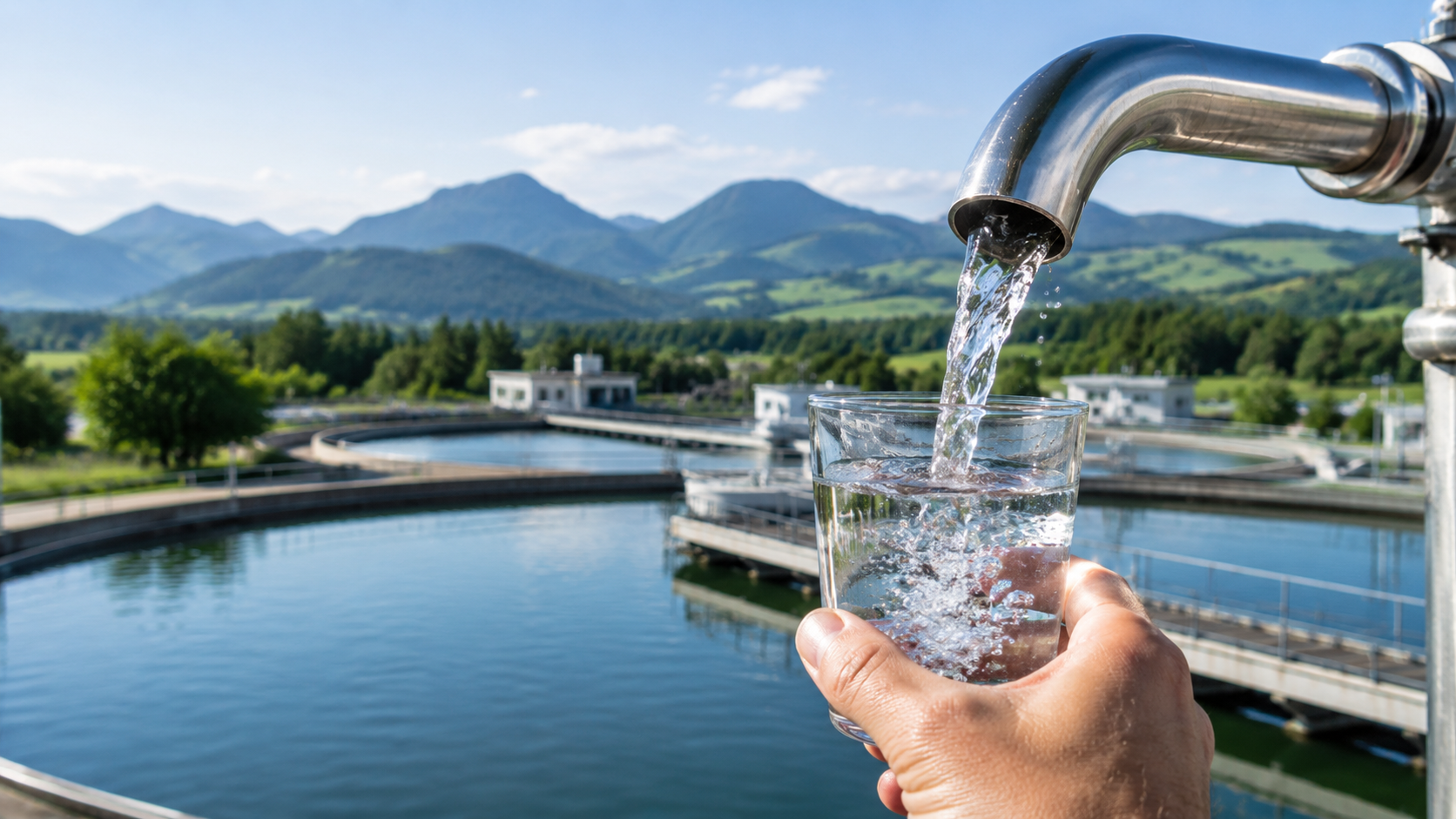
The key lesson is that a black-water event is usually a signal that manganese oxidation, particle separation and distribution-system control are not fully coordinated. Chlorine dioxide can be an effective oxidant for Mn(II), but its value depends on where it is dosed, how much is applied and whether the resulting solids are removed before distribution. Respecting water chemistry and managing the entire treatment train are the most reliable ways to keep finished water clear and stable.

Chlorine dioxide can efficiently degrade difficult-to-treat pollutants such as contrast agents and antibiotics in hospital wastewater. It is advisable to add it at multiple points in stages, ensuring a contact time of more than 30 minutes, and to conduct safety monitoring. It can also be combined with other processes to reduce the environmental harm of wastewater.
Excessive total phosphorus in hospital wastewater can be addressed by relying on a biological system for regulating polyphosphate metabolism: proper pretreatment and detoxification to stabilize water quality, control of key operating parameters in the anaerobic-aerobic tank, optimization of reflux and sludge management, addition of chemical agents when necessary, and regular monitoring to achieve effluent compliance.
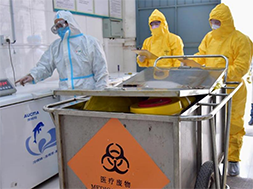
High COD in hospital wastewater can lead to high ammonia nitrogen levels, consuming chlorine dioxide disinfectant. Furthermore, some pathogens are resistant to disinfection, and blindly adding chemicals can easily produce byproducts. Therefore, it is necessary to strengthen biochemical pretreatment to reduce pollutants, precisely control the dosage of chemicals, and ensure the safety of wastewater disinfection.
Divalent manganese is oxidized by chlorine dioxide to produce black manganese dioxide, which causes black water pollution, easily clogging pipe networks, staining, and producing odors. Treatment can be achieved through precise dosage control, process optimization, real-time monitoring, and corresponding pipe network maintenance.
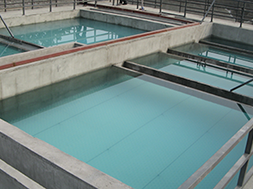
Hospital wastewater contains many pathogenic microorganisms. Compared with liquid chlorine and sodium hypochlorite, chlorine dioxide has a broad-spectrum and highly efficient bactericidal effect, produces fewer carcinogenic byproducts, has a wide pH adaptability range, and also has deodorizing and decolorizing effects. It has a long-lasting effect, is safe to use, and can decompose recalcitrant pollutants. Its comprehensive advantages are significant, and its application in hospital wastewater treatment is becoming increasingly widespread.
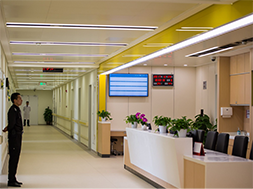
Small, grassroots hospitals often face difficulties in meeting wastewater treatment standards due to limitations in funding, personnel, and space. Xiuba helps these hospitals achieve compliant wastewater discharge through low-cost solutions involving minor facility modifications, process adaptation, and intelligent operation and maintenance.

The tidal discharge of hospital outpatient sewage leads to frequent on-off of chlorine dioxide disinfection system, posing efficiency, equipment and safety hazards. Relying on five layers of protection to ensure operational safety, cooperating with operation and maintenance measures such as phased operation, encrypted maintenance, and optimized drug supply, adjusting start and stop times reasonably, improving sewage disinfection efficiency, and building a solid public health defense line.
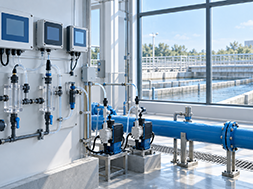
Xiuba chlorine dioxide can be used for advanced treatment of polluted water source. The front end pre oxidizes the odorant, iron and manganese, and the dosage is determined by test; The terminal disinfection shall comply with the requirements of the national standard to ensure the contact time and water margin. The product covers a variety of dosage forms and supporting equipment, which should be selected according to the national standard. Double dosing points are set, and the equipment is equipped with metering, monitoring and alarm functions to control the total dosage, monitor disinfection by-products, and ensure the water quality treatment effect by relying on detection test and whole process monitoring.
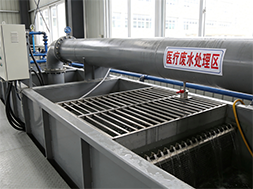
Regarding the control of hydrochloric acid and sodium chlorate raw materials for chlorine dioxide generators in hospital wastewater treatment, the quality requirements of raw materials are clearly defined in accordance with national standards such as GB28931-2024. On-site rapid acceptance can be carried out through visual inspection, odor identification, specific gravity and pH testing, and small-scale reaction. By implementing management measures such as raw material registration and sampling, separate storage, regular equipment cleaning, and monitoring of operating parameters, the disinfection effect can be stabilized, and cost reduction and efficiency improvement can be achieved.
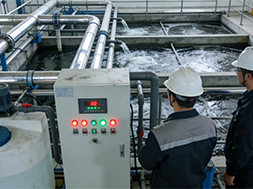
Hospital wastewater is prone to producing byproducts and residual resistant pathogens when disinfected alone. A chlorine dioxide-ozone-ultraviolet coupling process can be used for deep treatment. Chlorine dioxide is the main disinfection unit, ozone degrades recalcitrant pollutants, and ultraviolet light is used for final control. With the help of online monitoring, the reagents and energy consumption can be intelligently adjusted to balance treatment effect and cost. In the future, it will develop towards big data AI automatic control.
Northeast of Huangshan Road and Chuangye Intersection, Small and Medium sized Enterprise Entrepreneurship Industrial Park, Shanwang Town, Linqu County, Weifang City, Shandong Province
Copyright © 2025 by Shandong Huashi Pharmaceutical Co., Ltd All Rights Reserved


 Language
 中文
 Русский
 Chlorine Dioxide Disinfectant Manufacturer


