Welcome to Our Factory for a Visit! Free customized disinfection solutions
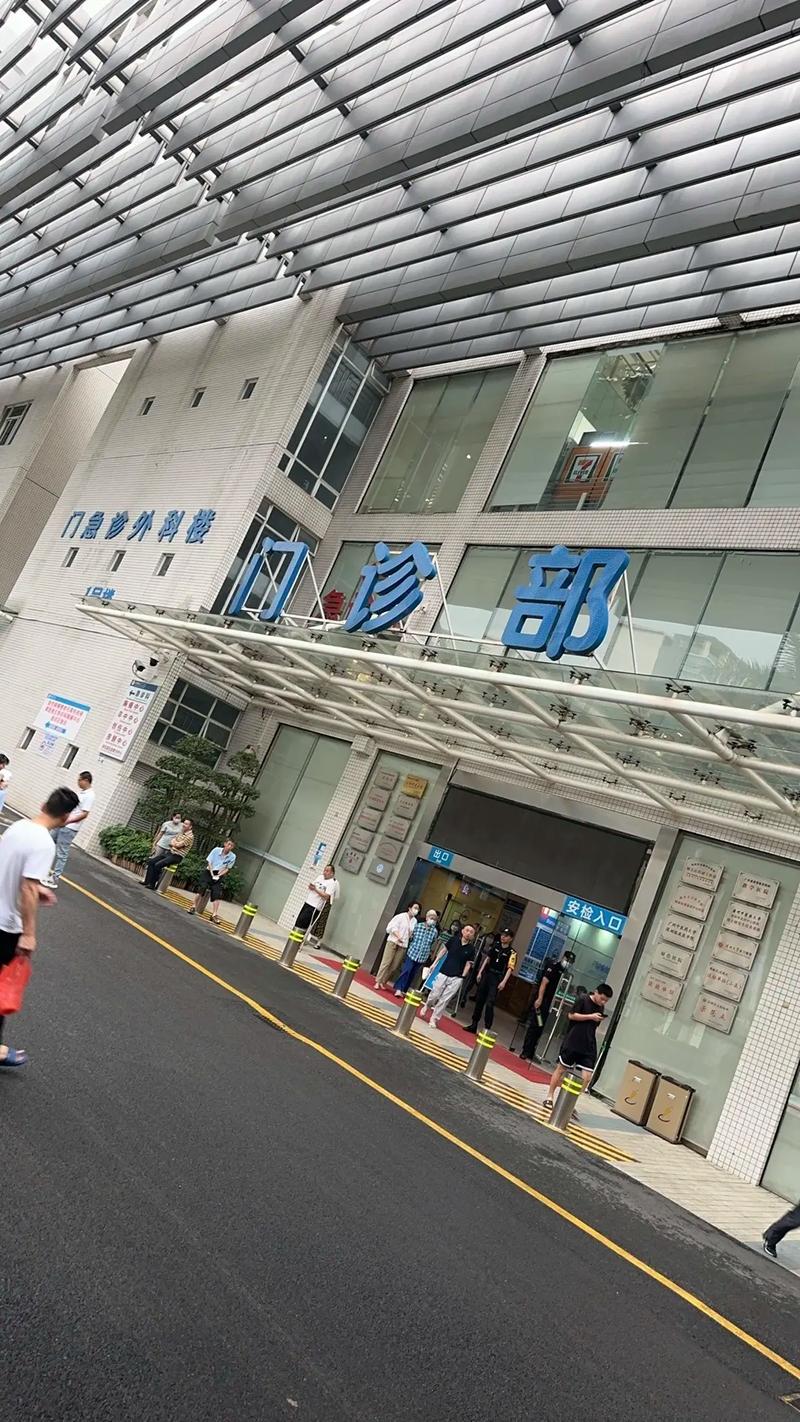
Pain Point: Why Is Wastewater Compliance So Difficult for Small Medical Facilities?
"We have received another wastewater-compliance notice..." Similar concerns are common among small hospitals and primary-care facilities.
Medical wastewater can contain pathogenic microorganisms, pharmaceutical residues, disinfectants, suspended solids, organic matter, and other pollutants. Failure to meet applicable discharge requirements may lead to regulatory corrective actions and other legal consequences, but the type and amount of penalties depend on the specific violation and local enforcement basis. It is therefore inappropriate to present one fixed fine range or to state that a wastewater violation automatically leads to suspension of a medical license.
In practice, many small medical facilities face three recurring constraints.
1. Limited capital. Small facilities often have tighter capital and operating budgets and may find a large, newly built treatment plant difficult to justify. However, annual wastewater budgets vary widely by bed count, wastewater flow, discharge route, local prices, and existing infrastructure, so a single figure such as 'less than RMB 100,000 per year' should not be treated as a universal benchmark.
2. Limited operating capability. Small facilities may lack dedicated environmental or wastewater operators. Complex equipment can perform poorly if chemical dosing, sludge management, alarms, maintenance, and recordkeeping are not properly managed. The real issue is therefore not simply whether the equipment is 'advanced,' but whether the process can be operated reliably with the available staff and management system.
3. Space constraints. Existing medical campuses may have little spare land, which can make conventional expansion difficult. Compact retrofits can be valuable, but the process must still provide the required hydraulic retention, treatment capacity, access for maintenance, and safety clearances.
Claims about how many local hospitals were fined or the average cost of corrective action should only be used when supported by an identifiable official data source. In a technical article, a safer conclusion is that compliance pressure can be significant for small facilities because wastewater treatment must satisfy both sanitary and environmental requirements with limited space and staffing.
Why Does 'Low-Cost Compliance' Look Simple but Prove Difficult in Practice?
Some facilities respond to an abnormal result by increasing disinfectant dosage or arranging short-term emergency service. These actions may temporarily change the effluent result, but repeated noncompliance often indicates that the problem lies in the whole treatment train rather than in one dosing step.
1. Treating only the final symptom and ignoring the system
If septic tanks are overloaded, sludge is not removed when needed, equalization is poor, or suspended solids and organic matter remain high, disinfectant demand can increase and microorganisms may be shielded from contact with the disinfectant. Simply adding more disinfectant is not a substitute for upstream solids control and stable pretreatment.
2. Over-designing or copying large-hospital processes
MBR and other advanced biological processes can provide strong treatment performance, but they are not automatically the best choice for every small hospital. Capital cost, membrane cleaning and replacement, aeration energy, sludge handling, operator capability, and discharge requirements should all be considered. Conversely, avoiding MBR purely because it is 'expensive' is also too simplistic; the correct process depends on the actual influent and effluent targets.
3. Underestimating the hidden cost of operation and maintenance
Manual operation may appear inexpensive, but inconsistent dosing, delayed sludge removal, missing calibration, and incomplete records can increase compliance risk. Automation can reduce some human error, yet it still requires inspection, calibration, alarm response, and trained oversight.
A genuinely low-cost solution should balance capital investment, operating cost, reliability, compliance margin, and ease of operation. The lowest purchase price is not necessarily the lowest life-cycle cost.
Solution: A Three-Step Approach to Cost-Effective Compliance
There is no universal 'low-cost compliance formula' that guarantees a fixed investment or monthly operating cost. A better approach is to reuse suitable existing assets, choose a process matched to the discharge route and wastewater quality, and simplify routine operation through appropriate automation.
Step 1: Make Use of Existing Facilities Instead of Rebuilding Everything
Septic-tank optimization: where the existing tank is structurally sound and appropriately sized, flow distribution, baffles, sludge withdrawal, ventilation, and maintenance can be reviewed and improved. Any retrofit should be designed from actual hydraulic loading and sludge conditions; fixed claims such as a 40% increase in treatment capacity or a universal RMB 2,000-5,000 retrofit cost require project-specific evidence.
Equalization and solids-control optimization: where suspended solids fluctuate or shock loads occur, equalization, screening, settling, coagulation, or other pretreatment may reduce the load on downstream biological treatment and disinfection. The chemical type and dose should be determined by jar testing or other validation, and a universal 85% suspended-solids removal rate should not be promised without site data.
Step 2: Match the Process to the Discharge Route and Required Standard
Process selection should consider whether the wastewater is discharged to a municipal sewer or directly to the environment, the size and type of the medical facility, the influent characteristics, the applicable version of GB 18466-2005 and its 2026 amendment, local requirements, and permit conditions. The table below therefore presents decision logic rather than fixed monthly costs.
|
Facility / discharge situation |
Process direction to evaluate |
Technical focus |
Cost approach |
|
Discharge to municipal sewer |
Existing pretreatment / primary or enhanced primary treatment + validated disinfection, where permitted by the applicable standard and sewer requirements |
Reduce solids and stabilize disinfection demand; confirm sewer-acceptance and medical-wastewater requirements |
Calculate from actual flow, chemical demand, monitoring and maintenance; no universal monthly figure |
|
Direct discharge requiring more complete treatment |
Biological treatment such as contact oxidation, MBR, or another suitable process + disinfection, selected from influent and effluent targets |
Stable removal of organics / ammonia where required, followed by validated microbial control |
Compare life-cycle cost, including power, sludge, membranes if used, chemicals, labor and monitoring |
|
Very small / decentralized medical facility |
Use the simplified treatment route permitted by the applicable GB 18466 requirements and local rules; do not assume lime disinfection is universally acceptable |
Simple, maintainable, safe dosing and sufficient contact time, with required monitoring |
Choose the lowest life-cycle cost that still meets the applicable standard and local requirements |
Key point on disinfection: chlorine dioxide may be used as one of the disinfection technologies for medical wastewater when the product, generator or dosing system, and operating procedure are suitable for the application. Its dosage and contact time must be set according to wastewater quality, target microorganisms, contact facilities, and validated performance. Claims such as 'activation above 98%,' '5-15 minute activation for every application,' 'no residual resistance,' or 'one dose remains effective for three months' should not be used as universal technical statements. Medical wastewater disinfection is a continuous process-control task, not a one-time treatment that remains effective for months.
Step 3: Use Appropriate Automation to Reduce Routine Labor, Not to Eliminate Oversight
Automatic dosing and control systems can improve consistency by linking chemical feed to flow, operating status, or validated monitoring parameters. They can help reduce overdosing and underdosing, but a guaranteed 20% chemical saving cannot be claimed without comparing the same influent, target, and operating period. Automation should be evaluated for reliability, alarm handling, maintenance, calibration, and fail-safe behavior.
Remote monitoring can make operation more transparent by displaying flow, pH, equipment status, disinfectant-related parameters, and alarms. The monitored parameter must match the actual disinfection process: when chlorine dioxide is used, 'chlorine dioxide residual' should not simply be labeled as 'residual chlorine.' Remote monitoring can reduce the need for constant on-site observation, but it does not eliminate the need for responsible personnel, routine inspections, calibration, and emergency response.
A complete service package may include chemical supply, equipment maintenance, operator training, monitoring support, and compliant sludge or waste handling. The 2026 amendment to GB 18466-2005 no longer categorically defines wastewater-treatment sludge from medical facilities as hazardous waste; instead, sludge must be disinfected and meet the applicable requirements before transfer and treatment. Therefore, sludge management should follow the current standard, local rules, and actual waste characteristics rather than being marketed simply as a 'regular removal package.'
XIUBA: Practical Support for Small Medical-Facility Wastewater Projects
For small medical facilities, a credible supplier advantage should be demonstrated through documented project experience, suitable products, engineering capability, and after-sales support. Statements such as 'more than 20 years of experience' or 'more than 1,000 facilities served' should be retained only when the company can support them with internal records or verifiable project documentation.
1. Customized solutions: design or retrofit the process according to wastewater flow, facility type, available space, discharge route, existing infrastructure, budget, and local compliance requirements rather than applying one standard package to every site.
2. Full-cycle support: provide commissioning, operating procedures, operator training, maintenance guidance, troubleshooting, and after-sales technical support so that the system can remain compliant after installation.
3. Transparent life-cycle cost: instead of claiming that equipment is always 40% cheaper or costs only 60% of comparable products, compare the same design basis, including equipment, chemicals, power, labor, maintenance, monitoring, sludge or waste handling, depreciation, and compliance cost. Cost advantages should be supported by project-specific calculations.
Overall, the most reliable low-cost strategy is to reduce unnecessary construction while preserving treatment performance and compliance margin. Reusing suitable existing facilities, selecting the right pretreatment and disinfection process, automating repetitive control tasks, and establishing clear sludge, monitoring, and maintenance procedures can reduce avoidable operating costs. For small medical facilities, 'low cost' should mean a system that remains stable and compliant over its life cycle, not simply the lowest initial investment.

Chlorine dioxide can efficiently degrade difficult-to-treat pollutants such as contrast agents and antibiotics in hospital wastewater. It is advisable to add it at multiple points in stages, ensuring a contact time of more than 30 minutes, and to conduct safety monitoring. It can also be combined with other processes to reduce the environmental harm of wastewater.
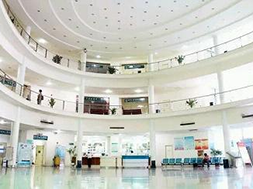
Excessive total phosphorus in hospital wastewater can be addressed by relying on a biological system for regulating polyphosphate metabolism: proper pretreatment and detoxification to stabilize water quality, control of key operating parameters in the anaerobic-aerobic tank, optimization of reflux and sludge management, addition of chemical agents when necessary, and regular monitoring to achieve effluent compliance.
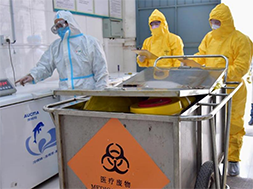
High COD in hospital wastewater can lead to high ammonia nitrogen levels, consuming chlorine dioxide disinfectant. Furthermore, some pathogens are resistant to disinfection, and blindly adding chemicals can easily produce byproducts. Therefore, it is necessary to strengthen biochemical pretreatment to reduce pollutants, precisely control the dosage of chemicals, and ensure the safety of wastewater disinfection.
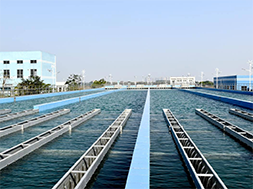
Divalent manganese is oxidized by chlorine dioxide to produce black manganese dioxide, which causes black water pollution, easily clogging pipe networks, staining, and producing odors. Treatment can be achieved through precise dosage control, process optimization, real-time monitoring, and corresponding pipe network maintenance.
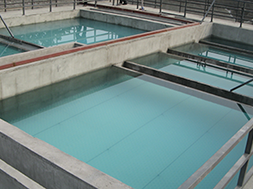
Hospital wastewater contains many pathogenic microorganisms. Compared with liquid chlorine and sodium hypochlorite, chlorine dioxide has a broad-spectrum and highly efficient bactericidal effect, produces fewer carcinogenic byproducts, has a wide pH adaptability range, and also has deodorizing and decolorizing effects. It has a long-lasting effect, is safe to use, and can decompose recalcitrant pollutants. Its comprehensive advantages are significant, and its application in hospital wastewater treatment is becoming increasingly widespread.
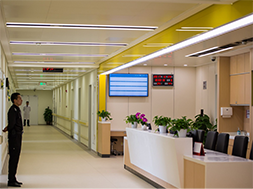
Small, grassroots hospitals often face difficulties in meeting wastewater treatment standards due to limitations in funding, personnel, and space. Xiuba helps these hospitals achieve compliant wastewater discharge through low-cost solutions involving minor facility modifications, process adaptation, and intelligent operation and maintenance.
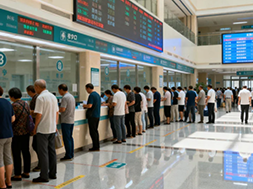
The tidal discharge of hospital outpatient sewage leads to frequent on-off of chlorine dioxide disinfection system, posing efficiency, equipment and safety hazards. Relying on five layers of protection to ensure operational safety, cooperating with operation and maintenance measures such as phased operation, encrypted maintenance, and optimized drug supply, adjusting start and stop times reasonably, improving sewage disinfection efficiency, and building a solid public health defense line.
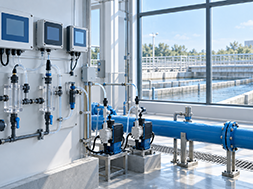
Xiuba chlorine dioxide can be used for advanced treatment of polluted water source. The front end pre oxidizes the odorant, iron and manganese, and the dosage is determined by test; The terminal disinfection shall comply with the requirements of the national standard to ensure the contact time and water margin. The product covers a variety of dosage forms and supporting equipment, which should be selected according to the national standard. Double dosing points are set, and the equipment is equipped with metering, monitoring and alarm functions to control the total dosage, monitor disinfection by-products, and ensure the water quality treatment effect by relying on detection test and whole process monitoring.
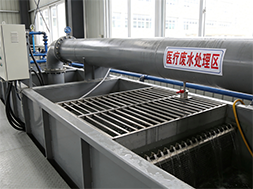
Regarding the control of hydrochloric acid and sodium chlorate raw materials for chlorine dioxide generators in hospital wastewater treatment, the quality requirements of raw materials are clearly defined in accordance with national standards such as GB28931-2024. On-site rapid acceptance can be carried out through visual inspection, odor identification, specific gravity and pH testing, and small-scale reaction. By implementing management measures such as raw material registration and sampling, separate storage, regular equipment cleaning, and monitoring of operating parameters, the disinfection effect can be stabilized, and cost reduction and efficiency improvement can be achieved.
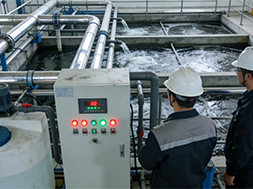
Hospital wastewater is prone to producing byproducts and residual resistant pathogens when disinfected alone. A chlorine dioxide-ozone-ultraviolet coupling process can be used for deep treatment. Chlorine dioxide is the main disinfection unit, ozone degrades recalcitrant pollutants, and ultraviolet light is used for final control. With the help of online monitoring, the reagents and energy consumption can be intelligently adjusted to balance treatment effect and cost. In the future, it will develop towards big data AI automatic control.
Northeast of Huangshan Road and Chuangye Intersection, Small and Medium sized Enterprise Entrepreneurship Industrial Park, Shanwang Town, Linqu County, Weifang City, Shandong Province
Copyright © 2025 by Shandong Huashi Pharmaceutical Co., Ltd All Rights Reserved


 Language
 中文
 Русский
 Chlorine Dioxide Disinfectant Manufacturer


