Welcome to Our Factory for a Visit! Free customized disinfection solutions
Today's topic is——
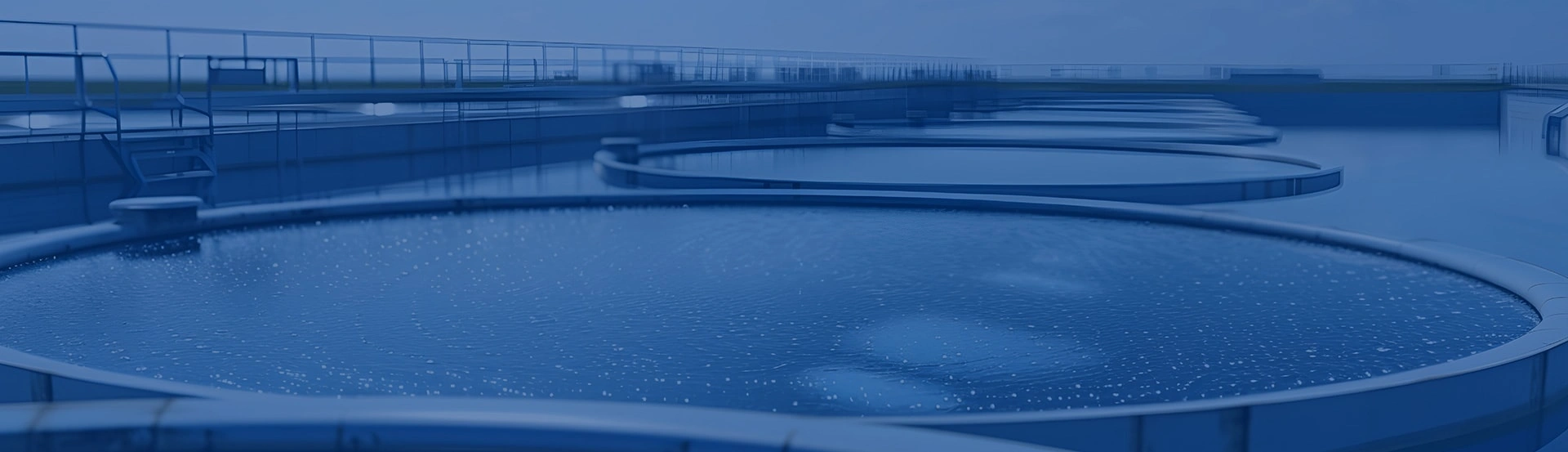
At the hospital sewage treatment site, there is often a problem that confuses the operators - why is there still an excessive amount of Escherichia coli when the online instrument displays stable chlorine dioxide and qualified residual chlorine indicators in the effluent. I believe this is a type of malfunction that occurs in the daily work of engineering personnel. There are often many particles hidden in wastewater, and pathogens hide in it to escape danger. How to carry out collaborative disinfection treatment for pre-treatment to effectively eliminate them?
1、 The Umbrella Effect of Particulate Matter: Why Disinfectants Can't Kill Even After Being Used
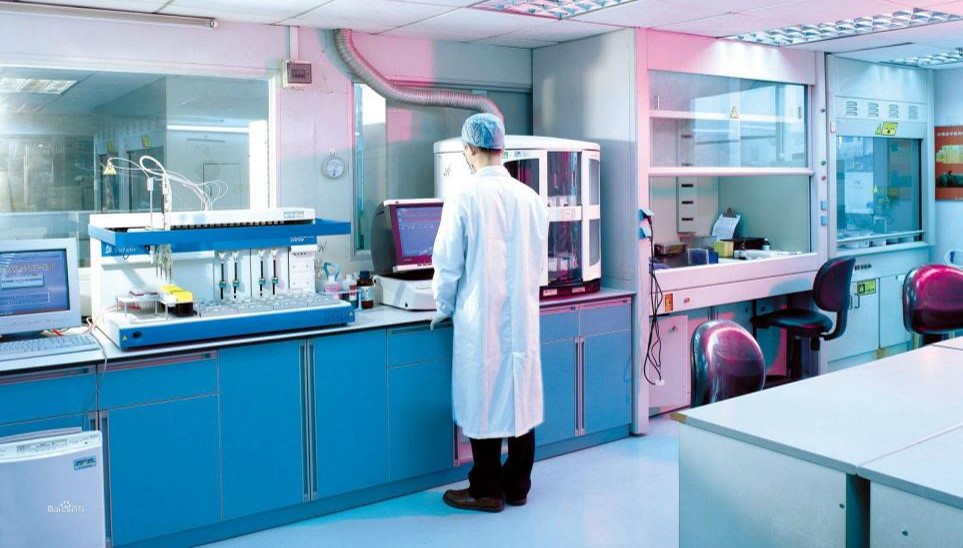
Chlorine dioxide disinfection is achieved by penetrating microbial cell walls and participating in the destruction of enzyme biological systems to achieve effective results. However, when pathogens attach to suspended particles or are wrapped in organic flocs, blind spots appear in the disinfection process. This is the phenomenon known as the "particulate matter shielding effect".
This type of particulate matter, when consumed with oxidants, can also hinder the direct attack of disinfectants on microorganisms. Disinfectants cannot effectively act on the microbial body, resulting in the problem of conflicting detection values in water. Grasp the target - particulate matter, leaving no place for fecal microbiota to escape, in order to enable disinfectants to achieve effective oxidative disinfection.
2、 Strengthen preprocessing: Remove the protective umbrella from the source
Pathogens use particulate matter as a shelter. How to remove these particles before disinfection, so that the disinfection process is no longer hindered. The coagulation and sedimentation process, which is a crucial pre-treatment step, is the challenge we need to solve today.
Coagulation precipitation mainly involves stripping the protective layer. By adding coagulants such as polyaluminum chloride, suspended particles in water are destabilized and aggregated, forming flocs that are easy to precipitate, gradually allowing the particles to physically separate from the attachments. Research has shown that if the optimized coagulation process is further optimized, it can directly remove more than 70% of pathogens from hospital wastewater.
Attention should be paid to some operational details during actual operation:
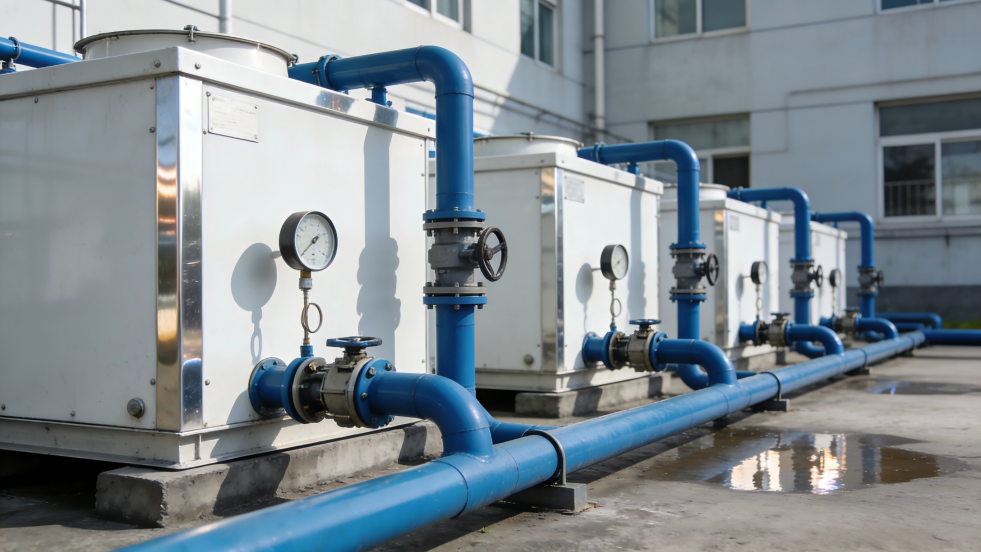
1. Optimize coagulation conditions: Water quality is dynamic, and the addition of coagulants should also be flexibly adjusted according to the water quality. It is recommended to control the dosage of sewage coagulation section in general hospitals at 200-400 mg/L, and increase or decrease according to the situation. By matching water quality values, it is easier to concentrate and treat excessive particle aggregation.
2. Strengthen precipitation separation: Slant plate precipitation is an effective method for efficient precipitation separation technology. As the concentration of suspended solids decreases, the disinfection unit's operating area also reduces some residual particulate matter, allowing for a greater probability of continued disinfection without causing a decline in effectiveness.
3. Pay attention to the application of membrane separation technology: For upgrading projects, traditional sedimentation tanks can be upgraded to membrane bioreactors or ultrafiltration units can be added. Membrane technology can achieve almost complete interception of particulate matter, completely eliminating the shielding effect of particulate matter from the source.
3、 UV collaborative disinfection: from individual combat to three-dimensional attack
Strengthening preprocessing can only be used as a mandatory means to increase and reduce particulate matter, and cannot completely remove all small particles. Technically, there is still no absolute zeroing method. Therefore, at the end of this unit, loading ultraviolet light and chlorine dioxide in synergy is the treasure trove for conquering the city.
As a physical disinfection method, ultraviolet disinfection can effectively address the problem of particle shielding with its penetrating power. Ultraviolet radiation targets the genetic material of microorganisms, inducing the formation of pyrimidine dimers and preventing their replication and expression, resulting in a direct effect. This transformation does not rely on the diffusion of oxidants, so it is equally effective against pathogens inside or on the surface of particles.
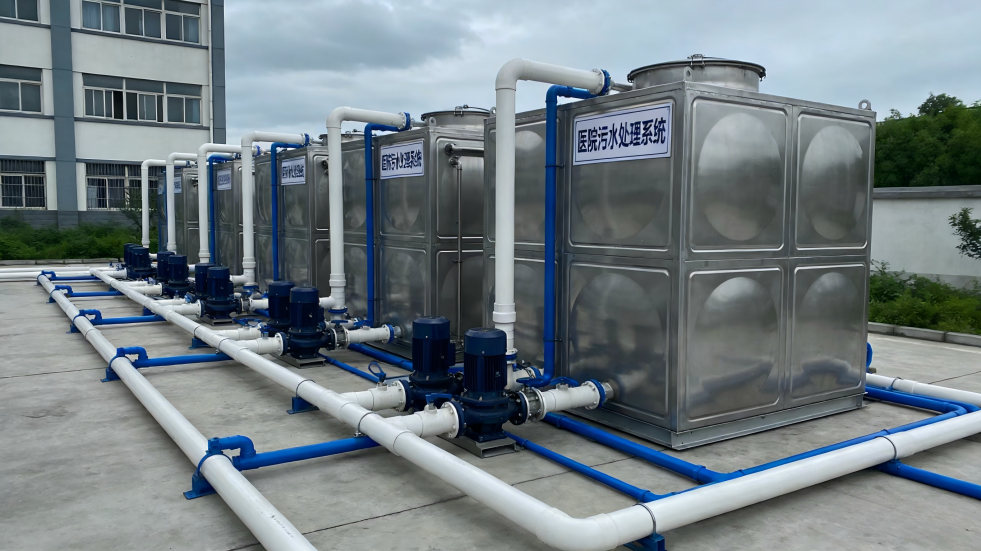
It is worth noting that the sequence of process combinations will affect the final effect. Compared to simultaneous addition, UV pre-treatment has more advantages in controlling the generation of disinfection by-products, which is particularly important for hospital sewage stations that are concerned about the risk of by-products.
4、 Practical suggestions for on-site operation
In response to the dilemma of meeting residual oxygen standards but exceeding fecal coliforms, it is recommended that on-site operators start investigating and optimizing from the following aspects:
The first step is to control the concentration of suspended solids in the preprocessing stage. If the concentration is too high, add coagulant and check for dead zones and short flows in the sedimentation tank.
The second step is to regularly check the status of the UV disinfection system, clean the quartz sleeve regularly, replace the lamp tube if necessary, and remember to set a monitoring device for real-time monitoring during UV disinfection.
The third step is to optimize the UV chlorine dioxide synergistic process by pre positioning the UV unit to reduce the amount of chlorine dioxide added and minimize by-products.
Finally, establish a multidimensional monitoring system. Setting residual chlorine, regularly testing multiple indicators such as fecal coliforms and suspended solids, and reporting disinfection interference factors in the process are convenient for comprehensive evaluation even if the problem is located.
The key to hospital sewage disinfection is problem-solving thinking. When encountering problems, it is necessary to implement them in various links of the system, gradually investigate and trace them, accurately identify the problem points, and optimize the disinfection methods. This is what disinfection masters often say about experience, which is the result of continuous optimization.

The tidal discharge of hospital outpatient sewage leads to frequent on-off of chlorine dioxide disinfection system, posing efficiency, equipment and safety hazards. Relying on five layers of protection to ensure operational safety, cooperating with operation and maintenance measures such as phased operation, encrypted maintenance, and optimized drug supply, adjusting start and stop times reasonably, improving sewage disinfection efficiency, and building a solid public health defense line.
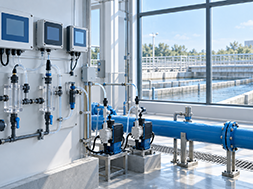
Xiuba chlorine dioxide can be used for advanced treatment of polluted water source. The front end pre oxidizes the odorant, iron and manganese, and the dosage is determined by test; The terminal disinfection shall comply with the requirements of the national standard to ensure the contact time and water margin. The product covers a variety of dosage forms and supporting equipment, which should be selected according to the national standard. Double dosing points are set, and the equipment is equipped with metering, monitoring and alarm functions to control the total dosage, monitor disinfection by-products, and ensure the water quality treatment effect by relying on detection test and whole process monitoring.
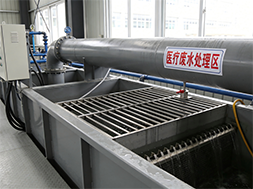
Regarding the control of hydrochloric acid and sodium chlorate raw materials for chlorine dioxide generators in hospital wastewater treatment, the quality requirements of raw materials are clearly defined in accordance with national standards such as GB28931-2024. On-site rapid acceptance can be carried out through visual inspection, odor identification, specific gravity and pH testing, and small-scale reaction. By implementing management measures such as raw material registration and sampling, separate storage, regular equipment cleaning, and monitoring of operating parameters, the disinfection effect can be stabilized, and cost reduction and efficiency improvement can be achieved.
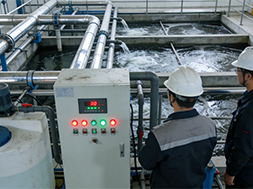
Hospital wastewater is prone to producing byproducts and residual resistant pathogens when disinfected alone. A chlorine dioxide-ozone-ultraviolet coupling process can be used for deep treatment. Chlorine dioxide is the main disinfection unit, ozone degrades recalcitrant pollutants, and ultraviolet light is used for final control. With the help of online monitoring, the reagents and energy consumption can be intelligently adjusted to balance treatment effect and cost. In the future, it will develop towards big data AI automatic control.
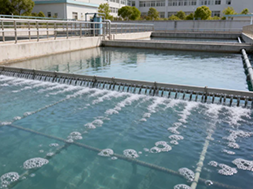
Sodium thiosulfate and other reducing substances in hospital wastewater may rapidly consume chlorine dioxide, leading to insufficient residual chlorine and reduced disinfection intensity in some areas. Solving this type of "disinfection gap" problem cannot rely solely on increasing the dosage. Instead, it requires a comprehensive disinfection assurance system built through measures such as source identification, homogenization adjustment, optimized mixing, rational dosage, upgraded monitoring, and supplementary disinfection.
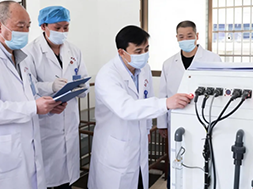
Chlorine dioxide kills bacteria through multi-target oxidation, and theoretically, it is unlikely to produce drug-resistant bacteria. However, long-term sublethal low-dose disinfection of wastewater systems can screen out resistant microorganisms, leading to bacterial succession. In such cases, it may be necessary to increase CT disinfection parameters to achieve the desired disinfection effect. The risk of increased microbial tolerance and the effectiveness of hospital wastewater disinfection can be mitigated by ensuring sufficient dosage and contact time, avoiding prolonged low-dose operation, combining UV/ozone disinfection, proper wastewater pretreatment, and regular monitoring of water quality microorganisms.
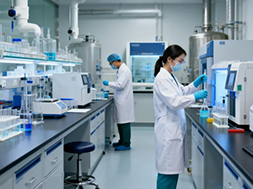
When chlorine dioxide is used to disinfect hospital wastewater, short-circuiting and disinfection dead zones can easily occur due to the short half-life of the agent. A three-stage mixing process, consisting of pipeline premixing, inlet enhanced mixing, and in-tank flow guidance, combined with an online intelligent control system and standardized equipment selection and daily operation and maintenance, can be used to achieve rapid and uniform distribution of chlorine dioxide in wastewater and ensure the disinfection effect of hospital wastewater.
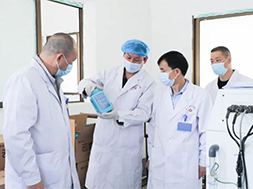
When hospital wastewater is disinfected with chlorine dioxide, pH directly affects the disinfection effect. The pH needs to be maintained within the range of 6.0–8.5. Water quality is controlled through monitoring, intelligent dosing, and coordinated regulation of upstream processes to ensure stable discharge compliance and save operating costs.
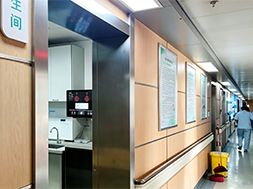
Excessive ammonia nitrogen in hospital wastewater stems from four main issues: pretreatment, biochemical processes, water volume, and process technology. This article provides a complete solution encompassing pretreatment, biochemical optimization, advanced treatment, and emergency nitrogen reduction, balancing stable compliance with operating costs, and simultaneously promoting solutions from chlorine dioxide disinfectant manufacturers.
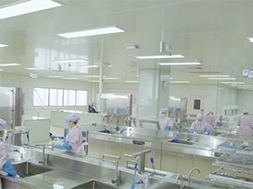
Abnormalities in hospital wastewater biochemical systems can lead to elevated COD and ammonia nitrogen levels, excessive consumption of chlorine dioxide causing disinfection failure, and posing a risk of pathogen leakage. This article introduces six emergency response measures and a corresponding long-term management plan to ensure wastewater meets discharge standards and safeguard public health and environmental safety.
Northeast of Huangshan Road and Chuangye Intersection, Small and Medium sized Enterprise Entrepreneurship Industrial Park, Shanwang Town, Linqu County, Weifang City, Shandong Province
Copyright © 2025 by Shandong Huashi Pharmaceutical Co., Ltd All Rights Reserved


 Language
 中文
中文 Русский
 Chlorine Dioxide Disinfectant Manufacturer


