Welcome to Our Factory for a Visit! Free customized disinfection solutions

“Mr. Wang, something is wrong with the flavor of this batch of yogurt. Several customers say they can detect a sharp odor similar to disinfectant…” The plant’s quality-control director frowned while holding the latest complaint report.
This was not the first similar complaint. After reviewing production timing, environmental-disinfection records, ventilation status, and the points at which product was exposed, workshop disinfection became one of the factors requiring closer investigation. Chlorine dioxide itself is not an “incorrect disinfectant”; the real issues are use concentration, disinfection timing, ventilation, product exposure, and whether conditions have been verified before production resumes.
Chlorine dioxide is a strong oxidizing disinfectant that can be used as part of hygiene control in food-production environments. At ambient conditions it is volatile and has a distinct irritating odor. If airborne chlorine dioxide has not fallen sufficiently after spraying or space disinfection, and exposed ingredients, intermediates, or filling operations are restarted too early, sensory quality may be affected. This deserves particular attention for flavor-sensitive products such as yogurt and dairy beverages.
Where Does the Off-Odor Come From? Identifying the Real Risk
Before solving the problem, the source of the odor must be described correctly. A disinfectant-like odor in yogurt does not mean that chlorate and all other chlorine-dioxide by-products volatilize into the product, nor should it simply be described as the product “absorbing disinfectant.” A more plausible pathway involves residual chlorine dioxide in air, residual liquid or condensate on surfaces, and contact or reaction between these oxidizing species and dairy ingredients or organic residues on equipment.
The risk can be understood from three main aspects:
First, chlorine dioxide itself is volatile. After space spraying or environmental disinfection, an excessive dose, inadequate air exchange, or premature restart may leave an irritating odor in the room. Chlorate and chlorite, however, are ionic by-products and should not be confused with volatile chlorine dioxide gas.
Second, yogurt and dairy beverages are predominantly aqueous systems but also contain proteins, fats, and numerous flavor compounds. The main issue is not a supposed “amphiphilic” property that makes chlorine dioxide dissolve equally in fat and water. Rather, chlorine dioxide is water-soluble and strongly oxidizing; when it contacts exposed product, wet equipment surfaces, or condensate, it may oxidize flavor-related compounds and alter sensory characteristics.
Third, the degree of product exposure strongly affects the risk. Closed raw-material tanks, storage vessels, and fully sealed finished products are generally far less exposed than open hoppers, open piping, unsealed intermediates, or product during filling. Therefore, the key control is preventing overlap in time and space between disinfection activities and exposed product.
Once the source of the off-odor is understood, the solution becomes clearer: the objective is not simply to stop using chlorine dioxide, but to place dose, contact time, ventilation, and product isolation within a validated sanitation process.
Root-Cause Control: Reduce Off-Odor Risk Through the Disinfection Process
The most effective approach is not to mask the odor with another flavor, but to reduce unnecessary exposure while maintaining the required disinfection performance by controlling dosing, scheduling, and restart conditions.
1. Optimize the disinfection process and workflow
Environmental spraying or space disinfection should, as far as possible, be scheduled when no product is exposed and normal production is not underway. A validated interval should be established before the next production run. A sequence such as after-shift disinfection, adequate ventilation, confirmation that restart conditions have been met, and only then resuming production is more reliable than specifying a universal waiting period. The actual interval should be determined from room volume, application method, dose, temperature and humidity, HVAC air-exchange capacity, and site-specific monitoring or validation.
If dry fog, ultra-low-volume spraying, or another space-disinfection system is used, operating parameters should follow the equipment instructions and process-validation results. Droplet size, coverage, and disinfectant-use efficiency vary among systems, so it is not technically sound to claim that droplets are always below 10 micrometers or that using dry fog automatically allows a lower disinfectant concentration. The appropriate dose, contact time, and ventilation/re-entry conditions should be validated without compromising microbiological control and while avoiding unnecessary residues or condensation on food, food-contact surfaces, or equipment interiors.
Block the Pathway: Prevent Residual Disinfectant from Contacting Product
If chlorine dioxide continues to be used for environmental disinfection, ventilation, product closure, and pre-start verification should be part of routine hygiene management. Current food-production hygiene management requires systematic control of cleaning and disinfection, air conditions, facilities and equipment, and cross-contamination risks. Dairy plants should also apply the relevant good manufacturing practice requirements for zoning and sanitation.
1. Strengthen ventilation and restart verification
After disinfection and the required contact period, mechanical exhaust or HVAC fresh-air exchange should be operated in accordance with a validated procedure so that residual chlorine dioxide is progressively removed. Ventilation should not be specified mechanically as “at least one to two hours”; it should be determined from the room’s air-exchange capacity, disinfectant dose, and actual verification results. Before production resumes, there should be no abnormal irritating odor, and where the company’s risk assessment requires it, suitable air monitoring should confirm compliance with applicable occupational-hygiene and internal release criteria.
During production, air supply and return, pressure differentials, and air-change rates should match the hygienic zoning and process design. Air movement should not carry contamination from higher-risk areas toward zones where exposed product requires greater protection. Specific parameters should follow the plant design, applicable dairy good-manufacturing-practice requirements, and the company’s validated air-control plan rather than relying on a single simplified airflow statement.
2. Physically isolate product and equipment
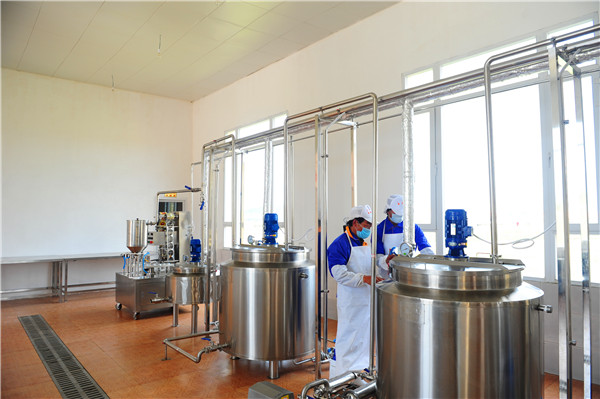
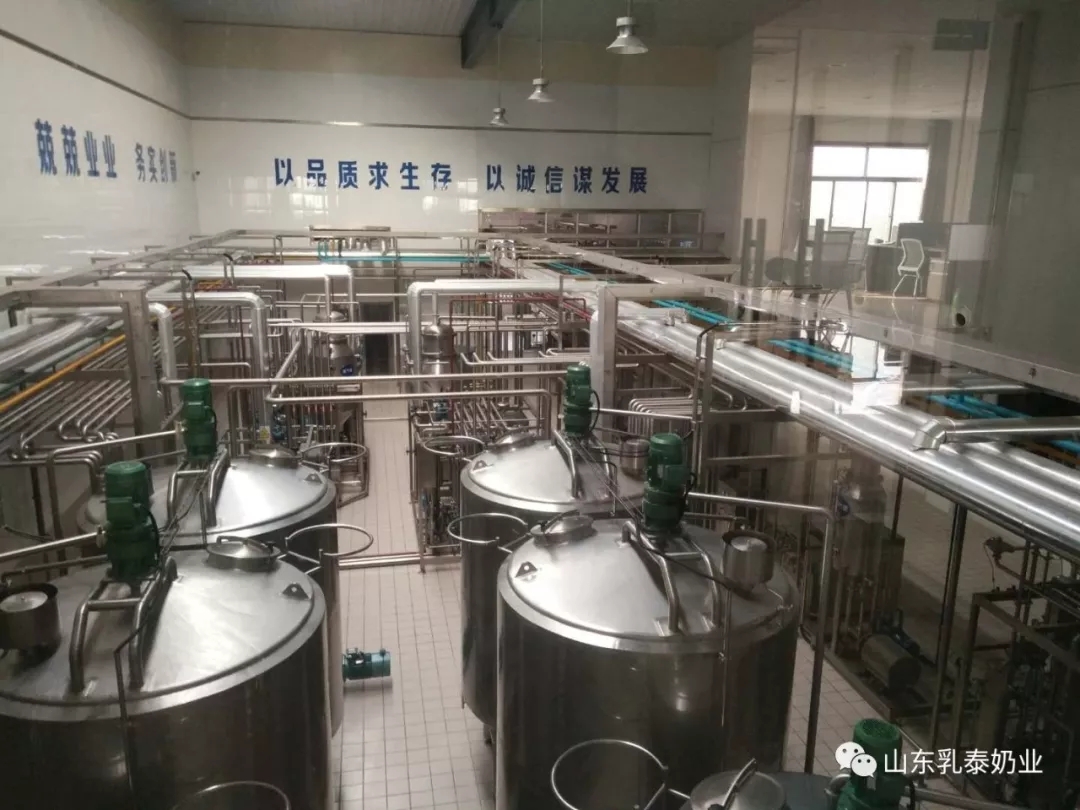
During environmental disinfection, exposure of raw materials, intermediates, and unsealed product should be avoided as far as possible. Raw-material tanks, blending tanks, fermentation vessels, buffer tanks, and associated piping should remain closed or sealed as required by the process, and packaged products should remain fully sealed. Food-contact equipment should also pass the established cleaning, rinsing, or release procedure before being returned to production.
Where an open point genuinely cannot be fully closed, preference should be given to dedicated hygienic covers or food-grade protective materials that have been assessed as suitable for the food-production environment. The covering itself must not introduce foreign-matter or microbiological contamination. Improvised use of ordinary household plastic film or unverified packaging material is not recommended as a standard practice.
Corrective Action: What to Do If an Off-Odor Has Already Appeared
1. Correct the environment first, then decide whether production can resume
If a clear irritating chlorine-dioxide odor is present in the workshop, first stop production activities that could expose product, identify the disinfectant source and dosing status, and increase ventilation in accordance with a validated procedure; air and relevant surfaces should be tested where necessary. Treating ozone as a routine “deodorizing” measure is not sufficiently robust: ozone is itself a strong oxidant and can further oxidize chlorite in chlorine-dioxide systems. Therefore, ozone should not be introduced solely to remove chlorine-dioxide odor unless a specific risk assessment and validated process support its use.
If the facility needs adsorption or air-cleaning assistance, an engineered and validated ventilation/filtration solution, such as an appropriate activated-carbon filtration unit, is preferable to simply placing loose adsorption packs around the workshop. Auxiliary air-cleaning measures cannot replace source control and adequate ventilation.
2. Product disposition: do not use flavor masking as a substitute for quality decisions
If finished yogurt or dairy beverages already show an abnormal disinfectant-like odor, the affected lot should be placed on hold while the cause is investigated under the company’s quality procedures. Sensory assessment and, where needed, physicochemical evaluation should be completed before deciding on release, rework, or disposal. Adding flavoring simply to mask an abnormal odor should not be a routine response to suspected disinfectant carryover or a process deviation, because it does not remove the cause and may create new formulation, labeling, and quality-control issues.
Summary and Recommended Actions
To reduce the risk that chlorine-dioxide environmental disinfection affects yogurt flavor, disinfection, ventilation, isolation, and production release should be managed as one integrated process rather than as separate measures.
First, redesign the handoff between disinfection and production. Establish a closed-loop sequence of “disinfect with no exposed product present - complete the required contact time - ventilate adequately - verify pre-start conditions - resume production.” The actual waiting period should be based on room conditions and validation rather than on an unsupported fixed duration.
Second, select and validate disinfection equipment appropriately. Dry-fog and other space-disinfection systems may be useful options, but any improvement in coverage, chemical consumption, or restart time should be demonstrated through on-site validation rather than assumed from the equipment category alone.
Third, strengthen personnel and operational management. Employees should clearly understand requirements for product closure, equipment status, ventilation switching, abnormal-condition reporting, and production restart so that disinfection does not overlap with exposed product because of poor operational coordination.
Fourth, establish a verifiable release mechanism. Sensory checks may be used as a supporting observation, but “no odor detected” should not be the sole basis for declaring the environment safe, and this check should not automatically be designated a Critical Control Point (CCP) without a HACCP hazard analysis. Under Codex HACCP principles, a CCP is determined through hazard analysis for a significant food-safety hazard and must have monitorable critical limits. For restart after workshop disinfection, controls are often better managed through prerequisite programs, sanitation standard operating procedures, or other control measures identified by the hazard analysis, with air monitoring and records used where necessary.
Both food safety and product flavor depend on process control. By optimizing chlorine-dioxide use conditions, providing adequate ventilation, isolating product, and establishing validated production-restart criteria, a plant can substantially reduce the risk of adverse flavor effects in yogurt and dairy beverages. If an abnormality occurs, the priority should be root-cause investigation and product disposition rather than masking the odor.
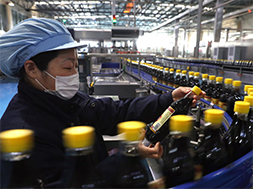
Biofilms easily grow in the pipes and tanks used in soy sauce and vinegar production. These biofilms continuously contaminate materials, leading to quality problems such as product spoilage and tank swelling. The microorganisms within the biofilm have strong resistance to disinfection. Chlorine dioxide, with its strong penetrating power, ability to target and destroy biofilm components, kill various microorganisms, and low likelihood of developing resistance, can be used for disinfection of pipes, fermenters, storage tanks, and workshop environments. It removes and inhibits biofilms, ensuring the quality of condiments produced.
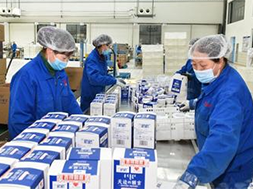
Using chlorine dioxide for disinfection in yogurt workshops can easily produce an unpleasant odor from the disinfectant solution, which can be absorbed by the yogurt and lead to customer complaints. Disinfection should be scheduled after shifts, with thorough ventilation before production resumes. Proper sealing and protection of materials should be ensured, and ozone and activated carbon should be used in conjunction to remove environmental odors. Odor detection in the workshop should be incorporated into management procedures to prevent impact on product flavor.
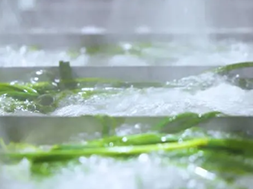
Chlorine dioxide is classified as an A1-level safe disinfectant, permitted for use in fruit and vegetable cleaning according to national standards. It is easily decomposed, and when used compliantly, it leaves low residue after rinsing, making it safe for human health. High-concentration, prolonged soaking can damage the color and flavor of fruits and vegetables; this can be avoided by controlling usage conditions. It also inhibits bacteria and ethylene production, extending shelf life. Use must follow standards, controlling concentration and time, and thorough rinsing after treatment is essential. It can also be combined with other preservation technologies.
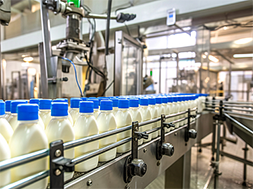
During CIP cleaning of dairy production pipelines, protein and fat residues consume chlorine dioxide, making it difficult to kill heat-resistant spore-forming bacteria and causing contamination. It is essential to adhere to the principle of cleaning before disinfection, removing organic matter through alkaline and enzymatic washing, optimizing disinfection parameters and monitoring concentrations online, controlling biofilm growth, and avoiding simply increasing the amount of disinfectant used.
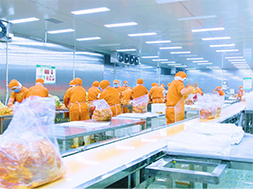
Mold is easy to pollute the food workshop and produce toxins. Chlorine dioxide can kill mold from the air, object surface, personnel and material water. This paper introduces the use methods, concentration parameters and safe operation points of various scenarios. Standardized use can prevent and control mold in the workshop and ensure food safety.
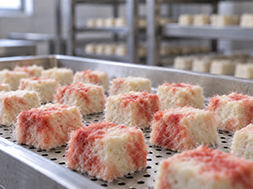
The reddish color of fermented tofu cannot be determined solely by its appearance; sampling and testing are necessary, and the abnormal product must be isolated. Relying solely on disinfectants is insufficient; equipment and the workshop environment must be thoroughly investigated. Air disinfection requires unmanned operation and material isolation. Disinfectants should be used according to specifications, and problems should be identified through a combination of production records and testing.

AB cleaning agents in food factories are prone to producing odor residues; Chlorine dioxide disinfectant can sterilize and deodorize without harmful residues. It can be diluted and used for disinfection of workshop equipment and water bodies, with matching ratios and safety operation requirements.
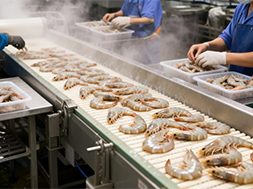
Chlorine dioxide disinfection in food production will produce harmful residues, and the water consumption of traditional large water washing is serious. Four measures can be taken to save water and reduce waste on the basis of ensuring food safety, so as to help enterprises achieve multiple benefits and win-win results.
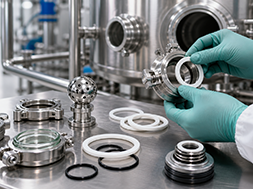
While switching from sodium hypochlorite to chlorine dioxide disinfection offers advantages such as sterilization, biofilm removal, and fewer disinfection byproducts, the strong oxidizing properties of chlorine dioxide necessitate careful consideration of production line material compatibility: 316L stainless steel should be prioritized for piping, and fluororubber or polytetrafluoroethylene (PTFE) should be used for seals, while also considering the suitability of accessories such as sight glasses and spray nozzles. The switch can be smoothly completed in three steps: establishing material records, conducting a 72-hour immersion test, and carrying out small-scale trial runs and inspections, thus preventing equipment corrosion and damage.
Northeast of Huangshan Road and Chuangye Intersection, Small and Medium sized Enterprise Entrepreneurship Industrial Park, Shanwang Town, Linqu County, Weifang City, Shandong Province
Copyright © 2025 by Shandong Huashi Pharmaceutical Co., Ltd All Rights Reserved


 Language
 中文
 Русский
 Chlorine Dioxide Disinfectant Manufacturer