Welcome to Our Factory for a Visit! Free customized disinfection solutions

In food production, microbiological control of process water is directly related to food safety. If disinfection of production water fails, microorganisms may affect product quality and safety through raw-material washing, equipment contact, or process-water applications. Therefore, food manufacturers should not focus only on disinfectant dosage; they should also determine an appropriate contact time scientifically and verify the actual disinfection performance. As a commonly used oxidizing disinfectant, how should the contact time of chlorine dioxide be determined? The following discussion looks at this question from a practical process-control perspective.
Compared with conventional chlorine-based disinfectants, chlorine dioxide has a different oxidation and disinfection mechanism. Its working concentration should be determined according to the specific use of the water, water quality, target microorganisms, and a validated disinfection procedure. A single fixed concentration should not be treated as a universal recommendation for all food-processing water applications.
First, chlorine dioxide can oxidize proteins, sulfur-containing amino acids, and other critical cellular components of microorganisms, disrupting cellular metabolism and structural integrity and thereby contributing to microbial inactivation.
Second, chlorine dioxide is a multi-target oxidizing agent that can act on several critical microbial structures. More resistant microorganisms, such as bacterial spores, generally require more demanding concentration-time conditions. The actual inactivation effect should therefore be confirmed through appropriate microbiological validation rather than inferred from isolated laboratory claims such as “ATPase inactivation within 30 seconds” or “99.99% spore inactivation” without clearly defined operating conditions.
Third, chlorine dioxide disinfection performance is relatively less affected by changes in pH than free chlorine. However, the decay of the chlorine dioxide residual is still influenced by water quality, temperature, initial concentration, organic load, and the contact environment. It should therefore not be assumed that a chlorine dioxide residual can always be maintained for a fixed period of time.
Water quality directly affects the effectiveness of chlorine dioxide disinfection. In general, lower water temperatures can reduce chlorine dioxide reaction rates and microbial inactivation kinetics. As a result, colder conditions may require a higher CT value. The actual degree of adjustment should be determined according to water temperature, the target microorganism, and validated process data.
Organic matter and other reducing substances in the water are also important. A higher organic load can increase chlorine dioxide demand and reduce the amount of active disinfectant available for microbial inactivation. In such situations, the appropriate approach is to improve pretreatment where necessary, determine the actual oxidant demand, and revalidate the CT conditions rather than mechanically extending the contact time based on a COD threshold.
Compared with free chlorine, chlorine dioxide is relatively less sensitive to pH changes and can maintain useful disinfection performance across a broader pH range. However, actual microbial inactivation under different pH conditions should still be evaluated together with the target microorganism, water temperature, water quality, and contact conditions. A statement such as “90% disinfection efficiency is maintained at pH 8.5” should not be used as a universal conclusion without identifying the microorganism and test conditions.
Different microorganisms show different levels of resistance to chlorine dioxide. In general, vegetative bacteria are relatively easier to inactivate, while certain viruses, fungi, and bacterial spores may require more stringent CT conditions. It is therefore inappropriate to assign fixed contact times such as 15, 20, 25, or 30 minutes to broad categories of microorganisms.
The appropriate contact time should be determined by considering the target microorganism, the actual chlorine dioxide concentration, water temperature, water quality, organic load, and the required level of inactivation. Actual performance should also be confirmed through microbiological testing and process validation rather than relying solely on theoretical contact-time calculations.
To improve the stability of chlorine dioxide dosing, food manufacturers can install an online chlorine dioxide monitoring system according to their actual process conditions.
The monitoring target should not be fixed at one universal concentration range. Instead, the control range should be established according to the specific use of the water, raw-water quality, target microorganisms, validated CT conditions, applicable standards, and the plant’s hygiene-control requirements.
Alarm limits and automatic dosing compensation ranges should also be set according to instrument accuracy, system response time, changes in flow rate, and the process-control objective. These limits should be verified during commissioning rather than applying a universal deviation such as ±0.2 mg/L.
There is also considerable room for optimization in the design of contact systems.
Pipeline reactors or other contact facilities should be sized according to design flow and the required effective contact time. The basic relationship is:
Contact time = effective volume ÷ actual flow rate
Therefore, a statement such as “a serpentine pipeline longer than 15 meters guarantees 30 minutes of contact time” is not technically valid.
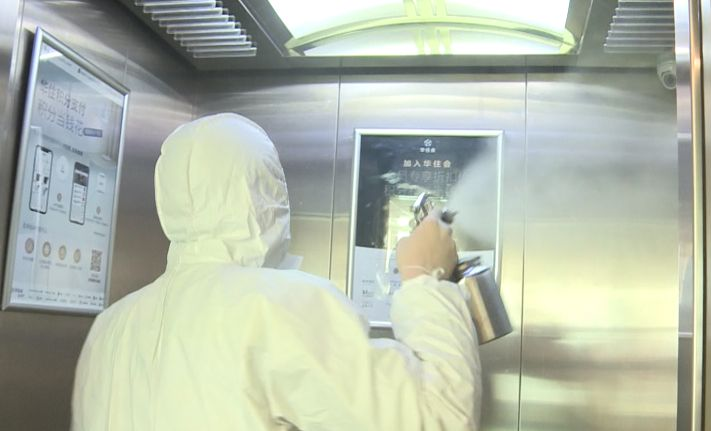
In actual engineering design, pipe diameter, flow rate, short-circuiting, mixing conditions, and hydraulic behavior must all be considered. A contact tank can be designed with multiple chambers and baffles to improve hydraulic performance, reduce short-circuiting, and make the effective contact time closer to the design target, thereby improving the uniformity of chlorine dioxide contact with the water.
When an unexpected microbiological problem occurs, a universal “high concentration, short contact time” emergency parameter should not be applied automatically.
A more appropriate response is to first control the contamination source, isolate the affected water or production system, determine the target microorganism and the extent of contamination, and then adjust the chlorine dioxide dosage and contact time according to a validated emergency disinfection procedure.
Where necessary, the chlorine dioxide dosage may be increased, but the actual concentration and contact time must be determined according to water quality, the target microorganism, and plant-specific validation data. A fixed emergency condition such as 2.0 mg/L for 20 minutes should not be presented as a universal solution for all food plants.
When the chlorine dioxide dosage is increased, the plant should pay particular attention to chlorine dioxide residuals and relevant transformation products such as chlorite and chlorate, and should confirm that treated water meets applicable microbiological and water-quality requirements. Trihalomethanes should not be treated as the primary by-product concern of a chlorine dioxide process.
With the development of automation and the Internet of Things, food-industry disinfection systems are gradually moving toward digital and more refined process control.
Automated systems can use data such as flow rate, water temperature, pH, raw-water quality, chlorine dioxide dosage, and online chlorine dioxide residual measurements to dynamically optimize the dosing process.
The CT value, meaning concentration multiplied by time, is an important parameter for the design and operation of disinfection processes. However, CT should not be treated as proof of final disinfection compliance.
The final disinfection result should still be verified through microbiological monitoring and relevant water-quality indicators. Food-processing water should not be considered safe solely because a theoretical CT value has been achieved.
In the future, companies may also use historical operating data to analyze trends in water quality and disinfection performance, supporting dose optimization and early warning of abnormal conditions. However, “AI automatically adjusting contact time” should not be presented as a standard configuration that all food plants can currently implement.
In routine production, 30 minutes should not be treated as a universal contact time for all food-processing water. A more appropriate approach is to establish a validated CT control range based on the specific use of the water, water quality, actual chlorine dioxide concentration, water temperature, and target microorganisms.
Food plants should first distinguish between different water-use scenarios. Ingredient water, process water that directly contacts food, raw-material washing water, equipment cleaning water, CIP final-rinse water, and cooling water may differ in hygiene requirements, chlorine dioxide concentration, contact time, and residual-control requirements. They should not automatically use the same operating parameters.
For equipment, piping, and critical food-contact surfaces, monitoring plans should be established according to hygiene risk. Where appropriate, validated methods such as microbiological swabbing or ATP monitoring can be used for trend analysis. If hygiene monitoring identifies an abnormality, the contamination source should first be investigated and necessary cleaning completed before disinfection is carried out according to a validated corrective-action procedure. An abnormal test result should not automatically trigger indiscriminate shock disinfection.
Monitoring instruments should be calibrated or verified periodically according to the manufacturer’s requirements and the company’s metrology-management system rather than according to a universal monthly schedule.
A complete disinfection operation record should also be maintained to ensure continuous and traceable process management. Records should include key operating parameters such as actual treatment flow, water temperature, pH, chlorine dioxide dosage, chlorine dioxide residual, and effective contact time.
In addition, appropriate microbiological test results and relevant water-quality indicators should be recorded according to the specific use of the water and the associated hygiene risk. This allows equipment-operation data, disinfection-process data, and final verification results to be linked together, providing a reliable basis for investigation, trend analysis, and process optimization.
As food-safety requirements become increasingly stringent, the real objective is not to memorize a fixed “time code,” but to understand the relationship among chlorine dioxide concentration, contact time, water quality, and target microorganisms.
Thirty minutes may serve as a design reference or specific process requirement under certain conditions, but it should never be used independently of chlorine dioxide concentration, water temperature, water quality, and the target microorganism.
For food manufacturers, a more reliable approach is to establish validated CT conditions according to the actual water-use scenario and then confirm the final disinfection performance through microbiological and water-quality monitoring.
Only by integrating dosing concentration, effective contact time, online monitoring, and final verification can chlorine dioxide disinfection become a stable and controllable part of a food plant’s water-hygiene management system.
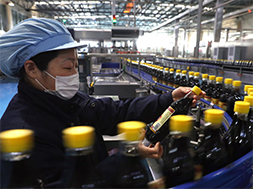
Biofilms easily grow in the pipes and tanks used in soy sauce and vinegar production. These biofilms continuously contaminate materials, leading to quality problems such as product spoilage and tank swelling. The microorganisms within the biofilm have strong resistance to disinfection. Chlorine dioxide, with its strong penetrating power, ability to target and destroy biofilm components, kill various microorganisms, and low likelihood of developing resistance, can be used for disinfection of pipes, fermenters, storage tanks, and workshop environments. It removes and inhibits biofilms, ensuring the quality of condiments produced.
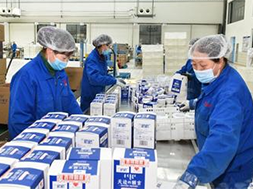
Using chlorine dioxide for disinfection in yogurt workshops can easily produce an unpleasant odor from the disinfectant solution, which can be absorbed by the yogurt and lead to customer complaints. Disinfection should be scheduled after shifts, with thorough ventilation before production resumes. Proper sealing and protection of materials should be ensured, and ozone and activated carbon should be used in conjunction to remove environmental odors. Odor detection in the workshop should be incorporated into management procedures to prevent impact on product flavor.
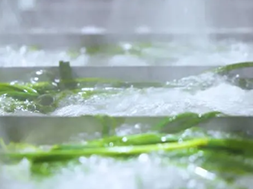
Chlorine dioxide is classified as an A1-level safe disinfectant, permitted for use in fruit and vegetable cleaning according to national standards. It is easily decomposed, and when used compliantly, it leaves low residue after rinsing, making it safe for human health. High-concentration, prolonged soaking can damage the color and flavor of fruits and vegetables; this can be avoided by controlling usage conditions. It also inhibits bacteria and ethylene production, extending shelf life. Use must follow standards, controlling concentration and time, and thorough rinsing after treatment is essential. It can also be combined with other preservation technologies.
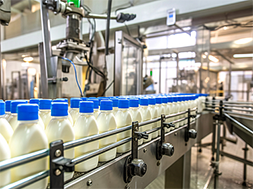
During CIP cleaning of dairy production pipelines, protein and fat residues consume chlorine dioxide, making it difficult to kill heat-resistant spore-forming bacteria and causing contamination. It is essential to adhere to the principle of cleaning before disinfection, removing organic matter through alkaline and enzymatic washing, optimizing disinfection parameters and monitoring concentrations online, controlling biofilm growth, and avoiding simply increasing the amount of disinfectant used.
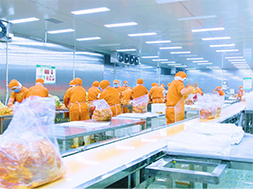
Mold is easy to pollute the food workshop and produce toxins. Chlorine dioxide can kill mold from the air, object surface, personnel and material water. This paper introduces the use methods, concentration parameters and safe operation points of various scenarios. Standardized use can prevent and control mold in the workshop and ensure food safety.
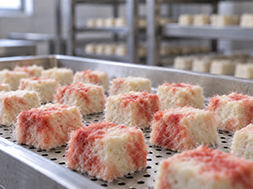
The reddish color of fermented tofu cannot be determined solely by its appearance; sampling and testing are necessary, and the abnormal product must be isolated. Relying solely on disinfectants is insufficient; equipment and the workshop environment must be thoroughly investigated. Air disinfection requires unmanned operation and material isolation. Disinfectants should be used according to specifications, and problems should be identified through a combination of production records and testing.
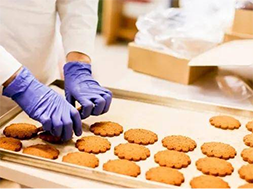
AB cleaning agents in food factories are prone to producing odor residues; Chlorine dioxide disinfectant can sterilize and deodorize without harmful residues. It can be diluted and used for disinfection of workshop equipment and water bodies, with matching ratios and safety operation requirements.
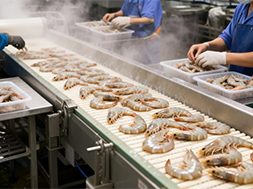
Chlorine dioxide disinfection in food production will produce harmful residues, and the water consumption of traditional large water washing is serious. Four measures can be taken to save water and reduce waste on the basis of ensuring food safety, so as to help enterprises achieve multiple benefits and win-win results.
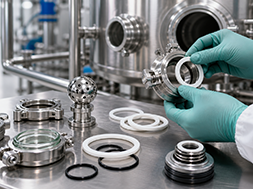
While switching from sodium hypochlorite to chlorine dioxide disinfection offers advantages such as sterilization, biofilm removal, and fewer disinfection byproducts, the strong oxidizing properties of chlorine dioxide necessitate careful consideration of production line material compatibility: 316L stainless steel should be prioritized for piping, and fluororubber or polytetrafluoroethylene (PTFE) should be used for seals, while also considering the suitability of accessories such as sight glasses and spray nozzles. The switch can be smoothly completed in three steps: establishing material records, conducting a 72-hour immersion test, and carrying out small-scale trial runs and inspections, thus preventing equipment corrosion and damage.
Northeast of Huangshan Road and Chuangye Intersection, Small and Medium sized Enterprise Entrepreneurship Industrial Park, Shanwang Town, Linqu County, Weifang City, Shandong Province
Copyright © 2025 by Shandong Huashi Pharmaceutical Co., Ltd All Rights Reserved


 Language
 中文
 Русский
 Chlorine Dioxide Disinfectant Manufacturer