Welcome to Our Factory for a Visit! Free customized disinfection solutions

In early March, a major food recall occurred in the United States: 37 million pounds of frozen chicken-and-rice meals and related products were recalled. The central issue in this incident was the discovery of foreign matter such as "glass fragment residues" in the products. It was described as one of the largest single food recalls worldwide and an event that food-industry professionals should not ignore.
For a serious food-hygiene incident like this, the key for food professionals is to review the event, trace the source, identify the problem, and determine how to solve it. The following sections systematically discuss how to manage the risk of secondary microbial contamination associated with foreign matter entering food, how such incidents can be prevented, and what supplementary corrective measures can be taken.
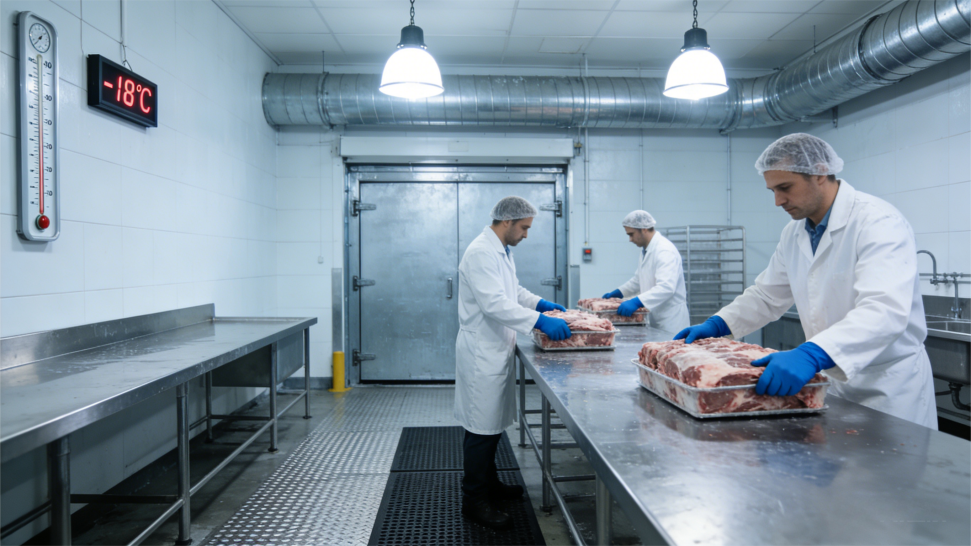
Physical Foreign Matter: The Visible "Tip of the Iceberg"
When fragments of glass, metal, plastic, or other materials enter food, even extremely small pieces can constitute a serious food-safety incident. If consumed, they may cause anything from skin or oral injuries to gastrointestinal perforation. More importantly, they may also trigger a less visible chain of secondary risks:
First, foreign matter may carry microbial contamination. Glass fragments themselves are not sterile. Foreign matter often enters during production activities in working areas where contamination sources may be dispersed. Once contaminated foreign matter enters a hygienically controlled food-production area or the food itself, it effectively carries an external contamination source into the product.
Second, production interruptions may cause loss of temperature control. After a foreign-matter incident, the production line usually has to stop for emergency inspection and cleaning. During this period, semi-finished products may remain outside controlled-temperature conditions for an extended time, and temperature fluctuations can create a window for microbial growth.
Third, damaged equipment may create hygienic dead zones. Broken glass may indicate damage to equipment or facilities. Damaged areas can become concealed sites where microorganisms accumulate. Even tiny cracks may harbor pathogenic bacteria and continue contaminating products during subsequent production.
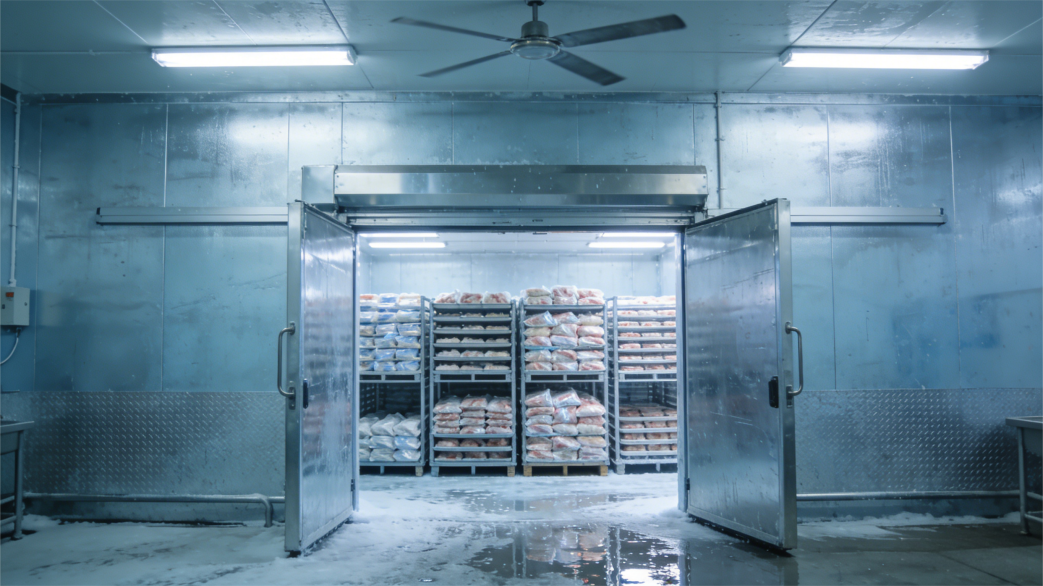
Secondary Contamination: The "Undercurrent" of Microbial Risk
In addition to the physical hazard, the 37-million-pound recall also raises a more difficult concern: the possibility that the production environment may have been contaminated at the same time, affecting the safety of subsequent production.
In the frozen-food industry in particular, microbial risk is a persistent threat, and temperature has no effect on it. One especially troublesome pathogen, Listeria, is among the microorganisms that the frozen-food industry must watch most carefully. It can remain active even under refrigerated low-temperature conditions. This means that even if a product is frozen, contamination with Listeria before freezing can still leave the product with a serious microbial contamination problem. The same concern applies to Salmonella and Staphylococcus aureus. Once frozen food becomes microbiologically contaminated, the direct economic loss can be substantial.
After a foreign-matter incident, a production line undergoes an unplanned interruption, and cleaning and disinfection procedures may be difficult to carry out exactly according to the standard process. Under time pressure, operators may simplify cleaning steps or overlook thorough disinfection of concealed areas. This pressure to "rush production" can create conditions for secondary microbial contamination.

Chlorine Dioxide Disinfection: A Systematic Solution
Foreign-matter control is not limited to physical environmental control; it also requires deeper microbial control. With chlorine dioxide as a core control technology, its disinfection advantages can be applied from individual points to entire lines and spaces to build a practical safety barrier.
First, comprehensive disinfection of the production environment. By using the diffusion characteristics of gaseous chlorine dioxide, it can spread across equipment surfaces and corners of the workshop. After waiting for more than 30 min, production can resume with confidence. Unlike ultraviolet light or ozone, it is less affected by shielding, and it can reach areas that conventional cleaning may not access, providing broad control of bacterial spores and mold spores.
Second, deep treatment of equipment surfaces. Foreign matter such as glass fragments may cause microscopic damage to equipment surfaces that cannot be seen with the naked eye. Chlorine dioxide solution has low corrosiveness and high penetration capability and can be used to treat equipment surfaces and small cracks, killing microorganisms attached to damaged areas. Its mechanism involves oxidizing proteins and enzyme systems within microbial cells; it does not induce drug resistance, and its long-term effectiveness remains stable.
Third, protection of production water and ice-making water. In frozen-food processing, water safety directly affects the microbiological indicators of finished products. Chlorine dioxide is used as a drinking-water disinfectant and has been included in food-safety standards in multiple countries. During recovery after a foreign-matter incident, shock disinfection of the production-water system can rapidly restore water-quality safety.
Fourth, rapid treatment of personnel and tools. Investigation of foreign matter often involves many personnel and frequent cross-use of tools. Chlorine dioxide disinfectant solution has low skin irritation and can be used for hand disinfection; after tools are disinfected by immersion, they do not require large volumes of rinse water, helping shorten processing time and reduce the risk of secondary contamination.
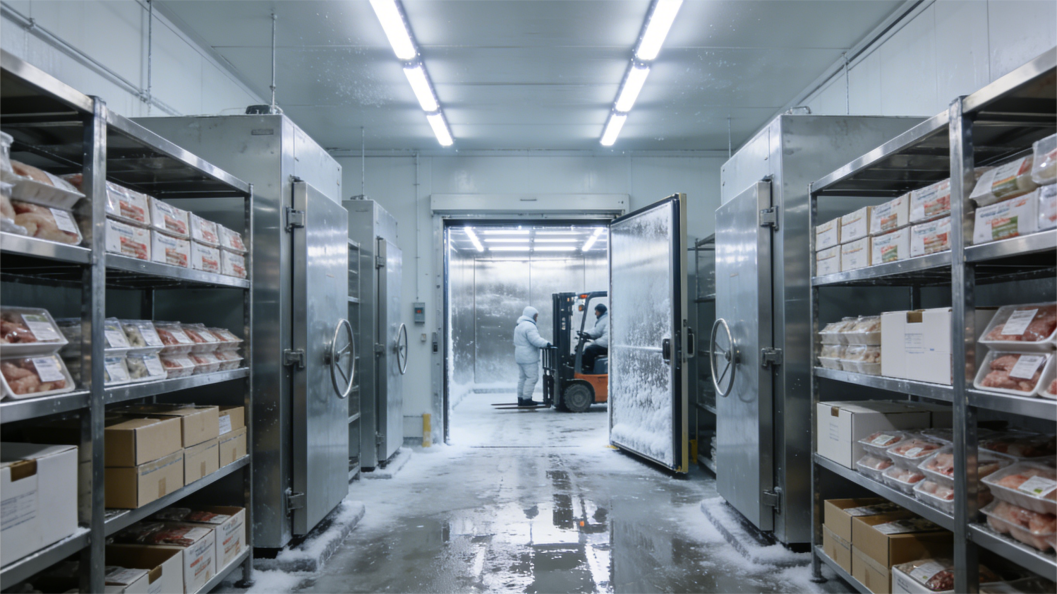
For food manufacturers seeking to keep production environments clean and free of contamination sources, two priorities are essential. First, attention should be paid to the hygiene of environmental equipment, work surfaces and workshop personnel, as well as to the hygienic compliance of food raw materials. Foreign-matter detection should be properly verified at regular intervals, and equipment-integrity inspection mechanisms should be implemented. Second, companies should establish microbial-risk response plans for foreign-matter incidents, production-line disinfection procedures, and safety testing and verification measures. Only by coordinating both the physical safeguards and the supporting inspection systems can product safety be effectively protected.
As a supplier of chlorine dioxide disinfectant products and services for more than 30 years, XIUBA has served thousands of food-processing enterprises across meat products, aquatic products, frozen foods, fruit and vegetable processing, and many other sectors. XIUBA therefore has extensive field experience in controlling microbial risks associated with foreign-matter incidents—from disinfection-plan design and optimization of concentration and contact time to effectiveness verification and SOP development—making disinfection services more concrete and systematic. Only when XIUBA disinfection solutions are applied in real operating conditions can they truly address food-safety problems faced by food professionals. This is XIUBA's service philosophy and its core commitment to responsible support for food manufacturers.
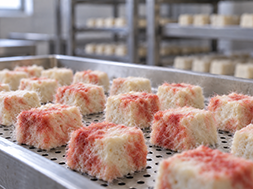
The reddish color of fermented tofu cannot be determined solely by its appearance; sampling and testing are necessary, and the abnormal product must be isolated. Relying solely on disinfectants is insufficient; equipment and the workshop environment must be thoroughly investigated. Air disinfection requires unmanned operation and material isolation. Disinfectants should be used according to specifications, and problems should be identified through a combination of production records and testing.

AB cleaning agents in food factories are prone to producing odor residues; Chlorine dioxide disinfectant can sterilize and deodorize without harmful residues. It can be diluted and used for disinfection of workshop equipment and water bodies, with matching ratios and safety operation requirements.
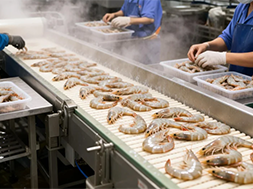
Chlorine dioxide disinfection in food production will produce harmful residues, and the water consumption of traditional large water washing is serious. Four measures can be taken to save water and reduce waste on the basis of ensuring food safety, so as to help enterprises achieve multiple benefits and win-win results.
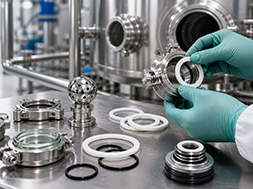
While switching from sodium hypochlorite to chlorine dioxide disinfection offers advantages such as sterilization, biofilm removal, and fewer disinfection byproducts, the strong oxidizing properties of chlorine dioxide necessitate careful consideration of production line material compatibility: 316L stainless steel should be prioritized for piping, and fluororubber or polytetrafluoroethylene (PTFE) should be used for seals, while also considering the suitability of accessories such as sight glasses and spray nozzles. The switch can be smoothly completed in three steps: establishing material records, conducting a 72-hour immersion test, and carrying out small-scale trial runs and inspections, thus preventing equipment corrosion and damage.
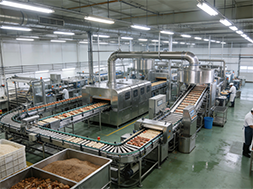
Traditional chlorine dioxide disinfection in food factories is time-consuming and reduces production capacity. Addressing pain points such as solution preparation, spraying, and ventilation monitoring, the process can be optimized in stages through equipment upgrades, zoned disinfection, scientific control of disinfection parameters, and accelerated ventilation monitoring. This phased process optimization, while ensuring safety and compliance, can shorten disinfection time by 30-50%, freeing up production capacity and improving hygiene management.
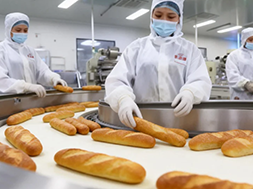
Powdered milk powder and starch dust in the powdered food workshop will absorb and consume chlorine dioxide dry fog, reducing the disinfection effect. It can solve the disinfection problems caused by dust and ensure food safety by reducing dust before disinfection, regulating the particle size of dry fog, pulse releasing agent, optimizing the air flow in the workshop, and matching other disinfection methods.
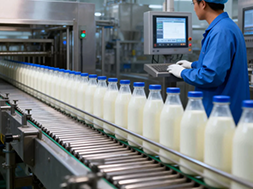
Chlorine dioxide is widely used for disinfection in water supply and food supply chains, but current issues exist regarding standards, procedures, and residue monitoring. It is necessary to standardize operating procedures, establish a comprehensive residue monitoring system, and improve risk warning and emergency response mechanisms to ensure disinfection safety from water treatment plant to table.

When using chlorine dioxide for disinfection of chocolate equipment, it is necessary to control the residue of the agent to avoid damaging the flavor and quality of the product. The preparation of the agent should be standardized, the disinfection and rinsing process optimized, and residue compliance verified through multiple methods. Since chocolate is a low-moisture food, a customized cleaning plan needs to be developed based on the specific equipment to balance safety and production stability.
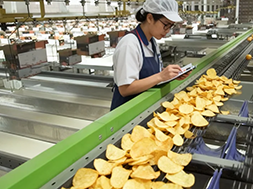
The strong oxidizing properties of chlorine dioxide can cause plastic conveyor belts in food factories to oxidize and age, with different materials exhibiting varying degrees of tolerance. To address this, a more refined approach can be taken, including controlling the concentration, shortening contact time, selecting oxidation-resistant materials, and employing differentiated disinfection methods and rotating disinfectants, thus balancing disinfection effectiveness with equipment protection.

When using chlorine dioxide for disinfection in food production, the disinfectant concentration is a critical control point in the HACCP system. Test strips are convenient to use but have a relatively large margin of error; portable testing instruments offer higher accuracy but require regular calibration and maintenance. Enterprises can adopt a three-tiered monitoring solution: primarily online sensors, supplemented by portable instrument inspection and calibration, and emergency verification using test strips. This enables continuous monitoring, data retention and traceability, ensuring both disinfection effectiveness and food safety.
Northeast of Huangshan Road and Chuangye Intersection, Small and Medium sized Enterprise Entrepreneurship Industrial Park, Shanwang Town, Linqu County, Weifang City, Shandong Province
Copyright © 2025 by Shandong Huashi Pharmaceutical Co., Ltd All Rights Reserved


 Language
 中文
中文 Русский
 Chlorine Dioxide Disinfectant Manufacturer


