Welcome to Our Factory for a Visit! Free customized disinfection solutions
From Water Treatment Plant to Table: How Can the Safety of Chlorine Dioxide Disinfection Be Ensured Across the Entire Supply Chain?

08 - Sep - 2026

When you pick up a pack of fresh vegetables in a supermarket or fill a glass of clear drinking water from the tap, you may not realize that an invisible line of defense may be working behind the scenes—chlorine dioxide disinfection technology.

From source-water treatment at drinking water plants to food processing, transportation equipment, and certain environmental and equipment disinfection applications, chlorine dioxide is already used in a range of scenarios. But how can we ensure that its use at every stage is compliant, effective, and properly monitored?

Cross-Sector Management: Three Key Challenges

The first challenge is coordination between different standards and regulatory requirements. Chlorine dioxide used in drinking water, food processing, environmental disinfection, and equipment sanitation is governed by different standards and management requirements.

Drinking water plants should manage chlorine dioxide according to the Standards for Drinking Water Quality (GB 5749-2022) and other applicable drinking water treatment requirements. In food processing, equipment sanitation, and environmental disinfection, management should be based on applicable disinfectant hygiene requirements, food safety and hygiene standards, and the instructions for the specific product being used. The National Food Safety Standard—Standards for Uses of Food Additives (GB 2760-2024) should not be treated as the primary basis for food-equipment disinfection.

Transportation equipment and retail environments generally need to operate within the existing framework of food hygiene management, disinfectant-use requirements, and company operating procedures. Specific requirements for chlorine dioxide in these scenarios may be relatively fragmented.

Because different stages involve different standards and responsible parties, gaps may arise in practical implementation, particularly in regulatory coordination, operating requirements, and information transfer.

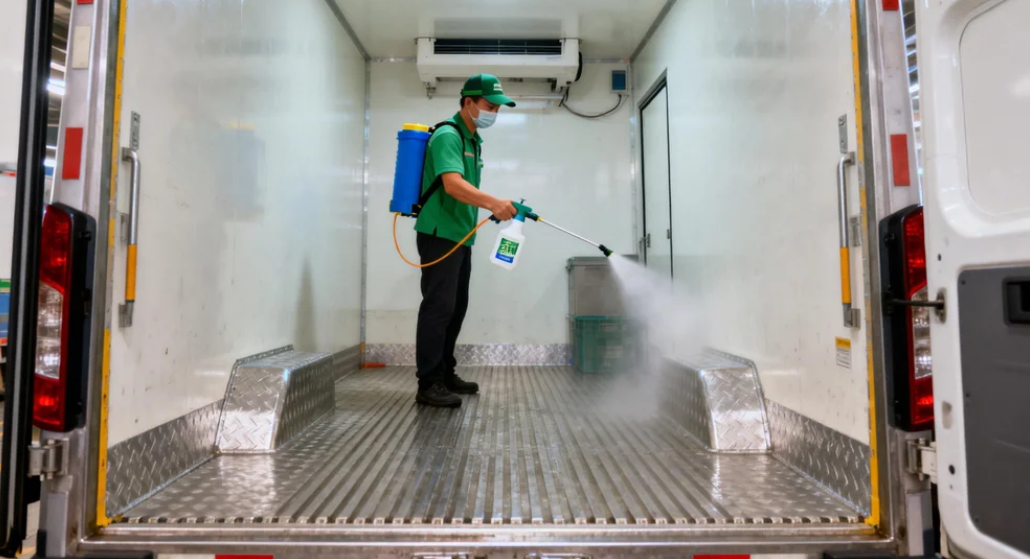
Operational inconsistency is another challenge. Drinking water plants need to control chlorine dioxide dosing, mixing, and effective contact according to process requirements. Food transportation equipment, processing equipment, and retail facilities may use spraying, wiping, immersion, or other methods. Without clearly defined SOPs, differences in operation can affect actual disinfection performance.

Process-monitoring gaps are also a potential risk. Drinking water treatment generally has relatively mature continuous monitoring and operational record systems. For food transportation equipment, processing equipment, and retail display facilities, however, whether residual testing, working-solution concentration checks, or other hygiene verification is required should be determined separately according to actual application risks.

For retail display equipment, particular attention should be paid to whether the disinfection method could result in direct exposure of food and whether residues on equipment surfaces remain within acceptable limits. It should not simply be assumed that chlorine dioxide will continuously “accumulate” on food surfaces.

Establishing Standardized Operating Practices: Four Key Dimensions

To build an effective safety barrier across the entire supply chain, a clear risk-management and operating framework is needed. This should focus on four key dimensions.

Accurate concentration control is essential.

Different application scenarios should not simply use the same concentration range.

For drinking water, chlorine dioxide dosing, contact time, and residual control should comply with GB 5749-2022 and the specific water treatment process. The range of 0.1–0.8 mg/L should not simply be interpreted as a universal dosing concentration.

For food-contact surfaces, the working concentration and contact time should be determined according to the instructions for the specific chlorine dioxide product, the target microorganisms, surface cleanliness, and the company’s validation results. A range of 50–200 mg/L should not be used as a universal recommendation for all food-contact surfaces.

Air or space disinfection should be carried out strictly within the application scope and operating conditions allowed for the product, with particular attention to worker exposure, room conditions, contact time, ventilation, and re-entry requirements.

The key is to establish a validated relationship between application scenario, target microorganisms, concentration, contact time, and application method, ensuring effective disinfection while avoiding unnecessary high concentrations and excessive use.

Standardized operating procedures provide the foundation.

Different stages should have their own SOPs specifying working-solution preparation, application methods such as spraying, immersion, or wiping, contact time, any necessary rinsing or removal steps, and procedures for handling abnormal situations.

For direct food-contact surfaces, whether rinsing is required and how it should be performed should follow the instructions for the specific product and the company’s validated sanitation procedures. Rinsing should not automatically be required in every situation.

Systematic personnel training is a critical part of safe use.

Operator competence directly affects disinfection safety. Training and competency confirmation should therefore be established according to different job functions. Training should at minimum cover the basic properties of chlorine dioxide, preparation and application, personal protection, and abnormal-event response.

Water treatment technicians, food plant operators, logistics personnel, and retail cleaning staff have different responsibilities. The depth of training and assessment requirements should therefore also differ rather than relying on a completely uniform certification model.

Standardized equipment and facilities provide technical support.

For continuous-use or higher-risk applications, automated dosing systems, online concentration monitoring equipment, or digital record systems may be introduced where appropriate to reduce human operating errors.

Transportation and retail applications can use portable solution-preparation, spraying, or testing equipment according to their risk levels, while SOPs and periodic calibration can help improve consistency.

Building a Risk-Based Process Monitoring and Verification System: From Source to End Point

Operating standards answer the question of “how to do it,” while monitoring and verification answer the question of “how well it was done.”

Not every stage needs to monitor the same type of “chlorine dioxide residue.” Instead, monitoring should be based on actual risk and may involve working-solution concentration, disinfectant residual, surface hygiene, microbiological indicators, or necessary chemical-residue parameters.

Source control is the first step.

Drinking water treatment generally has relatively mature continuous monitoring and operational recording systems, which can provide useful process-control references for other applications.

Chlorine dioxide suppliers should provide consistent product quality, clear instructions for use, recommendations for appropriate testing methods, and necessary technical support so downstream users can apply and verify the product correctly.

Process monitoring is the core challenge.

Critical monitoring points should be selected according to application frequency, the degree of food contact, and overall risk.

For example, food processors may verify working-solution concentration, surface hygiene, or necessary residual indicators according to their sanitation program. Transportation and logistics operations may focus inspections on equipment that is disinfected frequently or comes into direct contact with food. Retail facilities should determine whether rapid testing or hygiene verification is needed according to the actual method of use rather than applying the same testing requirements at every location.

End-point feedback completes the control loop.

End-point verification should focus on indicators relevant to the specific risk, such as hygiene-related microbiological indicators, necessary chemical residues, or other parameters associated with the disinfection procedure.

Abnormal consumer feedback can also be incorporated into the company’s traceability and investigation system as a quality-risk signal, but it should not replace professional testing and process verification.

Technological innovation can support monitoring systems, but technology should serve risk management rather than create unnecessary testing simply for the sake of “full-chain monitoring.”

Risk Prevention and Emergency Response: Completing the Safety Loop

Once operating standards and monitoring systems are established, a complete chlorine dioxide safety-management framework should also include risk prevention and abnormal-event response mechanisms.

Risk warning is an important part of safety management.

Companies can establish tiered warning mechanisms based on historical monitoring data, regulatory requirements, and their own control limits. When a critical parameter approaches a company-defined control limit or a relevant regulatory limit, the data should be rechecked promptly, the cause investigated, and appropriate corrective action initiated rather than relying on a single universal “safety threshold.”

Where necessary, production batch records, disinfection logs, and supply-chain traceability information can be used to identify abnormal stages and support root-cause correction.

Internal control capability is also fundamental.

Companies throughout the food supply chain should establish chlorine dioxide management systems appropriate to their own risk levels. These may include clearly assigned responsibilities, written operating procedures, self-inspection programs, and recordkeeping requirements.

For small and medium-sized food businesses, logistics companies, and retailers in particular, simple, clear, and practical management tools and templates can help lower the barrier to standardized implementation.

From Water Plant to Food Processing and Retail: What Should Really Be Standardized?

From drinking water treatment plants to food processing and retail environments, safe chlorine dioxide use is a cross-sector management task and an important part of modern food safety governance.

What should be standardized is not the use of the same concentration, equipment, or testing method at every stage.

What should be consistent is the underlying risk-management principle:

Use compliant products → identify the correct application scenario → apply validated concentration and contact time → follow standardized procedures → implement risk-based monitoring → take corrective action when necessary → maintain complete records and traceability.

When every stage has clear application requirements, every disinfection procedure can be traced, and every potential risk can be identified, verified, and addressed promptly, a more reliable food safety barrier can truly be built from source to end point.