Welcome to Our Factory for a Visit! Free customized disinfection solutions

In food production facilities, chlorine dioxide disinfection has become an important option for many companies seeking to maintain a stable and hygienic production environment. As a disinfectant with strong oxidizing capacity and broad-spectrum antimicrobial properties, chlorine dioxide can be used to control a wide range of bacteria, viruses, and fungi. Compared with some conventional chlorination processes, chlorine dioxide generally has a lower potential to form certain halogenated organic by-products, although related transformation products such as chlorite and chlorate still require attention.
However, when real-time monitoring is required at Critical Control Points (CCPs) or other important hygiene-control steps, can the concentration test strips and portable meters commonly used by food manufacturers really meet the strict requirements of food safety management?

Companies should first clarify exactly what they need to measure: the concentration of a freshly prepared working solution, the in-use concentration during the process, or the residual concentration after treatment. Different monitoring objectives require different measurement ranges, methods, and instruments.
Within the HACCP system—Hazard Analysis and Critical Control Points—a CCP is a step at which control can be applied to prevent, eliminate, or reduce a food safety hazard to an acceptable level.
For some food manufacturers that incorporate chlorine dioxide disinfection into their HACCP systems, parameters such as chlorine dioxide concentration and contact time may serve as important control parameters. Whether they actually constitute a CCP should be determined according to the specific process and the results of the company’s hazard analysis and CCP determination.
If the concentration is too low, the actual disinfection effect may fail to meet expectations, increasing the risk of inadequate microbial control. If the concentration is too high or the product is used improperly, it may increase the control burden associated with chlorine dioxide residues and related transformation products, while also creating potential material-compatibility or worker-exposure risks.
Therefore, timely and accurate monitoring of chlorine dioxide concentration is an important part of maintaining stable disinfection-process control, but it should not be used as the sole basis for determining whether final food safety or disinfection performance meets requirements.
Chlorine dioxide test strips are widely used because they are easy to operate and relatively inexpensive. Through color comparison, they can provide semi-quantitative results within a short period of time.
However, test strips are generally semi-quantitative tools, and their resolution and accuracy can be affected by factors such as the measurement range, color-scale design, the operator’s ability to distinguish colors, and sample conditions.
At low concentrations or when the measured value is close to a control limit, differences between color levels may be difficult to distinguish. Results may also be affected by sample pH, temperature, color, and other oxidizing or reducing substances.
When used to monitor a critical control point, the limited color resolution of test strips may make it difficult to identify small deviations when the actual chlorine dioxide concentration is close to the control limit, potentially delaying process adjustments.
For this reason, test strips are more suitable for rapid screening, trend assessment, and auxiliary checks. If a control point requires strict quantitative determination, the suitability of test strips should be evaluated according to their range, resolution, and the company’s own method-validation results.
Portable chlorine dioxide detection equipment may use colorimetric, photometric, amperometric, or other electrochemical methods. Different measurement principles vary in their range, selectivity, and resistance to interference.
Compared with test strips, suitable portable meters can generally provide more detailed numerical results, and some devices also support data logging and transmission. However, actual accuracy, response time, and measurement range should be determined according to the specifications of the specific model and validated method performance.
Portable instruments still require regular calibration and maintenance. Some sensors, reagents, or detection components have limited service lives, and replacement and maintenance can add to operating costs.
Performance also varies by brand and model. Measurement results may be affected by water temperature, pH, sample matrix, interfering substances, and the volatilization or decay of chlorine dioxide after sampling.
Therefore, when selecting a portable meter, companies should consider its reliability, suitable measurement range, actual operating environment, and intended monitoring purpose.
Monitoring of a Critical Control Point or another important food-safety control step is not an ordinary quality inspection. It requires stricter process-control management.
Timeliness: The monitoring method and frequency should allow deviations to be detected promptly so that corrective action can be taken before the risk expands.
Accuracy: Measurement data should have sufficient reliability and repeatability. False alarms or missed deviations can undermine the effective operation of the HACCP system.
Recordability: Monitoring results should be accurately recorded as evidence for verification, corrective actions, and traceability.
Continuity: For continuous production processes, the monitoring method and frequency should be sufficient to demonstrate that control measures remain effective and to detect deviations in a timely manner. Processes suitable for continuous monitoring may use online or high-frequency automated monitoring.
For food manufacturers, selecting a chlorine dioxide concentration monitoring solution requires consideration of several factors:
Production scale and risk level: Higher-risk products or large-scale, continuous production environments generally require more rigorous and stable monitoring.
Regulatory requirements: Regulatory and internal management requirements may vary depending on the region, product category, and application method.
Technical feasibility: Existing equipment, pipelines, monitoring points, and automation systems must be able to support the selected measurement method.
Cost-effectiveness: Companies should consider not only the purchase price of the equipment, but also long-term costs associated with reagents, sensors, calibration, maintenance, and personnel.
Personnel training: Operators must be able to sample correctly, perform measurements, maintain the equipment, and identify and respond to abnormal results.
For high-risk or high-frequency continuous production environments, companies should evaluate whether their existing chlorine dioxide monitoring approach needs to be optimized according to actual risk levels. Improvement can focus on both technological upgrades and monitoring-process optimization.

Online chlorine dioxide monitoring equipment can be installed in suitable flow cells, circulation pipelines, or representative monitoring points according to the measurement range and application conditions, allowing continuous observation of changes in chlorine dioxide concentration.
Some online devices can provide rapid responses and support standard analog signals such as 4–20 mA or digital outputs for integration with PLC or DCS systems.
However, actual measurement performance depends on the sensor principle, measurement range, on-site water quality, sensor condition, and maintenance status. A fixed accuracy or response time should not be treated as a universal specification for all instruments.
When concentration moves outside the preset range, the system can trigger an alarm and provide feedback for process correction. If the signal is linked to a metering pump, the control strategy should also account for changes in flow rate, mixing time, sampling delay, and control-system lag to avoid unstable or excessively frequent adjustments.
A more reasonable control approach is generally to use flow-proportional dosing as the basic control strategy and then apply online concentration measurements for feedback correction, creating a more stable monitoring-and-control loop.
Although the initial investment may be relatively high, in suitable applications online systems can improve monitoring continuity and process traceability while reducing the workload associated with manual inspections.
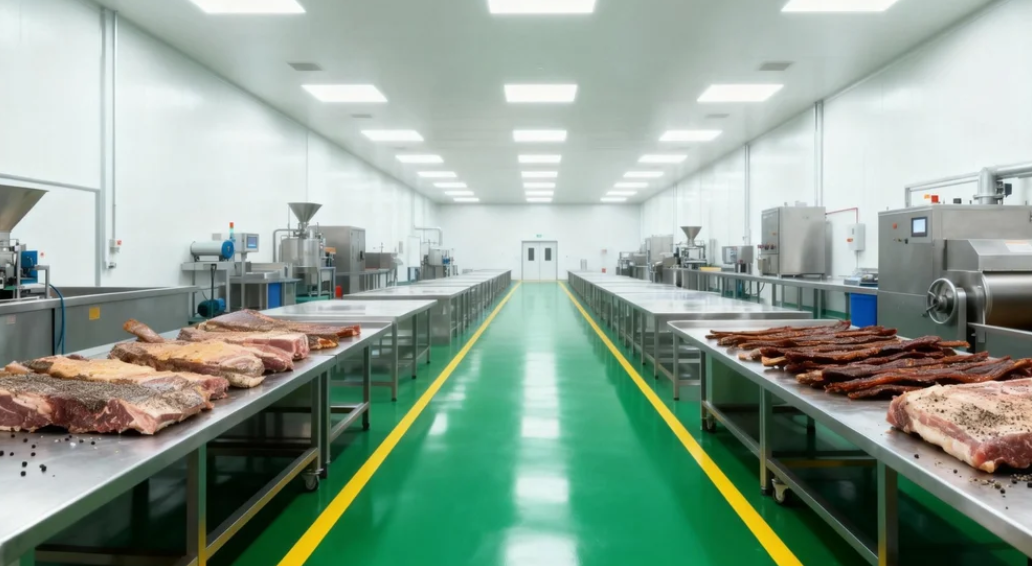
Although online monitoring provides the advantage of continuous measurement, regular calibration and maintenance of sensors remain essential.
Depending on the company’s risk level, a multi-layer monitoring system can be established using:
online real-time monitoring + portable instrument verification + test-strip emergency support.
Online sensors can be used for continuous trend monitoring during routine operations. Portable instruments or validated reference methods can be used for periodic comparison, abnormal-result verification, and equipment-status checks. Test strips can serve as auxiliary tools during equipment failure, temporary inspections, or rapid field screening.
It should be noted that portable meters can be used for data comparison and verification, but strict calibration of online equipment should be performed according to the specified methods and procedures for the instrument.
Whether test strips can be used to determine compliance with critical limits should also depend on their measurement range, resolution, and the company’s own method-validation results. They should not automatically become the primary decision-making method simply because they are easy to use.
At the same time, monitoring data can be incorporated into a digital management platform for trend analysis, deviation tracking, and report generation, providing data support for internal verification and audit traceability.
However, a digital system does not automatically guarantee that the data are accurate. Reliable data still depend on appropriate analytical methods, standardized operating procedures, and proper equipment maintenance.
Whether a company chooses to upgrade its monitoring equipment or optimize its monitoring process, the objective remains the same:
to ensure that the disinfection process stays under control and that reliable, traceable data are available to support food safety management.
It is also important to recognize that chlorine dioxide concentration measurement is only one part of the overall disinfection-control process.
Food manufacturers must also consider cleaning effectiveness, actual effective concentration, contact time, the object being disinfected, the application method, microbiological verification, secondary contamination during production, and, where necessary, control of residuals or transformation products.
Therefore, test strips, portable meters, and online sensors should not be viewed in terms of simply deciding “which one is best.”
A more appropriate positioning is:
Test strips are suitable for rapid screening, portable meters are suitable for quantitative inspections and on-site verification, and online instruments are suitable for continuous trend monitoring.
In food safety management, the true value of a monitoring tool is not merely to produce a concentration number, but to detect deviations in time, support corrective actions, and provide reliable data demonstrating that the disinfection process remains under control.
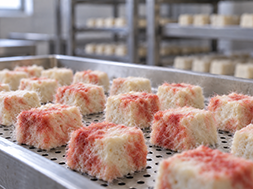
The reddish color of fermented tofu cannot be determined solely by its appearance; sampling and testing are necessary, and the abnormal product must be isolated. Relying solely on disinfectants is insufficient; equipment and the workshop environment must be thoroughly investigated. Air disinfection requires unmanned operation and material isolation. Disinfectants should be used according to specifications, and problems should be identified through a combination of production records and testing.

AB cleaning agents in food factories are prone to producing odor residues; Chlorine dioxide disinfectant can sterilize and deodorize without harmful residues. It can be diluted and used for disinfection of workshop equipment and water bodies, with matching ratios and safety operation requirements.
Chlorine dioxide disinfection in food production will produce harmful residues, and the water consumption of traditional large water washing is serious. Four measures can be taken to save water and reduce waste on the basis of ensuring food safety, so as to help enterprises achieve multiple benefits and win-win results.
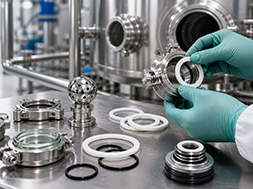
While switching from sodium hypochlorite to chlorine dioxide disinfection offers advantages such as sterilization, biofilm removal, and fewer disinfection byproducts, the strong oxidizing properties of chlorine dioxide necessitate careful consideration of production line material compatibility: 316L stainless steel should be prioritized for piping, and fluororubber or polytetrafluoroethylene (PTFE) should be used for seals, while also considering the suitability of accessories such as sight glasses and spray nozzles. The switch can be smoothly completed in three steps: establishing material records, conducting a 72-hour immersion test, and carrying out small-scale trial runs and inspections, thus preventing equipment corrosion and damage.
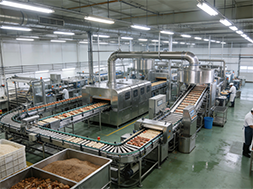
Traditional chlorine dioxide disinfection in food factories is time-consuming and reduces production capacity. Addressing pain points such as solution preparation, spraying, and ventilation monitoring, the process can be optimized in stages through equipment upgrades, zoned disinfection, scientific control of disinfection parameters, and accelerated ventilation monitoring. This phased process optimization, while ensuring safety and compliance, can shorten disinfection time by 30-50%, freeing up production capacity and improving hygiene management.
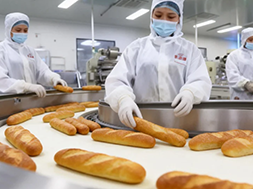
Powdered milk powder and starch dust in the powdered food workshop will absorb and consume chlorine dioxide dry fog, reducing the disinfection effect. It can solve the disinfection problems caused by dust and ensure food safety by reducing dust before disinfection, regulating the particle size of dry fog, pulse releasing agent, optimizing the air flow in the workshop, and matching other disinfection methods.
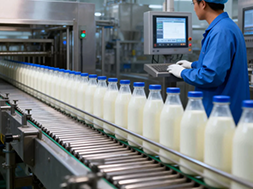
Chlorine dioxide is widely used for disinfection in water supply and food supply chains, but current issues exist regarding standards, procedures, and residue monitoring. It is necessary to standardize operating procedures, establish a comprehensive residue monitoring system, and improve risk warning and emergency response mechanisms to ensure disinfection safety from water treatment plant to table.

When using chlorine dioxide for disinfection of chocolate equipment, it is necessary to control the residue of the agent to avoid damaging the flavor and quality of the product. The preparation of the agent should be standardized, the disinfection and rinsing process optimized, and residue compliance verified through multiple methods. Since chocolate is a low-moisture food, a customized cleaning plan needs to be developed based on the specific equipment to balance safety and production stability.
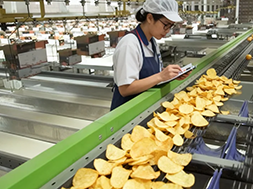
The strong oxidizing properties of chlorine dioxide can cause plastic conveyor belts in food factories to oxidize and age, with different materials exhibiting varying degrees of tolerance. To address this, a more refined approach can be taken, including controlling the concentration, shortening contact time, selecting oxidation-resistant materials, and employing differentiated disinfection methods and rotating disinfectants, thus balancing disinfection effectiveness with equipment protection.

When using chlorine dioxide for disinfection in food production, the disinfectant concentration is a critical control point in the HACCP system. Test strips are convenient to use but have a relatively large margin of error; portable testing instruments offer higher accuracy but require regular calibration and maintenance. Enterprises can adopt a three-tiered monitoring solution: primarily online sensors, supplemented by portable instrument inspection and calibration, and emergency verification using test strips. This enables continuous monitoring, data retention and traceability, ensuring both disinfection effectiveness and food safety.
Northeast of Huangshan Road and Chuangye Intersection, Small and Medium sized Enterprise Entrepreneurship Industrial Park, Shanwang Town, Linqu County, Weifang City, Shandong Province
Copyright © 2025 by Shandong Huashi Pharmaceutical Co., Ltd All Rights Reserved


 Language
 中文
中文 Русский
 Chlorine Dioxide Disinfectant Manufacturer


