Welcome to Our Factory for a Visit! Free customized disinfection solutions

A production manager at a well-known food company recently encountered a difficult problem: after the plant upgraded its chlorine dioxide disinfection system, the plastic conveyor belts in the workshop began to show unusual changes—the surfaces became rough, and small cracks even appeared in some areas.
This raised an important concern: could chlorine dioxide disinfectant, which is widely used in the industry, be quietly affecting critical production-line equipment?
Whether these changes are caused by chlorine dioxide alone cannot be determined without considering the conveyor belt material, disinfectant concentration, contact time, temperature, other cleaning chemicals, and mechanical loads.
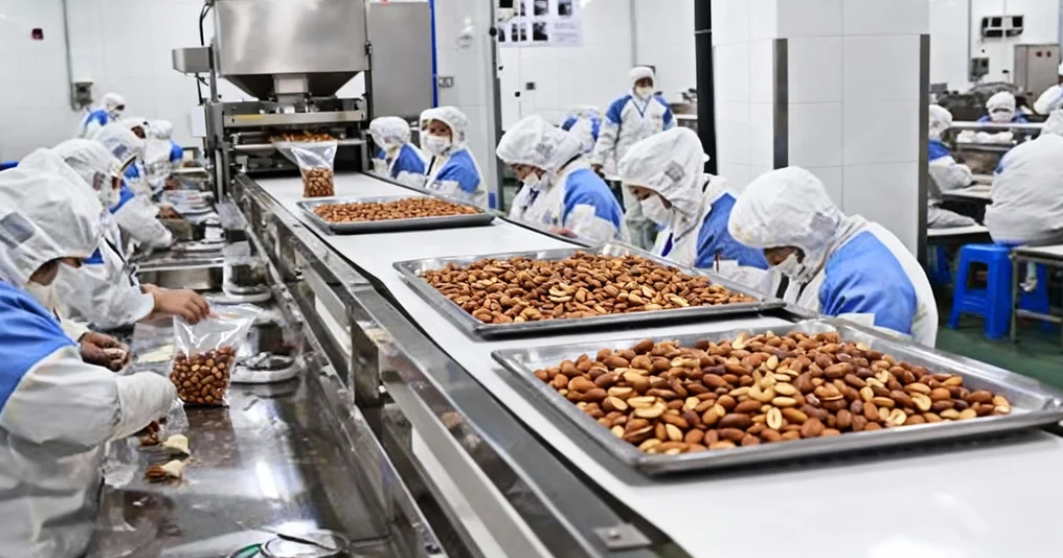
Chlorine dioxide is a disinfectant with strong oxidizing capacity and broad-spectrum antimicrobial properties. It is widely used in the food industry and can be applied to control a variety of bacteria, viruses, and other microorganisms. However, its strong oxidizing capacity can also be a double-edged sword.
Plastic conveyor belts used in food plants are commonly made from materials such as polyurethane (PU), polyethylene (PE), or polypropylene (PP). Under conditions involving relatively high concentrations, prolonged contact, or unfavorable temperatures, the oxidizing action of chlorine dioxide may accelerate the aging of certain polymer materials. The extent of the effect depends strongly on the specific material grade, formulation, and actual operating conditions.
Such effects usually do not occur suddenly. Instead, they may accumulate gradually over time. Some materials may initially show changes in surface gloss or hardness, followed by microcracking. In more severe cases, the mechanical performance and service life of the conveyor belt may be affected.
Not all conveyor belt materials respond to chlorine dioxide in the same way.
Polyethylene (PE) and Polypropylene (PP): Some grades show relatively good chemical resistance under certain chlorine dioxide exposure conditions, but prolonged exposure to high concentrations or elevated temperatures may still increase the risk of material aging.
Polyurethane (PU): PU is commonly used for conveyor belts that require flexibility. However, different PU formulations and types can vary significantly in their resistance to oxidizing agents, so the specific material grade should be evaluated.
Polyvinyl Chloride (PVC): The chemical resistance of PVC varies considerably depending on its formulation. Flexible PVC in particular may require additional attention to the long-term stability of plasticizers and other additives under chemical exposure.
Silicone Materials: Some silicone elastomers have good chemical stability, but their actual resistance to chlorine dioxide still depends on formulation, concentration, temperature, and contact time.
Even when materials belong to the same general category—such as PU, PE, PP, PVC, or silicone rubber—food plants should preferably refer to chemical compatibility data provided by the material supplier for chlorine dioxide or conduct validation under actual operating conditions.
The concentration of chlorine dioxide should be determined according to the specific product instructions, application scenario, target microorganisms, and the company’s validated procedures. A range of 50–100 ppm should not be treated as a universal recommendation for all food-contact surfaces.
While ensuring the required disinfection performance, unnecessarily high concentrations and excessive dosing should be avoided.
Depending on the risk level, validated test strips, portable meters, or online monitoring equipment may be used to check the actual working concentration. Test strips are more suitable for rapid field screening and should not be considered equivalent to continuous online monitoring.
The required contact time should be determined according to the product instructions, target microorganisms, actual chlorine dioxide concentration, and on-site validation results. Different microorganisms can vary significantly in their sensitivity to chlorine dioxide.
Provided that the validated disinfection effect is achieved, unnecessary prolonged exposure of materials to high concentrations of disinfectant should be avoided.
Whether rinsing is required after disinfection should be determined strictly according to the product instructions and the company’s validated sanitation procedures. Where rinsing is required, water of appropriate quality should be used to avoid secondary contamination.
Before a new conveyor belt is put into operation, or when the disinfection program is changed, representative compatibility testing can be conducted using the actual working concentration, temperature, and contact cycle.
Changes in color, hardness, surface gloss, surface cracking, and, where necessary, mechanical performance should be observed and documented for future reference.
When purchasing new equipment, preference should be given to materials for which the supplier can provide chlorine dioxide compatibility data or chemical compatibility information under conditions similar to the actual application.
Food-contact compliance should also be considered during material selection.
Although the initial investment may sometimes be higher, appropriate material selection can help reduce the risk of premature aging and subsequent maintenance problems.
For conveyor belts that come into direct contact with food, material selection must consider not only chlorine dioxide compatibility but also compliance with applicable food-contact material requirements.
Some food manufacturers with long-term experience using chlorine dioxide have begun adopting more refined approaches.
Different cleaning and disinfection methods and frequencies can be established for different areas according to hygiene risk assessments and the company’s sanitation procedures, helping to avoid unnecessary excessive chemical treatment.
If chemical-resistant coatings or special surface layers are being considered for conveyor belts, their food-contact compliance, adhesion stability, cleanability, resistance to repeated washing, and suitability for hygienic design should first be confirmed.
Such solutions should preferably be validated by the equipment or material supplier.
If alternative disinfection methods are being considered because of material compatibility concerns or specific hygiene requirements, they should be revalidated based on the target microorganisms, food-contact requirements, material compatibility, and the conditions of use of the product.
It should not simply be assumed that peracetic acid or alcohol-based disinfectants are always gentler on plastics than chlorine dioxide.
For systems that continuously use disinfectant solutions, automatic solution preparation or concentration-monitoring technologies may be adopted according to process conditions.
This can help reduce errors associated with manual preparation and unnecessary overdosing.
Food safety and hygienic production leave no room for neglect. Conveyor belts are often direct food-contact surfaces, so their stability and integrity are important.
Chlorine dioxide has strong disinfection capabilities, but inappropriate concentrations, excessive contact times, or unsuitable operating conditions may increase the aging risk of certain materials.
Through standardized use, material compatibility validation, and continuous equipment-condition monitoring, food manufacturers can achieve a more appropriate balance between effective disinfection and equipment service life.
When dealing with disinfection and material compatibility challenges in food production, the key is not to search for a so-called “perfect disinfectant,” but to implement refined process management: understand the properties of the materials being used, control disinfectant concentration and contact time appropriately, establish a reliable monitoring system, and continuously monitor equipment condition.
This is a more sustainable approach that balances food hygiene and safety, equipment reliability, and long-term operating costs.
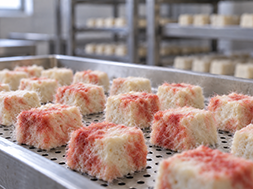
The reddish color of fermented tofu cannot be determined solely by its appearance; sampling and testing are necessary, and the abnormal product must be isolated. Relying solely on disinfectants is insufficient; equipment and the workshop environment must be thoroughly investigated. Air disinfection requires unmanned operation and material isolation. Disinfectants should be used according to specifications, and problems should be identified through a combination of production records and testing.

AB cleaning agents in food factories are prone to producing odor residues; Chlorine dioxide disinfectant can sterilize and deodorize without harmful residues. It can be diluted and used for disinfection of workshop equipment and water bodies, with matching ratios and safety operation requirements.
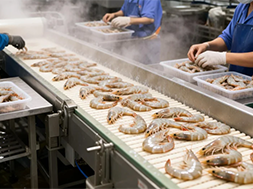
Chlorine dioxide disinfection in food production will produce harmful residues, and the water consumption of traditional large water washing is serious. Four measures can be taken to save water and reduce waste on the basis of ensuring food safety, so as to help enterprises achieve multiple benefits and win-win results.
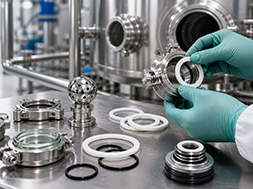
While switching from sodium hypochlorite to chlorine dioxide disinfection offers advantages such as sterilization, biofilm removal, and fewer disinfection byproducts, the strong oxidizing properties of chlorine dioxide necessitate careful consideration of production line material compatibility: 316L stainless steel should be prioritized for piping, and fluororubber or polytetrafluoroethylene (PTFE) should be used for seals, while also considering the suitability of accessories such as sight glasses and spray nozzles. The switch can be smoothly completed in three steps: establishing material records, conducting a 72-hour immersion test, and carrying out small-scale trial runs and inspections, thus preventing equipment corrosion and damage.
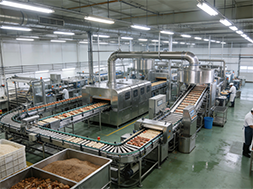
Traditional chlorine dioxide disinfection in food factories is time-consuming and reduces production capacity. Addressing pain points such as solution preparation, spraying, and ventilation monitoring, the process can be optimized in stages through equipment upgrades, zoned disinfection, scientific control of disinfection parameters, and accelerated ventilation monitoring. This phased process optimization, while ensuring safety and compliance, can shorten disinfection time by 30-50%, freeing up production capacity and improving hygiene management.
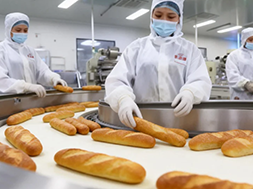
Powdered milk powder and starch dust in the powdered food workshop will absorb and consume chlorine dioxide dry fog, reducing the disinfection effect. It can solve the disinfection problems caused by dust and ensure food safety by reducing dust before disinfection, regulating the particle size of dry fog, pulse releasing agent, optimizing the air flow in the workshop, and matching other disinfection methods.
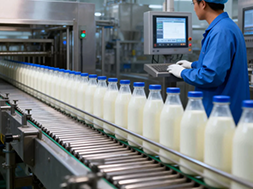
Chlorine dioxide is widely used for disinfection in water supply and food supply chains, but current issues exist regarding standards, procedures, and residue monitoring. It is necessary to standardize operating procedures, establish a comprehensive residue monitoring system, and improve risk warning and emergency response mechanisms to ensure disinfection safety from water treatment plant to table.
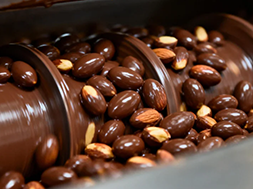
When using chlorine dioxide for disinfection of chocolate equipment, it is necessary to control the residue of the agent to avoid damaging the flavor and quality of the product. The preparation of the agent should be standardized, the disinfection and rinsing process optimized, and residue compliance verified through multiple methods. Since chocolate is a low-moisture food, a customized cleaning plan needs to be developed based on the specific equipment to balance safety and production stability.
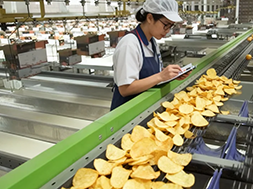
The strong oxidizing properties of chlorine dioxide can cause plastic conveyor belts in food factories to oxidize and age, with different materials exhibiting varying degrees of tolerance. To address this, a more refined approach can be taken, including controlling the concentration, shortening contact time, selecting oxidation-resistant materials, and employing differentiated disinfection methods and rotating disinfectants, thus balancing disinfection effectiveness with equipment protection.

When using chlorine dioxide for disinfection in food production, the disinfectant concentration is a critical control point in the HACCP system. Test strips are convenient to use but have a relatively large margin of error; portable testing instruments offer higher accuracy but require regular calibration and maintenance. Enterprises can adopt a three-tiered monitoring solution: primarily online sensors, supplemented by portable instrument inspection and calibration, and emergency verification using test strips. This enables continuous monitoring, data retention and traceability, ensuring both disinfection effectiveness and food safety.
Northeast of Huangshan Road and Chuangye Intersection, Small and Medium sized Enterprise Entrepreneurship Industrial Park, Shanwang Town, Linqu County, Weifang City, Shandong Province
Copyright © 2025 by Shandong Huashi Pharmaceutical Co., Ltd All Rights Reserved


 Language
 中文
中文 Русский
 Chlorine Dioxide Disinfectant Manufacturer


