Welcome to Our Factory for a Visit! Free customized disinfection solutions

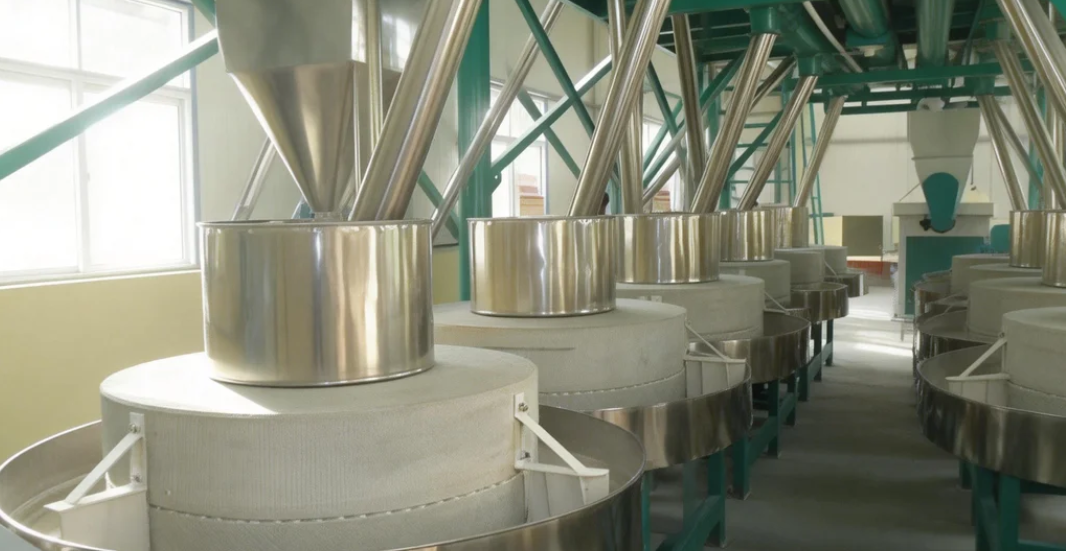
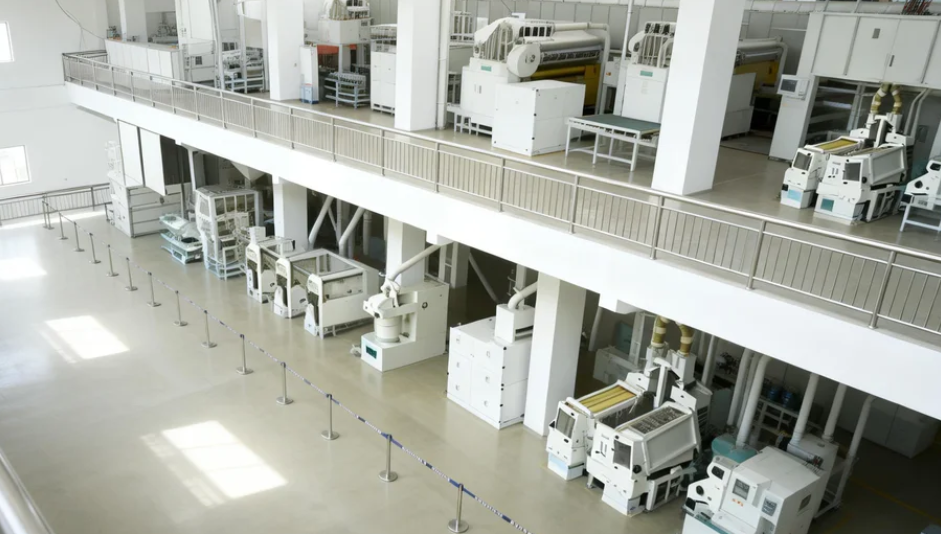
In the modern powdery food ingredients production workshop, an invisible war is staged every day. Delicate milk powder and light starch are dancing in the air, while chlorine dioxide molecules with sterilization mission are struggling in this "fog". When disinfectants encounter production dust, how to prevent them from "embracing" and reducing the disinfection effect? This has become a common problem faced by many food enterprises.
Dry fog disinfection: an invisible guardian of food production
Chlorine dioxide dry fog disinfection technology has been widely used in the field of food processing because of its multi effect sterilization characteristics. Compared with traditional spray disinfection, dry fog disinfection can form smaller particles (usually less than 10 microns). These tiny disinfectant particles can be suspended in the air for a long time and penetrate into every corner, including equipment gaps, pipe interior and other areas that are difficult to be covered by traditional disinfection.
However, in the production environment of powdered food ingredients, this advantage may turn into a challenge. When the dry fog of disinfectant with similar diameter meets the production dust in the air, the physical adsorption phenomenon inevitably occurs.
When disinfectant meets dust: an inevitable encounter
In the production workshops of powdery food such as milk powder and starch, micron level production dust fills the air. These dust particles have large surface area and adsorption capacity. When chlorine dioxide dry fog is released, they are easy to collide and combine due to Brownian motion.
This combination can lead to double negative effects:
On the one hand, the number of free chlorine dioxide molecules decreased, and the effective disinfection concentration in the air decreased; On the other hand, the disinfectant dust complex may settle on the equipment surface or ground, forming an uneven disinfection distribution, leaving a potential hiding place for microorganisms.
What is more difficult is that some dust components may react with chlorine dioxide, further weakening its bactericidal ability. For example, milk powder dust rich in protein may consume some chlorine dioxide, while starch particles may wrap disinfectant molecules and prevent them from contacting microorganisms.
Breaking the dilemma: breaking the dead corner of disinfection with multidimensional strategies
1. pre environmental control: reduce dust background value
Rapid dust removal is the first step. Before disinfection, the dust concentration in the air shall be minimized by strengthening environmental cleaning, optimizing production sealing, and taking local exhaust equipment. It is recommended to disinfect in non production period to avoid disinfection and production at the same time.
2. particle size control technology: make disinfectant run faster
By adjusting the parameters of the dry fog generator, chlorine dioxide particles with smaller particle size (such as 3-5 microns) are produced. Smaller particles not only have longer suspension time, but also can reduce the probability of collision with dust particles due to their higher diffusion speed. At the same time, smaller particle size means larger specific surface area, which improves the sterilization efficiency.
3. intelligent release strategy: grasp the best disinfection opportunity
Use intermittent or pulsed release methods instead of continuous spraying. This method allows time between each release for the disinfectant to work, while reducing the chance of interaction with the continuously generated dust. Combined with real-time air quality monitoring, when the dust concentration temporarily decreases, the disinfectant is released quickly to achieve accurate disinfection.
4. enhance air flow design: guide the directional migration of disinfectants
Reasonably design the workshop ventilation system, create a directional airflow mode, and guide the disinfectant dry fog to flow to the target area. In some key areas, temporary air diversion devices can be set to ensure that the disinfectant can reach the dead corner that is difficult to be covered by the conventional air flow.
5. compound disinfection scheme: establish multiple defense systems
Single disinfection method is difficult to deal with complex environment. It is suggested to use chlorine dioxide dry fog disinfection in combination with other disinfection methods, such as ultraviolet radiation, ozone treatment, etc. This multi-mode disinfection can play a role in different time and space dimensions, making up for the lack of a single method.
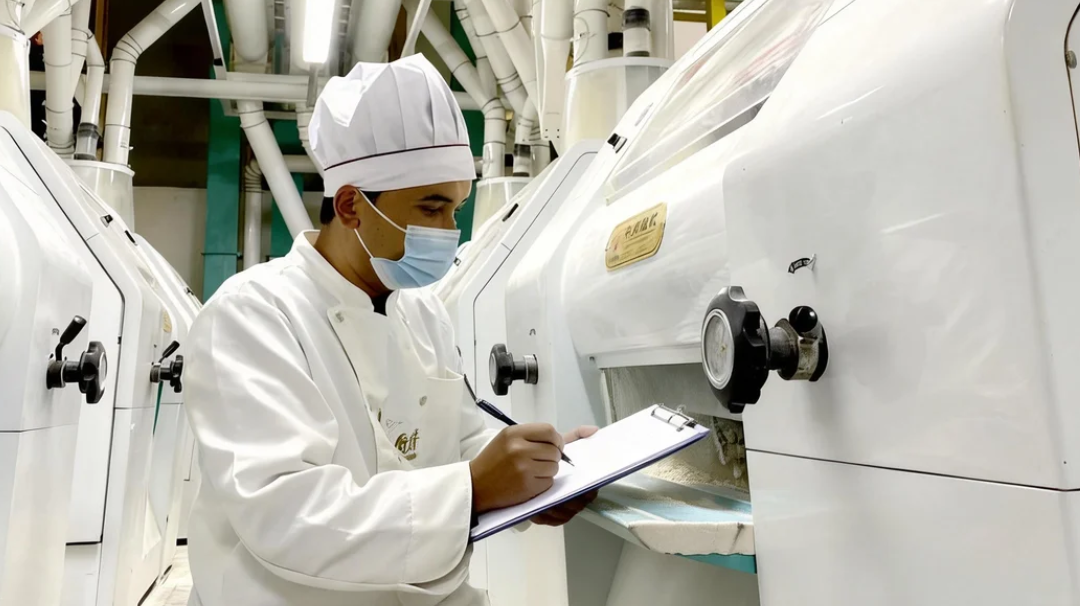
In the environment of powdery food production, the effective implementation of chlorine dioxide dry fog disinfection needs to find a delicate balance between stability and efficiency. This is not only a technical problem, but also a management art. Through scientific environmental control, technological innovation and process optimization, food production enterprises can overcome the challenges brought by dust and establish reliable disinfection barriers.
Every disinfection is a commitment to the health of consumers; Every technological innovation is a reinforcement of the food safety defense line. In this invisible war, only through continuous improvement and scientific response can we ensure that every spoonful of milk powder and every portion of starch are safe. Xiuba chlorine dioxide disinfectant can also give full play to its real disinfection value and achieve reliable and assured production.
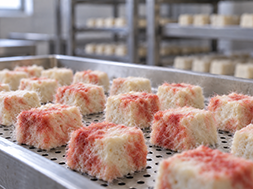
The reddish color of fermented tofu cannot be determined solely by its appearance; sampling and testing are necessary, and the abnormal product must be isolated. Relying solely on disinfectants is insufficient; equipment and the workshop environment must be thoroughly investigated. Air disinfection requires unmanned operation and material isolation. Disinfectants should be used according to specifications, and problems should be identified through a combination of production records and testing.

AB cleaning agents in food factories are prone to producing odor residues; Chlorine dioxide disinfectant can sterilize and deodorize without harmful residues. It can be diluted and used for disinfection of workshop equipment and water bodies, with matching ratios and safety operation requirements.
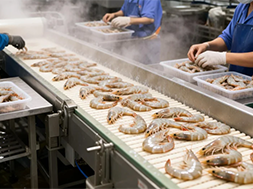
Chlorine dioxide disinfection in food production will produce harmful residues, and the water consumption of traditional large water washing is serious. Four measures can be taken to save water and reduce waste on the basis of ensuring food safety, so as to help enterprises achieve multiple benefits and win-win results.
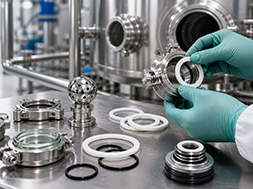
While switching from sodium hypochlorite to chlorine dioxide disinfection offers advantages such as sterilization, biofilm removal, and fewer disinfection byproducts, the strong oxidizing properties of chlorine dioxide necessitate careful consideration of production line material compatibility: 316L stainless steel should be prioritized for piping, and fluororubber or polytetrafluoroethylene (PTFE) should be used for seals, while also considering the suitability of accessories such as sight glasses and spray nozzles. The switch can be smoothly completed in three steps: establishing material records, conducting a 72-hour immersion test, and carrying out small-scale trial runs and inspections, thus preventing equipment corrosion and damage.
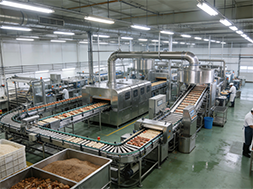
Traditional chlorine dioxide disinfection in food factories is time-consuming and reduces production capacity. Addressing pain points such as solution preparation, spraying, and ventilation monitoring, the process can be optimized in stages through equipment upgrades, zoned disinfection, scientific control of disinfection parameters, and accelerated ventilation monitoring. This phased process optimization, while ensuring safety and compliance, can shorten disinfection time by 30-50%, freeing up production capacity and improving hygiene management.

Powdered milk powder and starch dust in the powdered food workshop will absorb and consume chlorine dioxide dry fog, reducing the disinfection effect. It can solve the disinfection problems caused by dust and ensure food safety by reducing dust before disinfection, regulating the particle size of dry fog, pulse releasing agent, optimizing the air flow in the workshop, and matching other disinfection methods.
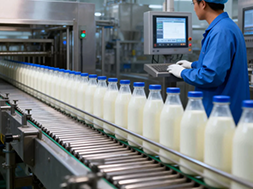
Chlorine dioxide is widely used for disinfection in water supply and food supply chains, but current issues exist regarding standards, procedures, and residue monitoring. It is necessary to standardize operating procedures, establish a comprehensive residue monitoring system, and improve risk warning and emergency response mechanisms to ensure disinfection safety from water treatment plant to table.

When using chlorine dioxide for disinfection of chocolate equipment, it is necessary to control the residue of the agent to avoid damaging the flavor and quality of the product. The preparation of the agent should be standardized, the disinfection and rinsing process optimized, and residue compliance verified through multiple methods. Since chocolate is a low-moisture food, a customized cleaning plan needs to be developed based on the specific equipment to balance safety and production stability.
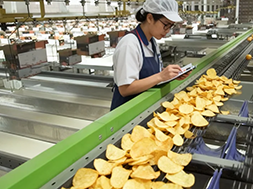
The strong oxidizing properties of chlorine dioxide can cause plastic conveyor belts in food factories to oxidize and age, with different materials exhibiting varying degrees of tolerance. To address this, a more refined approach can be taken, including controlling the concentration, shortening contact time, selecting oxidation-resistant materials, and employing differentiated disinfection methods and rotating disinfectants, thus balancing disinfection effectiveness with equipment protection.

When using chlorine dioxide for disinfection in food production, the disinfectant concentration is a critical control point in the HACCP system. Test strips are convenient to use but have a relatively large margin of error; portable testing instruments offer higher accuracy but require regular calibration and maintenance. Enterprises can adopt a three-tiered monitoring solution: primarily online sensors, supplemented by portable instrument inspection and calibration, and emergency verification using test strips. This enables continuous monitoring, data retention and traceability, ensuring both disinfection effectiveness and food safety.
Northeast of Huangshan Road and Chuangye Intersection, Small and Medium sized Enterprise Entrepreneurship Industrial Park, Shanwang Town, Linqu County, Weifang City, Shandong Province
Copyright © 2025 by Shandong Huashi Pharmaceutical Co., Ltd All Rights Reserved


 Language
 中文
中文 Русский
 Chlorine Dioxide Disinfectant Manufacturer


