Welcome to Our Factory for a Visit! Free customized disinfection solutions

As spring turns to summer and temperatures rise, the risk of mold contamination in food-production workshops may increase with higher humidity, condensation, and food residues. Mold contamination can cause visible spoilage, off-odors, and loss of product quality. Under suitable raw-material and environmental conditions, some toxin-producing molds may also produce mycotoxins. Food manufacturers therefore need a systematic control program covering the environment, equipment, raw materials, personnel, and monitoring.
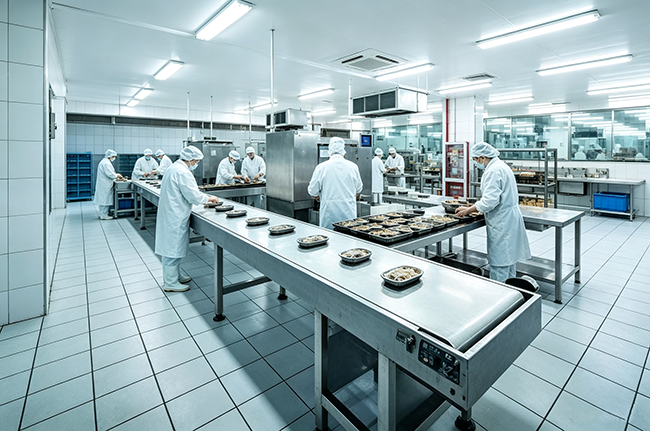
Mold contamination can lead to product disposal, rework, complaints, and even recalls, creating both food-safety and business risks. Rather than pursuing the unrealistic goal of a “zero-mold” workshop, the more important objective is to keep mold risk within acceptable company limits and regulatory requirements through hygienic design, effective cleaning and disinfection, temperature and humidity control, environmental monitoring, and continuous improvement.
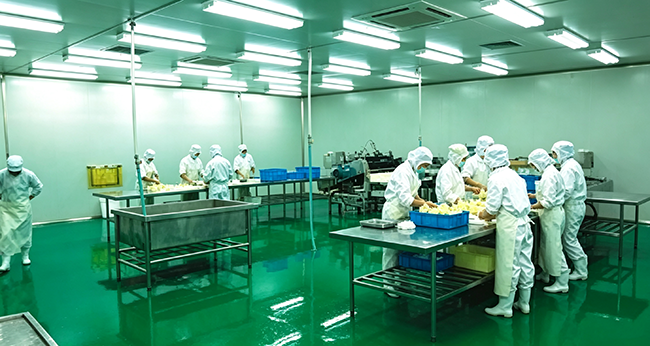
Mold spores are generally more resistant to environmental stress than vegetative cells. Their tolerance to drying, temperature changes, and certain disinfectants varies significantly with species, medium, temperature, and contact time. Alcohol can be used for some routine hygiene applications, but it should not be relied on as the sole control measure for established mold-spore contamination. When temperature, humidity, and nutrient conditions become favorable, spores can germinate and form new colonies. Mold control should therefore combine cleaning, drying, disinfection, and environmental management.
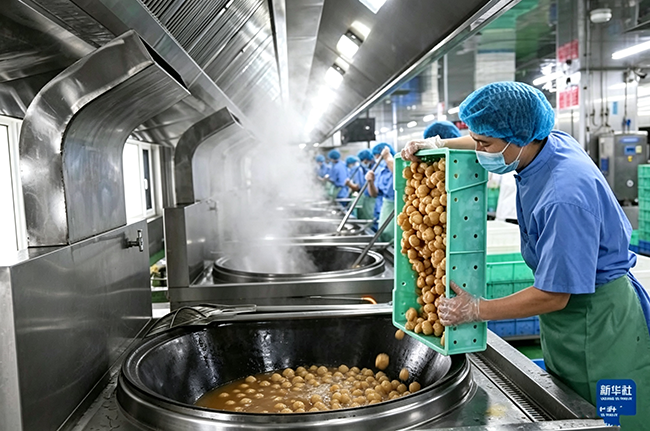
In warm, humid environments where food residues or other nutrients are present, molds such as Aspergillus niger can germinate and establish colonies relatively quickly. Growth rate is affected by many factors, including species, surface moisture, nutrient availability, temperature, and water activity, and therefore cannot be described by a universal “one generation per hour” rule or a fixed surface-coverage rate. Control efforts should focus on standing water, condensation, damp dead zones, and food residues.
Mold spores can spread through air movement, contact by personnel and tools, raw and auxiliary materials, water vapor, condensate, and drainage systems. Poorly managed gloves, cleaning tools, floor drains, and damp areas can become vehicles of cross-contamination. Zoning, personnel and material-flow controls, drainage maintenance, and targeted environmental monitoring are therefore important for identifying and interrupting transmission routes.
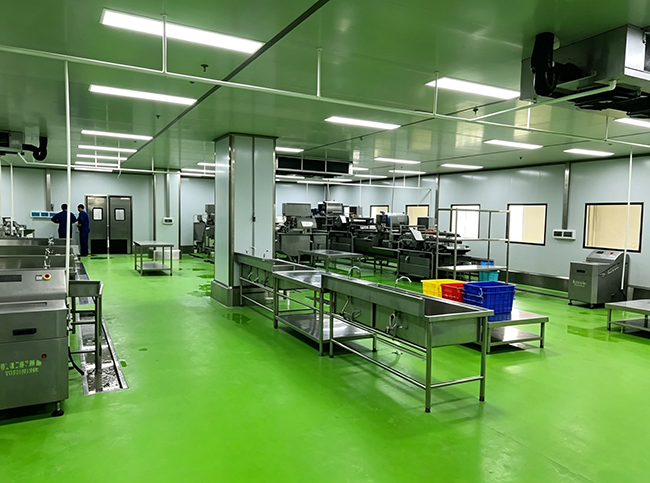
High temperature and humidity, surface condensation, and persistent standing water can significantly increase the risk of mold growth. Food plants should control temperature, relative humidity, and dew point according to product characteristics, process conditions, and area hygiene classifications, and should provide monitoring and drainage measures in locations prone to condensation. Ventilation systems should meet general hygienic requirements for food production, including GB 14881, provide appropriate natural or mechanical ventilation, and prevent airflow from lower-cleanliness areas toward higher-cleanliness areas. Specific air-change rates should be determined through engineering design or validation based on process and cleanliness requirements.
Air purification can form part of a mold-risk control program. In areas requiring higher air cleanliness, appropriately rated high-efficiency filtration may be used based on risk, together with proper filter maintenance and differential-pressure monitoring. Where space disinfection is necessary, products with clearly defined approved uses should be selected and applied strictly according to label instructions for concentration, contact time, personnel evacuation, and ventilation. Local clean-air supply or laminar-flow facilities at critical workstations should be designed and validated according to product-exposure risk and environmental monitoring results.
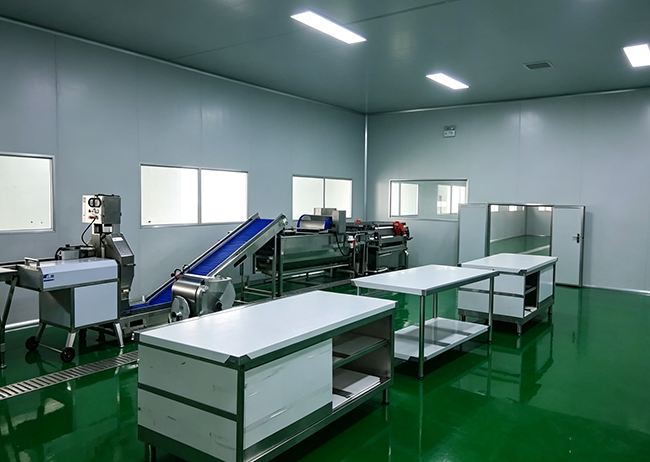
Routine cleaning should use dry or wet methods according to the nature of the contamination. Areas with heavy dust should preferentially use vacuum-cleaning equipment capable of effectively collecting dust, while tools that readily disperse dust should be avoided. Cleaning temperature, detergent concentration, and contact time for equipment surfaces should be selected according to material compatibility, soil type, and detergent instructions. Equipment designed to withstand high temperature or pressure may use validated steam or high-pressure cleaning methods. Drains and floor gullies should be brushed, disinfected, rinsed, and dried according to the plant sanitation program to prevent long-term standing water and biofilm formation.
Appropriate disinfectants should be selected for different areas and different food-contact conditions. Food-contact surfaces should use products that comply with applicable requirements for food-use disinfectants and whose instructions explicitly permit the intended application. Different disinfectants should not be mixed without authorization. Disinfection methods, concentrations, and contact times for air, pipelines, floors, walls, and other areas should likewise be determined from the product label, equipment-material compatibility, and plant validation results. For products containing peroxides, quaternary ammonium compounds, biguanides, or other combined active ingredients, worker protection, material compatibility, and any necessary residue control should also be considered.
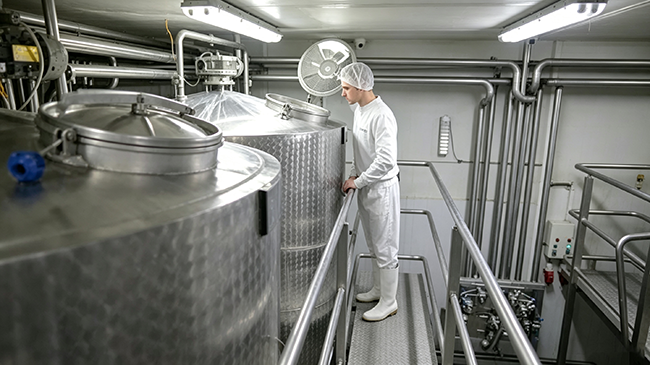
Whether disinfectants need to be rotated should be assessed using environmental microbiological monitoring, historical contaminant flora, disinfection-validation results, and material compatibility rather than a fixed calendar. Where necessary, a plant may rotate disinfectants with different modes of action and periodically confirm their effectiveness against target microorganisms. Disinfectants used on food or food-contact surfaces should comply with the current GB 14930.2—2025 National Food Safety Standard—Disinfectants and other applicable requirements, and residue control or final rinsing should follow the product instructions.
Heat-resistant equipment and piping may use validated hot-water or steam thermal-disinfection programs. Specific temperatures, holding times, and circulation methods should be determined from equipment design, material heat resistance, process risk, and validation results; medical-device sterilization parameters should not be copied directly into food-processing operations. After cleaning, equipment should also be drained and dried promptly to reduce prolonged surface wetness and condensation that could support renewed mold growth.
UV-C can be used as a supplementary physical disinfection measure in selected areas. Its effectiveness depends on dose, distance, exposure time, surface obstruction, and shadowing, so it cannot replace cleaning and routine disinfection. UV equipment should include personnel-protection, interlock, or sensing measures to prevent direct eye and skin exposure. UV-C devices installed on production lines or equipment should also be validated under actual operating conditions to confirm effective exposure.
Hygienic equipment design is critical for preventing mold and biofilm. Food-contact surfaces should be smooth, corrosion-resistant, easy to clean, and drainable, while sharp corners, crevices, dead legs, and structures that are difficult to clean should be minimized. Connections should preferably use radiused transitions that facilitate cleaning. In automated CIP systems, detergent concentration, temperature, time, and circulation velocity should be determined according to product residues, equipment materials, and validation results; no single parameter can guarantee the elimination of biofilm. Condensate should be removed promptly through suitable drainage, collection, and discharge design to prevent dripping onto products, food-contact surfaces, or clean areas.
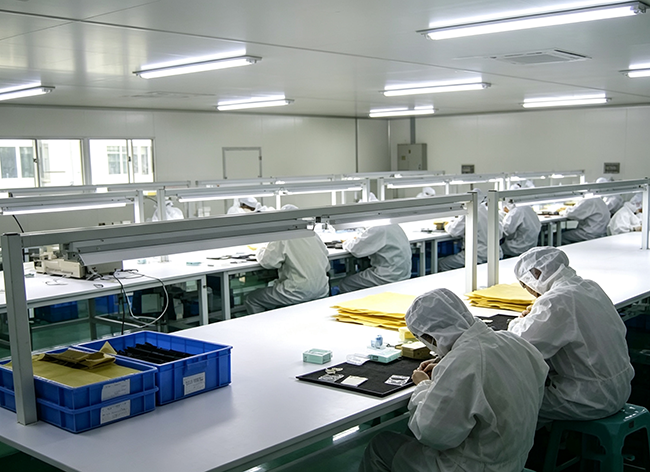
Incoming raw materials should be tested according to risk-based specifications. ATP fluorescence testing can be used for rapid assessment of overall cleanliness on equipment or environmental surfaces, but it is not a specific method for detecting mold or mycotoxins in raw materials. Mold, yeast, and mycotoxin risks in raw materials should be evaluated using appropriate microbiological or physicochemical methods. Depending on product characteristics, some cereal ingredients may undergo validated heat, microwave, or other microbial-control treatments, but the impact on product quality and nutrition should also be verified. Warehouse temperature, humidity, and gas-monitoring limits should be set according to the properties of each raw material and supported by FIFO, shelf-life alerts, and supplier-evaluation systems.
6. Personnel Management: Reducing Human-Mediated Cross-Contamination
Personnel are one of the important routes by which environmental microorganisms can spread. Based on hygiene zoning and process risk, companies should establish procedures for changing garments, hand washing and disinfection, footwear control, and entry management. In accordance with GB 14881 and the plant sanitation program, employees should repeat hand-hygiene procedures after entering operating areas, contacting contamination, using toilets, or other contamination events as required. Gloves and other protective articles should be suitable for their intended use and food-contact conditions; special antimicrobial coatings or mandatory disinfection every 30 minutes need not be imposed mechanically. Video or AI-based behavior recognition may support supervision, but cannot replace on-site training and sanitation management.
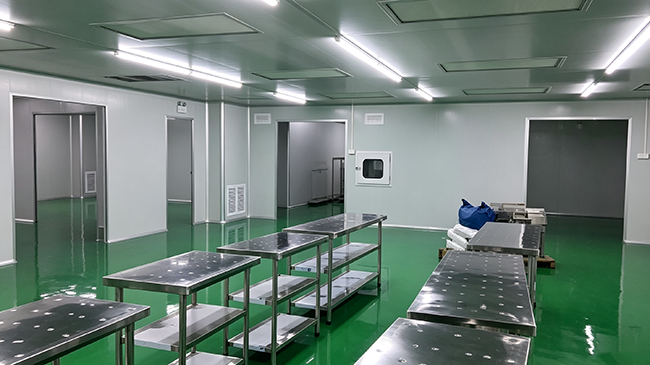
To improve employee awareness and operational capability for mold control, case studies, on-site demonstrations, fluorescent tracing, or simulation exercises can be used to show contact-transmission routes and cleaning blind spots. Emergency drills should be designed around the plant’s actual contamination risks and emergency plan, including scope of response, responsibilities, isolation, cleaning and disinfection, verification sampling, and conditions for resuming production. Completing “whole-workshop disinfection” within a fixed time should not be the sole objective.
Food plants can establish temperature, humidity, dew-point, and environmental microbiological monitoring systems based on risk. Sampling locations and frequencies for active air sampling, settle plates, surface contact plates, swabs, and other methods should be determined according to product risk, area hygiene classification, and historical trends. Automated spore monitoring, image recognition, and IoT sensors may serve as supplementary tools, but their detection scope, accuracy, and alarm thresholds must be validated. Fixed sampling intervals, fixed numbers of mold species, or fixed numbers of monitoring points should not be treated as universal requirements for all facilities.
Records of disinfection, environmental monitoring, deviation handling, and verification can be incorporated into a digital quality-management or traceability system to support rapid retrieval, trend analysis, and responsibility tracking. The decision to use blockchain should depend on actual business needs. When a contamination event occurs, the company should use batch records, production times, material-flow information, and test data to rapidly define the affected scope and initiate recall or corrective actions where necessary, rather than promising a fixed investigation time or a fixed improvement in recall efficiency.
Mold control is an important part of food-plant sanitation management and food-safety control. Effective prevention should be based on risk assessment and integrate hygienic design, cleaning and disinfection, temperature/humidity and condensation control, raw-material management, personnel hygiene, and environmental monitoring. Validation and continuous improvement should be used to reduce mold-contamination and product-spoilage risks.
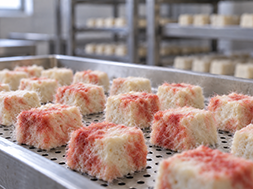
The reddish color of fermented tofu cannot be determined solely by its appearance; sampling and testing are necessary, and the abnormal product must be isolated. Relying solely on disinfectants is insufficient; equipment and the workshop environment must be thoroughly investigated. Air disinfection requires unmanned operation and material isolation. Disinfectants should be used according to specifications, and problems should be identified through a combination of production records and testing.
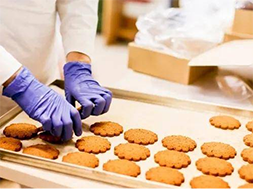
AB cleaning agents in food factories are prone to producing odor residues; Chlorine dioxide disinfectant can sterilize and deodorize without harmful residues. It can be diluted and used for disinfection of workshop equipment and water bodies, with matching ratios and safety operation requirements.
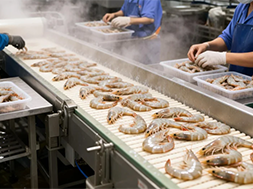
Chlorine dioxide disinfection in food production will produce harmful residues, and the water consumption of traditional large water washing is serious. Four measures can be taken to save water and reduce waste on the basis of ensuring food safety, so as to help enterprises achieve multiple benefits and win-win results.
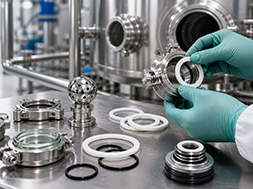
While switching from sodium hypochlorite to chlorine dioxide disinfection offers advantages such as sterilization, biofilm removal, and fewer disinfection byproducts, the strong oxidizing properties of chlorine dioxide necessitate careful consideration of production line material compatibility: 316L stainless steel should be prioritized for piping, and fluororubber or polytetrafluoroethylene (PTFE) should be used for seals, while also considering the suitability of accessories such as sight glasses and spray nozzles. The switch can be smoothly completed in three steps: establishing material records, conducting a 72-hour immersion test, and carrying out small-scale trial runs and inspections, thus preventing equipment corrosion and damage.
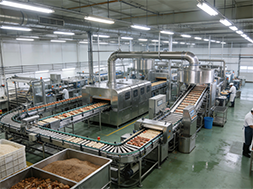
Traditional chlorine dioxide disinfection in food factories is time-consuming and reduces production capacity. Addressing pain points such as solution preparation, spraying, and ventilation monitoring, the process can be optimized in stages through equipment upgrades, zoned disinfection, scientific control of disinfection parameters, and accelerated ventilation monitoring. This phased process optimization, while ensuring safety and compliance, can shorten disinfection time by 30-50%, freeing up production capacity and improving hygiene management.
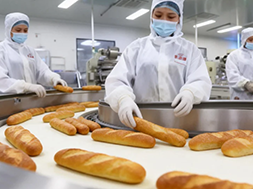
Powdered milk powder and starch dust in the powdered food workshop will absorb and consume chlorine dioxide dry fog, reducing the disinfection effect. It can solve the disinfection problems caused by dust and ensure food safety by reducing dust before disinfection, regulating the particle size of dry fog, pulse releasing agent, optimizing the air flow in the workshop, and matching other disinfection methods.
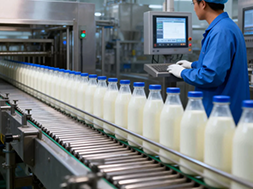
Chlorine dioxide is widely used for disinfection in water supply and food supply chains, but current issues exist regarding standards, procedures, and residue monitoring. It is necessary to standardize operating procedures, establish a comprehensive residue monitoring system, and improve risk warning and emergency response mechanisms to ensure disinfection safety from water treatment plant to table.

When using chlorine dioxide for disinfection of chocolate equipment, it is necessary to control the residue of the agent to avoid damaging the flavor and quality of the product. The preparation of the agent should be standardized, the disinfection and rinsing process optimized, and residue compliance verified through multiple methods. Since chocolate is a low-moisture food, a customized cleaning plan needs to be developed based on the specific equipment to balance safety and production stability.
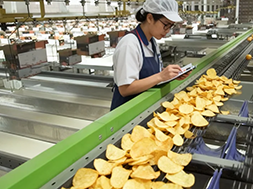
The strong oxidizing properties of chlorine dioxide can cause plastic conveyor belts in food factories to oxidize and age, with different materials exhibiting varying degrees of tolerance. To address this, a more refined approach can be taken, including controlling the concentration, shortening contact time, selecting oxidation-resistant materials, and employing differentiated disinfection methods and rotating disinfectants, thus balancing disinfection effectiveness with equipment protection.

When using chlorine dioxide for disinfection in food production, the disinfectant concentration is a critical control point in the HACCP system. Test strips are convenient to use but have a relatively large margin of error; portable testing instruments offer higher accuracy but require regular calibration and maintenance. Enterprises can adopt a three-tiered monitoring solution: primarily online sensors, supplemented by portable instrument inspection and calibration, and emergency verification using test strips. This enables continuous monitoring, data retention and traceability, ensuring both disinfection effectiveness and food safety.
Northeast of Huangshan Road and Chuangye Intersection, Small and Medium sized Enterprise Entrepreneurship Industrial Park, Shanwang Town, Linqu County, Weifang City, Shandong Province
Copyright © 2025 by Shandong Huashi Pharmaceutical Co., Ltd All Rights Reserved


 Language
 中文
中文 Русский
 Chlorine Dioxide Disinfectant Manufacturer


