Welcome to Our Factory for a Visit! Free customized disinfection solutions

Experienced masters know where in the food processing workshop is more important not to be ignored. These inconspicuous but headache inducing areas are the fiber depths of the tray, the cracks in the damaged tiles, and the grooves in the equipment threads.
These porous surface equipment and items are stationed everywhere in the food factory. Once a stubborn biofilm forms on the surface, conventional flushing has no practical effect at all. At this moment, immediately thinking of chlorine dioxide, the answer is naturally obvious, truly praising your excellent disinfection experience. That simple chemical agent can really disinfection and sterilization those corners and even inaccessible corners? Scientific Q&A, please continue to look down, with details of disinfection and sterilization operation.
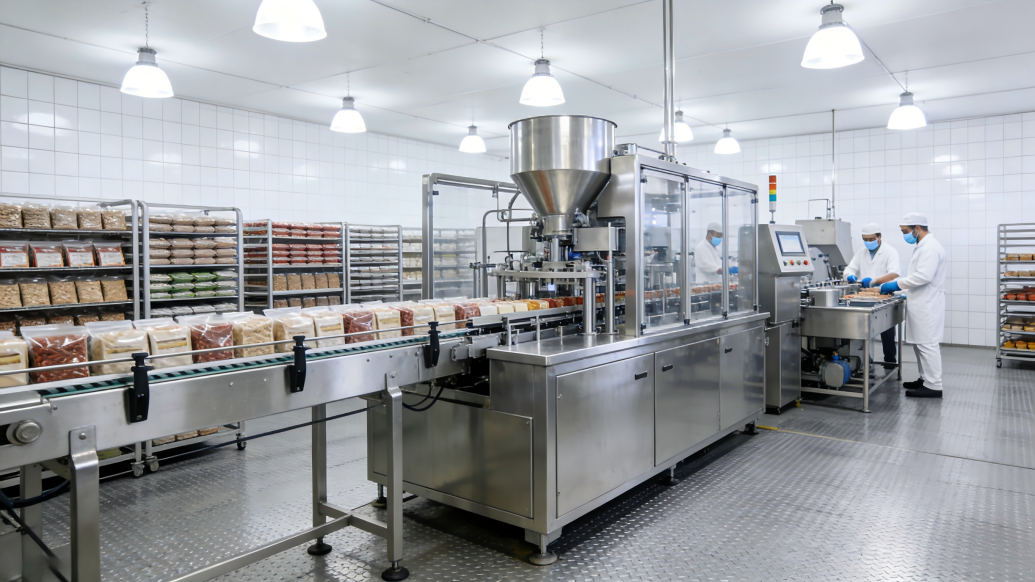
1、 The superpower of chlorine dioxide: it is a gas and also a wall penetrating hero
So, what's special about this chlorine dioxide contestant? It has two unique skills:
Firstly, it is a gas. This is not an ordinary disinfectant soaked in water. Chlorine dioxide remains stable with gas properties even after dissolving in water, which means it has strong diffusion and penetration capabilities. Just like perfume can drill into every corner of the room, chlorine dioxide swims between the water flows with the flexibility of small molecules, which will lead to the gaps.
Secondly, it can dissolve the walls of biofilms. Research has shown that chlorine dioxide can not only penetrate the mucous layer of biofilms, but also disrupt their structure. This is like it not only burrowed into the fortress, but also drilled a hole in the city wall to expose the bacteria inside.
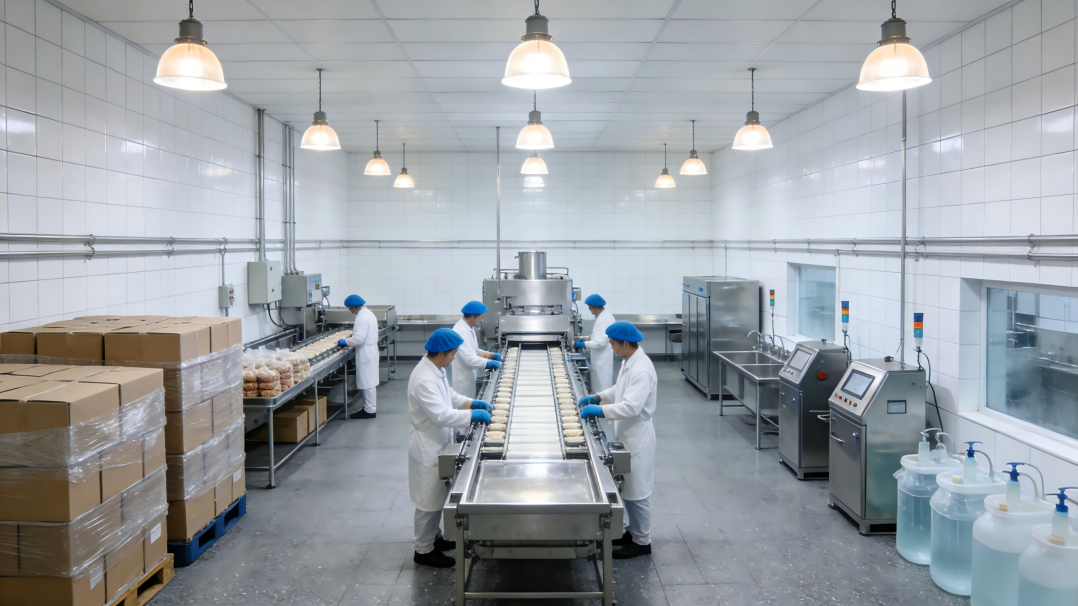
2、 Ideal is full, reality is tough: the three major difficulties hidden in the cracks
Although chlorine dioxide has the ability to penetrate walls, it will also encounter Waterloo in the complex battlefield of food factories.
Challenge 1: The materials are against you
Wooden pallets are a typical high-risk area. The surface of wood has a large number of pores and natural organic compounds (such as phenolic hydroxyl groups in lignin). Chlorine dioxide is a highly oxidizing and irritable substance that will fight all the way when drilling in - reacting with the organic matter in the wood itself.
The result is that before it could penetrate to the deepest biofilm, the active ingredients were sacrificed halfway. Research data shows that wooden surfaces can reduce the effective utilization rate of chlorine dioxide by 17%. Similarly, the dirt in the gaps of damaged tiles will also consume a large amount of disinfectant, making it impossible for ammunition to reach the front line.
Challenge 2: Thickness of Biofilm
Biofilm itself also has thickness. Scientists have measured using microelectrodes that when the thickness of a biofilm exceeds 100 microns and treated with a certain concentration of chlorine dioxide, depletion occurs in deep layers. That is to say, if the biofilm in the gap is too thick, the ability of chlorine dioxide to win depends solely on the quantity, which cannot be easily solved by adding it casually.
Difficulty Three: Thread Pitch
This is a very interesting detail. Do not use metal objects to store chlorine dioxide, as this incorrect use will inevitably lead to the problem of the lid not opening after a period of time. Because chlorine dioxide evaporates into the threads and reacts with something to crystallize, blocking the gaps.
What does this reverse indicate? Chlorine dioxide can indeed penetrate deep into threads. But in practical applications, if protein or oil accumulates at the thread, these things will wrap around bacteria like a protective cover. Attention: Chlorine dioxide should not be subjected to excessive pressure, as it cannot completely consume organic matter in areas with dense biofilm accumulation.
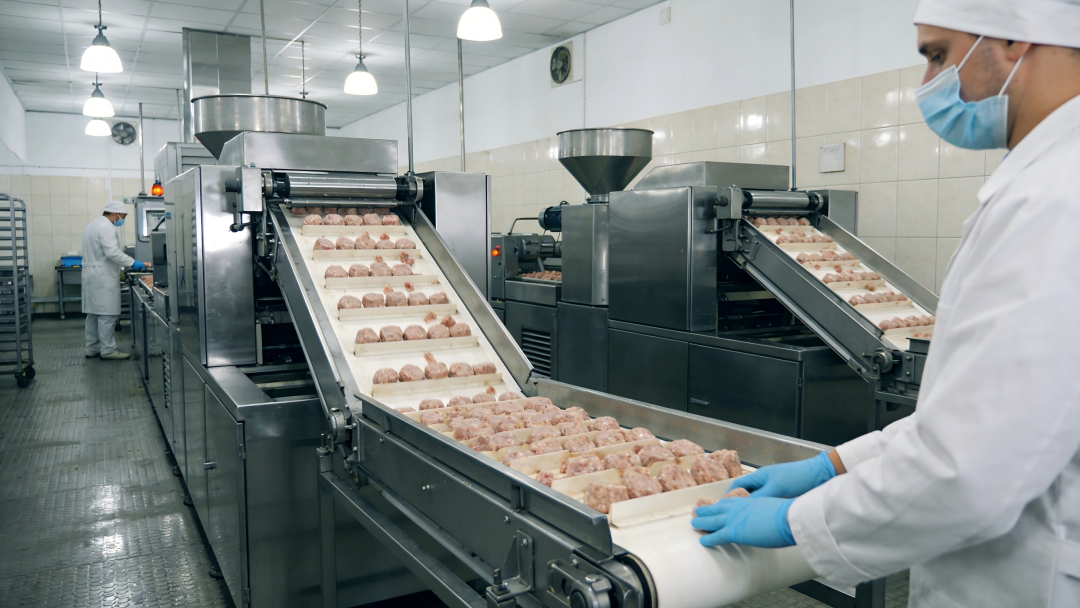
3、 So, what exactly is the answer? What should we do?
Returning to the question: Can chlorine dioxide penetrate gaps and kill hidden bacterial biofilms?
The answer is: yes, but with conditions. It is not a universal key, but a divine assist.
If we expect to kill all the bacteria in the aged dirt by simply increasing the concentration of chlorine dioxide, we are likely to be disappointed. To make chlorine dioxide shine in the cracks, you need to learn these tricks:
1. Cleaning is 1, disinfection is 0
The core technique is to clean first, then disinfect! Chlorine dioxide is a single soldier combat, and a large amount of organic matter (oil stains, food residues) in the crevices will quickly consume it. Only by washing and rinsing with alkali can the dirty things be removed before chlorine dioxide can be lightly loaded and enter for sterilization.
2. Give chlorine dioxide some time
The penetration reaction of chlorine dioxide requires time to complete. So it is necessary to specifically extend the contact time of the disinfectant in the concentrated area of its biofilm, and even use a cyclic soaking method to allow enough time for chlorine dioxide disinfectant to penetrate.
3. Compound attack
For porous materials such as wooden pallets, it is difficult to cure them solely through chemical disinfection. Conventional cleaning mode - one is to regularly soak and scald with hot water, and the other is to use ultrasonic assisted cleaning. This method prioritizes physical methods, which can first reduce a certain amount of bacteria in the gaps, and then add chlorine dioxide to sweep them away.
4. Gentle at the thread
Be careful not to forget those places with threads and sealing rings, of course, they need to be disassembled and cleaned until the threads are intact. Don't fantasize about using a flowing disinfectant to instantly clean the dirt deep inside the threads. Regularly disassembling, cleaning, and replacing is better than anything else.
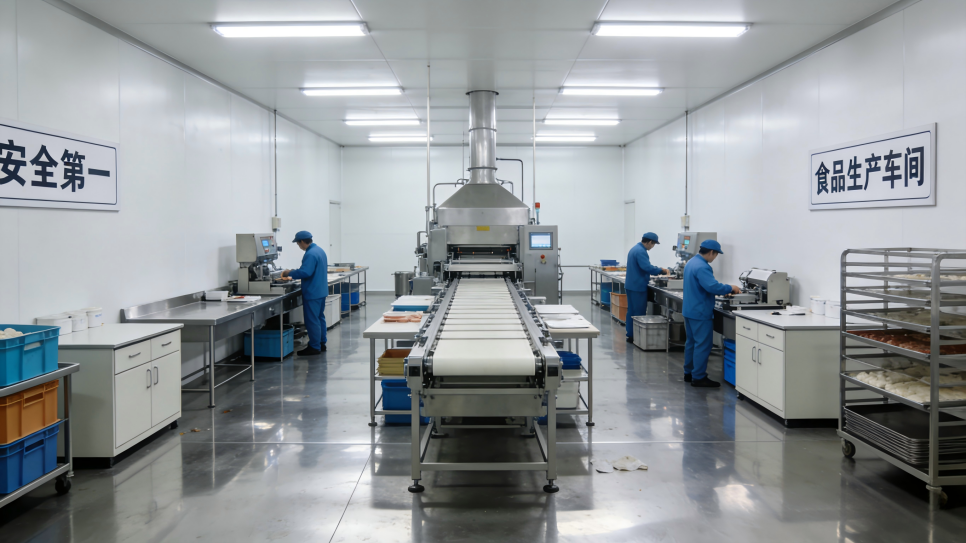
The next time you face seemingly inconspicuous cracks and threads, perhaps you will be more vigilant and have more confidence to deal with them.

When using chlorine dioxide for disinfection in food production, the disinfectant concentration is a critical control point in the HACCP system. Test strips are convenient to use but have a relatively large margin of error; portable testing instruments offer higher accuracy but require regular calibration and maintenance. Enterprises can adopt a three-tiered monitoring solution: primarily online sensors, supplemented by portable instrument inspection and calibration, and emergency verification using test strips. This enables continuous monitoring, data retention and traceability, ensuring both disinfection effectiveness and food safety.
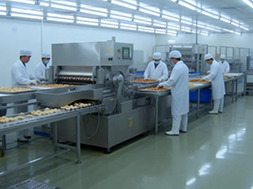
Chlorine dioxide fumigation can achieve thorough disinfection of food factory workshops, but it can easily produce residual odors that contaminate products. After 2-4 hours of disinfection, residual gases can be eliminated with the help of negative pressure exhaust, three-stage ventilation, neutralizing agents, and activated carbon. Raw material packaging should be removed or sealed in advance, easily absorbent parts should be protected, residues should be tested after disinfection, and sufficient ventilation should be ensured before production to guarantee food safety.

Microorganisms detected after disinfection in food factories often indicate secondary contamination. Do not blindly change disinfectants. Instead, identify the problem through three steps: on-site sampling and investigation, microbial tracing, and verification of the disinfection process. Then, classify and rectify the issues. Disinfection of workshops requires a combination of products, solutions, and services.
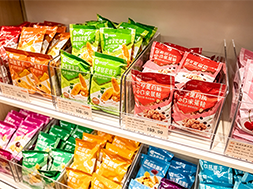
In 2022, a food factory in North China faced a downturn in offline channels and transformed its business by selling crispy pork powder on Douyin (TikTok). Within 18 months, it achieved monthly sales of 6 million yuan. Initially, the factory suffered losses from live-streaming sales, but managed to increase sales volume by supporting small and medium-sized influencers. It reversed the losses by reducing costs through various means and promoting high-margin packages. Optimizing shipping and after-sales service stabilized store traffic. Subsequently, it cultivated private domain traffic, expanded across multiple platforms, and even revitalized its offline channels. Traditional factories need to balance production and online operations to survive in the market.
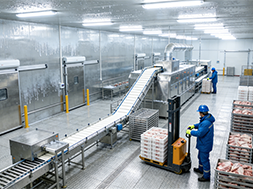
A large-scale recall of frozen food products in the US due to glass shards contaminated the food was highlighted. Physical foreign objects can carry microorganisms, cause temperature fluctuations on production lines, and create unsanitary areas in equipment, making frozen products susceptible to Listeria growth. Chlorine dioxide can achieve comprehensive disinfection of workshops, equipment, water, and tools, eliminating the risk of secondary contamination. Companies need to simultaneously conduct equipment inspections and standardized disinfection. Xiuba can provide complete disinfection solutions for the food industry.
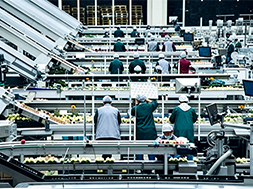
AI is profoundly reshaping the food industry. Domestic and foreign food companies are implementing five major applications: intelligent production, AI quality inspection, formula development, supply chain prediction, and low-carbon production, to achieve cost reduction and quality improvement. In the future, the industry will move towards data assetization, full-chain collaboration, and the widespread application of AI technology in small and medium-sized factories.
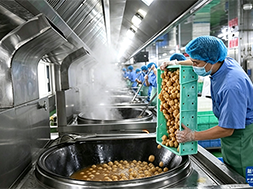
Mold easily grows in food factories during spring and summer, contaminating products and even producing carcinogenic toxins. This solution provides a complete practical guide to mold prevention in workshops, covering seven dimensions: environmental control, chemical and physical disinfection, equipment and raw materials, personnel management, and intelligent monitoring.
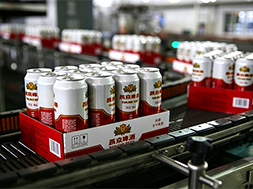
Biofilm growth in beverage and brewery pipelines can pose food safety risks. This article introduces the four-step CIP cleaning process, the advantages and disadvantages of various disinfectants, key points to avoid cleaning pitfalls, and recommends efficient disinfection solutions.
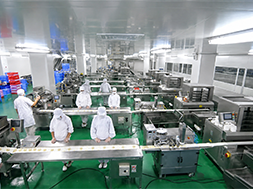
Chlorine dioxide is suitable for air and surface disinfection in food processing workshops. It has broad-spectrum and high-efficiency characteristics, but the concentration, time, ventilation and personnel protection must be strictly controlled, and the operation must be carried out in accordance with the instructions.

Disinfection in fruit and vegetable processing suffers from drawbacks such as the production of harmful byproducts, damage to nutritional value, and incomplete sterilization by traditional disinfectants. Chlorine dioxide, on the other hand, produces no toxic byproducts, is safe for use at low concentrations, and can also protect color and lock in nutrients. Xiuba food-grade chlorine dioxide boasts an activation rate exceeding 95%, a complete product range, and comprehensive certifications. With years of industry experience, Xiuba can provide complete solutions for cleaning and disinfecting food and fruits and vegetables.
Northeast of Huangshan Road and Chuangye Intersection, Small and Medium sized Enterprise Entrepreneurship Industrial Park, Shanwang Town, Linqu County, Weifang City, Shandong Province
Copyright © 2025 by Shandong Huashi Pharmaceutical Co., Ltd All Rights Reserved


 Language
 中文
中文 Русский
 Chlorine Dioxide Disinfectant Manufacturer


