Welcome to Our Factory for a Visit! Free customized disinfection solutions
“Manager Wang, the quality-control team has detected mold again on the filling line!”
“Didn’t we just adjust the chlorine dioxide disinfection program last month? Why is it happening again?”
Situations like this are not uncommon in food factories.
Companies invest manpower and money in cleaning and disinfection, yet microbiological monitoring still shows abnormal results. Management may immediately wonder:
Is the disinfectant ineffective?
Is the concentration too low?
Should we replace it immediately?
In fact, a single abnormal microbiological result does not directly prove that the disinfectant has failed.
Microbial problems in food-production environments often involve multiple factors. The real cause may be:
Failure of the cleaning or disinfection process, persistent contamination sources such as equipment dead zones and biofilms, recontamination after disinfection, or differences in sampling and testing procedures.
Therefore, when microorganisms are detected, the most important action is not immediately changing the disinfectant, but establishing a scientific investigation process to determine where the contamination is actually coming from.
Chlorine dioxide is a disinfectant with strong oxidizing capability, but no disinfectant can provide permanent sterility after a single treatment.
When abnormal microbiological results occur in a food plant, the investigation can generally begin from four directions.
Possible causes include:
Insufficient disinfectant concentration, inadequate contact time, improper preparation or storage, incomplete spray or wiping coverage, or failure to sufficiently remove oils, proteins, sugars, starches and other organic residues before disinfection.
All of these factors may reduce the actual effectiveness of disinfection.
One point is especially important:
Cleaning is the prerequisite for disinfection.
If obvious food residues, soils or biofilms remain on equipment surfaces, simply increasing the chlorine dioxide concentration may not solve the root problem.
This is an issue that can easily be overlooked in food-production environments.
Examples include:
Inside seals, pipe joints, conveyor-belt seams, equipment undersides, drains, condensation zones and hard-to-clean areas.
These locations may accumulate moisture and nutrients for long periods.
If biofilms form in these areas, microorganisms may be continuously released into an environment that has already been cleaned and disinfected.
In this case, even if surface disinfection is effective at the time of treatment, microorganisms may still be detected again later.
Therefore:
Detecting microorganisms again after disinfection does not necessarily mean that contamination came back from the outside. It may also mean that a hidden internal contamination source was never fully eliminated.
Even when cleaning and disinfection themselves are effective, treated equipment or surfaces may become contaminated again.
Common sources include:
Personnel movement, gowning procedures, hand hygiene, cross-use of production tools, incoming raw and auxiliary materials, packaging materials, airflow, return-air systems, condensation and cross-traffic between logistics routes.
Therefore, microbial control in a food plant cannot focus only on the few minutes during disinfection.
It must also consider what happens after disinfection is completed and before actual production begins.
This is extremely important but often ignored.
Differences between test results may also result from:
Different sampling locations, different sampling areas, different operators, differences in swab recovery efficiency, changes in incubation conditions, or residual disinfectant not being properly neutralized in the sampling solution.
Therefore, an abnormal result should not lead to an immediate conclusion based on a single test.
Sampling points should be selected according to the actual production process so that the results are comparable.
One point requires special attention:
T0 does not mean sampling immediately after spraying the disinfectant.
The correct approach is:
Complete the required effective contact time according to the label and instructions of the disinfectant, then collect the sample and use a validated neutralization system appropriate for the disinfectant to promptly stop any residual disinfectant activity.
Only then can the result more accurately represent the immediate microbiological condition after the cleaning and disinfection cycle.
If target microorganisms are repeatedly detected at this stage, priority should be given to checking:
Cleaning effectiveness, disinfectant concentration, contact time, coverage, equipment dead zones and persistent contamination sources.
If properly neutralized T0 results are low, but microorganisms are detected again after several hours of standing or before production begins, further investigation should consider:
Environmental recontamination, release from persistent contamination sources inside equipment, or recovery of surviving microorganisms.
It is not scientifically appropriate to assume:
T0 negative + T1 positive = definitely airborne recontamination.
A better approach is to add repeated samples and several time points to observe the trend.
In addition to time, location must also be compared.
Depending on the risk, sampling may include:
High-touch surfaces, critical equipment areas, conveyor systems, difficult-to-clean areas, drainage systems, walls and floors, return-air vents, supply-air outlets and adjacent hygiene zones.
If contamination is concentrated in areas frequently touched by personnel, personnel practices and cross-contact should be investigated first.
If similar microorganisms repeatedly appear near return-air outlets or at multiple elevated sampling points, the air-handling system should be investigated further.
If contamination repeatedly occurs at a fixed point on the same machine, structural hygienic dead zones, biofilms or inadequate cleaning should be considered.
Different microorganisms have characteristic ecological sources, so identification can help narrow the investigation.
However:
Microorganism type can provide investigative clues, but it cannot independently prove the source of contamination.
For example, when spore-forming microorganisms are detected, priority may be given to investigating raw materials, dust, soil-related contamination, packaging materials and whether the disinfection process adequately controls highly resistant microorganisms.
When molds such as Penicillium or Aspergillus are detected, priority may be given to air, raw materials, packaging, damp areas, walls, condensation and equipment dead zones.
If microorganisms commonly associated with personnel are detected, further investigation should focus on hand hygiene, protective clothing, gowning procedures and operator practices.
The key wording should not be:
“If this microorganism is detected, the contamination must have come from here.”
Instead, it should be:
“If this microorganism is detected, which potential sources should be investigated first?”
If the same microorganism repeatedly appears in several areas, isolates from the production area may be compared with isolates from:
Raw-material areas, gowning areas, packaging areas, air-handling systems and inside equipment.
Where resources allow, strain typing or higher-resolution molecular methods may be used to evaluate the genetic relatedness between isolates.
However, even if isolates from two locations are highly related, contamination pathways should still be interpreted together with:
Time, location, personnel movement, material flow and production records.
Highly similar strains can support a possible relationship, but do not independently prove that contamination moved directly from Point A to Point B.
Even when recontamination is suspected, the cleaning and disinfection process itself should still be reviewed.
The following areas deserve particular attention.
Before disinfection, were the following fully removed:
Food residues, proteins, oils, sugars, starches and visible soils?
For locations with repeated microbiological findings, it is also necessary to investigate:
Biofilms, contamination inside seals and structural hygienic dead zones.
If cleaning is inadequate, even an effective disinfectant may not perform consistently.
The specific product label and instructions should be checked for:
Correct working concentration, proper preparation method, required contact time, allowable storage conditions and specified use period.
For chlorine dioxide products, different dosage forms and models may have different preparation methods and stability periods.
Therefore, it is not appropriate to require every chlorine dioxide product to follow the exact same “prepare immediately before use” rule.
The correct principle is:
Prepare, store and use the product strictly according to the label and instructions for that specific product.
During spraying, soaking or wiping, were there areas that the disinfectant could not effectively reach?
The important issue in wiping disinfection is not mechanically following one particular “S-shaped” motion.
The real objective is:
To achieve complete coverage while avoiding recontamination of areas that have already been treated.
Cleaning cloths and tools should also be properly segregated by hygiene zone and replaced according to established procedures.
Even if the program itself is correct, inconsistent implementation between shifts can still cause significant variation.
Examples include:
Errors in concentration preparation, different spray volumes, insufficient contact time or cross-use of cleaning tools.
For this reason, operator training and process records are also part of the disinfection system.
The priority is not to “change chemicals immediately,” but to:
Revalidate the cleaning procedure, verify working-solution preparation and actual use concentration, confirm required contact time, improve coverage of difficult areas and retrain operators.
If the issue involves spores, biofilms or other specific microbial risks, targeted intensified cleaning or different disinfection mechanisms may be considered following professional evaluation, based on target microorganisms, material compatibility and the permitted application of the product.
It is not scientifically appropriate to assume:
Long-term use of one disinfectant automatically requires rotation, otherwise resistance will inevitably develop.
Disinfectant rotation should be based on actual environmental monitoring results and effectiveness verification.
These problems generally cannot be solved simply by increasing disinfection frequency.
Priority should be given to inspecting:
Equipment design, seals, pipeline joints, conveyors, drainage systems, condensation and persistently damp areas.
Where necessary, equipment disassembly, deep cleaning, biofilm removal and hygienic-design improvements may be required.
For food plants:
If the contamination source remains in place, disinfection may temporarily reduce microbial numbers but cannot eliminate the root cause.
Then the entire environmental-control system should be reviewed.
Reassess hygiene zoning, gowning procedures, hand hygiene, tool management, cross-traffic between personnel and materials, and buffer arrangements between areas of different hygiene levels.
According to actual hygiene risks, assess:
Supply and return air, filtration level, air-change efficiency and pressure differentials between zones.
For high-hygiene areas, filtration and pressure control may be optimized according to process requirements so that airflow direction supports hygienic design.
However, not every food plant requires uniform FFU installation or positive pressure in all rooms.
The specific solution should be designed according to the process and hygiene zoning.
If chemical space disinfection is genuinely required, first confirm that the specific product is permitted for the intended application.
The concentration, contact time, personnel evacuation, ventilation and effectiveness-verification requirements stated in the label and instructions should be strictly followed.
Continuous chemical fogging while personnel are present should not be treated as a general routine method for controlling airborne microorganisms in food-production areas.
During production, the priority should remain:
Source control, filtration, ventilation, pressure control and personnel-flow management.
A mature food plant should not wait until product or environmental tests fail before investigating.
A more effective approach is to establish an environmental monitoring program based on the characteristics of the product and the risk level of different production areas.
Monitoring may include:
Critical food-contact surfaces, non-food-contact surfaces, equipment dead zones, drainage systems, air-related areas and high-touch locations.
The important question is not only:
Did we exceed a limit today?
The plant should also analyze:
Which locations remain consistently high?
Which microorganisms repeatedly appear?
Are certain shifts associated with higher counts?
Are there seasonal patterns?
Did the trend actually improve after cleaning or disinfection changes?
In this way, environmental microbiological monitoring becomes more than a simple pass/fail tool.
It becomes a management tool that guides production and sanitation decisions.
When dealing with complex microbiological risks in food-production environments, a stable and appropriately selected disinfectant is certainly important.
But reliable food-production hygiene control has never depended on simply “choosing one disinfectant.”
It actually depends on:
Hygienic design → Effective cleaning → Appropriate disinfection → Personnel and material-flow control → Environmental monitoring → Deviation investigation → Continuous corrective action
forming a complete closed loop.
This is why, when microorganisms are detected in a food plant, the first conclusion should not be:
“This disinfectant does not work.”
Instead, ask:
Was contamination not controlled during cleaning and disinfection?
Is it hidden in equipment or biofilms?
Did it enter again after disinfection?
Or are the sampling and test results not fully comparable?
Only after the real cause has been identified can the corrective action truly address the problem.
The use of chlorine dioxide in food-production environments should not be evaluated only by one product parameter.
Different food enterprises vary greatly in:
Product type, equipment materials, production environment, water quality, organic load and microbiological risk.
Therefore, actual use should be based on the specific product label, instructions and applicable standards, with reasonable determination of:
Cleaning and disinfection procedures, concentration, contact time, application method and subsequent verification requirements.
XIUBA chlorine dioxide products continue to be used in food production, water treatment and other professional disinfection applications.
Beyond the product itself, companies should pay greater attention to:
On-site problem diagnosis, product selection, application-program design, operator training, effectiveness verification and continuous optimization.
When a microbiological problem occurs, professional technical service should not simply tell the customer:
“Increase the chemical concentration.”
Instead, it should help the customer answer:
Where are the microorganisms actually coming from?
Which part of the process has lost control?
How should it be corrected?
And how can data prove that the problem has truly been resolved?
That is where professional disinfection service creates real value.
Microbiological abnormalities in food-production environments are rarely explained by one simple cause.
When a problem occurs, do not rush to change disinfectants and do not blindly increase the concentration.
First separate the possible causes:
Was cleaning and disinfection effective?
Are biofilms or persistent contamination sources present?
Did recontamination occur after disinfection?
Are sampling and testing results truly comparable?
Then investigate systematically through time, location, microorganism type and production-process records.
Reliable microbial control in food production does not depend on one “universal disinfectant.”
It depends on a scientific system capable of identifying problems, verifying causes and continuously correcting deviations.
Products solve the tool problem.
Systems solve the long-term stability problem.
For more information on food-production environmental disinfection and microbial-control solutions, please follow the Shandong XIUBA official account.
This article is intended for technical communication on microbial control and disinfection in food-production environments.
The intended use, concentration, preparation method, contact time, rinsing requirements and safe operating procedures for any specific disinfectant product should follow the corresponding product label, instructions, the actual production process of the enterprise and currently applicable standards.
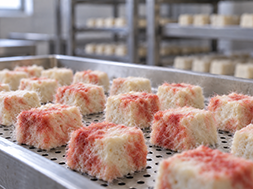
The reddish color of fermented tofu cannot be determined solely by its appearance; sampling and testing are necessary, and the abnormal product must be isolated. Relying solely on disinfectants is insufficient; equipment and the workshop environment must be thoroughly investigated. Air disinfection requires unmanned operation and material isolation. Disinfectants should be used according to specifications, and problems should be identified through a combination of production records and testing.
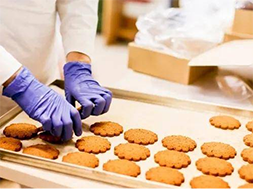
AB cleaning agents in food factories are prone to producing odor residues; Chlorine dioxide disinfectant can sterilize and deodorize without harmful residues. It can be diluted and used for disinfection of workshop equipment and water bodies, with matching ratios and safety operation requirements.
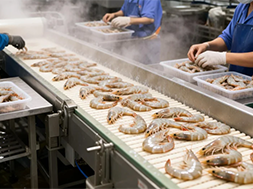
Chlorine dioxide disinfection in food production will produce harmful residues, and the water consumption of traditional large water washing is serious. Four measures can be taken to save water and reduce waste on the basis of ensuring food safety, so as to help enterprises achieve multiple benefits and win-win results.
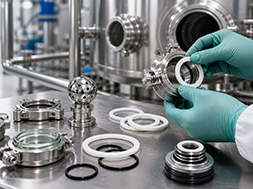
While switching from sodium hypochlorite to chlorine dioxide disinfection offers advantages such as sterilization, biofilm removal, and fewer disinfection byproducts, the strong oxidizing properties of chlorine dioxide necessitate careful consideration of production line material compatibility: 316L stainless steel should be prioritized for piping, and fluororubber or polytetrafluoroethylene (PTFE) should be used for seals, while also considering the suitability of accessories such as sight glasses and spray nozzles. The switch can be smoothly completed in three steps: establishing material records, conducting a 72-hour immersion test, and carrying out small-scale trial runs and inspections, thus preventing equipment corrosion and damage.
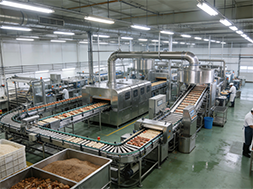
Traditional chlorine dioxide disinfection in food factories is time-consuming and reduces production capacity. Addressing pain points such as solution preparation, spraying, and ventilation monitoring, the process can be optimized in stages through equipment upgrades, zoned disinfection, scientific control of disinfection parameters, and accelerated ventilation monitoring. This phased process optimization, while ensuring safety and compliance, can shorten disinfection time by 30-50%, freeing up production capacity and improving hygiene management.
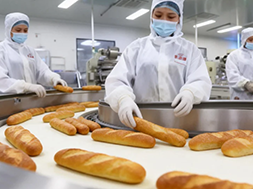
Powdered milk powder and starch dust in the powdered food workshop will absorb and consume chlorine dioxide dry fog, reducing the disinfection effect. It can solve the disinfection problems caused by dust and ensure food safety by reducing dust before disinfection, regulating the particle size of dry fog, pulse releasing agent, optimizing the air flow in the workshop, and matching other disinfection methods.
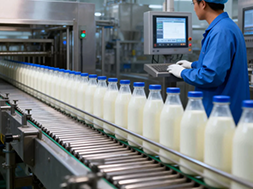
Chlorine dioxide is widely used for disinfection in water supply and food supply chains, but current issues exist regarding standards, procedures, and residue monitoring. It is necessary to standardize operating procedures, establish a comprehensive residue monitoring system, and improve risk warning and emergency response mechanisms to ensure disinfection safety from water treatment plant to table.

When using chlorine dioxide for disinfection of chocolate equipment, it is necessary to control the residue of the agent to avoid damaging the flavor and quality of the product. The preparation of the agent should be standardized, the disinfection and rinsing process optimized, and residue compliance verified through multiple methods. Since chocolate is a low-moisture food, a customized cleaning plan needs to be developed based on the specific equipment to balance safety and production stability.
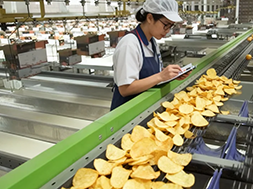
The strong oxidizing properties of chlorine dioxide can cause plastic conveyor belts in food factories to oxidize and age, with different materials exhibiting varying degrees of tolerance. To address this, a more refined approach can be taken, including controlling the concentration, shortening contact time, selecting oxidation-resistant materials, and employing differentiated disinfection methods and rotating disinfectants, thus balancing disinfection effectiveness with equipment protection.
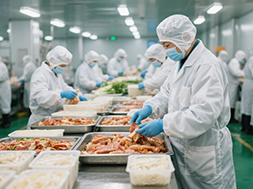
When using chlorine dioxide for disinfection in food production, the disinfectant concentration is a critical control point in the HACCP system. Test strips are convenient to use but have a relatively large margin of error; portable testing instruments offer higher accuracy but require regular calibration and maintenance. Enterprises can adopt a three-tiered monitoring solution: primarily online sensors, supplemented by portable instrument inspection and calibration, and emergency verification using test strips. This enables continuous monitoring, data retention and traceability, ensuring both disinfection effectiveness and food safety.
Northeast of Huangshan Road and Chuangye Intersection, Small and Medium sized Enterprise Entrepreneurship Industrial Park, Shanwang Town, Linqu County, Weifang City, Shandong Province
Copyright © 2025 by Shandong Huashi Pharmaceutical Co., Ltd All Rights Reserved


 Language
 中文
中文 Русский
 Chlorine Dioxide Disinfectant Manufacturer


