Welcome to Our Factory for a Visit! Free customized disinfection solutions
In beverage and beer production, process piping connects critical stages such as raw-material handling, intermediate product transfer and filling, and is therefore an important factor affecting product hygiene and quality. If piping contains product residues, hygienic dead zones, low-flow areas, or is not cleaned and disinfected effectively, microbial contamination and biofilms may develop. This can lead to turbidity, sediment, abnormal microbiological indicators, batch rejection and even food-safety risks.
For this reason, pipeline cleaning and disinfection cannot be judged only by whether a surface looks clean. Hygienic design, cleaning-agent concentration, temperature, flow velocity, contact time and verification results must all be controlled systematically. The following sections summarize key points for cleaning and disinfecting beverage and brewery piping, including contamination mechanisms, typical CIP procedures, disinfectant selection and verification management.
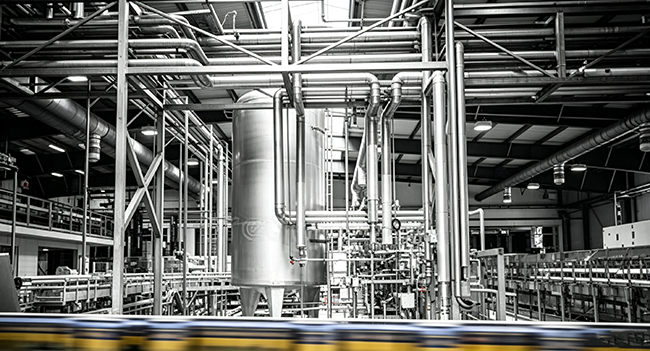
Beverage and brewery piping is frequently exposed to sugars, proteins, yeast and other nutrients. If a system contains dead legs, cannot drain completely, has insufficient flow velocity, or has defects in welds or seals, residues can adhere to pipe walls and provide conditions for microbial growth. Microorganisms may also combine with extracellular polymeric substances and product residues to form biofilms, which are more tolerant of conventional cleaning and disinfection.
Mature biofilms can continuously release microorganisms into the pipeline, causing abnormal total plate counts or other microbiological indicators. They may also contribute to turbidity, off-odors and sediment in products, while some gas-producing microorganisms can cause package swelling. At the same time, mineral deposits, corrosion products and product residues may accumulate on internal surfaces, further increasing cleaning difficulty and accelerating deterioration in product quality.
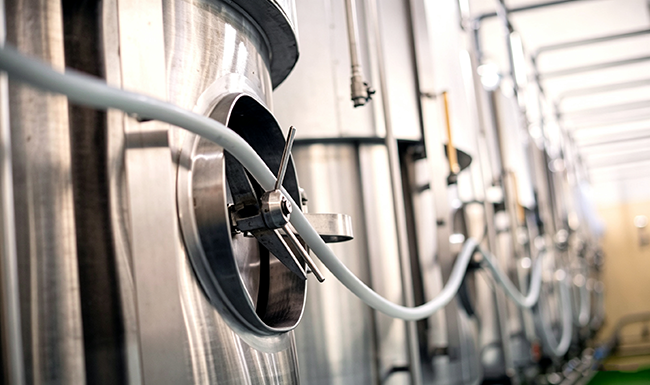
In actual production, long-term failure of a CIP program, hygienic design defects or recurring biofilm formation may result in microbiological abnormalities, product rejection or even recalls. Pipeline cleaning and disinfection should therefore be treated as an important part of food-safety and quality management. Preventive maintenance, process monitoring and cleaning-effectiveness verification should be used to continuously reduce contamination risks.
There is no single four-step CIP (cleaning-in-place) standard that applies to every beverage and brewery production line. A typical sequence may include pre-rinsing, alkaline cleaning, intermediate rinsing, acid cleaning when necessary, final rinsing and disinfection. Actual concentration, temperature, flow velocity and contact time should be determined according to the nature of product residues, equipment materials, hygienic design, cleaning-agent instructions and the company's validated results.
1. Pre-rinse: Remove soluble and loose residues
The purpose of pre-rinsing is to remove product and loose residues from the pipeline as quickly as possible and prepare the system for subsequent chemical cleaning. Appropriate water temperature and rinsing time should be selected according to the material being processed. One practical process indicator is that the return water no longer shows obvious product color, odor or visible residue. For protein-rich residues, excessively high initial rinse temperatures should be avoided because they may denature proteins and increase adhesion. Sugary beverages, juices and beer require conditions selected according to their respective soil characteristics.
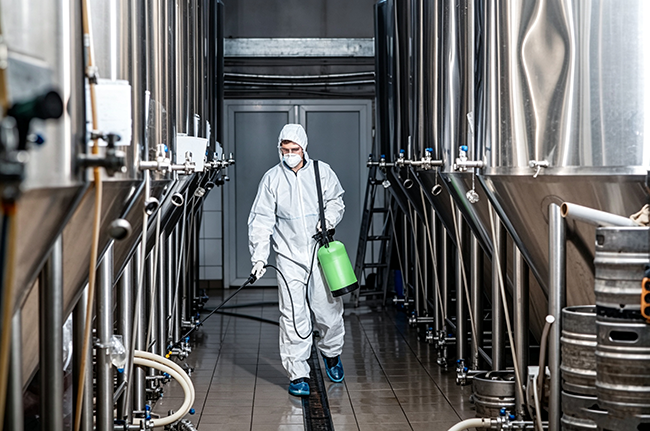
2. Alkaline cleaning: Remove organic soils
Alkaline cleaning is mainly used to remove fats, proteins and other organic residues. Some food and beverage CIP programs use approximately 1%-2% sodium hydroxide or a dedicated alkaline cleaner together with suitable heating and circulation time, but this range is only a typical example and should not be applied directly to every production line. Cleaning performance also depends on the mechanical action created by flow velocity, as well as temperature, concentration and contact time. The process should be validated with consideration of equipment materials and the cleaning-agent supplier's recommendations.
3. Acid cleaning: Remove mineral deposits
Acid cleaning is mainly used to remove scale, beerstone and other inorganic deposits. After alkaline cleaning, the system should first be thoroughly rinsed with water. Acid cleaning should then be used only when required by the type and degree of scaling; it should not be treated as a step for simply 'neutralizing residual alkali.' The concentration, temperature and circulation time of nitric acid, phosphoric acid or other dedicated acidic cleaners should be determined according to equipment materials, the degree of scaling and product instructions. After acid cleaning, the system must be thoroughly rinsed until the specified endpoint criteria are met.
4. Disinfection: Select thermal or chemical methods according to the equipment and process
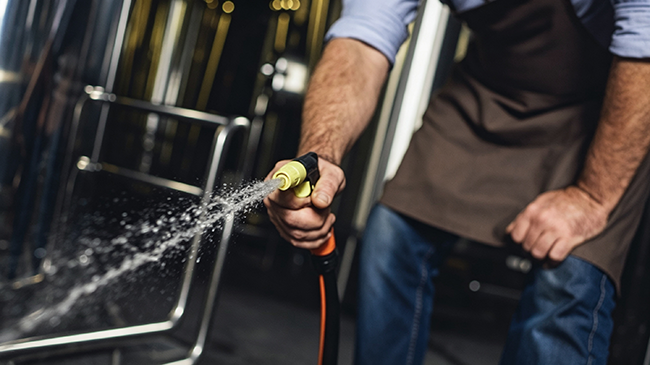
After cleaning has been verified as satisfactory, hot water, steam or chemical disinfection may be selected according to equipment heat resistance and the production process. Hot-water circulation should use a validated temperature-time combination, with particular attention to whether the return line and the most difficult-to-treat points in the system reach the specified conditions. When steam is used for SIP (sterilization/sanitization in place), steam meeting process requirements should be used and the validated temperature, pressure and holding time should be followed. 'Steam above 80°C' should not be used as a universal specification.
For chemical disinfection, the disinfectant should be selected according to target microorganisms, equipment materials, food-contact-surface requirements and product instructions. Improper use of chlorine-based disinfectants may increase corrosion and residue risks. The antimicrobial and biofilm-control performance of peroxide-based and compounded disinfectants depends on their active ingredients, use concentration, contact time and site conditions. Whether a final rinse is required should be determined by the product instructions, approved scope of use and the company's validation requirements. For products containing silver ions or other compounded ingredients, the fact that hydrogen peroxide ultimately decomposes into water and oxygen does not mean that the entire formulation can automatically be considered residue-free.
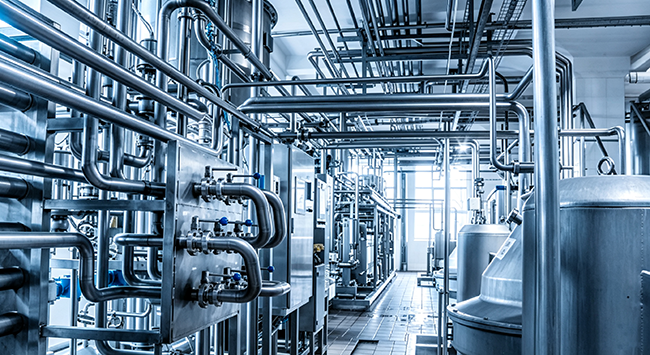
Many types of disinfectants can be used in beverage and beer production. Selection should not be based only on antimicrobial speed or unit price. Target microorganisms, food-contact-surface requirements, material compatibility, residues and by-products, operator safety and company validation data should all be considered. The table below summarizes key points for comparison.
|
Disinfectant type |
Advantages |
Key considerations |
|
Sodium hypochlorite |
Relatively low cost; rapid antimicrobial action |
High concentrations or improper use may increase corrosion and residue risks; concentration and use conditions must be controlled |
|
Peracetic acid |
Broad spectrum; relatively rapid action |
Irritating and corrosive; requires ventilation, personal protection and residue control according to instructions |
|
Chlorine dioxide |
Broad-spectrum oxidative disinfection; effective against many microorganisms |
Use concentration must be controlled; chlorite/chlorate by-products and material compatibility should be considered |
|
OXYSAN |
Compounded disinfectant; specific performance should be based on product documentation |
Use concentration, contact time and whether rinsing is required should follow instructions and validation reports |
|
Nocolyse |
Compounded disinfectant; specific performance should be based on product documentation |
Verify scope of use, dilution ratio, material compatibility and food-contact-surface requirements |
Peroxide- or silver-ion-based compounded products such as OXYSAN and Nocolyse may be considered as candidate disinfectants, but specific performance claims should be based on product instructions, approved scope of use and validated test reports. When selecting a product, verify the active ingredients, use concentration, contact time, target microorganisms, food-contact-surface requirements and whether a final rinse is required. Biofilm control should not rely on a single disinfectant alone; cleaning parameters should also be optimized and hygienic-design issues such as dead legs, seals, welds and insufficient flow velocity should be investigated.
Pipeline cleaning and disinfection involves several easily overlooked risks. If they are not properly controlled, cleaning effectiveness, equipment integrity and food safety can all be affected.
1. Ignoring biofilms
Mature biofilms are more tolerant of conventional cleaning and disinfection, but this does not mean that acid and alkaline cleaning are ineffective. Suitable alkaline cleaning, acid cleaning when needed, adequate flow velocity, temperature and contact time should first be used to remove product residues and biofilm matrix, followed by a validated disinfection process to reduce remaining microorganisms. If biofilms repeatedly appear at the same location, hygienic-design problems such as dead zones, dead legs, welds and seals should also be investigated.
2. Inadequate rinsing and residue verification
Final rinsing should be verified using indicators appropriate to the cleaning agent and disinfectant used. pH and conductivity can help determine the rinse endpoint after acid or alkaline cleaning. Chlorine-based, peroxide-based, chlorine dioxide and other oxidizing disinfectants should be checked using the corresponding residue-testing method. pH and conductivity alone cannot prove that all types of disinfectant residues have been removed.
3. Improper temperature control
When hot water or steam is used for thermal disinfection, the entire piping circuit should be confirmed to have reached the validated temperature-time conditions, especially at the return line and the most difficult-to-treat points. Inadequate insulation, circulation or steam supply can cause local temperatures to fall below the set requirement and lead to inconsistent disinfection performance.
4. Selecting cleaners or disinfectants based only on price
Price alone does not determine whether a product is suitable. Selection should consider antimicrobial effectiveness, material compatibility, suitability for food-contact surfaces, operator safety, residue control and total cost of use. An inappropriate product may cause equipment corrosion, cleaning failure or additional maintenance costs.
5. Neglecting employee training
CIP and chemical disinfection involve chemical preparation, temperature control, interlock operation and personal protection. Operators should receive job-specific training and understand standard operating procedures, chemical safety data and abnormal-condition response requirements to avoid cleaning failure, chemical waste or safety incidents caused by operational deviations.
6. Insufficient verification and trend monitoring
Microbiological sampling frequency should not be universally fixed at 'once per month.' Each company should establish a sampling plan based on product risk, production frequency, historical monitoring data, CIP validation results and its food-safety management program. When abnormal trends, equipment maintenance or formulation changes occur, testing frequency should be increased as appropriate and a root-cause investigation should be conducted.
As automation in the food industry advances, intelligent CIP systems can use sensors to monitor cleaning-agent concentration, temperature, flow velocity, time and return conditions, while interlock controls improve process consistency. Technologies such as electrolyzed water, ozone and peroxides can also be used for cleaning or disinfection in suitable applications, but antimicrobial effectiveness, material compatibility, residues or by-products and operator safety still need to be validated. ATP fluorescence testing can serve as a rapid hygiene-verification tool after CIP to indicate organic residues and overall cleanliness, but it cannot replace culture, PCR or other microbiological methods for specific microorganisms.
When an intelligent CIP system or a new disinfection program is introduced, the company should continuously validate its performance using cleaning-parameter records, ATP results, microbiological sampling, visual equipment inspection and product-stability data, and compare the results with pre-modification baseline data. Improvement percentages are meaningful and transferable only when the testing method, sampling locations and statistical definitions remain consistent.
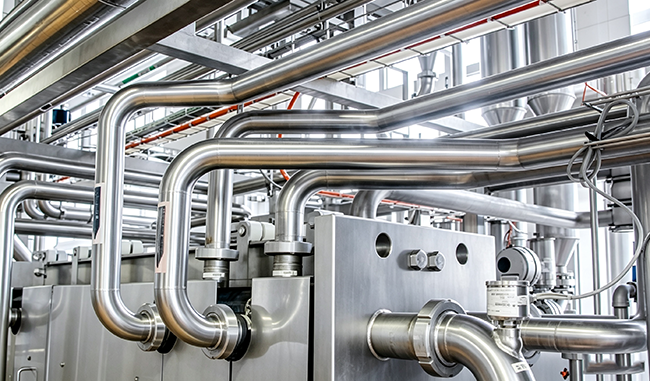
As consumers and regulators place increasing emphasis on food safety, pipeline cleaning and disinfection have become an essential part of quality control in beverage and beer production. Scientifically designed CIP programs, appropriate cleaners and disinfectants, and continuous verification not only support food-safety compliance but also help reduce abnormal batches and equipment-maintenance risks.
Stable product quality begins with verifiable hygiene control. Companies should integrate hygienic design, CIP parameters, disinfectant use, personnel training and microbiological monitoring into a unified food-safety management system, establish validated standard operating procedures according to product and equipment characteristics, and continuously use monitoring data to optimize cleaning and disinfection performance.
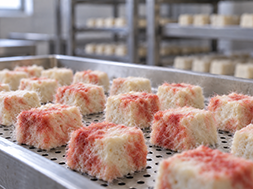
The reddish color of fermented tofu cannot be determined solely by its appearance; sampling and testing are necessary, and the abnormal product must be isolated. Relying solely on disinfectants is insufficient; equipment and the workshop environment must be thoroughly investigated. Air disinfection requires unmanned operation and material isolation. Disinfectants should be used according to specifications, and problems should be identified through a combination of production records and testing.
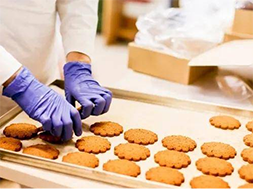
AB cleaning agents in food factories are prone to producing odor residues; Chlorine dioxide disinfectant can sterilize and deodorize without harmful residues. It can be diluted and used for disinfection of workshop equipment and water bodies, with matching ratios and safety operation requirements.
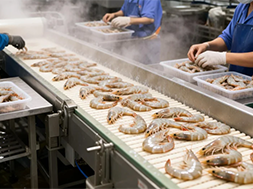
Chlorine dioxide disinfection in food production will produce harmful residues, and the water consumption of traditional large water washing is serious. Four measures can be taken to save water and reduce waste on the basis of ensuring food safety, so as to help enterprises achieve multiple benefits and win-win results.
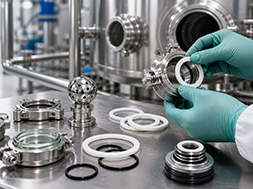
While switching from sodium hypochlorite to chlorine dioxide disinfection offers advantages such as sterilization, biofilm removal, and fewer disinfection byproducts, the strong oxidizing properties of chlorine dioxide necessitate careful consideration of production line material compatibility: 316L stainless steel should be prioritized for piping, and fluororubber or polytetrafluoroethylene (PTFE) should be used for seals, while also considering the suitability of accessories such as sight glasses and spray nozzles. The switch can be smoothly completed in three steps: establishing material records, conducting a 72-hour immersion test, and carrying out small-scale trial runs and inspections, thus preventing equipment corrosion and damage.
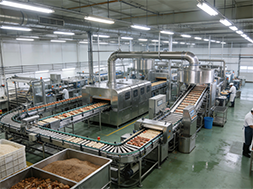
Traditional chlorine dioxide disinfection in food factories is time-consuming and reduces production capacity. Addressing pain points such as solution preparation, spraying, and ventilation monitoring, the process can be optimized in stages through equipment upgrades, zoned disinfection, scientific control of disinfection parameters, and accelerated ventilation monitoring. This phased process optimization, while ensuring safety and compliance, can shorten disinfection time by 30-50%, freeing up production capacity and improving hygiene management.
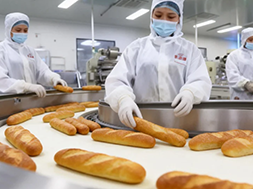
Powdered milk powder and starch dust in the powdered food workshop will absorb and consume chlorine dioxide dry fog, reducing the disinfection effect. It can solve the disinfection problems caused by dust and ensure food safety by reducing dust before disinfection, regulating the particle size of dry fog, pulse releasing agent, optimizing the air flow in the workshop, and matching other disinfection methods.
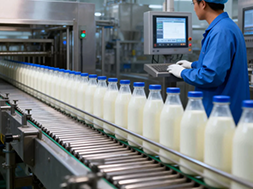
Chlorine dioxide is widely used for disinfection in water supply and food supply chains, but current issues exist regarding standards, procedures, and residue monitoring. It is necessary to standardize operating procedures, establish a comprehensive residue monitoring system, and improve risk warning and emergency response mechanisms to ensure disinfection safety from water treatment plant to table.

When using chlorine dioxide for disinfection of chocolate equipment, it is necessary to control the residue of the agent to avoid damaging the flavor and quality of the product. The preparation of the agent should be standardized, the disinfection and rinsing process optimized, and residue compliance verified through multiple methods. Since chocolate is a low-moisture food, a customized cleaning plan needs to be developed based on the specific equipment to balance safety and production stability.
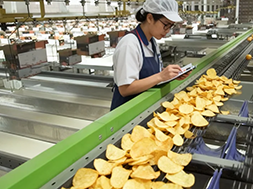
The strong oxidizing properties of chlorine dioxide can cause plastic conveyor belts in food factories to oxidize and age, with different materials exhibiting varying degrees of tolerance. To address this, a more refined approach can be taken, including controlling the concentration, shortening contact time, selecting oxidation-resistant materials, and employing differentiated disinfection methods and rotating disinfectants, thus balancing disinfection effectiveness with equipment protection.
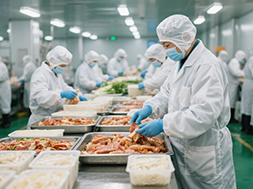
When using chlorine dioxide for disinfection in food production, the disinfectant concentration is a critical control point in the HACCP system. Test strips are convenient to use but have a relatively large margin of error; portable testing instruments offer higher accuracy but require regular calibration and maintenance. Enterprises can adopt a three-tiered monitoring solution: primarily online sensors, supplemented by portable instrument inspection and calibration, and emergency verification using test strips. This enables continuous monitoring, data retention and traceability, ensuring both disinfection effectiveness and food safety.
Northeast of Huangshan Road and Chuangye Intersection, Small and Medium sized Enterprise Entrepreneurship Industrial Park, Shanwang Town, Linqu County, Weifang City, Shandong Province
Copyright © 2025 by Shandong Huashi Pharmaceutical Co., Ltd All Rights Reserved


 Language
 中文
中文 Русский
 Chlorine Dioxide Disinfectant Manufacturer


