Welcome to Our Factory for a Visit! Free customized disinfection solutions
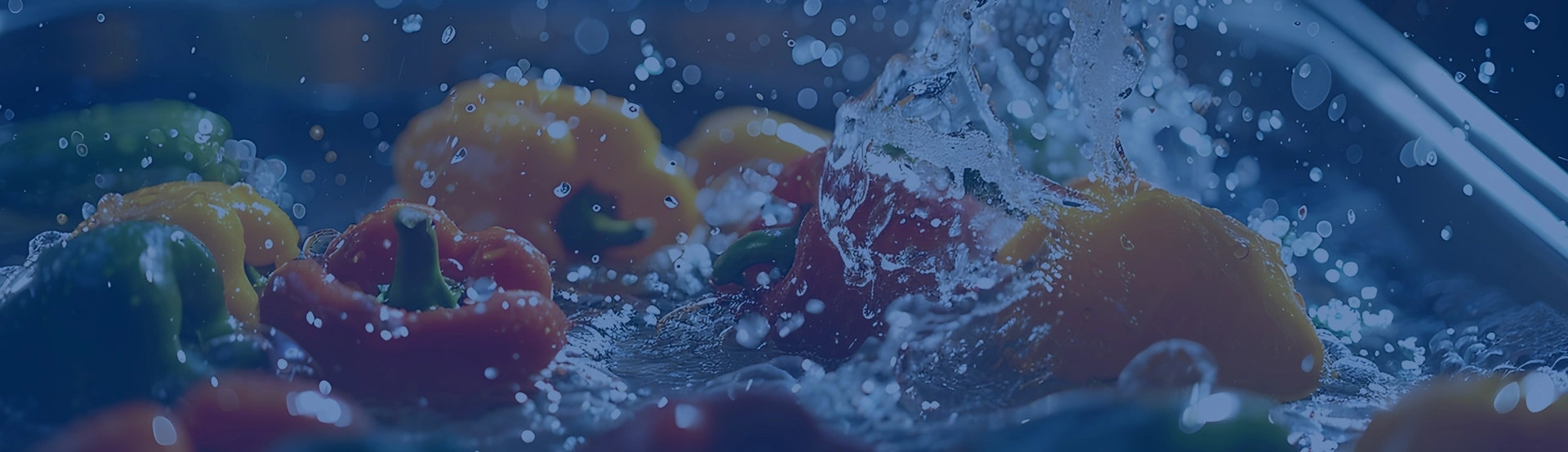
Food safety performance is a test of processing technology, and looking deeper, it is also a severe test of food production disinfection time and time again. In the entire processing process, cleaning and disinfection are undoubtedly the highest priority link in the entire safety management chain, which is also the trend of many food processing industries moving towards precise disinfection. Disinfection in the food industry is like walking a tightrope, with each step accurately calculating the disinfection effect. Therefore, the selection of disinfectant types and the degree of superiority or inferiority of disinfectants are crucial decisions that affect the life and death of a food enterprise. The balance between the comprehensive performance of disinfectants in mitigating microbial risks and product flavor quality in food has led to the differences and value distinctions in the disinfectant market today.
So, among many disinfectant categories, chlorine dioxide is a new type of disinfectant, which is safer in broad-spectrum sterilization and more stable in long-lasting sterilization. And Xiuba is a more scientific and precise technological advantage product among these numerous chlorine dioxide disinfectant products. Since its establishment, the brand has served dozens of industries and thousands of enterprises, serving as the disinfection manager for your company's food quality. In all disinfection processes, the cleaning process of fruits and vegetables in contact with chlorine dioxide is a crucial step that tests the disinfection effect, and it is also a decisive result in fully quantifying whether a product's technical indicators are of high quality.

Many hidden contradictions in traditional disinfection mechanisms
In many food factories, there are often conflicts in chemical reaction mechanisms during the cleaning of fruits and vegetables due to their inherent characteristics. Traditional chemical disinfectants are prone to the generation of disinfection by-products, which can actually lead to the side effects of disinfection becoming toxic. Secondly, the residual toxicity of disinfectants themselves can also bring about more complicated problems of heavy disinfection treatment. Even due to the strong oxidative force of disinfectants, the nutritional chain of fruits and vegetables is damaged, with significant nutrient damage being particularly common and severe in terms of vitamin C loss. As a result, excessive disinfection reactions of some disinfectants can cause browning of ingredients and damage to cellular tissues.
When it comes to fruit and vegetable cleaning, the fatal hidden problem is the concealed contamination location of fruits and vegetables. During the routine disinfection and soaking process, if the disinfectant's reaction effectiveness decays too quickly or the disinfection intensity is insufficient, it will cause incomplete fruit and vegetable cleaning, resulting in significant residual risks. And many of these pollutants adhere to fruits and vegetables, often surviving through biofilm protection structures. The contradiction in disinfection lies in whether general disinfectants can produce irreversible disinfection mechanisms and completely eliminate pollution sources. The defect of traditional disinfection mechanism is not a single technical problem, but a comprehensive impact of chemical safety, nutrient quality maintenance and physical disinfection and sterilization limit, which is why traditional disinfection products are not competent for cleaning fruits and vegetables.

Deep diving of chlorine dioxide disinfection and stability maintenance technology
On the other hand, the disinfection logic of chlorine dioxide has become the artistic balance in the cleaning and disinfection of fruits and vegetables. It is capable of handling hydrolysis reactions in water without the problem of three organic chlorides and by-products, and there is no contradiction between disinfection and poisoning. Moreover, due to the strong oxidation-reduction potential of other microorganisms, only trace amounts of agents can be used for ton water treatment, and the oxidation directly destroys the protease part inside the deep layers of cells, leaving no reversible conditions for microbial revival. This erodes the survival activity of microorganisms from the source, thus eliminating the possibility of organic by-products being generated.
Of course, fruit and vegetable cleaning is not only about the safety of disinfectants, but also about testing the effectiveness of disinfecting the food ingredients. Authoritative industry research data provides such clear explanations. Under normal low concentration conditions, chlorine dioxide has no significant impact on human physiology. Especially within the strict safety threshold range of 100PPM concentration for fruits and vegetables, it does not have any toxicity. When we talk about whether disinfectants can cause discoloration or nutrient loss in fruits and vegetables, more research data provides a clear answer: in the study of lychee disinfection and preservation, chlorine dioxide can delay the decomposition of anthocyanins and instead play a role in color protection. Research on tomato disinfection has also confirmed that lycopene content can be significantly increased after chlorine dioxide disinfection and cleaning, and the total bacterial count is much lower than 0.1% compared to other disinfectants, providing nutrition and color maintenance for fruit and vegetable disinfection, and providing quality protection for product processing.

Xiuba Chlorine Dioxide Scientific Quantification, Quality Protection
On the food processing track, Xiuba Chlorine Dioxide has brought high-precision and highly activated system solution optimized products to the industry. This is the endorsement of Xiuba's advantageous qualifications after obtaining 4 licenses from the Ministry of Health and GMP certification from the Ministry of Agriculture.
Xiuba not only continues to focus on the activation rate of disinfectants, but also specifically develops multiple types of products in its product line for application in the food processing industry. In the food grade chlorine dioxide disinfectant series, a precise disinfection technology that oxidizes pigments without damaging the fiber skeleton has been developed, which can be safely used in the cleaning, soaking, and disinfection of cellulose rich green vegetables. This type of product covers all usage scenarios; There are both convenient instant effervescent tablets and binary preparations that can be stored stably for up to 24 months, and different concentration types are also subdivided.

The disinfectant series products developed and produced by Xiuba, which can be applied in the food industry, all use international cash production lines to ensure safety, stability, and high activation technology without discount, and generally have a 95% activation rate higher than other disinfectants in the industry, bringing more economical operating costs to enterprise processing and production. Moreover, the Xiuba team supports on-site service, providing technical support and regular maintenance and other after-sales services, making it one of the suppliers among many disinfectant brands that focuses more on the continuous and stable disinfection effect. In addition, Xiuba has 28 years of experience in disinfection technology solutions, which can bring a complete and immediately monetized disinfection solution to many enterprises, providing higher quality development support for food processing.
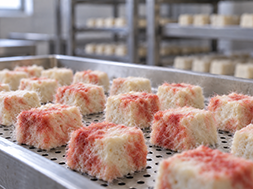
The reddish color of fermented tofu cannot be determined solely by its appearance; sampling and testing are necessary, and the abnormal product must be isolated. Relying solely on disinfectants is insufficient; equipment and the workshop environment must be thoroughly investigated. Air disinfection requires unmanned operation and material isolation. Disinfectants should be used according to specifications, and problems should be identified through a combination of production records and testing.

AB cleaning agents in food factories are prone to producing odor residues; Chlorine dioxide disinfectant can sterilize and deodorize without harmful residues. It can be diluted and used for disinfection of workshop equipment and water bodies, with matching ratios and safety operation requirements.
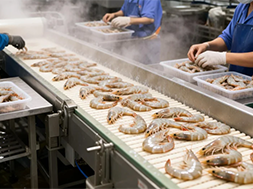
Chlorine dioxide disinfection in food production will produce harmful residues, and the water consumption of traditional large water washing is serious. Four measures can be taken to save water and reduce waste on the basis of ensuring food safety, so as to help enterprises achieve multiple benefits and win-win results.
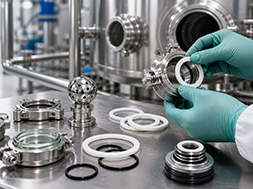
While switching from sodium hypochlorite to chlorine dioxide disinfection offers advantages such as sterilization, biofilm removal, and fewer disinfection byproducts, the strong oxidizing properties of chlorine dioxide necessitate careful consideration of production line material compatibility: 316L stainless steel should be prioritized for piping, and fluororubber or polytetrafluoroethylene (PTFE) should be used for seals, while also considering the suitability of accessories such as sight glasses and spray nozzles. The switch can be smoothly completed in three steps: establishing material records, conducting a 72-hour immersion test, and carrying out small-scale trial runs and inspections, thus preventing equipment corrosion and damage.
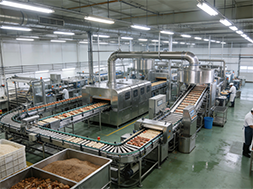
Traditional chlorine dioxide disinfection in food factories is time-consuming and reduces production capacity. Addressing pain points such as solution preparation, spraying, and ventilation monitoring, the process can be optimized in stages through equipment upgrades, zoned disinfection, scientific control of disinfection parameters, and accelerated ventilation monitoring. This phased process optimization, while ensuring safety and compliance, can shorten disinfection time by 30-50%, freeing up production capacity and improving hygiene management.
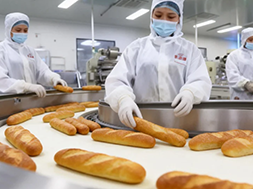
Powdered milk powder and starch dust in the powdered food workshop will absorb and consume chlorine dioxide dry fog, reducing the disinfection effect. It can solve the disinfection problems caused by dust and ensure food safety by reducing dust before disinfection, regulating the particle size of dry fog, pulse releasing agent, optimizing the air flow in the workshop, and matching other disinfection methods.
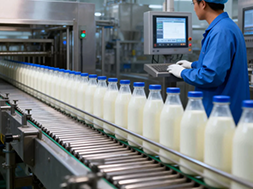
Chlorine dioxide is widely used for disinfection in water supply and food supply chains, but current issues exist regarding standards, procedures, and residue monitoring. It is necessary to standardize operating procedures, establish a comprehensive residue monitoring system, and improve risk warning and emergency response mechanisms to ensure disinfection safety from water treatment plant to table.

When using chlorine dioxide for disinfection of chocolate equipment, it is necessary to control the residue of the agent to avoid damaging the flavor and quality of the product. The preparation of the agent should be standardized, the disinfection and rinsing process optimized, and residue compliance verified through multiple methods. Since chocolate is a low-moisture food, a customized cleaning plan needs to be developed based on the specific equipment to balance safety and production stability.
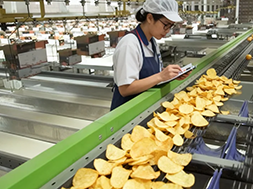
The strong oxidizing properties of chlorine dioxide can cause plastic conveyor belts in food factories to oxidize and age, with different materials exhibiting varying degrees of tolerance. To address this, a more refined approach can be taken, including controlling the concentration, shortening contact time, selecting oxidation-resistant materials, and employing differentiated disinfection methods and rotating disinfectants, thus balancing disinfection effectiveness with equipment protection.
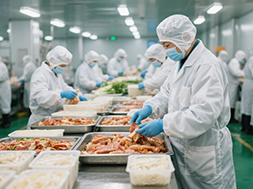
When using chlorine dioxide for disinfection in food production, the disinfectant concentration is a critical control point in the HACCP system. Test strips are convenient to use but have a relatively large margin of error; portable testing instruments offer higher accuracy but require regular calibration and maintenance. Enterprises can adopt a three-tiered monitoring solution: primarily online sensors, supplemented by portable instrument inspection and calibration, and emergency verification using test strips. This enables continuous monitoring, data retention and traceability, ensuring both disinfection effectiveness and food safety.
Northeast of Huangshan Road and Chuangye Intersection, Small and Medium sized Enterprise Entrepreneurship Industrial Park, Shanwang Town, Linqu County, Weifang City, Shandong Province
Copyright © 2025 by Shandong Huashi Pharmaceutical Co., Ltd All Rights Reserved


 Language
 中文
中文 Русский
 Chlorine Dioxide Disinfectant Manufacturer


