Welcome to Our Factory for a Visit! Free customized disinfection solutions
A practical question for water utilities is this: after chlorine dioxide is introduced or its operating conditions are changed, some consumers may report increased turbidity. Is chlorine dioxide necessarily stripping biofilm from the pipe wall, and how should the dosing strategy be adjusted? The first step is to avoid jumping to a single cause. Turbidity in a distribution system can result from biofilm detachment, resuspension of sediment or corrosion products, hydraulic disturbances, pressure changes, maintenance activities, or other network events. Chlorine dioxide should therefore be adjusted only after the source of the turbidity has been investigated.

I. Biofilm Formation and Its Potential Impact
Biofilms are complex microbial communities attached to pipe surfaces and embedded in extracellular polymeric substances. They may contain bacteria, fungi and other microorganisms, together with inorganic particles and corrosion products. Biofilms can consume disinfectant and contribute to changes in microbial quality, taste, odor, turbidity or color when material is released into the bulk water. However, biofilm should not be described as the sole or main source of secondary contamination in every distribution system. Sudden deterioration in consumer water quality can also result from sediment, oxide scale, corrosion products or hydraulic mobilization, so the cause should be confirmed through field investigation and water-quality data.
II. How Chlorine Dioxide Interacts with Biofilm
Chlorine dioxide is a strong oxidant that can inactivate microorganisms and oxidize components of the extracellular polymeric matrix. It may penetrate into parts of a biofilm and weaken some of the material that binds the biofilm to pipe surfaces, but mature biofilms are heterogeneous and mass-transfer limitations can reduce disinfectant penetration. It is therefore too absolute to state that chlorine dioxide can fully penetrate and strip biofilm. Detachment is governed by a combination of disinfectant exposure, biofilm structure, pipe material, hydraulic shear, flow changes, corrosion deposits and other network conditions.
The relationship between chlorine dioxide dose and biofilm behavior is not a simple 'low concentration suppresses growth, high concentration causes large-scale detachment' rule. Increasing oxidant exposure may change biofilm structure and can contribute to release of attached material, but sudden turbidity after a dosing change does not prove that chlorine dioxide concentration alone is responsible. Operators should compare turbidity, color, particle counts where available, metals, microbiological indicators, disinfectant residual, hydraulic events and consumer complaints before changing the treatment strategy.
III. Practical Adjustment Strategies for Chlorine Dioxide
1. Control the dose using regulatory limits and actual network demand
Chlorine dioxide dosing should be based on treated-water demand, required contact time, distribution-system water age, target residual, source-water quality and the applicable drinking-water standard. Under GB 5749-2022, chlorine dioxide has a contact-time requirement of at least 30 minutes, a finished-water and distribution-end limit of no more than 0.8 mg/L, a finished-water residual of at least 0.1 mg/L and a distribution-end residual of at least 0.02 mg/L. These values are regulatory requirements, not a universal biofilm-control recipe. Fixed recommendations such as routinely increasing the network to 0.4-0.8 mg/L, raising the dose by exactly 0.1 mg/L at a time, or waiting exactly 3-5 days should not be generalized. Any adjustment should be gradual, documented and verified against downstream water quality and residual behavior.
2. Optimize dosing points only after hydraulic and water-quality evaluation
Multiple dosing points can be useful in some large or high-water-age networks, but they are not automatically better than a single well-designed dosing point. Booster dosing should be considered only after hydraulic modeling, water-age assessment, residual-decay data and mixing conditions show that it is needed. Each additional point introduces equipment, monitoring, chemical-safety and control requirements, and poorly designed booster dosing can create local concentration peaks. The objective is a stable, compliant residual profile rather than simply adding more dosing locations.
3. Use pulse or shock treatment cautiously
Periodic high-concentration pulse dosing should not be presented as a routine method for an operating drinking-water network serving consumers. A fixed schedule such as one or two 6-12 hour treatments per month at 0.6-0.8 mg/L is not a universal or validated standard. If intensified biofilm-control treatment is considered, it should be based on a documented network-cleaning plan, regulatory requirements, pipe condition and verified water-quality risk. Where practical, the affected section should be isolated, flushed and returned to service only after the required water-quality checks. Normal distribution-system operation should prioritize continuous compliance and controlled residuals rather than repeated operation close to the maximum limit.
4. Coordinate disinfectant management with hydraulic flushing
When turbidity or discolored-water risk is associated with material mobilization, targeted hydraulic flushing can help remove released sediment, corrosion products and biofilm material from the network instead of allowing them to reach consumers. Flushing should be planned from the network configuration and hydraulic conditions, with suitable flow and discharge management. Consumer notification may be needed when service interruptions or short-term water-quality changes are expected. Flushing should not be scheduled simply because chlorine dioxide is being dosed; it should be linked to evidence of deposits, hydraulic risk or a planned cleaning program.
5. Build a monitoring and feedback system
Monitoring should combine online operational measurements with field and laboratory verification. Turbidity and chlorine dioxide residual can often be monitored online at selected locations where suitable instrumentation is installed; color is commonly verified through scheduled or event-based testing rather than assumed to be continuously monitored everywhere. When a turbidity event occurs, additional parameters such as iron, manganese, particle characteristics, heterotrophic plate counts or other microbiological indicators may help distinguish biofilm release from corrosion-scale or sediment resuspension. Dosing changes should be based on these trends together with hydraulic information and consumer complaints.
6. Use integrated distribution-system management
Chlorine dioxide control is only one part of distribution-system biofilm management. Utilities should also reduce biodegradable nutrient loading where practicable, maintain stable hydraulics, manage water age and storage turnover, control source-water and treatment-process conditions, remove accumulated deposits through appropriate flushing or cleaning, and maintain pipe integrity. If chlorine dioxide is the distribution disinfectant, the relevant parameter is chlorine dioxide residual rather than 'free chlorine residual.' Where mixed chlorine dioxide/chlorine systems are used, both disinfectant indicators should be managed according to the applicable requirements.
For aging networks, rehabilitation and replacement should be prioritized according to pipe condition, corrosion, hydraulic performance and water-quality risk rather than assuming that old pipe automatically equals biofilm growth. A rapid response mechanism for turbidity and discoloration complaints is also valuable: collect samples, check recent hydraulic and treatment changes, identify the likely material source, implement corrective flushing or treatment adjustments, and verify recovery before closing the event.
Biofilm control in drinking-water distribution systems is a balance between microbial stability, hydraulic management, disinfectant control and the removal of accumulated material. Chlorine dioxide can be an important part of this strategy, but a sudden increase in turbidity should never be attributed to 'excessive biofilm stripping' without investigation. The more reliable approach is to identify the source of the particles, maintain chlorine dioxide within validated and compliant operating conditions, coordinate dosing with hydraulic management, and use monitoring data to guide gradual adjustments. This system-based approach is more likely to protect both microbiological safety and stable consumer water quality.
A shutdown of the chlorine dioxide system in a water plant can lead to risks such as decreased disinfection capacity, increased byproducts, biofilm growth, and water quality exceeding standards. Water quality can be ensured through redundancy backups, temporary alternative disinfection methods, refined operation and maintenance, and optimized process parameters. Corresponding emergency measures should be implemented for planned maintenance and unforeseen malfunctions to minimize the impact of shutdowns on disinfection stability.
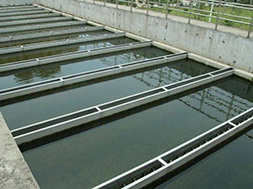
In remote rural areas, some water plants lack electricity due to grid limitations. They rely on three non-electric methods—gravity dripping, float pump, and manual dosing—to add disinfectant and disinfect drinking water. At the same time, they rationally select disinfectants based on the performance characteristics of different agents, using low-cost and practical technologies to safeguard the drinking water safety of rural residents and strengthen the foundation of rural revitalization and people's livelihood.
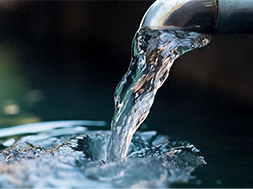
Tap water may momentarily fail to meet residual chlorine standards upon leaving the treatment plant, but the water coming out of the tap may still meet standards. This is because the water supply network has chlorination replenishment stations to add disinfectant, and the small amount of substandard water mixes and dilutes with a large amount of qualified water during transportation. Water supply relies on multiple layers of protection—water treatment at the treatment plant, network regulation, and end-point monitoring—to ensure the safety of water quality reaching households. Therefore, it is crucial to pay close attention to the water quality at the final point of contact (the point of contact with the tap).

Biofilm on the inner walls of water supply networks can easily cause secondary pollution. Excessive chlorine dioxide concentration can cause it to detach in large quantities, leading to turbidity in the water at the user's end. A comprehensive approach, including precise concentration control, optimized dosing methods, network flushing, enhanced water quality monitoring, and pipeline maintenance, can balance the effectiveness of biofilm management and ensure water supply safety.
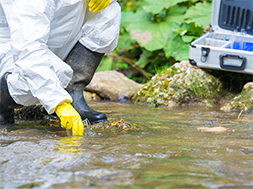
Excessive nitrate levels in drinking water can harm human health, especially threatening the health of infants and young children. Chlorine dioxide is only used for water disinfection and **cannot be used as a routine method for removing nitrates**. Reverse osmosis, ion exchange, and biological denitrification technologies can be used to remove nitrates. Boiling and activated carbon adsorption are ineffective in reducing nitrate levels, and regular water quality monitoring and maintenance are necessary after treatment.
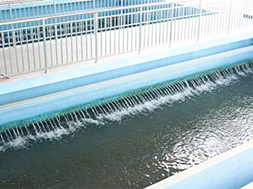
When water quality at the water plant is abnormal, a four-level emergency response is activated through real-time monitoring and alarms; the contaminated water source is cut off, a backup water source is activated, and targeted purification treatment is carried out according to the type of pollutant; water quality testing is intensified, and water supply is restored after the water meets the standards; information is simultaneously disclosed, and emergency water supply is allocated to key locations. A post-incident disinfection system is implemented, contingency plans are improved, and water source protection is strengthened to ensure the safety of urban water use.
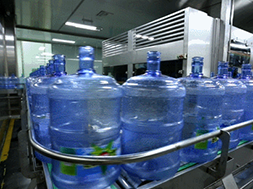
Chlorine dioxide is used for disinfection of bottled water, but its effectiveness is easily affected by high temperatures, light exposure, and storage time, leading to degradation and the production of harmful byproducts such as chlorite and chlorate. The quality of bottled water can be ensured through multi-party collaboration, including controlling the concentration at the factory, using light-blocking packaging, low-temperature storage and transportation, shortening distribution time, and other measures.
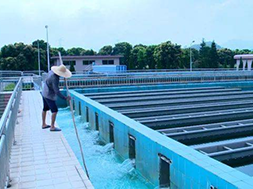
High temperatures can easily cause red nematodes to grow in secondary water supply tanks, which can be disinfected with chlorine dioxide; the tanks need to be cleaned regularly, and water should be drained before use, and any abnormalities should be reported immediately.
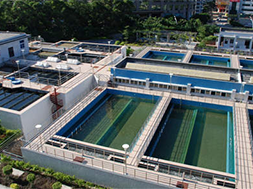
Sudden microbial contamination of water sources is characterized by rapid outbreaks, high difficulty in detection, and high health risks. Water plants can respond to contamination through various technical solutions, such as enhanced treatment using conventional processes, pretreatment combined with conventional processes, and advanced treatment. At the same time, they should follow the golden 4-hour emergency response process, carry out water quality testing, process adjustments, and safety verification in stages, and safeguard water supply safety by relying on technical means, real-time monitoring, and emergency drills.
Northeast of Huangshan Road and Chuangye Intersection, Small and Medium sized Enterprise Entrepreneurship Industrial Park, Shanwang Town, Linqu County, Weifang City, Shandong Province
Copyright © 2025 by Shandong Huashi Pharmaceutical Co., Ltd All Rights Reserved


 Language
 中文
 Русский
 Chlorine Dioxide Disinfectant Manufacturer